Dental Milling Machines: Wet or Dry for Your Lab?
Choosing between wet and dry dental milling machines can directly affect restoration quality, workflow efficiency, material compatibility, and operating costs in your lab. For buyers, technicians, and decision-makers evaluating dental milling machines, this guide breaks down the practical differences, performance trade-offs, and investment considerations to help you match the right milling approach to your production goals.
Wet vs. dry dental milling machines: what really changes in daily lab production?
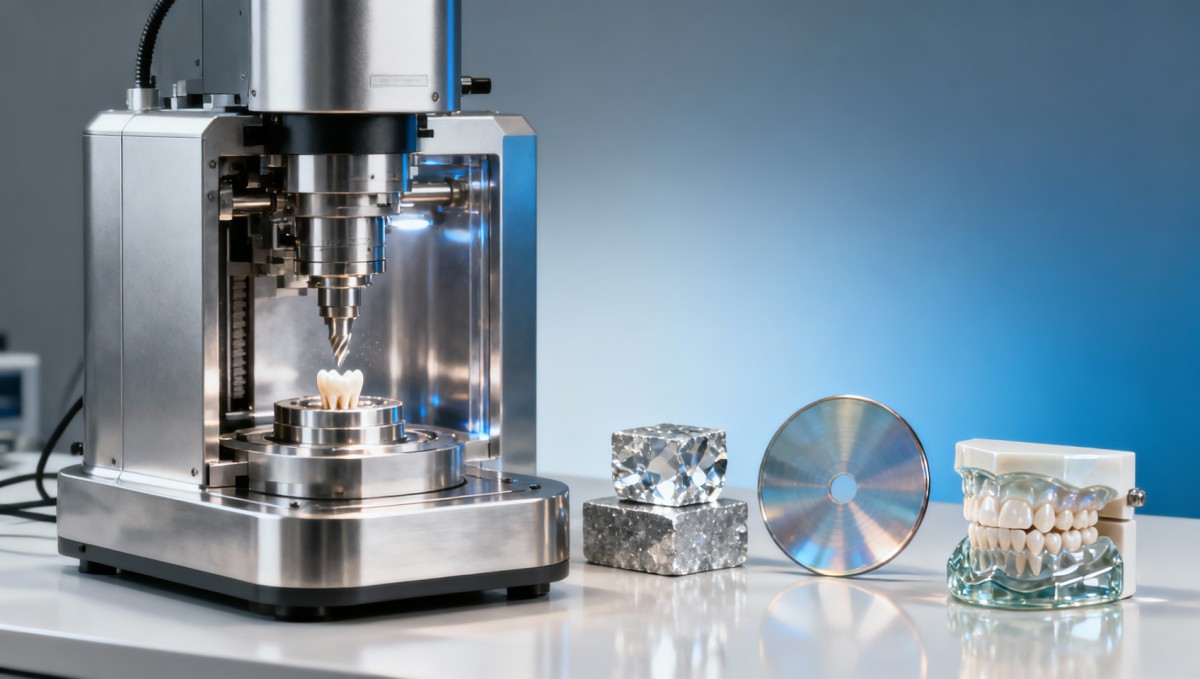
For many dental labs, the wet-or-dry decision is not a simple equipment preference. It changes material workflow, spindle use, cleanup routines, restoration turnaround, and even staffing requirements. In a typical lab handling 10–50 units per day, the wrong milling approach can create avoidable delays across design, nesting, finishing, and delivery.
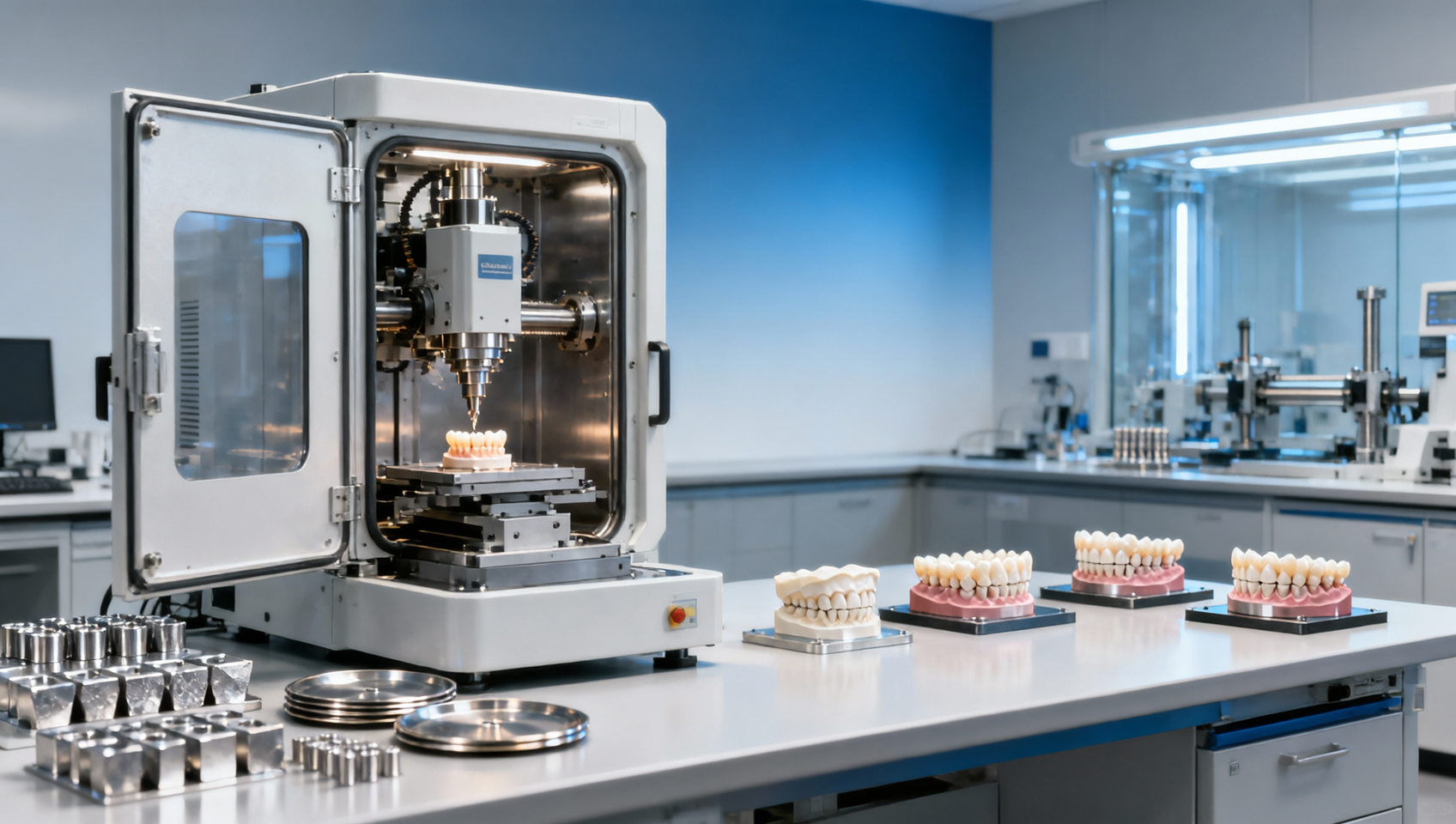
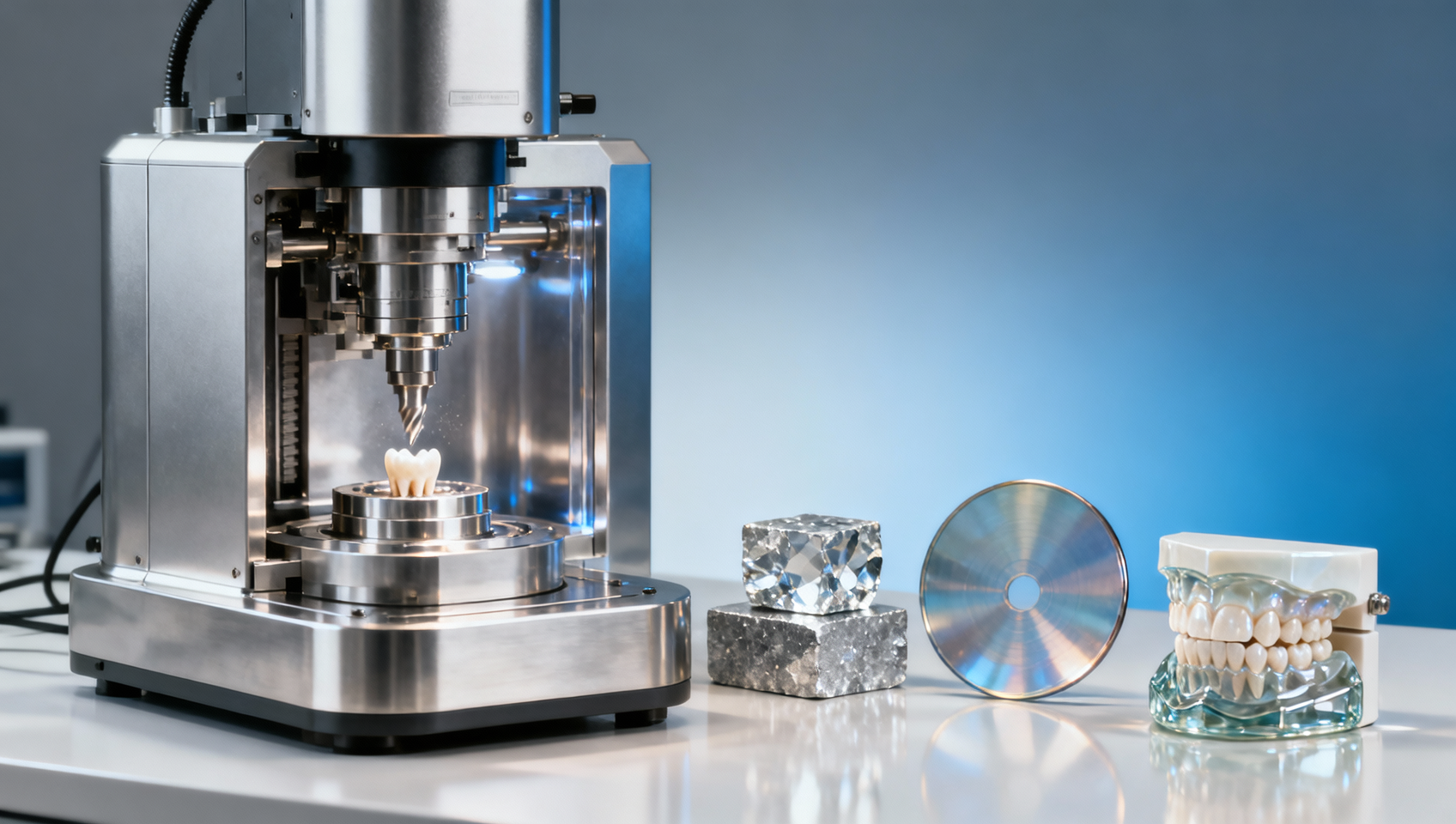
Dry dental milling machines are commonly selected for zirconia and PMMA processing, where a clean dust-management system and stable dry milling strategy support high-throughput crown, bridge, and framework production. Wet dental milling machines are often preferred for glass ceramics, hybrid ceramics, titanium, cobalt-chrome in selected workflows, and applications where coolant helps reduce heat, microcracks, and tool wear.
The key point is that neither option is universally better. The right choice depends on your material mix, daily case volume, restoration type, operator skill level, and maintenance discipline. A lab producing mainly zirconia copings and full-contour zirconia may prioritize dry efficiency. A lab focused on chairside glass ceramic restorations may lean toward wet precision and smoother surface outcomes.
From a procurement view, decision-makers usually evaluate 4 core factors: material compatibility, machine utilization rate, total operating cost over 2–5 years, and risk of production interruption. These factors matter more than headline spindle speed alone, because dental milling performance is tied to the full workflow, not just one specification.
Core operational differences labs should compare first
- Cooling method: wet milling uses liquid coolant to manage friction and heat, while dry milling relies on air, suction, and tool-path control.
- Material range: dry setups are usually stronger for zirconia-focused production; wet setups are often more suitable for glass ceramics and certain hard metals.
- Housekeeping demand: dry milling requires reliable dust extraction and filter maintenance; wet milling requires coolant management, tank cleaning, and fluid replacement schedules.
- Post-processing flow: dry zirconia often needs sintering after milling, while wet-milled glass ceramics may proceed into crystallization, polishing, or glazing with a different timing structure.
For distributors, project managers, and technical evaluators, understanding these workflow differences early helps avoid mismatched proposals. It also reduces after-sales issues tied to unrealistic expectations, especially when end users assume one machine can optimize every dental material without compromise.
Which materials and applications fit wet or dry milling better?
Material compatibility is often the fastest way to narrow the selection. In dental production, the machine should be evaluated against the top 3–5 materials that generate most revenue or most daily volume. Labs that try to make a decision based only on future possibilities may overinvest in complexity they rarely use.
Dry dental milling machines are widely associated with presintered zirconia because the material mills efficiently before final sintering. This supports scalable production of crowns, bridges, implant prosthetic components, and full-arch structures within a standardized digital workflow. PMMA and wax are also common dry-milled materials for temporaries, prototypes, and casting patterns.
Wet dental milling machines are frequently used for lithium disilicate and similar glass ceramic workflows because coolant helps maintain edge quality and reduces thermal stress during milling. They may also be used in applications involving harder, denser materials where heat control and tool life are more critical, although actual suitability depends on machine design, axis configuration, and approved material strategy.
If your lab runs mixed production across zirconia, PMMA, and glass ceramic, the choice becomes more strategic. Some labs use separate machines for specialization. Others prefer hybrid-capable systems to reduce floor space and simplify procurement. The trade-off is that hybrid flexibility can introduce added maintenance routines and workflow discipline requirements.
Application mapping table for faster evaluation
The table below summarizes how wet and dry dental milling machines are typically aligned with common lab applications, material behavior, and production priorities.
This comparison shows why material planning should come before machine selection. A procurement team that starts with restoration mix, monthly case categories, and finishing requirements will usually make a stronger investment decision than one that starts with marketing claims or broad machine labels.
Questions to ask before locking the material strategy
- What percentage of monthly cases are zirconia, PMMA, wax, glass ceramic, or other materials?
- Do you need same-day or 24-hour turnaround for specific restorations?
- Will the machine be dedicated to one material family or shared across multiple production lines?
- How often can operators perform cleaning, calibration, and consumable replacement without disrupting output?
These questions also help financial approvers compare whether one versatile machine or two specialized machines produce a lower cost per unit over a 12–36 month operating period.
How do performance, maintenance, and operating costs compare?
When comparing dental milling machines, buyers often focus on initial price and overlook recurring cost layers. In reality, total ownership depends on tooling, coolant or filter consumables, preventive maintenance intervals, operator time, machine downtime, and rework caused by material mismatch or poor surface outcomes.
Dry milling can support efficient zirconia production, but dust extraction quality is critical. Filters, suction performance, and internal cleanliness directly affect machine reliability and restoration accuracy over time. Wet milling introduces different operating costs, including coolant management, pump maintenance, fluid disposal procedures, and additional cleaning steps after repeated use.
Tool wear also differs by material and process. For example, a lab milling zirconia at steady volume over 5–6 days per week may prioritize predictable bur replacement schedules and low interruption risk. A lab producing high-value esthetic ceramic cases may accept slower throughput if wet milling reduces chipping risk and helps protect restoration quality.
A useful procurement approach is to model cost in 6 categories: machine acquisition, installation, consumables, maintenance labor, downtime exposure, and post-processing burden. This gives technical teams and finance teams a shared framework instead of debating only the purchase price.
Operational cost comparison table
The table below highlights cost-related differences that usually matter during supplier comparison, internal budget review, and return-on-investment discussions.
For many labs, the most important lesson is that maintenance burden should be priced into the business case. A machine that looks economical on day one can become costly if it needs frequent stoppages, poorly planned consumable replacement, or operator intervention every few cycles.
A practical 5-point cost review checklist
- Estimate monthly unit volume in low, medium, and peak seasons instead of relying on one annual average.
- Review tool replacement frequency by material family and by operator shift pattern.
- Include 12-month cleaning and maintenance labor in the ownership model.
- Check whether downtime requires outsourcing urgent cases to another lab or milling center.
- Confirm whether training, installation, and software integration are included or quoted separately.
For business evaluators and finance approvers, this checklist makes supplier comparisons far more objective, especially when quotations differ in scope and service terms.
What should buyers, technicians, and project owners check before procurement?
A strong dental milling machine purchase starts with a cross-functional review. Operators care about usability and maintenance. Technical evaluators care about axis stability, workflow compatibility, bur management, and accuracy consistency. Financial approvers care about payback period and service exposure. Project owners care about implementation risk and delivery timing, often within a 2–8 week launch window.
In many B2B purchases, the biggest mistake is selecting a machine before defining the production target. Is the objective to reduce outsourcing? Increase same-day capacity? Improve ceramic quality? Expand implant prosthetic capability? Each goal changes the weighting of wet versus dry performance, and therefore changes the preferred supplier shortlist.
Another critical step is checking software and scanner compatibility. Even a technically capable dental milling machine can become inefficient if nesting logic, file transfer, tool libraries, or CAM strategy create extra manual steps. Labs should confirm integration flow from design file to final restoration, including who supports troubleshooting when hardware and software come from different vendors.
TradeNexus Pro supports this stage by helping procurement teams compare supplier positioning, workflow claims, and market-fit signals across advanced manufacturing and healthcare technology ecosystems. That matters when buyers need more than a brochure and want decision support grounded in real operating logic, vendor alignment, and supply continuity.
Procurement checkpoints by stakeholder role
Use the following structure to keep the evaluation balanced across technical, commercial, and operational priorities rather than letting one department dominate the decision.
This matrix is especially useful when multiple departments must sign off on the purchase. It turns a technical debate into a structured decision process with measurable checkpoints.
A 4-step implementation sequence that reduces procurement risk
- Define the top case categories, material ratios, and target turnaround time for the next 12 months.
- Shortlist machines by material approval, software compatibility, and maintenance model.
- Review quotation scope in detail, including installation, training, consumables, and support response terms.
- Run a trial evaluation or sample review before final approval, especially for high-value ceramic or implant-related workflows.
This process is simple, but it prevents two common problems: buying a machine with the wrong material focus and underestimating the support needed after installation.
Common mistakes, realistic timelines, and buyer FAQs
Even experienced labs can make avoidable mistakes when comparing dental milling machines. The most common errors include assuming all hybrid machines perform equally across materials, ignoring post-processing time, underestimating daily cleaning requirements, and failing to align machine capacity with scanner and CAM workflow speed. These mistakes usually appear within the first 30–90 days of operation.
Lead times also matter. Depending on supplier inventory, training arrangements, and import conditions, a practical delivery and startup cycle may range from 2–6 weeks for stocked configurations to 6–12 weeks for specialized setups. Distributors and project managers should verify this early if the machine is tied to a new lab launch or a capacity expansion deadline.
Compliance and documentation should not be skipped. Buyers commonly request operating manuals, electrical specifications, installation requirements, software support details, and maintenance instructions. Where applicable, general conformity documentation and region-specific import compliance should be checked before final payment or shipping approval.
Below are focused questions that often arise during supplier evaluation, especially among information researchers, technical reviewers, and budget approvers who need concise and practical answers.
Is a dry dental milling machine enough for most labs?
If the lab’s main workload is presintered zirconia, PMMA, wax, and standard high-volume crown-and-bridge production, dry milling can cover a large share of needs. It becomes less complete when the business model depends heavily on glass ceramics or broader mixed-material flexibility. The answer depends on revenue mix, not on machine popularity alone.
When is wet milling the better investment?
Wet milling is often the better fit when restoration quality for glass ceramics, edge integrity, and heat-sensitive processing carry more value than maximum zirconia throughput. It is also worth considering when a lab or clinic requires a more specialized esthetic workflow and can maintain coolant systems consistently across daily operations.
Should a lab buy one hybrid machine or two specialized machines?
For low to medium case volume, one hybrid-capable system may reduce initial investment and save floor space. For medium to high volume, especially where zirconia and glass ceramic workflows both run daily, two specialized machines may provide better uptime, clearer maintenance routines, and less scheduling conflict. This is usually a 12–24 month capacity planning decision.
What service items should be clarified before issuing a purchase order?
Ask for installation scope, training duration, standard consumable list, preventive maintenance schedule, spare part availability, software update policy, and support response timing. These items influence real operating continuity far more than brochure language. For a B2B buyer, they are part of the machine solution, not optional extras.
Why work with TradeNexus Pro when evaluating dental milling machine options?
Choosing between wet and dry dental milling machines often involves more than product comparison. It requires supply-side visibility, technical interpretation, procurement discipline, and a realistic view of downstream workflow impact. TradeNexus Pro helps decision-makers move beyond generic marketplace listings by focusing on deeper industry intelligence across advanced manufacturing and healthcare technology supply networks.
For procurement directors, distributors, and enterprise buyers, TNP provides a more structured environment to assess supplier fit, application relevance, and market positioning. That is especially useful when your team needs to compare multiple dental milling machine options, validate production assumptions, and understand where equipment choices affect quality, lead time, and operating cost.
You can use TNP to support several practical evaluation tasks: confirming material-use scenarios, narrowing machine type by production target, reviewing implementation considerations, comparing supplier communication quality, and identifying where hidden cost or service gaps may appear. This is valuable for both first-time buyers and labs planning a second-stage capacity upgrade within 6–18 months.
If your team is currently assessing dental milling machines, contact TradeNexus Pro for support around parameter confirmation, wet versus dry workflow matching, supplier comparison logic, estimated delivery windows, customization scope, documentation expectations, sample discussion pathways, and quotation communication strategy. A clearer evaluation process saves time, reduces procurement risk, and improves the odds of selecting a machine that fits your lab’s real production model.
Get weekly intelligence in your inbox.
No noise. No sponsored content. Pure intelligence.
 Apr 22, 2026China Leads Global Offshore Wind Installations for 5th YearChina Leads Global Offshore Wind Installations for 5th Year
 Apr 22, 2026China Launches National Mine Safety IoT Monitoring NetworkChina Launches National Mine Safety IoT Monitoring Network
 Apr 22, 2026Yinchuan Boiler Pure Water Solution Certified for Middle East ProjectsYinchuan Boiler Pure Water Solution Certified for Middle East Projects
 Apr 22, 2026China to Enforce Mandatory EV Battery Recycling Standards by 2026China to Enforce Mandatory EV Battery Recycling Standards by 2026
 Apr 22, 2026Vietnam Launches Anti-Circumvention Probe on Electronic ComponentsVietnam Launches Anti-Circumvention Probe on Electronic Components
 Apr 22, 20262026 Shanghai Fastener Show: Robotic Fasteners Drive Overseas Procurement2026 Shanghai Fastener Show: Robotic Fasteners Drive Overseas Procurement
 Apr 22, 2026US BIS Adds EV On-Board Charger Crypto Modules to EAR Appendix 7US BIS Adds EV On-Board Charger Crypto Modules to EAR Appendix 7
 Apr 22, 2026TÜV Rheinland Updates BESS Certification: Propagation Blocking Now MandatoryTÜV Rheinland Updates BESS Certification: Propagation Blocking Now Mandatory
 Apr 22, 2026Red Sea Crisis Escalates: Suez AI Speed Limits & Slot Review from Apr 19Red Sea Crisis Escalates: Suez AI Speed Limits & Slot Review from Apr 19
 Apr 22, 2026EU CBAM Carbon Tariff Takes Effect April 1, 2026EU CBAM Carbon Tariff Takes Effect April 1, 2026
 Apr 21, 2026When to Replace CT Scanner Parts Before Downtime StartsWhen to Replace CT Scanner Parts Before Downtime Starts
 Apr 21, 2026How to Cut Costs in Lathe Turning Without ReworkHow to Cut Costs in Lathe Turning Without Rework
 Apr 21, 2026Lathe Turning Tolerances: What Can You Expect?Lathe Turning Tolerances: What Can You Expect?
 Apr 21, 2026How to Avoid Risks in Solar Panels WholesaleHow to Avoid Risks in Solar Panels Wholesale
 Apr 21, 2026Solar Panels Wholesale: How to Compare SuppliersSolar Panels Wholesale: How to Compare Suppliers
 Apr 21, 2026Solar Mounting Cost Factors You Should KnowSolar Mounting Cost Factors You Should Know
 Apr 21, 2026Solar Mounting Options: Which One Fits Your Project?Solar Mounting Options: Which One Fits Your Project?
 Apr 21, 2026How to Pick USB C Docking Stations for Dual DisplaysHow to Pick USB C Docking Stations for Dual Displays
 Apr 21, 2026USB C Docking Stations: What Ports Do You Need?USB C Docking Stations: What Ports Do You Need?
 Apr 21, 2026What Affects Dental Milling Machine ROI in 2026?What Affects Dental Milling Machine ROI in 2026?
 Apr 21, 2026Dental Milling Machines: Wet or Dry for Your Lab?Dental Milling Machines: Wet or Dry for Your Lab?
 Apr 21, 2026How to Avoid Common Medical Refrigerator MistakesHow to Avoid Common Medical Refrigerator Mistakes
 Apr 21, 2026Medical Refrigerators: What Specs Matter Most?Medical Refrigerators: What Specs Matter Most?
 Apr 21, 2026Portable or Cart Vet Ultrasound: Which to Buy?Portable or Cart Vet Ultrasound: Which to Buy?
 Apr 21, 2026Vet Ultrasound Buying Guide for Small ClinicsVet Ultrasound Buying Guide for Small Clinics
 Apr 21, 2026Yard Management Systems: Key Features to CompareYard Management Systems: Key Features to Compare
 Apr 21, 2026How Yard Management Systems Improve Dock FlowHow Yard Management Systems Improve Dock Flow