Solar Mounting Options: Which One Fits Your Project?
Selecting the right solar mounting solution can determine the efficiency, durability, and ROI of any energy project. From rooftop systems to ground arrays, understanding solar mounting options is essential for buyers, engineers, and project leaders evaluating solar panels wholesale opportunities. This guide explores which setup best fits different site conditions, technical goals, and commercial requirements.
In B2B solar procurement, the mounting system is not a secondary hardware line item. It affects structural safety, installation speed, long-term maintenance, wind and snow resistance, cable routing, and the actual energy yield a project can achieve over 20–30 years. A lower panel price can quickly lose its advantage if the mounting design creates labor delays, roof penetrations, or higher maintenance costs.
For technical evaluators, project managers, distributors, and financial approvers, the right decision usually comes down to matching site conditions with a practical support structure. Roof type, soil profile, corrosion exposure, tilt angle, module size, and local permitting all shape the final choice. Understanding these variables early can reduce redesign cycles by 1–3 rounds and improve installation efficiency by 10%–20% in many standard commercial projects.
Core Solar Mounting Types and Where They Work Best
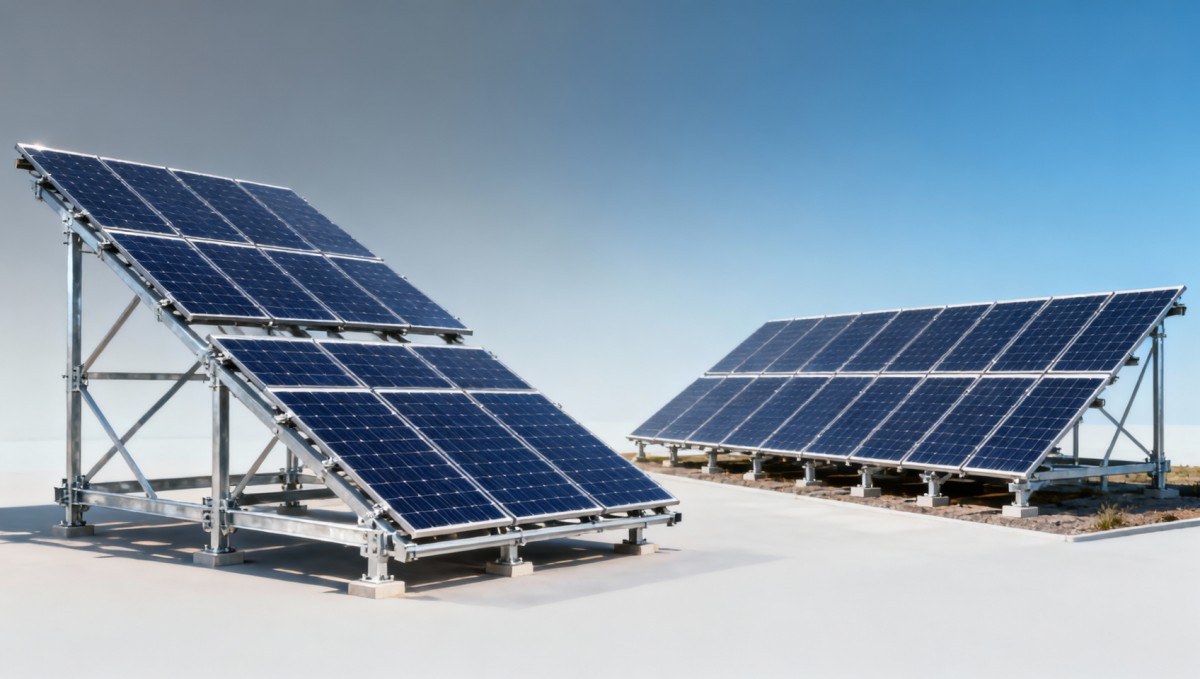
Solar mounting options generally fall into four main categories: pitched roof mounting, flat roof mounting, ground-mounted systems, and tracker-based structures. Each serves a different project logic. A warehouse roof with limited load reserve may need lightweight rail solutions, while a utility-scale project on open land often favors driven-pile or concrete-based ground structures.
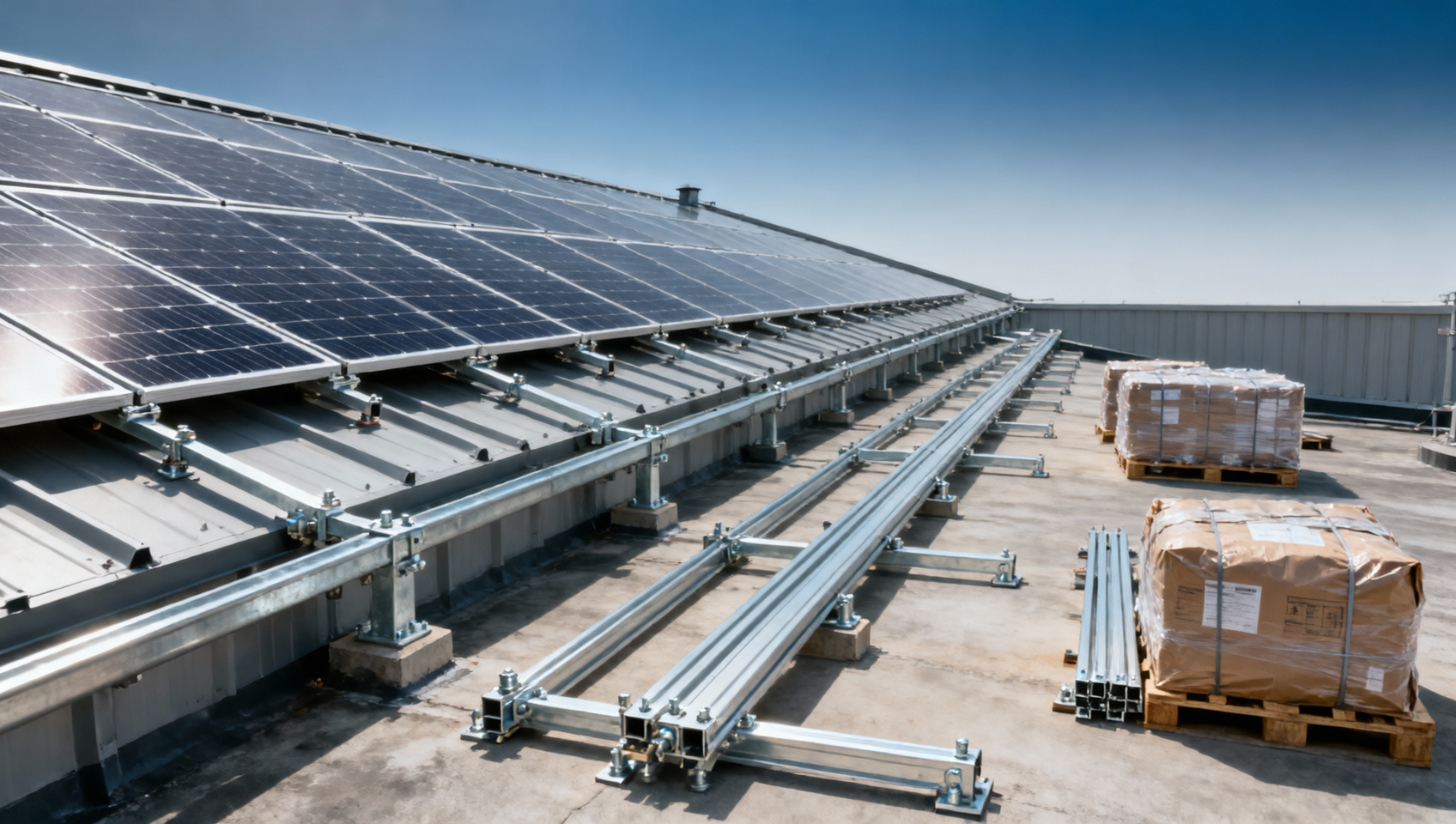
Pitched roof systems are common for industrial buildings, logistics centers, and commercial properties with metal sheet, tile, or shingle roofs. These structures are usually selected when roof slope already provides a usable tilt angle, often between 5° and 30°. They reduce land-use pressure but require careful waterproofing, attachment design, and static load verification.
Flat roof mounting is widely used on factories, office buildings, and retail facilities. It offers flexibility in module orientation and row spacing, but ballast weight, uplift exposure, and maintenance walkway planning become critical. In regions with strong winds above 35 m/s, aerodynamic design and edge-zone reinforcement are especially important.
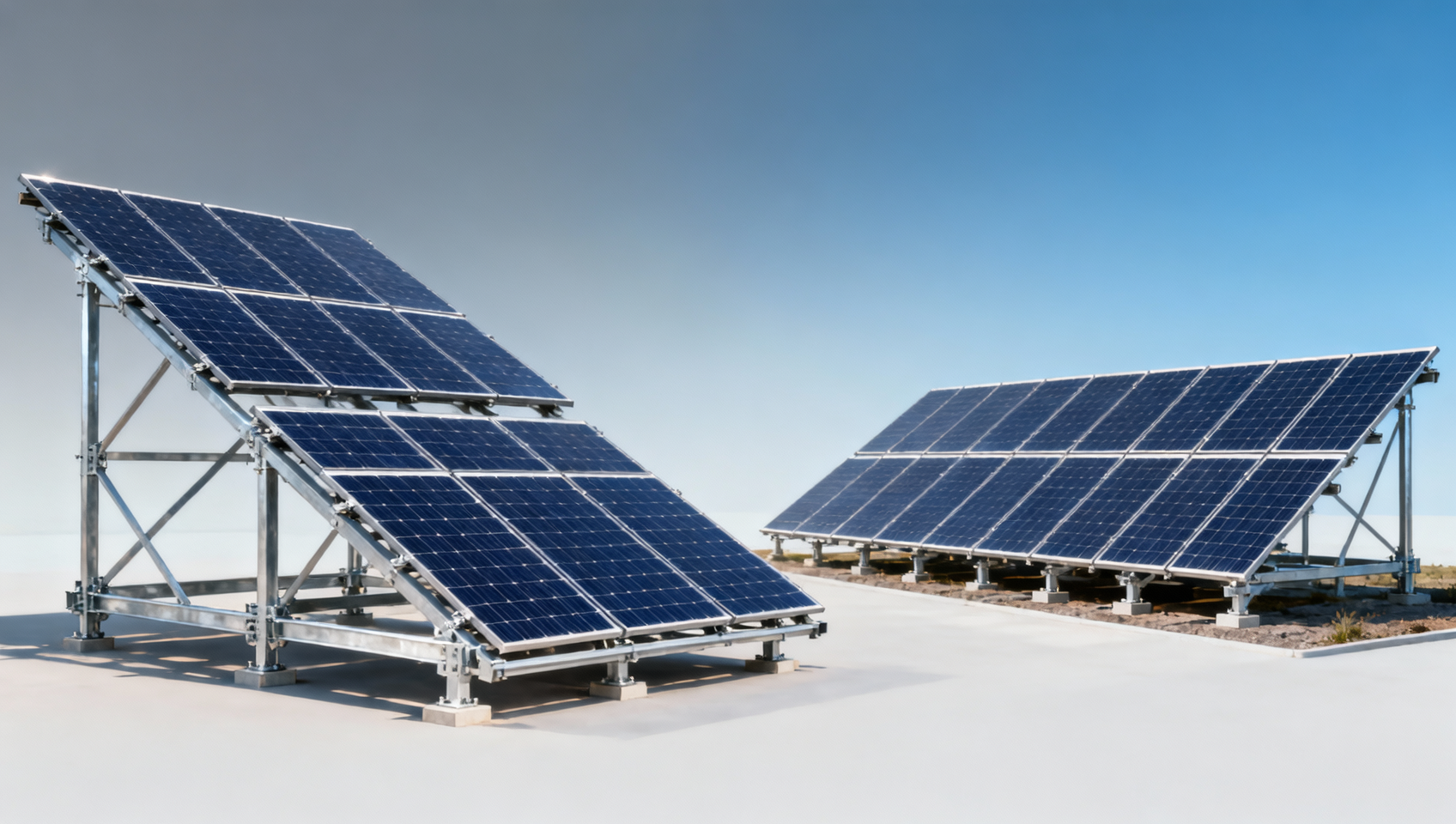
Ground-mounted systems are often the preferred choice when roof conditions are unsuitable or when the project target exceeds 500 kW. They allow optimized tilt, easier cleaning access, and simpler electrical routing. However, site grading, geotechnical testing, fencing, and drainage planning can add 2–6 weeks to pre-construction work if not addressed early.
Trackers, including single-axis designs, can improve energy capture in suitable regions, especially where direct irradiance is strong and land availability is good. Yet they also introduce motors, controls, higher O&M requirements, and tighter foundation tolerances. For many commercial and industrial buyers, a fixed-tilt structure remains the simpler and more bankable choice.
Quick comparison by application logic
The table below summarizes how common solar mounting options align with site conditions, installation complexity, and business use cases. It is useful for early-stage screening before detailed engineering starts.
The key takeaway is that there is no universal “best” solar mounting solution. The right answer depends on a project’s structural constraints, output target, maintenance model, and installation environment. That is why early-stage option mapping is often more valuable than comparing unit prices alone.
How to Match the Mounting System to Site Conditions
A practical selection process starts with site data, not catalog preference. For rooftops, the first filter is structural capacity. Many commercial roofs have reserve load allowances in a limited range, and even a difference of 10–15 kg/m² can change whether a ballast system is feasible. Engineering teams should verify dead load, live load, wind uplift, and attachment spacing before shortlisting any rack design.
For ground projects, soil and terrain are equally decisive. Soft ground may require longer piles, screw foundations, or concrete bases, all of which affect cost and installation schedule. A site with a slope above 10% may still be workable, but leveling, variable leg lengths, and drainage management should be included in early budget assumptions rather than added later.
Climate exposure also shapes the final choice. Coastal or chemical-industry zones may need anodized aluminum, hot-dip galvanized steel, or additional corrosion protection depending on exposure class. In snow-prone regions, both the array tilt and the section size of rails and supports must be checked against design loads. A structurally adequate mounting system in a mild climate may be underspecified in a heavy snow zone.
Module format matters more than many buyers expect. Today’s larger modules often exceed earlier standard dimensions, which means rail spans, clamp positions, and load distribution need review. Using a mounting structure designed around smaller modules can create misalignment, excessive deflection, or slower installation. This is especially relevant in wholesale purchasing where panel specification changes can happen late in sourcing negotiations.
Four site questions to answer before procurement
- What is the verified structural or geotechnical limit of the site, including roof reserve load or soil bearing conditions?
- What environmental loads apply, such as wind speed, snow load, salt mist, or high-temperature exposure?
- What module dimensions, row spacing, and target tilt angle are required to meet energy yield and access goals?
- What installation method can local labor teams execute reliably within the planned 2–8 week construction window?
These questions reduce procurement risk because they force alignment between engineering, sourcing, and project scheduling. A solar mounting system should not only fit the modules; it should fit the site, labor reality, logistics path, and operating environment for the next two decades.
Common mismatch risks
Three mistakes appear repeatedly in commercial projects: selecting ballast systems without checking roof reserve load, specifying steel structures without exposure review in corrosive environments, and underestimating row spacing for maintenance access. Each can trigger redesign, permit delays, or hidden lifecycle costs. In many projects, avoiding one major redesign can save more than a small discount on hardware pricing.
Technical and Commercial Criteria Buyers Should Compare
When evaluating solar mounting options for procurement, buyers should compare more than material price per watt. A realistic assessment includes structural performance, component count, assembly time, corrosion resistance, transport efficiency, compatibility with module frames, and serviceability. A system with 15% fewer components may reduce installation labor hours significantly, especially across projects above 1 MW.
Material choice is one of the first technical checkpoints. Aluminum often offers lower weight and strong corrosion resistance, while galvanized steel can provide cost advantages and higher rigidity in certain configurations. The right choice depends on climate, span requirements, and total installed cost, not on a single material preference.
Standardization is also important for distributors and EPC contractors. Mounting systems that use a limited number of rail profiles, clamps, and fasteners are easier to stock, easier to train on, and less prone to field confusion. On-site errors frequently increase when crews must manage too many connection variants across multiple roof zones or project phases.
Commercial review should include lead time and packaging efficiency. Depending on project region and fabrication capacity, typical lead times may range from 2–6 weeks for standard rooftop kits and 4–10 weeks for customized ground structures. In volatile procurement cycles, the supplier’s engineering response time can be as important as hardware availability.
Decision matrix for B2B evaluation
The following matrix helps cross-check technical and commercial fit before moving into final vendor selection or bulk purchase approval.
This comparison shows why procurement should involve engineering, project delivery, and finance together. A mounting solution that is slightly higher in material cost may still deliver better overall project economics if it shortens installation, reduces structural risk, and lowers lifecycle service demands.
Key procurement checks before issuing a PO
- Confirm bill of materials against final module dimensions and array layout.
- Review fastening method, rail sections, and foundation assumptions with the project engineer.
- Check delivery split plan if the project will be installed in phases over 30–90 days.
- Verify whether special zones require upgraded corrosion treatment or wind reinforcement.
Implementation, Maintenance, and Lifecycle Performance
A mounting system should be judged not only by how it is delivered, but by how it performs after year 1, year 5, and year 15. Installation quality, torque control, rail alignment, and drainage management all influence long-term asset performance. Even a technically sound design can underperform if site crews improvise spacing or fail to secure hardware to specification.
For rooftop systems, maintenance planning should include access paths, cable management, and roof interface inspection intervals. Many operators adopt a visual check every 6–12 months, with more frequent reviews after major storms. On ground-mounted systems, vegetation control, erosion monitoring, and fastener inspection are often part of routine O&M.
Durability also depends on small details. Standing water around roof supports, mixed-metal contact without proper isolation, or poorly planned cable trays can increase failure risk. Over a 25-year operating horizon, these design choices can influence both maintenance cost and system availability. A low-maintenance mounting design often delivers stronger financial predictability for asset owners.
From a project management perspective, implementation should be handled in stages rather than as a single procurement event. Site survey, engineering review, procurement alignment, staged delivery, installation inspection, and final sign-off should each have clear ownership. This reduces field changes and helps distributors or EPC teams maintain quality consistency across multiple sites.
Typical implementation workflow
- Stage 1: Site assessment and structural or geotechnical verification, usually 3–10 working days.
- Stage 2: Layout and mounting selection review, including tilt, spacing, and attachment method.
- Stage 3: Procurement confirmation, packaging plan, and logistics scheduling.
- Stage 4: Installation with torque checks, alignment control, and material reconciliation.
- Stage 5: Inspection, punch list closure, and handover for O&M teams.
When these steps are documented well, teams can scale more easily from one project to the next. This matters for distributors, regional EPC contractors, and enterprise buyers managing portfolios across several commercial or industrial facilities.
Lifecycle warning signs to monitor
Watch for repeated fastener loosening, rail deflection beyond expected tolerance, roof leakage near penetration points, and corrosion at cut edges or connectors. These issues rarely appear all at once, but identifying them within the first 12–24 months can prevent more costly repairs later.
FAQ: Practical Questions Buyers and Project Teams Often Ask
The most common questions about solar mounting options usually come from teams balancing technical reliability with budget pressure. The answers below focus on real procurement and project execution concerns rather than generic product claims.
How do I choose between rooftop and ground-mounted solar?
Start with site availability and structural feasibility. If the roof has sufficient reserve load, suitable access, and a useful orientation, rooftop systems can save land and shorten site works. If roof conditions are uncertain, fragmented, or maintenance access is limited, ground-mounted solar may provide better design freedom and easier long-term servicing, especially for projects above 500 kW.
Are ballast systems always better for flat roofs?
No. Ballast systems avoid roof penetrations in some cases, but they add weight and may require more careful wind-zone design. If the roof cannot handle the added load, a mechanically attached structure may be safer. The decision should be based on load calculations, roof condition, and local wind requirements rather than installation convenience alone.
What should distributors or bulk buyers prioritize?
Prioritize standardization, packaging efficiency, installation simplicity, and engineering support response time. For channel partners, the best solar mounting solution is often the one that can serve multiple roof types or ground conditions with a manageable SKU structure. This lowers inventory complexity and improves service responsiveness across repeat orders.
How long does delivery usually take?
For standard rooftop systems, lead times commonly fall in the 2–6 week range. Custom ground-mounted structures or projects with unusual module formats, corrosion requirements, or phased shipping plans may take 4–10 weeks. Buyers should also include time for drawing approval, freight coordination, and site readiness when planning project launch.
What is the biggest mistake in solar mounting procurement?
The biggest mistake is treating the mounting system as interchangeable hardware. In reality, it is a structural and operational component. If buyers choose solely on upfront price without checking site fit, climate exposure, and labor practicality, they increase the risk of redesign, installation delays, and avoidable O&M costs.
Choosing the right solar mounting option means aligning structure, climate, module format, installation method, and lifecycle maintenance into one practical decision. Pitched roof, flat roof, ground-mounted, and tracker systems each have clear strengths, but the best fit depends on project conditions and business goals rather than a one-size-fits-all rule.
For procurement leaders, engineers, and commercial decision-makers, a well-matched mounting solution can improve installation speed, reduce technical risk, and support stronger long-term returns. If you are evaluating solar panels wholesale opportunities or planning a commercial or industrial solar project, now is the right time to compare mounting options with site-specific criteria in mind.
To explore tailored solar structure strategies, supplier evaluation insights, and project-ready sourcing guidance, connect with TradeNexus Pro and get a more informed path to your next solar deployment.
Get weekly intelligence in your inbox.
No noise. No sponsored content. Pure intelligence.
 Apr 22, 2026China Leads Global Offshore Wind Installations for 5th YearChina Leads Global Offshore Wind Installations for 5th Year
 Apr 22, 2026China Launches National Mine Safety IoT Monitoring NetworkChina Launches National Mine Safety IoT Monitoring Network
 Apr 22, 2026Yinchuan Boiler Pure Water Solution Certified for Middle East ProjectsYinchuan Boiler Pure Water Solution Certified for Middle East Projects
 Apr 22, 2026China to Enforce Mandatory EV Battery Recycling Standards by 2026China to Enforce Mandatory EV Battery Recycling Standards by 2026
 Apr 22, 2026Vietnam Launches Anti-Circumvention Probe on Electronic ComponentsVietnam Launches Anti-Circumvention Probe on Electronic Components
 Apr 22, 20262026 Shanghai Fastener Show: Robotic Fasteners Drive Overseas Procurement2026 Shanghai Fastener Show: Robotic Fasteners Drive Overseas Procurement
 Apr 22, 2026US BIS Adds EV On-Board Charger Crypto Modules to EAR Appendix 7US BIS Adds EV On-Board Charger Crypto Modules to EAR Appendix 7
 Apr 22, 2026TÜV Rheinland Updates BESS Certification: Propagation Blocking Now MandatoryTÜV Rheinland Updates BESS Certification: Propagation Blocking Now Mandatory
 Apr 22, 2026Red Sea Crisis Escalates: Suez AI Speed Limits & Slot Review from Apr 19Red Sea Crisis Escalates: Suez AI Speed Limits & Slot Review from Apr 19
 Apr 22, 2026EU CBAM Carbon Tariff Takes Effect April 1, 2026EU CBAM Carbon Tariff Takes Effect April 1, 2026
 Apr 21, 2026When to Replace CT Scanner Parts Before Downtime StartsWhen to Replace CT Scanner Parts Before Downtime Starts
 Apr 21, 2026How to Cut Costs in Lathe Turning Without ReworkHow to Cut Costs in Lathe Turning Without Rework
 Apr 21, 2026Lathe Turning Tolerances: What Can You Expect?Lathe Turning Tolerances: What Can You Expect?
 Apr 21, 2026How to Avoid Risks in Solar Panels WholesaleHow to Avoid Risks in Solar Panels Wholesale
 Apr 21, 2026Solar Panels Wholesale: How to Compare SuppliersSolar Panels Wholesale: How to Compare Suppliers
 Apr 21, 2026Solar Mounting Cost Factors You Should KnowSolar Mounting Cost Factors You Should Know
 Apr 21, 2026Solar Mounting Options: Which One Fits Your Project?Solar Mounting Options: Which One Fits Your Project?
 Apr 21, 2026How to Pick USB C Docking Stations for Dual DisplaysHow to Pick USB C Docking Stations for Dual Displays
 Apr 21, 2026USB C Docking Stations: What Ports Do You Need?USB C Docking Stations: What Ports Do You Need?
 Apr 21, 2026What Affects Dental Milling Machine ROI in 2026?What Affects Dental Milling Machine ROI in 2026?
 Apr 21, 2026Dental Milling Machines: Wet or Dry for Your Lab?Dental Milling Machines: Wet or Dry for Your Lab?
 Apr 21, 2026How to Avoid Common Medical Refrigerator MistakesHow to Avoid Common Medical Refrigerator Mistakes
 Apr 21, 2026Medical Refrigerators: What Specs Matter Most?Medical Refrigerators: What Specs Matter Most?
 Apr 21, 2026Portable or Cart Vet Ultrasound: Which to Buy?Portable or Cart Vet Ultrasound: Which to Buy?
 Apr 21, 2026Vet Ultrasound Buying Guide for Small ClinicsVet Ultrasound Buying Guide for Small Clinics
 Apr 21, 2026Yard Management Systems: Key Features to CompareYard Management Systems: Key Features to Compare
 Apr 21, 2026How Yard Management Systems Improve Dock FlowHow Yard Management Systems Improve Dock Flow