
How IoT Energy Monitors Are Changing Industrial Power Management
As industries accelerate toward net zero solutions, IoT energy monitors are redefining how enterprises manage and optimize power consumption. From smart plugs wholesale to advanced energy auditing tools and BMS boards, these connected systems deliver real-time insights that enhance efficiency, sustainability, and cost control. TradeNexus Pro (TNP) explores how next-gen technologies—from wind generator kits and hydro turbine generators to MPPT and solar charge controllers—are reshaping industrial energy strategies, helping decision-makers unlock data-driven performance gains across global supply networks.
Understanding the Role of IoT Energy Monitors in Modern Industry
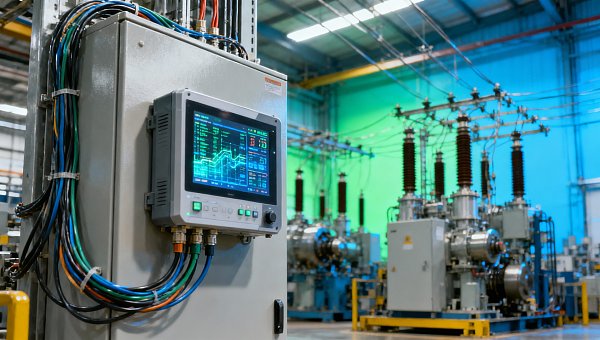
IoT energy monitors are not just simple meters; they are networked sensors and computational nodes that collect, process, and transmit real-time power consumption data across equipment, departments, or entire facilities. In modern manufacturing plants operating 24/7 cycles, energy monitoring systems aggregate readings at intervals as high as every 5–10 seconds, offering visibility into load variations and downtime losses.
These systems integrate with SCADA or Building Management Systems (BMS) to enable automated responses. For instance, when load thresholds exceed 120% of the predefined baseline, the system can trigger a load-shedding protocol within 3–5 minutes to maintain operational safety. The collected data is also transmitted to cloud-based dashboards accessible to plant managers and energy auditors.
Typical industrial IoT monitors comply with standards such as IEC 61010 for safety and Modbus RTU/TCP for communication, ensuring compatibility with existing infrastructure. Their installation cycle, including calibration and integration, usually spans 2–4 weeks depending on the size of the network and the number of monitored points.
The business impact is significant. Plants report reductions of 8–15% in monthly electricity consumption when applying predictive analytics from IoT sensors. For cost inspectors and finance approvers, such tangible savings justify investment allocation within one fiscal quarter.
Market Dynamics and Industrial Adoption Trends
Across global manufacturing and logistics enterprises, IoT energy monitoring adoption is growing at an estimated rate of 18–22% annually. Key drivers include stricter sustainability mandates, rising energy tariffs, and corporate ESG accountability. The shift toward continuous digital auditing directly supports compliance with ISO 50001 energy management frameworks.
In Asia-Pacific, where industrial operations often run high-density workflows, facilities use segmented monitoring—dividing energy use by production line, HVAC, and auxiliary loads. In Europe, emphasis is placed on integration with renewable energy assets like rooftop solar inverters and 5–20 kW wind generators. North America, in contrast, prioritizes demand response integration linked to utility incentives, allowing enterprises to offset costs through smart grid participation.
Industrial-grade IoT platforms now integrate machine learning models capable of anomaly detection at accuracy levels of ±2–3%, flagging inefficient motors or inconsistent phase loads before failures occur. Decision-makers across three operational layers—technical teams, energy managers, and executives—leverage these insights for quarterly performance alignment.
TradeNexus Pro continuously analyzes such data-driven transformations and connects verified vendors supplying certified metering modules, gateways, and compatible software ecosystems. This ecosystem approach supports users, from procurement officers managing multi-million-dollar factory upgrades to small-batch OEM suppliers seeking data visibility across 5–10 machine nodes.
Key Application Scenarios of IoT Energy Monitors
To understand where IoT monitors create the most value, it helps to examine typical deployment contexts spanning advanced manufacturing, smart electronics assembly, and renewable energy integration. Each scenario demands specific technical configurations and response thresholds.
The following table summarizes three commonly observed industrial applications and their primary optimization objectives.
By linking energy monitors with programmable logic controllers, industrial users can maintain energy stability even under load fluctuations exceeding ±5%. This prevents costly equipment outages and aligns with predictive maintenance frameworks adopted in most Industry 4.0 facilities.
Implementation teams usually progress through four phases: data mapping, sensor installation, communication setup, and analytics optimization. For mid-scale factories with about 30–50 monitored devices, this cycle typically completes within 6–8 weeks, ensuring rapid ROI realization.
Procurement and Selection Guide for Decision-Makers
The procurement of IoT energy monitors involves both hardware capability assessment and digital integration considerations. Buyers and project managers must evaluate measurement accuracy, communication protocol compatibility, and cloud scalability. Selecting a partner that offers full-chain support—from sensors to analytics dashboards—significantly reduces integration friction.
Three core procurement dimensions typically guide selection:
- Measurement and Data Integrity (accuracy, sampling rate, fault tolerance)
- System Compatibility (Modbus, BACnet, MQTT, or proprietary integration APIs)
- Scalability and Maintenance (remote firmware updates, multi-site management)
The following table outlines comparative specifications frequently evaluated during supplier screening, particularly relevant to procurement departments operating under cost-performance constraints.
While industrial-grade models demand 25–35% higher upfront costs, their extended durability (typically 50,000–60,000 operation hours) reduces total cost of ownership in asset-heavy environments. For financial approvers, amortization cycles of 18–24 months are within standard ROI expectations.
TradeNexus Pro provides access to verified technology partners offering detailed specification sheets, sample testing procedures (usually over a 10-day evaluation cycle), and integration consultation for enterprises scaling energy management analytics across regions.
Frequently Asked Questions on Industrial IoT Energy Monitoring
How long does deployment typically take?
A standard deployment cycle ranges between 6–10 weeks depending on facility size. This includes site assessment (1 week), equipment installation (2–3 weeks), network calibration (2 weeks), and user training (1–2 weeks). Multi-site rollouts can be staged in parallel to minimize production downtime.
What certifications should buyers verify before procurement?
Buyers should confirm compliance with CE, RoHS, and ISO 9001 manufacturing standards, alongside communication certifications like FCC Part 15 for wireless modules. For high-voltage environments, ensuring adherence to IEC 60204-1 for machinery safety provides additional assurance to quality control and safety managers.
Can IoT monitors integrate with renewable sources?
Yes. Modern systems support hybrid integration with PV arrays, hydro turbines, and 3–10 kW wind installations. The connection module often includes MPPT algorithms ensuring energy balance at conversion efficiencies above 92%. This makes hybrid monitoring particularly beneficial for enterprises moving toward carbon neutrality.
How do maintenance teams ensure long-term reliability?
Best practice includes quarterly recalibration and firmware updates. Most devices support remote diagnostics and log archiving for a minimum of 12 months. It is also critical to secure network traffic through AES-256 encryption or VPN channels to meet cybersecurity compliance under IEC 62443.
Why Consult TradeNexus Pro
As a global B2B intelligence platform focused on Advanced Manufacturing, Green Energy, and Smart Electronics, TradeNexus Pro connects decision-makers with vetted IoT solution providers specializing in precision energy monitoring. Our intelligence framework consolidates multi-sector expertise, enabling procurement and engineering teams to align technology selection with measurable ROI.
Through exclusive case analyses and integration blueprints, we help clients validate supplier claims, compare configuration ranges (for instance, 3-phase 380V systems or 110–240V modular setups), and assess total project costs before commitment. This empowers business evaluators to rationalize investments with quantitative confidence.
Enterprises seeking assistance can consult TradeNexus Pro for individualized proposal matching, certification verification, and data integration support for complex, multi-site implementations. Whether confirming measurement parameters, designing a 5-step rollout plan, or requesting vendor quotations, clients can leverage TNP’s curated network to enhance operational and procurement outcomes.
Get weekly intelligence in your inbox.
No noise. No sponsored content. Pure intelligence.
 Oct 08, 2026How Digital Health Improves Diagnostic Accuracy and Workflow in Clinical LabsHow Digital Health Improves Diagnostic Accuracy and Workflow in Clinical Labs
 Oct 07, 2026Selecting Voice Picking Systems for German Warehouses: Integration, Languages and ROISelecting Voice Picking Systems for German Warehouses: Integration, Languages and ROI
 Oct 06, 2026How to Choose Last Mile Dispatch Software for On-Time Delivery at ScaleHow to Choose Last Mile Dispatch Software for On-Time Delivery at Scale
 Oct 05, 2026Vietnam’s Consumer Electronics Market: Demand Shifts and Sourcing OpportunitiesVietnam’s Consumer Electronics Market: Demand Shifts and Sourcing Opportunities
 Oct 04, 2026Digital Health Investment Priorities for Providers: Improving Access, Outcomes, and EfficiencyDigital Health Investment Priorities for Providers: Improving Access, Outcomes, and Efficiency
 Oct 03, 2026How to Specify an FR4 Custom PCB Board for High-Voltage and High-Heat DesignsHow to Specify an FR4 Custom PCB Board for High-Voltage and High-Heat Designs
 Oct 02, 2026ERP Software Market Intelligence: Adoption, Pricing, and Vendor Signals to WatchERP Software Market Intelligence: Adoption, Pricing, and Vendor Signals to Watch
 Oct 01, 2026How to Select Calibrated Temperature Data Loggers for GMP Cold Storage MonitoringHow to Select Calibrated Temperature Data Loggers for GMP Cold Storage Monitoring
 Sep 30, 2026Custom Molded Rubber Pricing: What Drives Unit Cost and Tooling Fees?Custom Molded Rubber Pricing: What Drives Unit Cost and Tooling Fees?
 Sep 29, 2026How to Evaluate Energy Management Software Vendors for Multi-Site OperationsHow to Evaluate Energy Management Software Vendors for Multi-Site Operations
 Sep 28, 2026How to Select a DIN Rail Smart Meter for Multi-Circuit Energy MonitoringHow to Select a DIN Rail Smart Meter for Multi-Circuit Energy Monitoring
 Sep 27, 2026TWS Earbuds in Vietnam: Demand Drivers, Price Tiers, and Retail Channel OpportunitiesTWS Earbuds in Vietnam: Demand Drivers, Price Tiers, and Retail Channel Opportunities
 Sep 26, 2026How UAE Clinics Can Qualify a Smart Glucometer Supplier for Accuracy and ComplianceHow UAE Clinics Can Qualify a Smart Glucometer Supplier for Accuracy and Compliance
 Sep 25, 2026Buying Aesthetic Lasers in the USA: FDA Status, Wavelengths, and Service SupportBuying Aesthetic Lasers in the USA: FDA Status, Wavelengths, and Service Support
 Sep 24, 2026Laser Cutting Brass Sheet: How to Prevent Burrs and Heat Marks on Thin PartsLaser Cutting Brass Sheet: How to Prevent Burrs and Heat Marks on Thin Parts
 Sep 23, 2026How to Choose Lightweight ANC Headphones for Comfortable All-Day TravelHow to Choose Lightweight ANC Headphones for Comfortable All-Day Travel
 Sep 22, 2026IPX5 TWS Bluetooth Earbuds: What Protection Do They Offer for Workouts?IPX5 TWS Bluetooth Earbuds: What Protection Do They Offer for Workouts?
 Sep 21, 2026What to Look for in a Grid Integration Company for Utility-Scale Solar ProjectsWhat to Look for in a Grid Integration Company for Utility-Scale Solar Projects
 Sep 20, 2026Microgrid Controller Pricing: What Drives Cost in Commercial Energy Projects?Microgrid Controller Pricing: What Drives Cost in Commercial Energy Projects?
 Sep 19, 2026How to Choose a GaN Charger for Laptops Without Compromising Power or PortabilityHow to Choose a GaN Charger for Laptops Without Compromising Power or Portability
 Sep 18, 2026Floating Solar Farm Costs: CAPEX, OPEX, and the Site Factors That Shape ROIFloating Solar Farm Costs: CAPEX, OPEX, and the Site Factors That Shape ROI
 Sep 17, 2026Drone Delivery Solutions for Last-Mile Routes: Site, Payload, and Range PlanningDrone Delivery Solutions for Last-Mile Routes: Site, Payload, and Range Planning
 Sep 16, 2026When Low-Volume Electronics Manufacturing Makes More Sense Than Mass ProductionWhen Low-Volume Electronics Manufacturing Makes More Sense Than Mass Production
 Sep 15, 2026Wholesale WiFi Smart Switches: What Buyers Should Verify Before OrderingWholesale WiFi Smart Switches: What Buyers Should Verify Before Ordering
 Sep 14, 2026How to Select IoT Sensors for Reliable Monitoring in Harsh Industrial EnvironmentsHow to Select IoT Sensors for Reliable Monitoring in Harsh Industrial Environments
 Sep 13, 2026How Procurement Teams Can Improve Supplier Reliability With Supply Chain VisibilityHow Procurement Teams Can Improve Supplier Reliability With Supply Chain Visibility
 Sep 12, 2026Smart Manufacturing Trends 2026: What Leaders Should Prioritize for ROISmart Manufacturing Trends 2026: What Leaders Should Prioritize for ROI



























