Why do solar inverters lose efficiency in real use?
Laboratory efficiency ratings rarely tell the full story of how solar inverters perform once deployed in the field. Real operating environments introduce heat, partial loading, voltage fluctuations, dust, aging components, grid instability, and design trade-offs that can quietly reduce conversion performance over time.
For technical evaluators, understanding these loss mechanisms is essential when comparing inverter models, validating supplier claims, and estimating long-term system yield.
Why Field Conditions Are Redefining Solar Inverters Performance
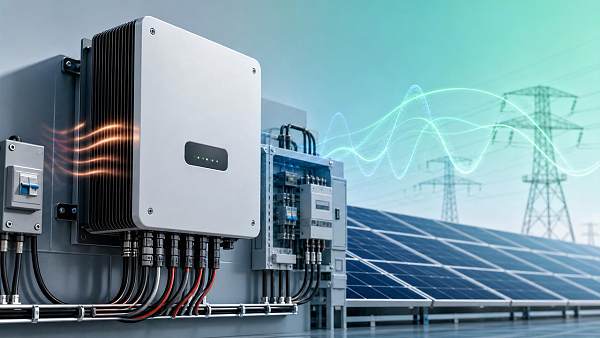
The global solar market is moving from simple capacity expansion toward lifetime performance verification. This shift makes real efficiency more important than nameplate conversion data.
Solar inverters now operate in hotter rooftops, larger hybrid systems, unstable grids, and increasingly complex commercial energy networks.
A device tested at ideal temperature, steady input voltage, and controlled load may behave differently after years of variable field operation.
This performance gap matters because solar inverters sit between photovoltaic generation and usable electricity. Small losses can compound across large portfolios.
In mature projects, efficiency loss is no longer a minor engineering detail. It directly affects yield forecasts, warranty risk, and return expectations.
The New Trend Signal: Efficiency Claims Face Real-World Scrutiny
Published peak efficiency is usually measured near optimal operating points. However, solar inverters rarely spend most of their life at those points.
Morning ramp-up, cloudy transitions, midday clipping, evening decline, and seasonal changes all push systems into less efficient conversion zones.
This is why weighted efficiency standards are gaining attention. They better reflect typical loading patterns than isolated maximum efficiency ratings.
Yet even weighted figures cannot fully capture site-specific stress. Solar inverters installed near coastal humidity face different risks than desert installations.
As solar assets become financial infrastructure, performance validation is shifting from catalog review to operational evidence, telemetry, and supplier transparency.
Core Reasons Solar Inverters Lose Efficiency in Real Use
Efficiency loss is usually not caused by one dramatic failure. It is more often the result of multiple small penalties accumulating together.
Heat is one of the most persistent challenges. Solar inverters convert power while dissipating unavoidable electrical losses as thermal energy.
When ambient temperature rises, cooling margins shrink. Internal components then operate closer to limits, reducing conversion stability.
Thermal derating protects the device, but it also reduces output. This is especially visible in rooftop and containerized installations.
Partial loading is another common reason. Solar inverters often show peak efficiency only within a preferred load range.
At very low power, control circuits, fans, sensors, and standby electronics consume a larger share of available energy.
At very high power, switching losses, magnetic losses, and heat rise can reduce net conversion performance.
Grid Volatility Is Becoming a Bigger Efficiency Variable
Grid-connected solar inverters do more than convert DC to AC. They must synchronize, regulate power quality, and meet grid-code requirements.
When grids experience voltage swings or frequency events, solar inverters adjust operating behavior to remain compliant and stable.
Reactive power support, voltage ride-through, and anti-islanding functions can create operating conditions that differ from ideal laboratory tests.
In weak grids, repeated control adjustments may increase losses. The inverter is working harder to maintain acceptable output quality.
This trend is important as renewable penetration rises. More solar inverters must operate in networks with bidirectional power flow and congestion.
Efficiency assessment should therefore include grid conditions, not only the inverter’s internal power electronics design.
Design Trade-Offs Behind Real Efficiency Loss
No inverter design maximizes every attribute simultaneously. Higher efficiency, lower cost, smaller size, ruggedness, and serviceability often compete.
For example, compact solar inverters may be attractive for space-limited sites. However, dense packaging can make heat management harder.
Fanless designs reduce moving-part failures and maintenance needs. Yet they depend heavily on enclosure design and ambient airflow.
High switching frequency can reduce magnetic component size. It may also increase switching losses if not carefully engineered.
Advanced silicon carbide components can improve performance. Still, system-level efficiency depends on controls, layout, cooling, and protection architecture.
- Peak efficiency should be compared with European, CEC, or relevant weighted efficiency data.
- Thermal derating curves should be reviewed under expected site temperatures.
- MPPT voltage range should match module strings and seasonal voltage behavior.
- Ingress protection and cooling design should suit dust, humidity, and salt exposure.
- Remote monitoring should reveal conversion efficiency trends, not only fault alarms.
How Aging Components Quietly Reduce Conversion Performance
Solar inverters are exposed to years of electrical cycling, thermal expansion, vibration, moisture, and grid disturbances.
Electrolytic capacitors are especially sensitive to temperature. Higher operating heat can shorten life and increase electrical losses.
Thermal interface materials may dry or degrade. This makes heat transfer less effective and increases semiconductor junction temperature.
Fans can accumulate dust or lose speed. Even minor airflow reduction can force solar inverters into warmer operating states.
Relays, connectors, and terminals may develop higher resistance over time. These small resistive losses can become meaningful at high current.
Aging does not always appear as sudden failure. Often, it appears as lower yield before any alarm is triggered.
Business Impact Across Energy Assets and Supply Chains
Real efficiency loss changes how solar projects are modeled, financed, operated, and compared. It also affects supplier qualification standards.
For distributed energy systems, lower inverter efficiency reduces usable onsite generation. This can weaken savings assumptions and storage charging forecasts.
For utility-scale plants, small conversion gaps across many solar inverters can translate into significant annual revenue variance.
For B2B equipment ecosystems, the trend favors vendors that provide transparent testing, clear derating data, and strong field analytics.
- Engineering teams need site-specific efficiency assumptions, not generic datasheet optimism.
- Procurement evaluations should include thermal, grid, and aging performance evidence.
- Operations teams need monitoring dashboards that detect gradual conversion decline.
- Financial models should include realistic inverter loss and replacement scenarios.
Performance Indicators Worth Closer Attention
The most useful comparison is not the single highest efficiency number. It is the expected performance across real operating conditions.
Solar inverters should also be evaluated through monitoring compatibility. Data visibility is becoming a practical efficiency protection tool.
Without granular data, gradual losses may be hidden inside weather variability, soiling losses, or module degradation assumptions.
How to Respond Before Procurement or Deployment
A stronger evaluation process begins by connecting product claims with environmental reality. Solar inverters should be assessed as operating systems.
- Define site temperature, humidity, dust, altitude, and grid volatility before model selection.
- Compare efficiency curves across low, medium, and high load conditions.
- Request derating data, not just maximum AC output ratings.
- Validate MPPT range against module string design and temperature extremes.
- Check monitoring depth, firmware history, cybersecurity practices, and service response.
- Model lifetime yield using realistic inverter loss assumptions.
Installation quality also matters. Poor cable sizing, loose terminals, inadequate spacing, and blocked ventilation can erase design advantages.
Routine maintenance should focus on airflow, enclosure sealing, thermal alarms, firmware updates, and abnormal efficiency drift.
When solar inverters are part of storage or microgrid systems, control strategy deserves special attention. Bidirectional operation adds new conversion pathways.
The Next Efficiency Benchmark Will Be Operational Trust
The market is moving beyond simple datasheet comparison. The next benchmark is verified performance under documented operating conditions.
This favors solar inverters supported by transparent testing, robust thermal design, adaptive controls, and long-term fleet data.
It also favors decision frameworks that combine engineering review, supplier evidence, and operational monitoring into one continuous feedback loop.
TradeNexus Pro tracks green energy technology shifts, supplier performance signals, and cross-sector supply chain implications with data-driven analysis.
Before selecting solar inverters, build a shortlist around real efficiency evidence, not only headline ratings. Then verify performance assumptions against site conditions.
The practical next step is clear: compare curves, question derating behavior, demand field data, and monitor performance from commissioning onward.
Get weekly intelligence in your inbox.
No noise. No sponsored content. Pure intelligence.
 Oct 12, 2026How Predictive Maintenance AI Detects Machine Failures Before Unplanned DowntimeHow Predictive Maintenance AI Detects Machine Failures Before Unplanned Downtime
 Oct 10, 2026How to Scope Packaging Automation for High-Mix Lines Without Creating BottlenecksHow to Scope Packaging Automation for High-Mix Lines Without Creating Bottlenecks
 Oct 08, 2026How Digital Health Improves Diagnostic Accuracy and Workflow in Clinical LabsHow Digital Health Improves Diagnostic Accuracy and Workflow in Clinical Labs
 Oct 07, 2026Selecting Voice Picking Systems for German Warehouses: Integration, Languages and ROISelecting Voice Picking Systems for German Warehouses: Integration, Languages and ROI
 Oct 06, 2026How to Choose Last Mile Dispatch Software for On-Time Delivery at ScaleHow to Choose Last Mile Dispatch Software for On-Time Delivery at Scale
 Oct 05, 2026Vietnam’s Consumer Electronics Market: Demand Shifts and Sourcing OpportunitiesVietnam’s Consumer Electronics Market: Demand Shifts and Sourcing Opportunities
 Oct 04, 2026Digital Health Investment Priorities for Providers: Improving Access, Outcomes, and EfficiencyDigital Health Investment Priorities for Providers: Improving Access, Outcomes, and Efficiency
 Oct 03, 2026How to Specify an FR4 Custom PCB Board for High-Voltage and High-Heat DesignsHow to Specify an FR4 Custom PCB Board for High-Voltage and High-Heat Designs
 Oct 02, 2026ERP Software Market Intelligence: Adoption, Pricing, and Vendor Signals to WatchERP Software Market Intelligence: Adoption, Pricing, and Vendor Signals to Watch
 Oct 01, 2026How to Select Calibrated Temperature Data Loggers for GMP Cold Storage MonitoringHow to Select Calibrated Temperature Data Loggers for GMP Cold Storage Monitoring
 Sep 30, 2026Custom Molded Rubber Pricing: What Drives Unit Cost and Tooling Fees?Custom Molded Rubber Pricing: What Drives Unit Cost and Tooling Fees?
 Sep 29, 2026How to Evaluate Energy Management Software Vendors for Multi-Site OperationsHow to Evaluate Energy Management Software Vendors for Multi-Site Operations
 Sep 28, 2026How to Select a DIN Rail Smart Meter for Multi-Circuit Energy MonitoringHow to Select a DIN Rail Smart Meter for Multi-Circuit Energy Monitoring
 Sep 27, 2026TWS Earbuds in Vietnam: Demand Drivers, Price Tiers, and Retail Channel OpportunitiesTWS Earbuds in Vietnam: Demand Drivers, Price Tiers, and Retail Channel Opportunities
 Sep 26, 2026How UAE Clinics Can Qualify a Smart Glucometer Supplier for Accuracy and ComplianceHow UAE Clinics Can Qualify a Smart Glucometer Supplier for Accuracy and Compliance
 Sep 25, 2026Buying Aesthetic Lasers in the USA: FDA Status, Wavelengths, and Service SupportBuying Aesthetic Lasers in the USA: FDA Status, Wavelengths, and Service Support
 Sep 24, 2026Laser Cutting Brass Sheet: How to Prevent Burrs and Heat Marks on Thin PartsLaser Cutting Brass Sheet: How to Prevent Burrs and Heat Marks on Thin Parts
 Sep 23, 2026How to Choose Lightweight ANC Headphones for Comfortable All-Day TravelHow to Choose Lightweight ANC Headphones for Comfortable All-Day Travel
 Sep 22, 2026IPX5 TWS Bluetooth Earbuds: What Protection Do They Offer for Workouts?IPX5 TWS Bluetooth Earbuds: What Protection Do They Offer for Workouts?
 Sep 21, 2026What to Look for in a Grid Integration Company for Utility-Scale Solar ProjectsWhat to Look for in a Grid Integration Company for Utility-Scale Solar Projects
 Sep 20, 2026Microgrid Controller Pricing: What Drives Cost in Commercial Energy Projects?Microgrid Controller Pricing: What Drives Cost in Commercial Energy Projects?
 Sep 19, 2026How to Choose a GaN Charger for Laptops Without Compromising Power or PortabilityHow to Choose a GaN Charger for Laptops Without Compromising Power or Portability
 Sep 18, 2026Floating Solar Farm Costs: CAPEX, OPEX, and the Site Factors That Shape ROIFloating Solar Farm Costs: CAPEX, OPEX, and the Site Factors That Shape ROI
 Sep 17, 2026Drone Delivery Solutions for Last-Mile Routes: Site, Payload, and Range PlanningDrone Delivery Solutions for Last-Mile Routes: Site, Payload, and Range Planning
 Sep 16, 2026When Low-Volume Electronics Manufacturing Makes More Sense Than Mass ProductionWhen Low-Volume Electronics Manufacturing Makes More Sense Than Mass Production
 Sep 15, 2026Wholesale WiFi Smart Switches: What Buyers Should Verify Before OrderingWholesale WiFi Smart Switches: What Buyers Should Verify Before Ordering
 Sep 14, 2026How to Select IoT Sensors for Reliable Monitoring in Harsh Industrial EnvironmentsHow to Select IoT Sensors for Reliable Monitoring in Harsh Industrial Environments