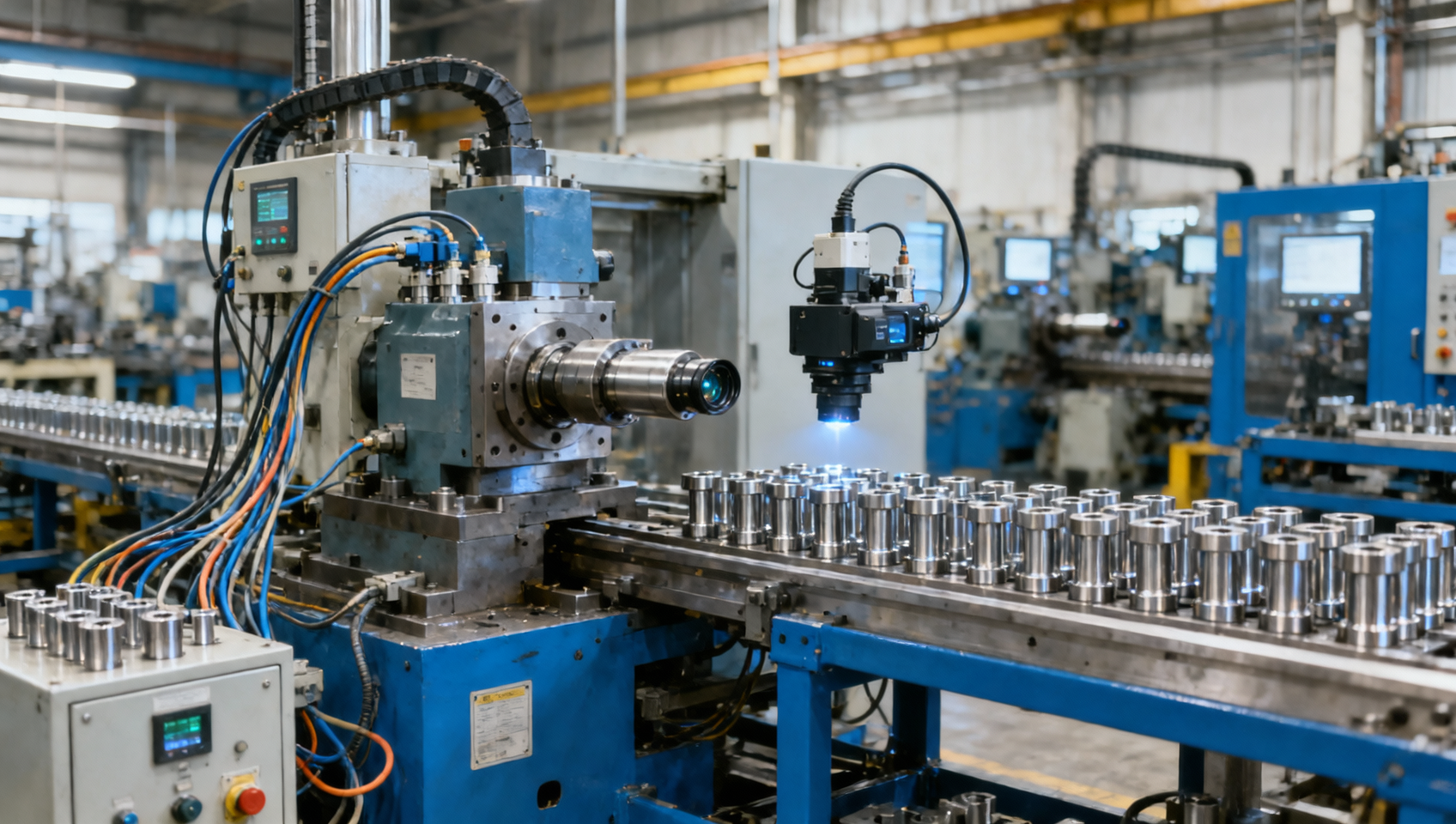
Plastic Injection Molding for Medical Devices: Materials, Tolerances, and Validation
Plastic injection molding for medical devices sits at the point where engineering detail meets regulatory discipline. A part can look simple, yet material behavior, mold design, tolerance control, and validation history all shape whether it performs safely in the field.
For technical evaluation, the real question is not only whether a supplier can mold a component. It is whether the full process can repeatedly deliver clean, stable, traceable parts under medical expectations.
That is why plastic injection molding for medical devices is often reviewed through a wider lens. Material compliance, dimensional repeatability, tooling capability, validation records, and documentation quality all need to connect.
Within broader industrial analysis, this topic also matters beyond healthcare alone. It links advanced manufacturing, supply chain risk, quality systems, and cross-border sourcing decisions, which is exactly the type of intersection TradeNexus Pro follows across global B2B markets.
Start with the material, not the mold
In plastic injection molding for medical devices, material choice usually determines the limits of everything that follows. If the resin does not match sterilization, biocompatibility, and end-use stress, tight processing alone will not save the part.
The first review should focus on how the resin behaves over the product life cycle. That includes molding temperature, moisture sensitivity, chemical exposure, shelf life, and post-sterilization stability.
[Image 01: Medical plastic injection molding material selection and validation workflow]
A datasheet alone is not enough. It helps, but technical evaluation usually needs confirmation of lot consistency, regulatory declarations, and evidence that the selected grade has been used in comparable medical conditions.
- Check whether the resin grade supports sterilization exposure, chemical contact, and mechanical stress without cracking, yellowing, or property drift during the intended service life.
- Confirm biocompatibility data matches the actual grade, colorant, and additive package, because similar polymer families may still perform very differently in regulated medical applications.
- Review moisture sensitivity and drying requirements early, since unstable drying control often creates cosmetic defects, dimensional variation, and inconsistent mechanical behavior.
- Ask for material traceability down to batch level, especially when plastic injection molding for medical devices supports validation protocols or long-term field performance review.
A common blind spot appears when a resin is technically compliant but commercially unstable. If supply continuity is weak, even a validated design can face costly requalification later.
That supply-side view is increasingly important in international sourcing. Platforms such as TradeNexus Pro help connect technical material review with broader market visibility, supplier credibility, and long-term capacity signals.
Treat tolerances as a system, not a drawing note
Tight tolerances are often discussed as if they depend only on the mold. In reality, plastic injection molding for medical devices depends on a full control system that includes tooling, resin variation, machine stability, cooling, and inspection discipline.
A printed tolerance band can look reasonable, but it may still be unrealistic for the selected geometry and polymer shrink behavior. That mismatch usually shows up during pilot runs, not during quoting.
- Map critical dimensions to function first, then separate them from non-critical cosmetic dimensions so process control resources stay focused on real performance risk.
- Review part geometry for thick-to-thin transitions, unsupported walls, and long flow paths, because these often drive warpage more than machine capability does.
- Match tolerance expectations to polymer shrink characteristics, since semi-crystalline and amorphous materials behave differently even under otherwise similar molding conditions.
- Confirm how dimensions are measured, including fixture method, timing after molding, and environmental conditions, because inconsistent metrology can distort capability conclusions.
A useful review scenario is a diagnostic housing with snap-fit features. The outer profile may pass inspection, yet the part still fails assembly because internal ribs move after cooling.
In that case, the issue is not simply “out of tolerance.” It is poor alignment between functional dimensions, gate placement, shrink control, and measurement timing. Plastic injection molding for medical devices rewards that deeper interpretation.
Where tolerance risk usually hides
Some risks do not appear on first article reports. Thin walls may pass initial checks but drift under cavity wear. Multi-cavity tools can also hide imbalance that only becomes visible when full production volume begins.
It helps to ask for cavity-level data, not just pooled averages. For plastic injection molding for medical devices, average capability can hide one unstable cavity that later creates complaint risk.
Validation should prove repeatability, not just one successful run
Validation is where technical confidence becomes operational confidence. In plastic injection molding for medical devices, this usually means showing that the process can run within defined limits and still produce acceptable parts consistently.
IQ, OQ, and PQ are familiar terms, but the value lies in how they are executed. Weak protocols often focus on documentation format while missing practical process risk.
- Verify that installation qualification covers machine, mold, utility, and measurement readiness, not just equipment listing and signature completion.
- Use operational qualification to challenge upper and lower process windows, so the study reflects realistic variation rather than a narrow ideal setting.
- Expect performance qualification to include normal operators, approved materials, and routine production controls, because artificial conditions can overstate robustness.
- Link validation outputs to change control rules, ensuring future resin, tooling, or process changes trigger the right level of reassessment.
A strong validation package also supports supplier comparison. That matters when entering a new region or adding backup capacity, where visible process discipline can reduce uncertainty before commercial commitment.
Look beyond the molded part itself
Plastic injection molding for medical devices does not end at ejection. Cleanliness, packaging, handling, labeling, and storage can all affect whether the part remains acceptable when it reaches assembly or final use.
This is especially true for components used in fluid paths, diagnostic cartridges, or patient-contact assemblies. A dimensionally correct part can still fail the application if contamination or mix-up control is weak.
- Review post-molding handling steps for particle control, packaging method, and lot segregation, especially when components feed sterile or sensitive downstream assemblies.
- Check whether regrind policy, line clearance, and identification controls are formally documented, since undocumented shop-floor habits create avoidable compliance risk.
- Confirm that mold maintenance records support dimensional consistency, because wear, vent fouling, and gate condition directly affect validated process stability.
- Assess document control quality, including version history and deviation closure, because technical strength loses value if traceability breaks during audit review.
One practical scenario involves outsourced molding and separate final assembly. If labeling conventions differ between sites, mixed lots can enter assembly even when both sites individually appear controlled.
That kind of issue is not rare in cross-border supply chains. It shows why plastic injection molding for medical devices should be assessed as part of a connected operating system, not as an isolated production step.
Why market intelligence still matters
Technical review and commercial intelligence increasingly overlap. Capacity pressure, regional compliance shifts, resin supply volatility, and tooling transfer risk can all influence whether a technically approved source remains dependable.
This is where a platform like TradeNexus Pro becomes useful. It frames plastic injection molding for medical devices within wider manufacturing capability, supplier positioning, and global sourcing context, rather than treating the topic as a narrow factory question.
A practical way to compare suppliers
When multiple options look similar on paper, a structured comparison helps. The goal is to identify which source can maintain control when normal production variation appears, not just who can produce an impressive sample.
- Score suppliers on material control, tooling discipline, validation depth, metrology method, and documentation quality instead of relying mainly on price and lead time.
- Request evidence from similar medical programs, but check whether complexity, resin family, and regulatory expectations genuinely match the current application.
- Ask how process drift is detected and escalated, because response speed to variation often matters more than polished presentation during qualification meetings.
- Review backup plans for resin shortages, cavity repair, and tool transfer, since resilience is part of real capability in medical manufacturing.
A reliable decision usually comes from combining part-level evidence with wider supplier intelligence. That includes operational maturity, sector focus, and transparency in communication, all of which shape execution under pressure.
Plastic injection molding for medical devices is rarely judged by one metric. The strongest choices come from balancing engineering detail with validation rigor and practical supply continuity.
If the next step is evaluation, begin with three checks: verify the exact resin path, test whether critical tolerances match real process capability, and review whether validation proves repeatability under normal production conditions. That approach makes plastic injection molding for medical devices easier to assess with fewer surprises later.
Get weekly intelligence in your inbox.
No noise. No sponsored content. Pure intelligence.
 Oct 24, 2026Tesla Q3 2026 Storage Deployments Rank Second Highest as Revenue Falls 16%Tesla Q3 2026 Storage Deployments Rank Second Highest as Revenue Falls 16%
 Oct 24, 2026Freight Forwarding Services Pricing: Comparing Quotes Beyond Base RatesFreight Forwarding Services Pricing: Comparing Quotes Beyond Base Rates
 Oct 23, 2026IndexBox Issues Off-Grid Solar Outlook to 2035, Forecasting 8.2% CAGRIndexBox Issues Off-Grid Solar Outlook to 2035, Forecasting 8.2% CAGR
 Oct 23, 2026NSF/ANSI 49 Biosafety Cabinets: Product Certification vs. Field TestingNSF/ANSI 49 Biosafety Cabinets: Product Certification vs. Field Testing
 Oct 22, 2026Mitsubishi Electric Develops Industry-First Humanoid Robot–CNC Machining SystemMitsubishi Electric Develops Industry-First Humanoid Robot–CNC Machining System
 Oct 22, 2026Aerospace Aluminum Machining: How to Control Distortion in Thin-Wall PartsAerospace Aluminum Machining: How to Control Distortion in Thin-Wall Parts
 Oct 21, 2026Genesis Energy commissions 200 MWh battery storage system at HuntlyGenesis Energy commissions 200 MWh battery storage system at Huntly
 Oct 21, 2026Buying AMI Smart Meters Wholesale: Compatibility Checks and Total CostsBuying AMI Smart Meters Wholesale: Compatibility Checks and Total Costs
 Oct 20, 2026Werner Enterprises Issues Q3 Earnings Warning as Costs RiseWerner Enterprises Issues Q3 Earnings Warning as Costs Rise
 Oct 20, 2026Are Digital Twins Viable for SMEs? Costs, Use Cases, and Data RequirementsAre Digital Twins Viable for SMEs? Costs, Use Cases, and Data Requirements
 Oct 19, 2026Choosing a Wholesale Servo Motor Exporter: Traceability and Warranty ChecksChoosing a Wholesale Servo Motor Exporter: Traceability and Warranty Checks
 Oct 18, 2026Syringe Manufacturing Equipment: Evaluating Throughput and Assembly AccuracySyringe Manufacturing Equipment: Evaluating Throughput and Assembly Accuracy
 Oct 17, 2026Air Freight Forwarding Services: How to Compare Quotes for Urgent ShipmentsAir Freight Forwarding Services: How to Compare Quotes for Urgent Shipments
 Oct 16, 2026Wholesale Solar Panels: How to Compare Bulk Quotes by Total Landed CostWholesale Solar Panels: How to Compare Bulk Quotes by Total Landed Cost
 Oct 15, 2026Supply Chain Intelligence for Sourcing: How to Vet New SuppliersSupply Chain Intelligence for Sourcing: How to Vet New Suppliers
 Oct 14, 2026How energy costs shape smart manufacturing investment in EuropeHow energy costs shape smart manufacturing investment in Europe
 Oct 14, 2026How skills shortages slow smart manufacturing in Southeast AsiaHow skills shortages slow smart manufacturing in Southeast Asia
 Oct 14, 2026How CNC wire-cut machining maintains tight tolerances in thick partsHow CNC wire-cut machining maintains tight tolerances in thick parts
 Oct 14, 2026Can automated feeding stabilize metal forming in smart factories?Can automated feeding stabilize metal forming in smart factories?
 Oct 14, 2026Can CT inspection detect internal defects in metal additive parts?Can CT inspection detect internal defects in metal additive parts?
 Oct 14, 2026When does additive manufacturing reduce lead time for spare parts?When does additive manufacturing reduce lead time for spare parts?
 Oct 14, 2026How production volume affects ROI on an automated painting lineHow production volume affects ROI on an automated painting line
 Oct 14, 2026What data does manufacturing bottleneck analysis consulting need?What data does manufacturing bottleneck analysis consulting need?
 Oct 14, 2026When should you hire a consultant for manufacturing bottlenecks?When should you hire a consultant for manufacturing bottlenecks?
 Oct 14, 2026What Are Electronics Exporters' Top Supply Chain Resilience Gaps in 2026?What Are Electronics Exporters' Top Supply Chain Resilience Gaps in 2026?
 Oct 14, 2026How Do You Measure AI Adoption Maturity in a Traditional Factory?How Do You Measure AI Adoption Maturity in a Traditional Factory?
 Oct 14, 2026Are Chinese AI-Assisted Surgical Devices Gaining Global Trust?Are Chinese AI-Assisted Surgical Devices Gaining Global Trust?