How to Evaluate a Smart Thermostat OEM for Product Quality, App Integration, and Scale
How to Evaluate a Smart Thermostat OEM for Product Quality, App Integration, and Scale
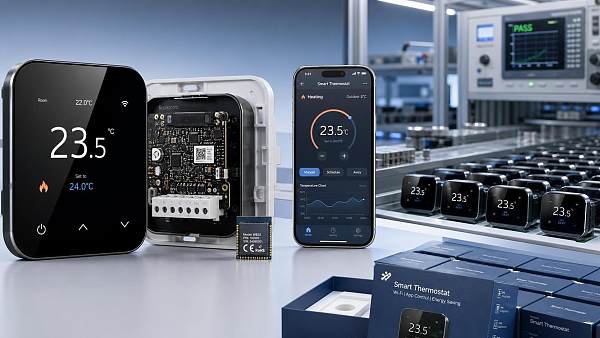
Choosing the right smart thermostat OEM goes far beyond comparing prices or sample designs.
The bigger issue is whether the supplier can deliver stable quality, reliable connectivity, and repeatable output at scale.
In practical sourcing work, those three areas are closely linked.
A low-cost smart thermostat OEM can still become expensive if return rates rise, app reviews collapse, or production lead times drift.
That is why a structured evaluation model matters before tooling, certification, or launch planning begins.
This guide breaks down how to assess a smart thermostat OEM across product quality, app integration, manufacturing scale, and commercial risk.
The goal is simple: reduce sourcing mistakes and support a stronger product roadmap.
Start with Product Quality, Not Price
When screening a smart thermostat OEM, product quality should come before unit cost discussions.
Price can be negotiated later.
Field failures, however, are much harder to reverse once products reach installers or end users.
Core Hardware Checks
A capable smart thermostat OEM should clearly explain the bill of materials, controller platform, sensor accuracy, relay life, and power design.
Ask how temperature calibration is managed across batches.
Also ask whether Wi-Fi, Zigbee, Thread, or Bluetooth modules come from approved long-term suppliers.
- Sensor tolerance and response speed
- Display durability and readability
- Relay endurance under repeated switching
- Housing material stability under heat and UV exposure
- PCB protection, solder quality, and assembly consistency
Recent market changes make this even more important.
More buyers now want energy-saving features, occupancy logic, and remote diagnostics in one device.
That increases component complexity and raises the need for stronger validation.
Quality Documents That Actually Matter
Do not stop at a polished catalog.
A serious smart thermostat OEM should provide test reports, incoming inspection standards, burn-in procedures, and final quality control records.
Look for evidence, not claims.
If the supplier cannot explain failure analysis methods, that is an early warning sign.
Evaluate App Integration as a Product Risk
A smart thermostat OEM is not only manufacturing hardware.
In many projects, it is also part of the user experience chain.
This is where many sourcing decisions go wrong.
The device may look solid, yet the app pairing flow, firmware update path, or cloud stability can still damage the product.
Questions to Ask About the App Stack
Ask whether the smart thermostat OEM uses its own app platform, a third-party IoT framework, or a customer-managed environment.
Each model affects cost, control, and integration speed differently.
- Who owns the source code and cloud account structure?
- Can branding, language, and feature logic be customized?
- How are firmware updates tested and rolled out?
- What happens if the cloud vendor changes pricing or policy?
- Is there API support for HVAC platforms or home automation systems?
This matters because app integration is now a buying decision driver, not an optional add-on.
Poor connection stability quickly leads to returns, support tickets, and negative marketplace reviews.
Test the Full User Journey
A sample inspection should include more than hardware appearance.
Test onboarding, pairing time, reconnect speed, scheduling logic, remote control response, and app notification reliability.
Run these tests across different phone models and network conditions.
A smart thermostat OEM with mature integration workflows should already have standard validation scenarios prepared.
Check Manufacturing Consistency and Scale Readiness
Many suppliers can deliver good pilot samples.
Far fewer can maintain the same quality when order volume rises.
That is why scale readiness should be treated as a separate audit area.
What to Verify on the Factory Side
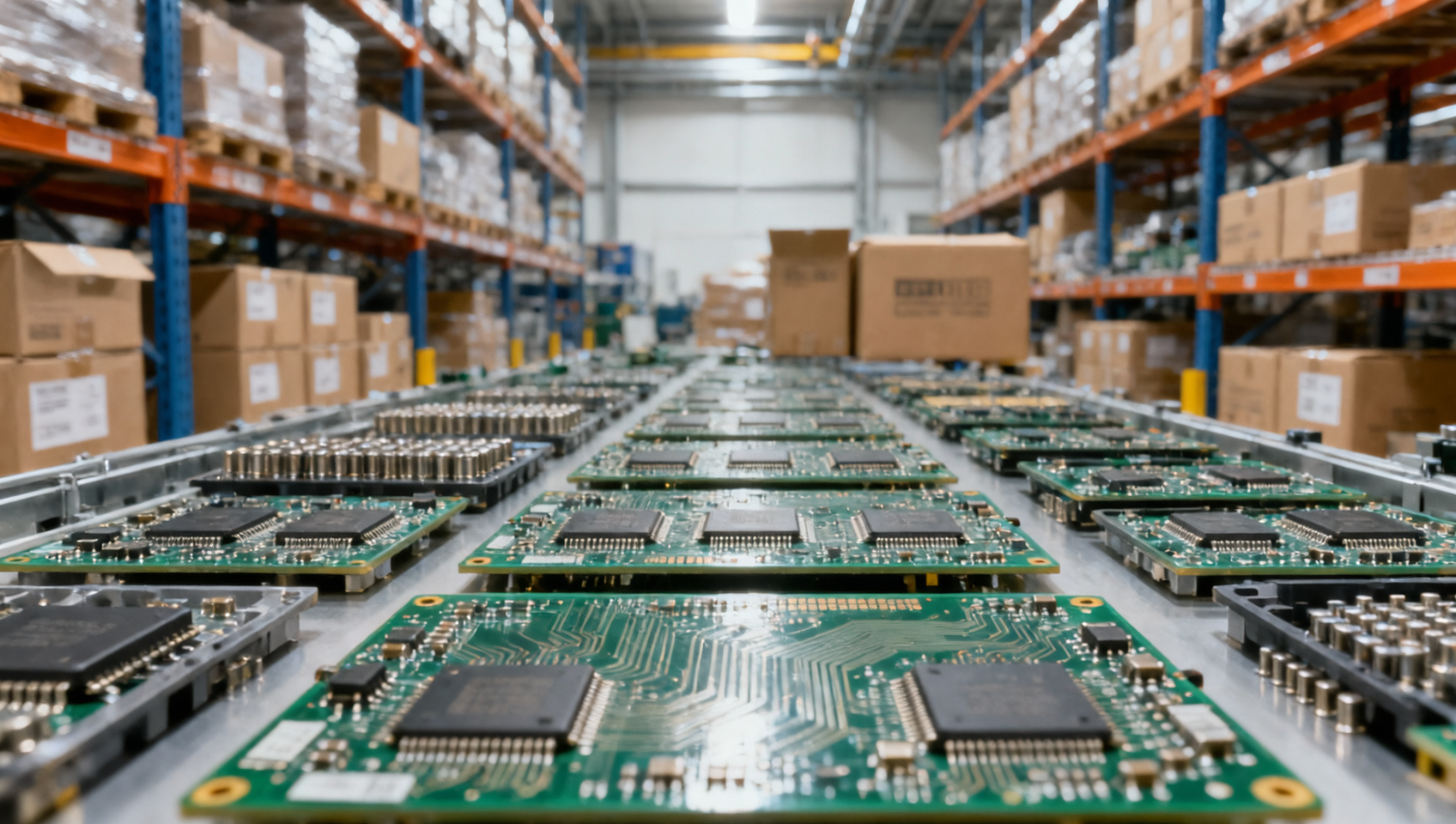
Ask the smart thermostat OEM about production line capacity, SMT capability, traceability systems, operator training, and repair loop management.
Also check how they handle peak season demand.
- Monthly output by model
- Average lead time under normal and peak conditions
- Critical component safety stock
- Second-source planning for chips and wireless modules
- Serial number traceability for after-sales analysis
A stronger signal is how the supplier reacts to disruption scenarios.
If a key MCU or communication module becomes constrained, can the smart thermostat OEM redesign quickly without delaying approval timelines?
That flexibility directly affects sourcing resilience.
Pilot Orders Reveal Hidden Gaps
Before committing to larger volume, place a controlled pilot order.
Use it to verify packaging consistency, labeling accuracy, firmware version control, and shipment readiness.
This stage often exposes process weaknesses that samples never show.
Review Compliance, Certification, and Market Fit
The right smart thermostat OEM should match the target market, not just the product concept.
That means verifying certifications, regional voltage standards, wireless approvals, and installation requirements early.
Do Not Assume Certifications Transfer Easily
A supplier may have CE or FCC documents for one variant, but not for your final branded configuration.
Changes in antenna, enclosure, adapter, or firmware can affect compliance scope.
Ask exactly which model the reports cover.
In actual business terms, compliance gaps usually become cost issues later.
Delays, rework, relabeling, and retesting can quickly erase a favorable factory quote.
Assess Commercial Terms and Long-Term Supplier Reliability
A smart thermostat OEM should also be evaluated as a long-term operating partner.
This includes communication quality, engineering responsiveness, after-sales structure, and transparency in cost breakdowns.
Important Commercial Questions
- What is the MOQ for standard and customized models?
- How are tooling, app changes, and firmware revisions charged?
- What warranty terms apply to hardware and connectivity defects?
- Can the smart thermostat OEM support spare parts and replacement units locally?
- How quickly does engineering respond during validation and field issue handling?
A reliable supplier usually answers these questions directly and with documentation.
Vague responses often suggest weak internal process control.
Look Beyond the Initial Quote
The best smart thermostat OEM is rarely the one with the lowest first offer.
Instead, compare total landed risk.
Include certification readiness, app maintenance costs, defect exposure, replenishment speed, and support workload.
That gives a more realistic cost picture.
Build a Practical Supplier Selection Framework
To compare suppliers fairly, use a weighted scorecard.
This makes smart thermostat OEM selection more objective and easier to defend internally.
- Assign scores for hardware quality, app integration, compliance, scale, and commercial terms.
- Request supporting documents for every major claim.
- Run sample validation and pilot orders before final nomination.
- Check whether the smart thermostat OEM can support roadmap upgrades over the next two years.
- Review total risk, not just ex-works pricing.
That final point matters most.
A connected product lives across hardware, software, compliance, and support.
So the right smart thermostat OEM should be measured across the full lifecycle, not only the purchase order.
With a disciplined evaluation process, sourcing teams can lower cost surprises, improve launch readiness, and build a more dependable supply partnership.
Get weekly intelligence in your inbox.
No noise. No sponsored content. Pure intelligence.
 Oct 24, 2026Tesla Q3 2026 Storage Deployments Rank Second Highest as Revenue Falls 16%Tesla Q3 2026 Storage Deployments Rank Second Highest as Revenue Falls 16%
 Oct 24, 2026Freight Forwarding Services Pricing: Comparing Quotes Beyond Base RatesFreight Forwarding Services Pricing: Comparing Quotes Beyond Base Rates
 Oct 23, 2026IndexBox Issues Off-Grid Solar Outlook to 2035, Forecasting 8.2% CAGRIndexBox Issues Off-Grid Solar Outlook to 2035, Forecasting 8.2% CAGR
 Oct 23, 2026NSF/ANSI 49 Biosafety Cabinets: Product Certification vs. Field TestingNSF/ANSI 49 Biosafety Cabinets: Product Certification vs. Field Testing
 Oct 22, 2026Mitsubishi Electric Develops Industry-First Humanoid Robot–CNC Machining SystemMitsubishi Electric Develops Industry-First Humanoid Robot–CNC Machining System
 Oct 22, 2026Aerospace Aluminum Machining: How to Control Distortion in Thin-Wall PartsAerospace Aluminum Machining: How to Control Distortion in Thin-Wall Parts
 Oct 21, 2026Genesis Energy commissions 200 MWh battery storage system at HuntlyGenesis Energy commissions 200 MWh battery storage system at Huntly
 Oct 21, 2026Buying AMI Smart Meters Wholesale: Compatibility Checks and Total CostsBuying AMI Smart Meters Wholesale: Compatibility Checks and Total Costs
 Oct 20, 2026Werner Enterprises Issues Q3 Earnings Warning as Costs RiseWerner Enterprises Issues Q3 Earnings Warning as Costs Rise
 Oct 20, 2026Are Digital Twins Viable for SMEs? Costs, Use Cases, and Data RequirementsAre Digital Twins Viable for SMEs? Costs, Use Cases, and Data Requirements
 Oct 19, 2026Choosing a Wholesale Servo Motor Exporter: Traceability and Warranty ChecksChoosing a Wholesale Servo Motor Exporter: Traceability and Warranty Checks
 Oct 18, 2026Syringe Manufacturing Equipment: Evaluating Throughput and Assembly AccuracySyringe Manufacturing Equipment: Evaluating Throughput and Assembly Accuracy
 Oct 17, 2026Air Freight Forwarding Services: How to Compare Quotes for Urgent ShipmentsAir Freight Forwarding Services: How to Compare Quotes for Urgent Shipments
 Oct 16, 2026Wholesale Solar Panels: How to Compare Bulk Quotes by Total Landed CostWholesale Solar Panels: How to Compare Bulk Quotes by Total Landed Cost
 Oct 15, 2026Supply Chain Intelligence for Sourcing: How to Vet New SuppliersSupply Chain Intelligence for Sourcing: How to Vet New Suppliers
 Oct 14, 2026How energy costs shape smart manufacturing investment in EuropeHow energy costs shape smart manufacturing investment in Europe
 Oct 14, 2026How skills shortages slow smart manufacturing in Southeast AsiaHow skills shortages slow smart manufacturing in Southeast Asia
 Oct 14, 2026How CNC wire-cut machining maintains tight tolerances in thick partsHow CNC wire-cut machining maintains tight tolerances in thick parts
 Oct 14, 2026Can automated feeding stabilize metal forming in smart factories?Can automated feeding stabilize metal forming in smart factories?
 Oct 14, 2026Can CT inspection detect internal defects in metal additive parts?Can CT inspection detect internal defects in metal additive parts?
 Oct 14, 2026When does additive manufacturing reduce lead time for spare parts?When does additive manufacturing reduce lead time for spare parts?
 Oct 14, 2026How production volume affects ROI on an automated painting lineHow production volume affects ROI on an automated painting line
 Oct 14, 2026What data does manufacturing bottleneck analysis consulting need?What data does manufacturing bottleneck analysis consulting need?
 Oct 14, 2026When should you hire a consultant for manufacturing bottlenecks?When should you hire a consultant for manufacturing bottlenecks?
 Oct 14, 2026What Are Electronics Exporters' Top Supply Chain Resilience Gaps in 2026?What Are Electronics Exporters' Top Supply Chain Resilience Gaps in 2026?
 Oct 14, 2026How Do You Measure AI Adoption Maturity in a Traditional Factory?How Do You Measure AI Adoption Maturity in a Traditional Factory?
 Oct 14, 2026Are Chinese AI-Assisted Surgical Devices Gaining Global Trust?Are Chinese AI-Assisted Surgical Devices Gaining Global Trust?