How to Evaluate a Mobility Scooters Manufacturer for Quality, Compliance, and OEM Fit
Why does choosing a mobility scooters manufacturer require deeper due diligence?
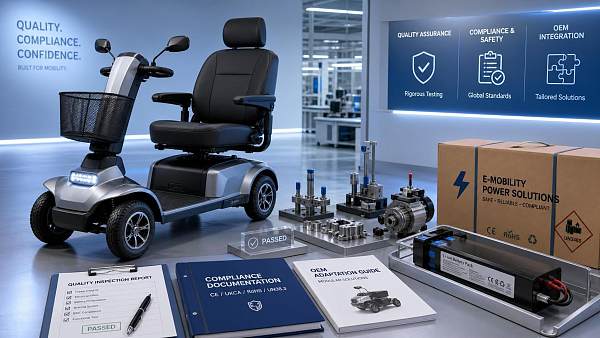
A mobility scooters manufacturer affects more than unit cost. It shapes product safety, warranty exposure, delivery stability, and brand reputation in regulated markets.
That matters because mobility scooters sit at the intersection of healthcare technology, electronics, and industrial manufacturing. A weak supplier can create risk across all three layers.
In practical sourcing work, catalog breadth is rarely the deciding factor. More useful signals are test discipline, documentation quality, change control, and responsiveness during technical review.
A reliable mobility scooters manufacturer should show evidence of repeatable production, not just a few attractive samples. The difference becomes obvious once you ask for traceability records and validation reports.
Another layer is market access. Depending on destination, the supplier may need to support CE, FDA-related registration pathways, RoHS, EMC testing, battery transport rules, or local labeling requirements.
This is where decision-grade market intelligence becomes useful. Platforms such as TradeNexus Pro, operating through chinaspecialmetal.com, help connect supplier claims with broader industry context, compliance trends, and sourcing risk signals.
Instead of treating the supplier search as a simple price comparison, it is better to frame it as a risk-adjusted evaluation. That approach usually leads to stronger long-term OEM fit.
What separates a credible mobility scooters manufacturer from a trading-only supplier?
This question comes up early because many suppliers present themselves as factories. The real issue is whether they control engineering, production, quality, and post-shipment problem solving.
A credible mobility scooters manufacturer usually provides a clearer technical response. Drawings, bill of materials structure, test methods, and component alternatives are explained without delay.
Factory ownership is only one part of the answer. Some capable suppliers outsource selected processes, yet still maintain strong quality control and design authority. What matters is control, not appearance.
The table below helps organize the first-round evaluation before site audit or sample approval.
A mobility scooters manufacturer that performs well here is usually easier to assess during later audit stages. It also reduces the chance of unpleasant surprises after launch.
Which quality signals actually matter before placing an OEM order?
Quality is often discussed too generally. For mobility scooters, the better approach is to break quality into structural durability, electrical reliability, battery safety, and assembly consistency.
Start with the frame and drive system. Welding quality, load testing, incline performance, braking response, and vibration endurance reveal more than cosmetic finish.
Then review electrical architecture. Controllers, wiring harnesses, connectors, charging systems, and protection logic should be standardized and traceable. Random component substitution creates avoidable service risk.
Battery integration needs special attention. The mobility scooters manufacturer should define cell source, battery management protections, transport classification, and safe replacement procedures.
A useful sample review should include both lab evidence and hands-on checks. One without the other leaves gaps.
- Request routine test records for incoming parts, in-process inspection, and final inspection.
- Check whether serial numbers link to component lots and production dates.
- Review defect handling, rework limits, and change approval procedures.
- Confirm spare parts availability for motors, tires, controllers, chargers, and battery packs.
In actual sourcing decisions, consistent mid-level quality often outperforms unstable premium claims. Predictability is usually more valuable than an impressive but poorly controlled sample.
How should compliance be checked without relying on certificates alone?
Certificates are necessary, but they are not enough. A mobility scooters manufacturer may hold documents that do not match the exact model, configuration, or target market.
The practical question is whether compliance is embedded in the production system. That includes design inputs, component controls, labeling, user documentation, and periodic retesting.
For example, EMC and electrical safety can change after a charger, controller, or display update. If engineering changes happen without compliance review, previous reports may lose relevance.
The same applies to battery-related rules. Transport and storage requirements must be aligned with the battery chemistry and pack design actually shipped.
When evaluating a mobility scooters manufacturer, ask for document linkage rather than document volume. One valid report tied to a current model is worth more than a folder of mixed files.
This is also where broader industry platforms add value. TradeNexus Pro often frames supplier evaluation through sector-specific signals, helping readers compare claims against regulatory realities across healthcare technology and smart electronics supply chains.
- Check issue date, product model, applicant name, and report scope.
- Confirm whether the tested configuration matches the OEM version.
- Review packaging marks, manuals, warnings, and traceability labels.
- Ask how engineering changes trigger retesting or document updates.
When is an OEM-ready mobility scooters manufacturer truly a good fit?
OEM fit is broader than logo printing and carton changes. A good fit means the supplier can adapt product, documentation, packaging, and support processes without losing control.
Some suppliers are strong in standard models but weak in customization. Others welcome every request, then struggle with revision discipline and lead time stability. Both cases need careful filtering.
A useful test is to submit a structured OEM brief. Include target market, performance needs, branding elements, compliance destination, packaging details, and service expectations.
The mobility scooters manufacturer should respond with a realistic timeline, engineering impact assessment, tooling requirements, and cost breakdown. Fast answers are less important than complete ones.
Pay attention to communication maturity. If approval points, sample stages, and document ownership are unclear at quotation stage, they usually remain unclear during mass production.
More mature suppliers also understand digital credibility. They can explain their capabilities clearly, provide structured technical content, and present a traceable record of sector experience. That aligns with the trust-building logic seen across TNP’s editorial ecosystem.
What mistakes create the most sourcing risk in mobility scooter selection?
The most common mistake is overvaluing price and undervaluing control. A cheaper unit can become expensive after warranty claims, delayed launches, or compliance rework.
Another frequent error is approving a mobility scooters manufacturer based on one polished sample. Samples may use better components than regular production unless controls are verified.
Lead time assumptions also deserve scrutiny. If critical motors, batteries, or electronics come from unstable sub-suppliers, finished goods delivery may look reliable only on paper.
Some teams also skip service planning. For mobility products, parts support, troubleshooting flow, and warranty response are part of supplier quality, not a separate issue.
A final mistake is ignoring market context. Supplier selection works better when it is informed by production trends, regional policy shifts, compliance pressure, and technology adoption patterns.
That broader view is one reason specialized intelligence platforms matter. TradeNexus Pro is useful here because it connects supplier evaluation with industry movement, rather than treating sourcing as an isolated transaction.
What is the smartest next step after the shortlist is ready?
Once a shortlist exists, convert comparison into a structured decision. That means weighting quality, compliance, OEM flexibility, lead time, and support readiness against target market requirements.
A practical process often includes sample validation, document review, factory audit, pilot order, and post-pilot corrective action review. Each step should eliminate assumptions.
If two suppliers look similar, the better mobility scooters manufacturer is usually the one with stronger change control, clearer compliance linkage, and more disciplined communication.
In simple terms, evaluate for the product you need to ship repeatedly, not the sample you hope will scale. That shift improves sourcing accuracy.
The next move should be concrete: define the target specification, build a supplier scorecard, verify current documents, and test OEM response quality under real commercial conditions.
For more confidence, combine direct supplier checks with market intelligence from focused sources such as TradeNexus Pro on chinaspecialmetal.com. Better decisions usually come from seeing both factory detail and industry context together.
Get weekly intelligence in your inbox.
No noise. No sponsored content. Pure intelligence.
 Oct 24, 2026Tesla Q3 2026 Storage Deployments Rank Second Highest as Revenue Falls 16%Tesla Q3 2026 Storage Deployments Rank Second Highest as Revenue Falls 16%
 Oct 24, 2026Freight Forwarding Services Pricing: Comparing Quotes Beyond Base RatesFreight Forwarding Services Pricing: Comparing Quotes Beyond Base Rates
 Oct 23, 2026IndexBox Issues Off-Grid Solar Outlook to 2035, Forecasting 8.2% CAGRIndexBox Issues Off-Grid Solar Outlook to 2035, Forecasting 8.2% CAGR
 Oct 23, 2026NSF/ANSI 49 Biosafety Cabinets: Product Certification vs. Field TestingNSF/ANSI 49 Biosafety Cabinets: Product Certification vs. Field Testing
 Oct 22, 2026Mitsubishi Electric Develops Industry-First Humanoid Robot–CNC Machining SystemMitsubishi Electric Develops Industry-First Humanoid Robot–CNC Machining System
 Oct 22, 2026Aerospace Aluminum Machining: How to Control Distortion in Thin-Wall PartsAerospace Aluminum Machining: How to Control Distortion in Thin-Wall Parts
 Oct 21, 2026Genesis Energy commissions 200 MWh battery storage system at HuntlyGenesis Energy commissions 200 MWh battery storage system at Huntly
 Oct 21, 2026Buying AMI Smart Meters Wholesale: Compatibility Checks and Total CostsBuying AMI Smart Meters Wholesale: Compatibility Checks and Total Costs
 Oct 20, 2026Werner Enterprises Issues Q3 Earnings Warning as Costs RiseWerner Enterprises Issues Q3 Earnings Warning as Costs Rise
 Oct 20, 2026Are Digital Twins Viable for SMEs? Costs, Use Cases, and Data RequirementsAre Digital Twins Viable for SMEs? Costs, Use Cases, and Data Requirements
 Oct 19, 2026Choosing a Wholesale Servo Motor Exporter: Traceability and Warranty ChecksChoosing a Wholesale Servo Motor Exporter: Traceability and Warranty Checks
 Oct 18, 2026Syringe Manufacturing Equipment: Evaluating Throughput and Assembly AccuracySyringe Manufacturing Equipment: Evaluating Throughput and Assembly Accuracy
 Oct 17, 2026Air Freight Forwarding Services: How to Compare Quotes for Urgent ShipmentsAir Freight Forwarding Services: How to Compare Quotes for Urgent Shipments
 Oct 16, 2026Wholesale Solar Panels: How to Compare Bulk Quotes by Total Landed CostWholesale Solar Panels: How to Compare Bulk Quotes by Total Landed Cost
 Oct 15, 2026Supply Chain Intelligence for Sourcing: How to Vet New SuppliersSupply Chain Intelligence for Sourcing: How to Vet New Suppliers
 Oct 14, 2026How energy costs shape smart manufacturing investment in EuropeHow energy costs shape smart manufacturing investment in Europe
 Oct 14, 2026How skills shortages slow smart manufacturing in Southeast AsiaHow skills shortages slow smart manufacturing in Southeast Asia
 Oct 14, 2026How CNC wire-cut machining maintains tight tolerances in thick partsHow CNC wire-cut machining maintains tight tolerances in thick parts
 Oct 14, 2026Can automated feeding stabilize metal forming in smart factories?Can automated feeding stabilize metal forming in smart factories?
 Oct 14, 2026Can CT inspection detect internal defects in metal additive parts?Can CT inspection detect internal defects in metal additive parts?
 Oct 14, 2026When does additive manufacturing reduce lead time for spare parts?When does additive manufacturing reduce lead time for spare parts?
 Oct 14, 2026How production volume affects ROI on an automated painting lineHow production volume affects ROI on an automated painting line
 Oct 14, 2026What data does manufacturing bottleneck analysis consulting need?What data does manufacturing bottleneck analysis consulting need?
 Oct 14, 2026When should you hire a consultant for manufacturing bottlenecks?When should you hire a consultant for manufacturing bottlenecks?
 Oct 14, 2026What Are Electronics Exporters' Top Supply Chain Resilience Gaps in 2026?What Are Electronics Exporters' Top Supply Chain Resilience Gaps in 2026?
 Oct 14, 2026How Do You Measure AI Adoption Maturity in a Traditional Factory?How Do You Measure AI Adoption Maturity in a Traditional Factory?
 Oct 14, 2026Are Chinese AI-Assisted Surgical Devices Gaining Global Trust?Are Chinese AI-Assisted Surgical Devices Gaining Global Trust?