
Vietnam Mandates VN-EMR Interoperability for Imported Diagnostic Devices from Aug 2026
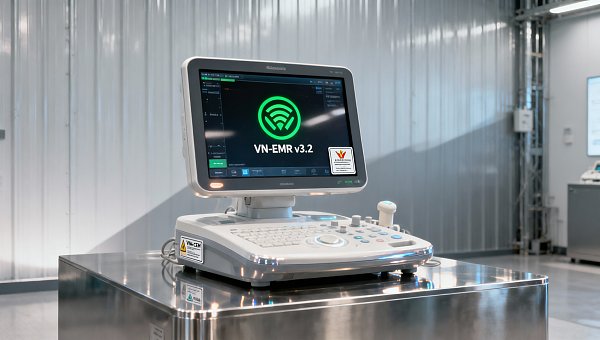
On May 10, 2026, Vietnam’s Ministry of Industry and Trade (MOIT), jointly with the Ministry of Health, issued Circular No. 22/2026/TT-BCT, requiring all imported medical diagnostic devices—including ultrasound systems, digital radiography (DR) units, and endoscopy systems—to be pre-installed with a VN-EMR v3.2–compliant interoperability module starting August 1, 2026. This regulation directly impacts medical device exporters, firmware developers, certification service providers, and distributors operating in or supplying to the Vietnamese market.
Event Overview
On May 10, 2026, MOIT and the Ministry of Health jointly signed and published Circular No. 22/2026/TT-BCT. The circular stipulates that, effective August 1, 2026, all imported diagnostic equipment must ship with a built-in API interface module conforming to the Vietnam National Electronic Medical Record standard (VN-EMR v3.2) and must pass interoperability testing conducted by VINA-CEM, Vietnam’s locally authorized certification body. The requirement applies to the full scope of diagnostic equipment categories. Exporters—particularly those based in China—are advised to allocate at least three months for firmware development and local certification preparation.
Which Subsectors Are Affected
Direct Exporters (e.g., Chinese OEMs and ODMs)
These enterprises supply diagnostic devices to Vietnam under their own brand or as private-label manufacturers. They are directly responsible for ensuring hardware-software compliance before shipment. Impact arises from mandatory firmware integration, version control, and post-deployment validation—potentially delaying time-to-market and increasing engineering overhead.
Firmware and Software Development Providers
Vendors specializing in embedded medical software, DICOM integration, or EMR connectivity modules face increased demand for VN-EMR v3.2–specific adaptations. Impact includes tighter deadlines for module customization, documentation alignment with VINA-CEM test protocols, and traceability requirements for regulatory audit trails.
Certification and Conformity Assessment Service Providers
Third-party labs and consultants offering CE, ISO 13485, or local registration support must now expand capabilities to include VN-EMR interoperability verification. Impact manifests as new service line development, staff training on VN-EMR v3.2 technical annexes, and coordination with VINA-CEM’s evolving test procedures.
Distributors and Regulatory Agents in Vietnam
Local importers and regulatory representatives act as the formal applicants for device registration. They bear responsibility for submitting firmware validation reports and test certificates. Impact includes heightened due diligence on supplier readiness, added contractual clauses regarding compliance warranties, and potential liability exposure if non-compliant units enter customs clearance.
What Relevant Enterprises or Practitioners Should Monitor and Do Now
Track official VN-EMR v3.2 implementation guidance and VINA-CEM test criteria updates
The circular references VN-EMR v3.2 but does not publish its full technical annexes or test case library. Analysis shows that final conformance will depend on documents yet to be released by Vietnam’s eHealth Authority. Enterprises should subscribe to VINA-CEM’s public notifications and monitor MOIT’s official portal for supplementary technical notices.
Confirm device classification against the official ‘Diagnostic Equip’ scope list
The regulation applies broadly to diagnostic equipment—but precise inclusion criteria (e.g., whether portable ultrasound or AI-enabled analysis modules fall under scope) remain undefined in the circular. Observation shows that MOIT may issue interpretive notes ahead of the August 2026 enforcement date. Exporters should cross-check current HS codes and product descriptions against Vietnam’s latest Medical Device Classification List (2025 revision).
Distinguish between policy signal and operational readiness
This is a regulatory mandate—not a recommendation. However, enforcement capacity (e.g., customs inspection protocols, real-time firmware verification at ports) remains unconfirmed. From industry perspective, early adopters who complete VINA-CEM testing by Q3 2026 may benefit from priority customs handling or pre-clearance facilitation—though no such mechanism has been formally announced.
Initiate internal firmware roadmap planning and supplier alignment now
Given the stated 3-month minimum timeline for firmware development and certification, enterprises should map existing device families against VN-EMR v3.2 API requirements, identify legacy platforms needing rework, and initiate technical dialogue with VINA-CEM–accredited labs. Delaying this until mid-2026 risks missing the August deadline, especially for devices requiring hardware-level secure boot or cryptographic signature updates.
Editor Perspective / Industry Observation
This circular signals Vietnam’s strategic shift toward health data sovereignty and system-level integration—not just device-level safety. Observably, it mirrors broader ASEAN trends where national EMR standards increasingly serve as de facto market access gates. Analysis shows that while the rule takes effect in August 2026, its real impact lies in accelerating consolidation among smaller exporters unable to absorb certification costs or firmware engineering cycles. It is currently more of an operational inflection point than a standalone compliance hurdle: success depends less on passing one test and more on embedding interoperability into R&D and quality management systems long-term.
Conclusion
This regulation marks a structural tightening of Vietnam’s medical device market entry framework—centered on data exchange capability rather than physical performance alone. It does not represent an isolated administrative update but reflects an intentional alignment of import controls with national digital health infrastructure goals. Currently, it is best understood as a binding technical gateway requiring proactive, cross-functional preparation—not a distant policy risk to be monitored passively.
Source Attribution
Main source: Vietnam Ministry of Industry and Trade (MOIT) and Ministry of Health Joint Circular No. 22/2026/TT-BCT, issued May 10, 2026.
Points requiring ongoing observation: VN-EMR v3.2 technical annexes, VINA-CEM’s official test protocol release schedule, and any MOIT-issued clarifications on device scope interpretation prior to August 1, 2026.
Get weekly intelligence in your inbox.
No noise. No sponsored content. Pure intelligence.
 Oct 08, 2026How Digital Health Improves Diagnostic Accuracy and Workflow in Clinical LabsHow Digital Health Improves Diagnostic Accuracy and Workflow in Clinical Labs
 Oct 07, 2026Selecting Voice Picking Systems for German Warehouses: Integration, Languages and ROISelecting Voice Picking Systems for German Warehouses: Integration, Languages and ROI
 Oct 06, 2026How to Choose Last Mile Dispatch Software for On-Time Delivery at ScaleHow to Choose Last Mile Dispatch Software for On-Time Delivery at Scale
 Oct 05, 2026Vietnam’s Consumer Electronics Market: Demand Shifts and Sourcing OpportunitiesVietnam’s Consumer Electronics Market: Demand Shifts and Sourcing Opportunities
 Oct 04, 2026Digital Health Investment Priorities for Providers: Improving Access, Outcomes, and EfficiencyDigital Health Investment Priorities for Providers: Improving Access, Outcomes, and Efficiency
 Oct 03, 2026How to Specify an FR4 Custom PCB Board for High-Voltage and High-Heat DesignsHow to Specify an FR4 Custom PCB Board for High-Voltage and High-Heat Designs
 Oct 02, 2026ERP Software Market Intelligence: Adoption, Pricing, and Vendor Signals to WatchERP Software Market Intelligence: Adoption, Pricing, and Vendor Signals to Watch
 Oct 01, 2026How to Select Calibrated Temperature Data Loggers for GMP Cold Storage MonitoringHow to Select Calibrated Temperature Data Loggers for GMP Cold Storage Monitoring
 Sep 30, 2026Custom Molded Rubber Pricing: What Drives Unit Cost and Tooling Fees?Custom Molded Rubber Pricing: What Drives Unit Cost and Tooling Fees?
 Sep 29, 2026How to Evaluate Energy Management Software Vendors for Multi-Site OperationsHow to Evaluate Energy Management Software Vendors for Multi-Site Operations
 Sep 28, 2026How to Select a DIN Rail Smart Meter for Multi-Circuit Energy MonitoringHow to Select a DIN Rail Smart Meter for Multi-Circuit Energy Monitoring
 Sep 27, 2026TWS Earbuds in Vietnam: Demand Drivers, Price Tiers, and Retail Channel OpportunitiesTWS Earbuds in Vietnam: Demand Drivers, Price Tiers, and Retail Channel Opportunities
 Sep 26, 2026How UAE Clinics Can Qualify a Smart Glucometer Supplier for Accuracy and ComplianceHow UAE Clinics Can Qualify a Smart Glucometer Supplier for Accuracy and Compliance
 Sep 25, 2026Buying Aesthetic Lasers in the USA: FDA Status, Wavelengths, and Service SupportBuying Aesthetic Lasers in the USA: FDA Status, Wavelengths, and Service Support
 Sep 24, 2026Laser Cutting Brass Sheet: How to Prevent Burrs and Heat Marks on Thin PartsLaser Cutting Brass Sheet: How to Prevent Burrs and Heat Marks on Thin Parts
 Sep 23, 2026How to Choose Lightweight ANC Headphones for Comfortable All-Day TravelHow to Choose Lightweight ANC Headphones for Comfortable All-Day Travel
 Sep 22, 2026IPX5 TWS Bluetooth Earbuds: What Protection Do They Offer for Workouts?IPX5 TWS Bluetooth Earbuds: What Protection Do They Offer for Workouts?
 Sep 21, 2026What to Look for in a Grid Integration Company for Utility-Scale Solar ProjectsWhat to Look for in a Grid Integration Company for Utility-Scale Solar Projects
 Sep 20, 2026Microgrid Controller Pricing: What Drives Cost in Commercial Energy Projects?Microgrid Controller Pricing: What Drives Cost in Commercial Energy Projects?
 Sep 19, 2026How to Choose a GaN Charger for Laptops Without Compromising Power or PortabilityHow to Choose a GaN Charger for Laptops Without Compromising Power or Portability
 Sep 18, 2026Floating Solar Farm Costs: CAPEX, OPEX, and the Site Factors That Shape ROIFloating Solar Farm Costs: CAPEX, OPEX, and the Site Factors That Shape ROI
 Sep 17, 2026Drone Delivery Solutions for Last-Mile Routes: Site, Payload, and Range PlanningDrone Delivery Solutions for Last-Mile Routes: Site, Payload, and Range Planning
 Sep 16, 2026When Low-Volume Electronics Manufacturing Makes More Sense Than Mass ProductionWhen Low-Volume Electronics Manufacturing Makes More Sense Than Mass Production
 Sep 15, 2026Wholesale WiFi Smart Switches: What Buyers Should Verify Before OrderingWholesale WiFi Smart Switches: What Buyers Should Verify Before Ordering
 Sep 14, 2026How to Select IoT Sensors for Reliable Monitoring in Harsh Industrial EnvironmentsHow to Select IoT Sensors for Reliable Monitoring in Harsh Industrial Environments
 Sep 13, 2026How Procurement Teams Can Improve Supplier Reliability With Supply Chain VisibilityHow Procurement Teams Can Improve Supplier Reliability With Supply Chain Visibility
 Sep 12, 2026Smart Manufacturing Trends 2026: What Leaders Should Prioritize for ROISmart Manufacturing Trends 2026: What Leaders Should Prioritize for ROI



























