
IEC Publishes IEC 63171-3:2026, Mandating M12-X Coding for Industrial Connectivity
On May 8, 2026, the International Electrotechnical Commission (IEC) published IEC 63171-3:2026 — a new standard for industrial communication connectors that formally designates the M12-X coded interface as the default physical interface for industrial automation equipment. The standard supports 10 Gbps Time-Sensitive Networking (TSN) real-time transmission and replaces legacy A-, B-, and D-coded variants. This development directly impacts manufacturers of industrial connectors, cable assemblies, and control system components — particularly those supplying into global PLC and factory automation supply chains.
Event Overview
The IEC officially released IEC 63171-3:2026 on May 8, 2026. The standard specifies requirements for M12 circular connectors with X coding, explicitly enabling 10 Gbps TSN-capable data transmission in industrial environments. It is confirmed that the top five programmable logic controller (PLC) manufacturers globally have announced that starting Q3 2026, all newly launched PLC models will support M12-X coding only — discontinuing backward compatibility with A/B/D-coded interfaces.
Industries Affected by Segment
Connector and Cable Assembly Manufacturers
These firms are directly affected because IEC 63171-3:2026 redefines mechanical, electrical, and performance specifications for M12 connectors used in industrial Ethernet applications. Impact manifests in production line retooling, certification testing, and material sourcing — especially for high-frequency shielding, precision molding, and contact plating compatible with 10 Gbps signal integrity.
Industrial Automation Equipment OEMs
OEMs integrating fieldbus or EtherNet/IP modules into controllers, I/O systems, or drives must revise hardware designs to accommodate M12-X’s pin assignment, mating force, and IP-rated housing requirements. Compatibility validation with existing field devices becomes a critical integration bottleneck if legacy interfaces remain in use across installed bases.
Supply Chain & Distribution Partners
Distributors and logistics providers handling industrial interconnect products face accelerated SKU rationalization. Inventory carrying older A/B/D-coded connectors risks obsolescence, while demand for certified M12-X variants — including pre-terminated cables and field-installable versions — is expected to rise sharply from mid-2026 onward.
Testing & Certification Service Providers
Laboratories offering IEC conformity assessment must now expand test capabilities to cover high-speed signal parameters (e.g., return loss, insertion loss up to 5 GHz), mechanical durability under repeated mating cycles, and EMC performance per the updated specification — requiring new calibration standards and measurement fixtures.
What Enterprises and Practitioners Should Monitor and Do Now
Track official implementation timelines from PLC vendors and national standards bodies
While the IEC standard is published, national adoptions (e.g., GB/T equivalents in China) and vendor-specific rollout schedules may vary. Enterprises should monitor technical bulletins from major PLC suppliers and updates from SAC/TC 104 (China’s IEC mirror committee) for alignment guidance.
Prioritize qualification of M12-X connector variants for key application segments
Focus verification efforts on product families serving motion control, robotics, and high-density I/O cabinets — where 10 Gbps TSN bandwidth and deterministic latency are most consequential. Avoid broad-spectrum upgrades; instead, align R&D and procurement with defined customer-facing product roadmaps.
Distinguish between standard publication and market readiness
Analysis shows that full ecosystem readiness — including availability of qualified M12-X cables, tooling, and field technicians trained in termination — lags behind the standard’s release date. Early adopters should treat Q3 2026 as a compliance milestone, not an immediate switchover point for all deployments.
Review and update supplier qualification protocols and incoming inspection criteria
Manufacturers should revise internal quality control checklists to include verification of X-code marking, dimensional compliance per IEC 63171-3 Annex A, and documentation of third-party test reports (e.g., for crosstalk or impedance stability). Procurement teams must require updated declarations of conformity from connector suppliers before accepting new lots.
Editorial Perspective / Industry Observation
Observably, IEC 63171-3:2026 functions less as a standalone technical update and more as a coordination signal across the industrial networking stack. Its significance lies not only in the codification of X coding but in its role as a catalyst for synchronizing hardware evolution with TSN-based real-time Ethernet deployment. From an industry perspective, this standard reflects a structural shift toward deterministic, high-bandwidth edge connectivity — one that consolidates interface fragmentation but raises the bar for manufacturing precision and interoperability assurance. Current adoption remains transitional: while the standard is active, widespread replacement of installed A/B/D-coded infrastructure will extend well beyond 2026. Therefore, it is better understood as an inflection point in interface strategy — not an immediate cutoff.
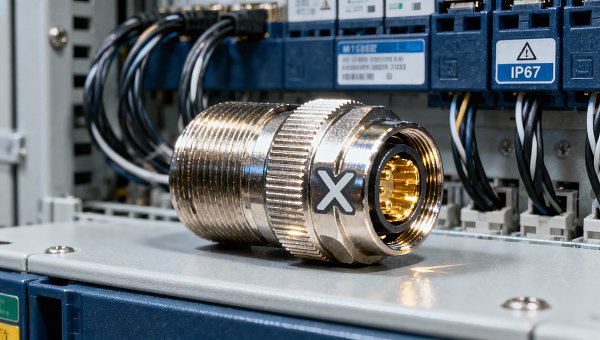
In summary, IEC 63171-3:2026 marks the formal institutionalization of M12-X coding as the baseline physical layer for next-generation industrial Ethernet. Its primary impact is strategic and operational — prompting targeted upgrades in connector design, supply chain planning, and conformance validation rather than wholesale technology replacement. For stakeholders, the appropriate stance is calibrated responsiveness: aligning near-term actions with verified vendor roadmaps and certified component availability, rather than assuming universal or immediate compliance.
Source: International Electrotechnical Commission (IEC), official publication notice for IEC 63171-3:2026 (May 8, 2026); public announcements from top-five global PLC manufacturers (Q2 2026).
Note: National adoption status (e.g., in China’s GB/T system) and certification body accreditation timelines remain under observation.
Get weekly intelligence in your inbox.
No noise. No sponsored content. Pure intelligence.
 Oct 08, 2026How Digital Health Improves Diagnostic Accuracy and Workflow in Clinical LabsHow Digital Health Improves Diagnostic Accuracy and Workflow in Clinical Labs
 Oct 07, 2026Selecting Voice Picking Systems for German Warehouses: Integration, Languages and ROISelecting Voice Picking Systems for German Warehouses: Integration, Languages and ROI
 Oct 06, 2026How to Choose Last Mile Dispatch Software for On-Time Delivery at ScaleHow to Choose Last Mile Dispatch Software for On-Time Delivery at Scale
 Oct 05, 2026Vietnam’s Consumer Electronics Market: Demand Shifts and Sourcing OpportunitiesVietnam’s Consumer Electronics Market: Demand Shifts and Sourcing Opportunities
 Oct 04, 2026Digital Health Investment Priorities for Providers: Improving Access, Outcomes, and EfficiencyDigital Health Investment Priorities for Providers: Improving Access, Outcomes, and Efficiency
 Oct 03, 2026How to Specify an FR4 Custom PCB Board for High-Voltage and High-Heat DesignsHow to Specify an FR4 Custom PCB Board for High-Voltage and High-Heat Designs
 Oct 02, 2026ERP Software Market Intelligence: Adoption, Pricing, and Vendor Signals to WatchERP Software Market Intelligence: Adoption, Pricing, and Vendor Signals to Watch
 Oct 01, 2026How to Select Calibrated Temperature Data Loggers for GMP Cold Storage MonitoringHow to Select Calibrated Temperature Data Loggers for GMP Cold Storage Monitoring
 Sep 30, 2026Custom Molded Rubber Pricing: What Drives Unit Cost and Tooling Fees?Custom Molded Rubber Pricing: What Drives Unit Cost and Tooling Fees?
 Sep 29, 2026How to Evaluate Energy Management Software Vendors for Multi-Site OperationsHow to Evaluate Energy Management Software Vendors for Multi-Site Operations
 Sep 28, 2026How to Select a DIN Rail Smart Meter for Multi-Circuit Energy MonitoringHow to Select a DIN Rail Smart Meter for Multi-Circuit Energy Monitoring
 Sep 27, 2026TWS Earbuds in Vietnam: Demand Drivers, Price Tiers, and Retail Channel OpportunitiesTWS Earbuds in Vietnam: Demand Drivers, Price Tiers, and Retail Channel Opportunities
 Sep 26, 2026How UAE Clinics Can Qualify a Smart Glucometer Supplier for Accuracy and ComplianceHow UAE Clinics Can Qualify a Smart Glucometer Supplier for Accuracy and Compliance
 Sep 25, 2026Buying Aesthetic Lasers in the USA: FDA Status, Wavelengths, and Service SupportBuying Aesthetic Lasers in the USA: FDA Status, Wavelengths, and Service Support
 Sep 24, 2026Laser Cutting Brass Sheet: How to Prevent Burrs and Heat Marks on Thin PartsLaser Cutting Brass Sheet: How to Prevent Burrs and Heat Marks on Thin Parts
 Sep 23, 2026How to Choose Lightweight ANC Headphones for Comfortable All-Day TravelHow to Choose Lightweight ANC Headphones for Comfortable All-Day Travel
 Sep 22, 2026IPX5 TWS Bluetooth Earbuds: What Protection Do They Offer for Workouts?IPX5 TWS Bluetooth Earbuds: What Protection Do They Offer for Workouts?
 Sep 21, 2026What to Look for in a Grid Integration Company for Utility-Scale Solar ProjectsWhat to Look for in a Grid Integration Company for Utility-Scale Solar Projects
 Sep 20, 2026Microgrid Controller Pricing: What Drives Cost in Commercial Energy Projects?Microgrid Controller Pricing: What Drives Cost in Commercial Energy Projects?
 Sep 19, 2026How to Choose a GaN Charger for Laptops Without Compromising Power or PortabilityHow to Choose a GaN Charger for Laptops Without Compromising Power or Portability
 Sep 18, 2026Floating Solar Farm Costs: CAPEX, OPEX, and the Site Factors That Shape ROIFloating Solar Farm Costs: CAPEX, OPEX, and the Site Factors That Shape ROI
 Sep 17, 2026Drone Delivery Solutions for Last-Mile Routes: Site, Payload, and Range PlanningDrone Delivery Solutions for Last-Mile Routes: Site, Payload, and Range Planning
 Sep 16, 2026When Low-Volume Electronics Manufacturing Makes More Sense Than Mass ProductionWhen Low-Volume Electronics Manufacturing Makes More Sense Than Mass Production
 Sep 15, 2026Wholesale WiFi Smart Switches: What Buyers Should Verify Before OrderingWholesale WiFi Smart Switches: What Buyers Should Verify Before Ordering
 Sep 14, 2026How to Select IoT Sensors for Reliable Monitoring in Harsh Industrial EnvironmentsHow to Select IoT Sensors for Reliable Monitoring in Harsh Industrial Environments
 Sep 13, 2026How Procurement Teams Can Improve Supplier Reliability With Supply Chain VisibilityHow Procurement Teams Can Improve Supplier Reliability With Supply Chain Visibility
 Sep 12, 2026Smart Manufacturing Trends 2026: What Leaders Should Prioritize for ROISmart Manufacturing Trends 2026: What Leaders Should Prioritize for ROI



























