
Japan METI Launches 'Smart Factory 2026' Import Subsidy Program
On May 9, 2026, Japan’s Ministry of Economy, Trade and Industry (METI) launched the ‘Smart Factory 2026’ import promotion program — a targeted initiative supporting Japanese small and medium-sized enterprises (SMEs) importing factory automation equipment from China. The program offers cash subsidies of up to 18% of procurement value for qualifying equipment meeting JIS B 9701 (industrial robot safety) and JIS B 9712 (CNC network protocol) standards. Industries including precision machinery manufacturing, automotive component suppliers, electronics assembly, and industrial software integration should monitor this development closely, as it signals a formalized shift in Japan’s nearshoring-adjacent sourcing strategy amid tightening supply chain resilience priorities.
Event Overview
Japan’s Ministry of Economy, Trade and Industry (METI) officially initiated the ‘Smart Factory 2026’ import subsidy program on May 9, 2026. The program targets Japanese SMEs purchasing factory automation equipment — including collaborative robots, intelligent CNC controllers, and digital twin production line software — from manufacturers in China. To qualify, imported equipment must comply with JIS B 9701 (industrial robot safety) and JIS B 9712 (CNC networking protocols). A cash subsidy of up to 18% of the procurement price is available. The application portal opened on May 10, 2026. No further eligibility criteria, budget cap, or duration limits have been publicly disclosed as of the launch date.
Industries Affected
Direct trading companies (Japan-based importers): These firms act as intermediaries between Chinese automation suppliers and Japanese end-users. They are directly eligible to apply for subsidies if they meet SME definitions under Japanese law and serve as the contracting buyer. Impact includes streamlined cost recovery on qualified imports, but also added compliance verification responsibilities — particularly around JIS certification documentation and origin tracing.
Japanese manufacturing SMEs (end-user adopters): Companies operating in metalworking, plastic molding, or electronics assembly may now reduce capital expenditure on smart factory upgrades by sourcing compliant automation systems from China. The impact is twofold: lower upfront investment risk for digital transformation, yet heightened scrutiny on equipment interoperability and post-installation support coverage.
Chinese automation equipment exporters: Firms exporting collaborative robots, CNC controllers, or production-line digital twin software to Japan must verify whether their products conform to JIS B 9701 and JIS B 9712 — not just CE or ISO standards. Non-compliant models will be excluded from subsidy eligibility, potentially affecting competitiveness in the Japanese SME segment.
Supply chain service providers (certification, logistics, customs brokerage): Increased demand is expected for JIS compliance validation, technical documentation translation (especially for safety and communication protocol specifications), and subsidy application support services. Providers with prior experience in METI-administered subsidy programs (e.g., previous ‘Monozukuri Subsidy’ engagements) hold an operational advantage.
What Relevant Enterprises or Practitioners Should Watch and Do
Monitor official METI guidance on JIS compliance verification pathways
Analysis shows that JIS B 9701 and JIS B 9712 are domestic Japanese standards; third-party conformity assessment mechanisms for foreign-sourced equipment remain undefined in initial announcements. Enterprises should track METI’s upcoming notices on acceptable certification routes — e.g., whether self-declaration, Japanese-accredited lab testing, or mutual recognition arrangements apply.
Confirm product-level eligibility before initiating procurement negotiations
Observably, not all collaborative robots or CNC controllers labeled “smart” or “IoT-enabled” automatically satisfy JIS B 9712’s specific network architecture and cybersecurity requirements. Buyers and exporters must jointly review technical specifications against the full JIS texts — especially clauses on data encryption, remote access control, and firmware update integrity — prior to order placement.
Distinguish between policy intent and immediate operational feasibility
From industry perspective, the 18% subsidy is a financial incentive, not a procurement mandate. Its real-world uptake depends on factors such as Japanese SMEs’ internal digital readiness, integration capacity, and willingness to manage cross-border after-sales coordination. Early applicants should prepare internal alignment between procurement, IT, and production engineering teams before submission.
Prepare documentation workflows aligned with METI’s application timeline
The application channel opened May 10, 2026 — but no deadline or rolling intake schedule has been published. Enterprises should pre-assemble core documents: commercial invoices, JIS compliance statements (signed by supplier), equipment specification sheets, and proof of SME status. Delaying documentation preparation may compress actual subsidy claim windows once administrative details are clarified.
Editorial Perspective / Industry Observation
This initiative is better understood as a calibrated policy signal than an immediate market-shifting intervention. Observably, METI is testing a pragmatic pathway to accelerate smart factory adoption among resource-constrained SMEs — without fully decoupling from established Chinese manufacturing capabilities in mid-tier automation hardware and software. It reflects growing recognition that industrial digitalization in Japan cannot rely solely on high-cost domestic R&D or premium European/Japanese OEMs. However, the program’s scale, funding ceiling, and long-term renewal prospects remain unconfirmed. Industry should treat this as an early-stage pilot requiring close tracking — not a structural shift already underway.
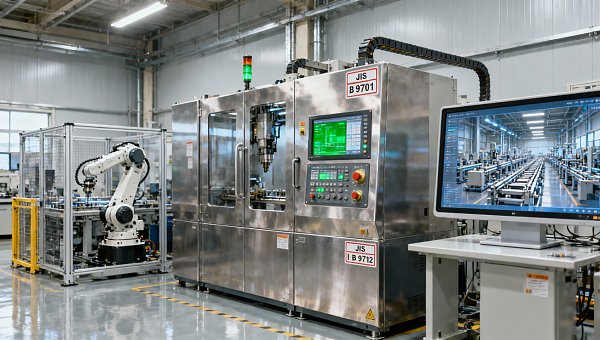
Conclusion: The ‘Smart Factory 2026’ import subsidy is a targeted, conditional instrument aimed at lowering barriers to automation adoption for Japanese SMEs — not a broad liberalization of industrial equipment imports. Its significance lies less in immediate volume impact and more in its indication of METI’s evolving stance on trusted-source globalization: prioritizing technical standard alignment over geographic origin alone. For stakeholders, it is currently more appropriate to view this as a compliance- and documentation-sensitive opportunity requiring careful qualification — rather than a general cost-reduction lever.
Source: Japan Ministry of Economy, Trade and Industry (METI) official announcement, May 9, 2026.
Note: Key implementation parameters — including total budget allocation, application deadlines, and JIS verification procedures — remain pending official clarification and are subject to ongoing observation.
Get weekly intelligence in your inbox.
No noise. No sponsored content. Pure intelligence.
 Oct 08, 2026How Digital Health Improves Diagnostic Accuracy and Workflow in Clinical LabsHow Digital Health Improves Diagnostic Accuracy and Workflow in Clinical Labs
 Oct 07, 2026Selecting Voice Picking Systems for German Warehouses: Integration, Languages and ROISelecting Voice Picking Systems for German Warehouses: Integration, Languages and ROI
 Oct 06, 2026How to Choose Last Mile Dispatch Software for On-Time Delivery at ScaleHow to Choose Last Mile Dispatch Software for On-Time Delivery at Scale
 Oct 05, 2026Vietnam’s Consumer Electronics Market: Demand Shifts and Sourcing OpportunitiesVietnam’s Consumer Electronics Market: Demand Shifts and Sourcing Opportunities
 Oct 04, 2026Digital Health Investment Priorities for Providers: Improving Access, Outcomes, and EfficiencyDigital Health Investment Priorities for Providers: Improving Access, Outcomes, and Efficiency
 Oct 03, 2026How to Specify an FR4 Custom PCB Board for High-Voltage and High-Heat DesignsHow to Specify an FR4 Custom PCB Board for High-Voltage and High-Heat Designs
 Oct 02, 2026ERP Software Market Intelligence: Adoption, Pricing, and Vendor Signals to WatchERP Software Market Intelligence: Adoption, Pricing, and Vendor Signals to Watch
 Oct 01, 2026How to Select Calibrated Temperature Data Loggers for GMP Cold Storage MonitoringHow to Select Calibrated Temperature Data Loggers for GMP Cold Storage Monitoring
 Sep 30, 2026Custom Molded Rubber Pricing: What Drives Unit Cost and Tooling Fees?Custom Molded Rubber Pricing: What Drives Unit Cost and Tooling Fees?
 Sep 29, 2026How to Evaluate Energy Management Software Vendors for Multi-Site OperationsHow to Evaluate Energy Management Software Vendors for Multi-Site Operations
 Sep 28, 2026How to Select a DIN Rail Smart Meter for Multi-Circuit Energy MonitoringHow to Select a DIN Rail Smart Meter for Multi-Circuit Energy Monitoring
 Sep 27, 2026TWS Earbuds in Vietnam: Demand Drivers, Price Tiers, and Retail Channel OpportunitiesTWS Earbuds in Vietnam: Demand Drivers, Price Tiers, and Retail Channel Opportunities
 Sep 26, 2026How UAE Clinics Can Qualify a Smart Glucometer Supplier for Accuracy and ComplianceHow UAE Clinics Can Qualify a Smart Glucometer Supplier for Accuracy and Compliance
 Sep 25, 2026Buying Aesthetic Lasers in the USA: FDA Status, Wavelengths, and Service SupportBuying Aesthetic Lasers in the USA: FDA Status, Wavelengths, and Service Support
 Sep 24, 2026Laser Cutting Brass Sheet: How to Prevent Burrs and Heat Marks on Thin PartsLaser Cutting Brass Sheet: How to Prevent Burrs and Heat Marks on Thin Parts
 Sep 23, 2026How to Choose Lightweight ANC Headphones for Comfortable All-Day TravelHow to Choose Lightweight ANC Headphones for Comfortable All-Day Travel
 Sep 22, 2026IPX5 TWS Bluetooth Earbuds: What Protection Do They Offer for Workouts?IPX5 TWS Bluetooth Earbuds: What Protection Do They Offer for Workouts?
 Sep 21, 2026What to Look for in a Grid Integration Company for Utility-Scale Solar ProjectsWhat to Look for in a Grid Integration Company for Utility-Scale Solar Projects
 Sep 20, 2026Microgrid Controller Pricing: What Drives Cost in Commercial Energy Projects?Microgrid Controller Pricing: What Drives Cost in Commercial Energy Projects?
 Sep 19, 2026How to Choose a GaN Charger for Laptops Without Compromising Power or PortabilityHow to Choose a GaN Charger for Laptops Without Compromising Power or Portability
 Sep 18, 2026Floating Solar Farm Costs: CAPEX, OPEX, and the Site Factors That Shape ROIFloating Solar Farm Costs: CAPEX, OPEX, and the Site Factors That Shape ROI
 Sep 17, 2026Drone Delivery Solutions for Last-Mile Routes: Site, Payload, and Range PlanningDrone Delivery Solutions for Last-Mile Routes: Site, Payload, and Range Planning
 Sep 16, 2026When Low-Volume Electronics Manufacturing Makes More Sense Than Mass ProductionWhen Low-Volume Electronics Manufacturing Makes More Sense Than Mass Production
 Sep 15, 2026Wholesale WiFi Smart Switches: What Buyers Should Verify Before OrderingWholesale WiFi Smart Switches: What Buyers Should Verify Before Ordering
 Sep 14, 2026How to Select IoT Sensors for Reliable Monitoring in Harsh Industrial EnvironmentsHow to Select IoT Sensors for Reliable Monitoring in Harsh Industrial Environments
 Sep 13, 2026How Procurement Teams Can Improve Supplier Reliability With Supply Chain VisibilityHow Procurement Teams Can Improve Supplier Reliability With Supply Chain Visibility
 Sep 12, 2026Smart Manufacturing Trends 2026: What Leaders Should Prioritize for ROISmart Manufacturing Trends 2026: What Leaders Should Prioritize for ROI



























