Vietnam Mandates Localized Privacy Module for IoT Devices from Aug 2026
Vietnam’s Ministry of Information and Communications (MIC) issued Circular No. 12/2026/TT-BTTTT on May 8, 2026, requiring all imported IoT devices—including gateways, sensors, and edge computing boxes—to embed a Vietnamese-language privacy consent prompt and a GDPR-compatible data localization toggle, with cloud synchronization disabled by default. This regulation directly impacts manufacturers, exporters, and certification service providers in the IoT hardware supply chain, particularly those serving the Vietnamese market from China and other export-oriented economies.
Event Overview
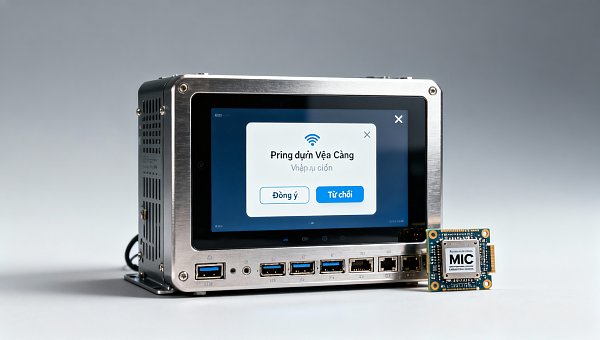
On May 8, 2026, Vietnam’s Ministry of Information and Communications (MIC) published Circular No. 12/2026/TT-BTTTT. The circular stipulates that all imported IoT devices—specifically naming gateways, sensors, and edge computing boxes—must include, at the firmware level: (1) a Vietnamese-language privacy agreement pop-up interface; (2) a GDPR-compatible data localization switch; and (3) default deactivation of cloud synchronization functionality. Devices failing to meet these requirements will be denied MIC type approval, effectively barring market entry.
Industries Affected by Segment
IoT Hardware Exporters (e.g., Chinese OEMs/ODMs)
These enterprises are directly responsible for firmware-level compliance. Non-compliant firmware will result in rejection during MIC type approval—a mandatory step before importation and sale. Impact manifests as delayed time-to-market, additional firmware development and validation costs, and potential rework of existing device families intended for Vietnam.
IoT Device Distributors & Importers
Distributors handling cross-border logistics and local certification must verify pre-shipment firmware compliance. They face increased due diligence burdens: verifying Vietnamese UI strings, testing localization switches, and confirming default sync-off behavior. Failure to validate may lead to customs hold-ups or post-import recall risks after MIC audits.
Firmware Development & Certification Support Providers
Third-party labs and firmware engineering firms supporting exporters now need Vietnamese language integration capabilities and familiarity with MIC’s type approval test protocols. Demand is rising for firmware validation services aligned specifically with Circular No. 12/2026, including bilingual UI rendering tests and data flow verification under local storage-only mode.
Key Focus Areas and Recommended Actions for Stakeholders
Monitor official MIC guidance on implementation timelines and test criteria
Circular No. 12/2026 enters force on August 1, 2026—but MIC has not yet published detailed technical specifications, test procedures, or approved translation standards for the Vietnamese privacy prompt. Stakeholders should track MIC’s official notices and any supplementary guidance documents expected before Q3 2026.
Prioritize firmware adaptation for high-volume or regulated-device categories
Not all IoT devices carry equal risk. Gateways and edge computing boxes—often acting as data aggregation points—are more likely to undergo deeper scrutiny than simple low-power sensors. Exporters should prioritize firmware updates for devices with cloud connectivity features and those already undergoing MIC certification cycles in 2026.
Distinguish policy issuance from operational readiness
The circular is formally effective August 2026, but MIC’s capacity to enforce firmware-level checks across all device submissions remains unconfirmed. Observably, initial enforcement may focus on new applications rather than legacy-certified models—making near-term renewal timing a critical variable for existing approvals.
Initiate internal firmware audit and supplier coordination now
Because firmware changes require version control, regression testing, and hardware compatibility validation, lead times often exceed 8–12 weeks. Exporters should inventory affected SKUs, assess current firmware architecture for localization modularity, and engage component suppliers (e.g., module vendors, RTOS providers) to confirm support for Vietnamese language packs and configurable sync toggles.
Editorial Perspective / Industry Observation
This regulation is better understood as an early-stage regulatory signal than an immediately enforceable operational mandate. Analysis shows it reflects Vietnam’s broader move toward asserting digital sovereignty—not only in data residency but also in user-facing transparency. While the requirement targets IoT devices specifically, its design parallels frameworks seen in ASEAN data governance discussions, suggesting possible regional spillover. However, current scope remains limited to MIC-type-approved hardware; no extension to software-only services or consumer apps is indicated in the circular. Continued observation is warranted for MIC’s publication of conformance test reports and any alignment announcements with ASEAN mutual recognition arrangements.
Conclusion
This circular marks a formal step toward localized data governance for connected hardware in Vietnam. It does not introduce broad data localization mandates for all digital services, nor does it retroactively invalidate existing certifications. Instead, it establishes a firmware-level compliance threshold for new market entries—making it a targeted, device-specific requirement. Currently, it is more appropriately understood as a preparatory milestone for exporters: one demanding technical readiness, not systemic overhaul.
Information Sources
Main source: Vietnam Ministry of Information and Communications (MIC), Circular No. 12/2026/TT-BTTTT, issued May 8, 2026.
Note: Technical annexes, test methodology documents, and official Vietnamese-language privacy template wording remain pending publication and are subject to ongoing monitoring.
Get weekly intelligence in your inbox.
No noise. No sponsored content. Pure intelligence.
 Sep 23, 2026How to Choose Lightweight ANC Headphones for Comfortable All-Day TravelHow to Choose Lightweight ANC Headphones for Comfortable All-Day Travel
 Sep 22, 2026IPX5 TWS Bluetooth Earbuds: What Protection Do They Offer for Workouts?IPX5 TWS Bluetooth Earbuds: What Protection Do They Offer for Workouts?
 Sep 21, 2026What to Look for in a Grid Integration Company for Utility-Scale Solar ProjectsWhat to Look for in a Grid Integration Company for Utility-Scale Solar Projects
 Sep 20, 2026Microgrid Controller Pricing: What Drives Cost in Commercial Energy Projects?Microgrid Controller Pricing: What Drives Cost in Commercial Energy Projects?
 Sep 19, 2026How to Choose a GaN Charger for Laptops Without Compromising Power or PortabilityHow to Choose a GaN Charger for Laptops Without Compromising Power or Portability
 Sep 18, 2026Floating Solar Farm Costs: CAPEX, OPEX, and the Site Factors That Shape ROIFloating Solar Farm Costs: CAPEX, OPEX, and the Site Factors That Shape ROI
 Sep 17, 2026Drone Delivery Solutions for Last-Mile Routes: Site, Payload, and Range PlanningDrone Delivery Solutions for Last-Mile Routes: Site, Payload, and Range Planning
 Sep 16, 2026When Low-Volume Electronics Manufacturing Makes More Sense Than Mass ProductionWhen Low-Volume Electronics Manufacturing Makes More Sense Than Mass Production
 Sep 15, 2026Wholesale WiFi Smart Switches: What Buyers Should Verify Before OrderingWholesale WiFi Smart Switches: What Buyers Should Verify Before Ordering
 Sep 14, 2026How to Select IoT Sensors for Reliable Monitoring in Harsh Industrial EnvironmentsHow to Select IoT Sensors for Reliable Monitoring in Harsh Industrial Environments
 Sep 13, 2026How Procurement Teams Can Improve Supplier Reliability With Supply Chain VisibilityHow Procurement Teams Can Improve Supplier Reliability With Supply Chain Visibility
 Sep 12, 2026Smart Manufacturing Trends 2026: What Leaders Should Prioritize for ROISmart Manufacturing Trends 2026: What Leaders Should Prioritize for ROI
 Sep 11, 2026B2B Market Analysis: How Buyers Evaluate Suppliers, Pricing, and Delivery RiskB2B Market Analysis: How Buyers Evaluate Suppliers, Pricing, and Delivery Risk
 Sep 10, 2026Residential Solar Kits in Canada: How to Size a System for Your Home and ClimateResidential Solar Kits in Canada: How to Size a System for Your Home and Climate
 Sep 09, 2026How to Specify a Syringe Assembly Line for High-Volume Sterile ProductionHow to Specify a Syringe Assembly Line for High-Volume Sterile Production
 Sep 08, 2026How to Evaluate Warehouse Robotics System Suppliers for Reliable Multi-Site DeploymentHow to Evaluate Warehouse Robotics System Suppliers for Reliable Multi-Site Deployment
 Sep 07, 2026Renewable Geothermal Energy Explained: How It Works for Heating and PowerRenewable Geothermal Energy Explained: How It Works for Heating and Power
 Sep 07, 2026How to Choose an Industrial Packaging Robot Manufacturer for Your Production LineHow to Choose an Industrial Packaging Robot Manufacturer for Your Production Line
 Sep 05, 2026How to Evaluate a Turnkey Hydro Turbine Generator Supplier for Remote Power ProjectsHow to Evaluate a Turnkey Hydro Turbine Generator Supplier for Remote Power Projects
 Sep 04, 2026Automated Ultrasonic Welding for Thermoplastic Assemblies: Process Controls That MatterAutomated Ultrasonic Welding for Thermoplastic Assemblies: Process Controls That Matter
 Sep 03, 2026Energy Forecasting for Grid Planning: Sizing Solar and Storage CapacityEnergy Forecasting for Grid Planning: Sizing Solar and Storage Capacity
 Sep 02, 2026Which Metrics Should an Energy Analytics Dashboard Track for Factory Energy Management?Which Metrics Should an Energy Analytics Dashboard Track for Factory Energy Management?
 Sep 01, 2026How Warehouse Voice Picking Improves Accuracy and Throughput in Order FulfillmentHow Warehouse Voice Picking Improves Accuracy and Throughput in Order Fulfillment
 Aug 31, 2026How to Automate Dropshipping Order Processing Without Overselling StockHow to Automate Dropshipping Order Processing Without Overselling Stock
 Aug 30, 2026How to Evaluate a Smart Lighting Supplier for Multi-Site Commercial ProjectsHow to Evaluate a Smart Lighting Supplier for Multi-Site Commercial Projects
 Aug 29, 2026Recent Advances in Smart Manufacturing and Materials Reshaping Factory InvestmentRecent Advances in Smart Manufacturing and Materials Reshaping Factory Investment
 Aug 29, 2026Selecting Lightweight Aluminum Extrusions for Strength-Critical Industrial DesignsSelecting Lightweight Aluminum Extrusions for Strength-Critical Industrial Designs