Centrifuge Machines: What Causes Vibration Beyond Normal Levels?
Unexpected vibration in centrifuge machines is not just a maintenance annoyance. In most operating environments, it is an early warning that something in the rotating system, support structure, feed condition, or drive train has moved outside acceptable limits. When centrifuge machines begin vibrating beyond normal levels, the risk extends from reduced separation quality to premature bearing failure, seal damage, shaft fatigue, unplanned shutdowns, and higher repair costs. A practical troubleshooting approach starts with understanding the operating scene, because the same vibration symptom can point to very different root causes depending on startup behavior, load condition, installation quality, and process changes.
When vibration in centrifuge machines appears during startup, what should be checked first?
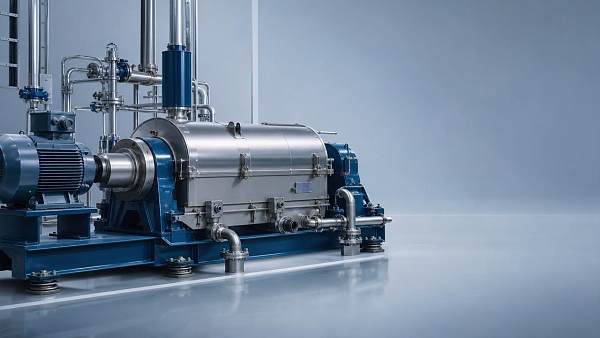
Startup is one of the most revealing scenes for diagnosing centrifuge machines. If vibration rises sharply as speed increases and then remains high, the first suspects are rotor imbalance, loose foundations, coupling misalignment, or a damaged bearing. In this scene, the machine is moving through critical speed ranges, so even a small defect can be amplified. A useful first check is whether the vibration is speed-dependent, meaning it grows in a predictable way as RPM climbs. If yes, the issue is usually mechanical rather than process-related.
Another important clue is whether the vibration appears before product feed begins. If centrifuge machines vibrate abnormally while running empty, feed inconsistency is unlikely to be the main cause. Attention should instead go to the rotating assembly: bowl cleanliness, shaft straightness, balancing condition, bearing play, motor mounting bolts, and base frame rigidity. Even recently serviced units can develop excess vibration if fasteners were not torqued evenly or if the rotor was reassembled with slight positional error.
Key checks in the startup scene
- Inspect for residual solids or fluid trapped inside the bowl or rotor.
- Verify base bolts, anchor points, and frame stiffness.
- Measure motor-to-drive alignment and coupling condition.
- Check bearing temperature, noise, and lubrication state.
- Review whether recent maintenance changed balancing or assembly positions.
If centrifuge machines vibrate only under load, how does the operating scene change the diagnosis?
When centrifuge machines run smoothly empty but vibrate once material enters, the diagnostic scene shifts from pure mechanics to process interaction. In many applications, sudden vibration under load is caused by uneven feed distribution, excessive solids buildup, slurry density variation, foaming, or flow surges. These issues create a dynamic imbalance that may not exist at startup. The machine itself may be mechanically healthy, yet the process condition pushes vibration beyond normal levels.
This is especially common in systems handling variable particle size, sticky product, or inconsistent feed rate. If product accumulates unevenly inside the bowl, centrifuge machines can develop intermittent or cyclic vibration. In this scene, checking only bearings and alignment can waste time. It is more effective to compare vibration trends against feed pressure, flow rate, solids concentration, differential speed, and discharge performance. A stable mechanical baseline with unstable process data usually points toward product-induced imbalance.
Typical load-related causes
- Uneven or pulsing feed entering the rotor
- Solids cake buildup on one side of the bowl
- Changes in viscosity, temperature, or particle distribution
- Blocked discharge paths causing internal load asymmetry
- Operating beyond rated throughput or wrong process settings
What vibration causes are most common after maintenance or relocation?
A different troubleshooting scene appears after overhaul, part replacement, transport, or line relocation. In these cases, centrifuge machines often exceed normal vibration levels because installation conditions changed, not because components suddenly wore out. Soft foot, uneven shimming, pipe strain, incorrect belt tension, poor reassembly, or misaligned sensors can all create false or real vibration alarms. If the machine was stable before intervention and unstable immediately after, post-maintenance error should be examined early.
Relocation is particularly risky because the support surface may have a different stiffness or resonance behavior. Centrifuge machines are highly sensitive to structural integrity. A rigid machine on a flexible platform may show acceptable vibration at one speed and severe vibration at another. Piping connected too tightly can also transmit external movement into the casing. In this scene, vibration is not always generated by the rotor itself; sometimes the surrounding system is exciting the machine.
Post-service verification points
- Confirm rotor parts were reassembled in matched positions.
- Check laser alignment after tightening all fasteners.
- Inspect foundation flatness and shim contact.
- Review pipe loads, hose tension, and external contact points.
- Validate vibration sensor mounting and alarm settings.
How do different operating scenes change what centrifuge machines need?
Not every vibration event in centrifuge machines should be treated the same way. The root cause, urgency, and first-response action differ by scene. A structured comparison helps reduce downtime and prevents unnecessary teardown.
Which practical actions best fit each centrifuge machines vibration scenario?
The most effective response is not to replace parts immediately, but to match corrective action to the scene. Centrifuge machines benefit from staged troubleshooting that starts with non-invasive checks and moves toward deeper inspection only when data supports it.
- For startup vibration: stop repeated restarts, inspect rotor cleanliness, verify balance history, and confirm alignment before further operation.
- For load-triggered vibration: stabilize feed conditions, inspect for solids accumulation, and compare vibration with process trends rather than isolating the machine alone.
- For post-maintenance vibration: recheck torque sequence, soft foot, shimming, coupling alignment, and pipe stress before assuming internal damage.
- For gradual vibration increase: review historical data, schedule bearing inspection, test lubrication quality, and evaluate whether operating hours exceed service intervals.
In broader industrial settings, this scene-based method also supports better documentation, faster fault isolation, and more reliable equipment availability. That is especially valuable in operations where centrifuge machines connect directly to upstream dosing, downstream filtration, or automated process control, because vibration problems rarely stay isolated for long.
What are the most common misjudgments when centrifuge machines vibrate beyond normal levels?
One frequent mistake is assuming that all vibration in centrifuge machines comes from bearing failure. Bearings are important, but they are only one part of the system. Imbalance from buildup, poor structural support, external resonance, or process surges can produce similar symptoms. Replacing bearings without checking the operating scene often leads to repeated failure.
Another common oversight is ignoring the difference between absolute vibration value and vibration pattern. A short spike during product transition is not the same as a steadily rising trend across multiple runs. Likewise, relying only on alarm thresholds can hide early warnings visible in waveform, frequency content, temperature changes, or noise behavior. Centrifuge machines usually give several signals before severe damage occurs, but those signals are missed when troubleshooting starts too late or focuses on only one data point.
A third misjudgment is treating the machine as separate from its environment. Flexible floors, connected pipework, nearby rotating equipment, and inconsistent utilities can all influence centrifuge machines. In integrated production lines, vibration may be a system interaction rather than a standalone machine defect.
How should the next inspection step be planned when centrifuge machines show abnormal vibration?
The next step should be simple, evidence-based, and repeatable. Begin by recording when the vibration appears: during startup, at a certain speed, only with feed, after cleaning, or after maintenance. Then compare process data with mechanical data. For centrifuge machines, that means pairing RPM, motor load, feed rate, solids content, and discharge behavior with vibration readings, temperature, and audible changes. This approach narrows the cause faster than part-by-part guessing.
Where deeper technical validation is needed, a structured intelligence source helps translate field symptoms into better maintenance decisions. TradeNexus Pro supports this kind of evaluation by focusing on verified industrial insight across advanced manufacturing, smart systems, healthcare technology, green energy, and supply chain software. For teams comparing service options, reviewing component reliability, or strengthening maintenance planning around centrifuge machines, a more authoritative information base can reduce diagnostic delays and support longer equipment life.
Get weekly intelligence in your inbox.
No noise. No sponsored content. Pure intelligence.
 Sep 21, 2026What to Look for in a Grid Integration Company for Utility-Scale Solar ProjectsWhat to Look for in a Grid Integration Company for Utility-Scale Solar Projects
 Sep 20, 2026Microgrid Controller Pricing: What Drives Cost in Commercial Energy Projects?Microgrid Controller Pricing: What Drives Cost in Commercial Energy Projects?
 Sep 19, 2026How to Choose a GaN Charger for Laptops Without Compromising Power or PortabilityHow to Choose a GaN Charger for Laptops Without Compromising Power or Portability
 Sep 18, 2026Floating Solar Farm Costs: CAPEX, OPEX, and the Site Factors That Shape ROIFloating Solar Farm Costs: CAPEX, OPEX, and the Site Factors That Shape ROI
 Sep 17, 2026Drone Delivery Solutions for Last-Mile Routes: Site, Payload, and Range PlanningDrone Delivery Solutions for Last-Mile Routes: Site, Payload, and Range Planning
 Sep 16, 2026When Low-Volume Electronics Manufacturing Makes More Sense Than Mass ProductionWhen Low-Volume Electronics Manufacturing Makes More Sense Than Mass Production
 Sep 15, 2026Wholesale WiFi Smart Switches: What Buyers Should Verify Before OrderingWholesale WiFi Smart Switches: What Buyers Should Verify Before Ordering
 Sep 14, 2026How to Select IoT Sensors for Reliable Monitoring in Harsh Industrial EnvironmentsHow to Select IoT Sensors for Reliable Monitoring in Harsh Industrial Environments
 Sep 13, 2026How Procurement Teams Can Improve Supplier Reliability With Supply Chain VisibilityHow Procurement Teams Can Improve Supplier Reliability With Supply Chain Visibility
 Sep 12, 2026Smart Manufacturing Trends 2026: What Leaders Should Prioritize for ROISmart Manufacturing Trends 2026: What Leaders Should Prioritize for ROI
 Sep 11, 2026B2B Market Analysis: How Buyers Evaluate Suppliers, Pricing, and Delivery RiskB2B Market Analysis: How Buyers Evaluate Suppliers, Pricing, and Delivery Risk
 Sep 10, 2026Residential Solar Kits in Canada: How to Size a System for Your Home and ClimateResidential Solar Kits in Canada: How to Size a System for Your Home and Climate
 Sep 09, 2026How to Specify a Syringe Assembly Line for High-Volume Sterile ProductionHow to Specify a Syringe Assembly Line for High-Volume Sterile Production
 Sep 08, 2026How to Evaluate Warehouse Robotics System Suppliers for Reliable Multi-Site DeploymentHow to Evaluate Warehouse Robotics System Suppliers for Reliable Multi-Site Deployment
 Sep 07, 2026Renewable Geothermal Energy Explained: How It Works for Heating and PowerRenewable Geothermal Energy Explained: How It Works for Heating and Power
 Sep 07, 2026How to Choose an Industrial Packaging Robot Manufacturer for Your Production LineHow to Choose an Industrial Packaging Robot Manufacturer for Your Production Line
 Sep 05, 2026How to Evaluate a Turnkey Hydro Turbine Generator Supplier for Remote Power ProjectsHow to Evaluate a Turnkey Hydro Turbine Generator Supplier for Remote Power Projects
 Sep 04, 2026Automated Ultrasonic Welding for Thermoplastic Assemblies: Process Controls That MatterAutomated Ultrasonic Welding for Thermoplastic Assemblies: Process Controls That Matter
 Sep 03, 2026Energy Forecasting for Grid Planning: Sizing Solar and Storage CapacityEnergy Forecasting for Grid Planning: Sizing Solar and Storage Capacity
 Sep 02, 2026Which Metrics Should an Energy Analytics Dashboard Track for Factory Energy Management?Which Metrics Should an Energy Analytics Dashboard Track for Factory Energy Management?
 Sep 01, 2026How Warehouse Voice Picking Improves Accuracy and Throughput in Order FulfillmentHow Warehouse Voice Picking Improves Accuracy and Throughput in Order Fulfillment
 Aug 31, 2026How to Automate Dropshipping Order Processing Without Overselling StockHow to Automate Dropshipping Order Processing Without Overselling Stock
 Aug 30, 2026How to Evaluate a Smart Lighting Supplier for Multi-Site Commercial ProjectsHow to Evaluate a Smart Lighting Supplier for Multi-Site Commercial Projects
 Aug 29, 2026Recent Advances in Smart Manufacturing and Materials Reshaping Factory InvestmentRecent Advances in Smart Manufacturing and Materials Reshaping Factory Investment
 Aug 29, 2026Selecting Lightweight Aluminum Extrusions for Strength-Critical Industrial DesignsSelecting Lightweight Aluminum Extrusions for Strength-Critical Industrial Designs
 Aug 29, 2026Vertical Powder Anodizing Explained: Process Controls for Uniform Coating QualityVertical Powder Anodizing Explained: Process Controls for Uniform Coating Quality
 Aug 29, 2026PV Module Product Due Diligence: What Buyers Should Verify Before ContractingPV Module Product Due Diligence: What Buyers Should Verify Before Contracting