Medical Grade Silicone: Which Properties Matter in Device Design?
In medical device development, choosing medical grade silicone is about far more than softness or flexibility. The material often sits at the intersection of patient safety, processing efficiency, and long-term product reliability. In practice, the wrong silicone can create problems with biocompatibility, sterilization, compression set, bonding, or regulatory documentation long before a product reaches market. The right choice, by contrast, supports cleaner validation, fewer design iterations, and better field performance. This guide explains which properties of medical grade silicone matter most in device design, how to compare options, and what to verify before final material selection.
What is medical grade silicone, and why is it treated differently from general-purpose silicone?
At a basic level, medical grade silicone refers to silicone materials formulated, manufactured, and documented for healthcare-related use. That does not mean every grade fits every device. Some are suitable for short-term skin contact, while others are designed for implantable or long-duration use. The distinction matters because device design is not only about material chemistry; it also includes toxicological profile, consistency across lots, traceability, and support for regulatory submissions.
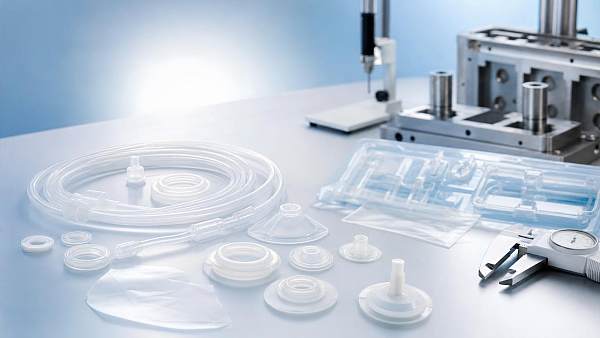
Compared with industrial silicone, medical grade silicone is typically expected to offer tighter control over extractables, stronger quality documentation, and testing aligned with standards such as ISO 10993, USP Class VI, or other region-specific requirements. In many healthcare technology applications, that extra level of control reduces uncertainty during verification and validation.
Common applications include seals in fluid handling systems, wearable skin-contact parts, catheter components, respiratory masks, valves, tubing, overmolded electronics, and cushioning interfaces. Across these use cases, the same question appears repeatedly: which material properties directly influence design success rather than simply looking good on a data sheet?
Which physical and mechanical properties matter most in device design?
When evaluating medical grade silicone, the most important mechanical properties depend on how the device is used, how often it is stressed, and how it interfaces with the body or other components. Shore hardness is usually the first screening metric, but it should never be the only one. A soft material may improve comfort, yet fail under repeated compression or tear during assembly.
Key properties to review include:
- Shore hardness: Influences feel, sealing force, flexibility, and insertion characteristics.
- Tensile strength and elongation: Important for parts that stretch, flex, or undergo assembly strain.
- Tear resistance: Critical for thin walls, slits, diaphragms, and components exposed to repeated handling.
- Compression set: A major factor for gaskets, seals, and valves that must recover after long-term loading.
- Resilience and fatigue resistance: Relevant in dynamic applications such as pumps, wearable closures, or breathing-related systems.
For example, a seal in a diagnostic cartridge may require low compression set more than high elongation, while a wearable patch interface may prioritize low hardness, skin comfort, and dimensional stability. In short, the best medical grade silicone is not the “strongest” grade in isolation, but the one whose mechanical profile matches the real duty cycle of the device.
How do biocompatibility and regulatory requirements affect material choice?
Biocompatibility is one of the most searched topics around medical grade silicone, and for good reason. A material can perform well mechanically yet still be unsuitable for its intended contact type or contact duration. Device design teams should begin by defining whether the component will have skin contact, mucosal contact, indirect fluid contact, or implant exposure. This context drives what evidence is needed.
It is also important to avoid a common mistake: assuming that “medical grade” automatically guarantees approval for every healthcare use. In reality, suitability depends on the final device configuration, processing method, additives, post-curing conditions, sterilization, and patient-contact profile. Supplier test reports are useful, but they do not replace finished-device evaluation.
Useful checkpoints include whether the medical grade silicone supplier provides:
- Biocompatibility data relevant to expected contact type
- Lot traceability and change notification practices
- Information on additives, catalysts, and processing aids
- Support for extractables and leachables assessment when needed
- Regulatory documentation that aligns with target market expectations
Within healthcare technology and broader cross-industry product development, stronger documentation often translates into shorter risk reviews and fewer delays during submission preparation. That is one reason why medical grade silicone selection should begin early, not after the geometry is finalized.
What role do sterilization resistance and chemical stability play?
A device material may pass initial tests and still fail after sterilization exposure. This is where medical grade silicone often offers an advantage, but the grade still has to match the sterilization method. Steam, ethylene oxide, gamma, and e-beam can each affect color, mechanical integrity, surface properties, or long-term aging differently.
For reusable components, repeated sterilization cycles can increase hardness, reduce elongation, or alter seal performance over time. For single-use products, even one cycle may influence package interaction, surface tack, or transparency. Chemical stability also matters when the silicone contacts drugs, cleaning agents, lipids, bodily fluids, or disinfectants. In fluid pathways and wearable electronics, swelling or extractable interaction can create hidden reliability issues.
A practical selection process should ask three questions early: Which sterilization method is planned? How many cycles will the material face? Which chemicals will it contact during use, cleaning, transport, and storage? The answers often eliminate unsuitable grades before expensive tooling begins.
How should design teams compare processing options such as LSR, HCR, and extrusion grades?
Not every medical grade silicone behaves the same in manufacturing. Liquid silicone rubber (LSR), high-consistency rubber (HCR), and extrusion silicone each support different geometries, tolerances, and production strategies. Selecting the wrong process family can raise scrap rates, complicate bonding, or limit feature resolution.
LSR is often preferred for high-volume molded components with tight repeatability, clean processing, and complex micro-features. HCR can be useful where specific mechanical performance or custom compounding is needed. Extrusion grades are common for tubing, profiles, and continuous lengths. If overmolding onto plastics or electronics is required, adhesion behavior and molding temperature become critical screening factors.
This comparison shows why a material decision is never purely chemical. The chosen medical grade silicone must align with tooling, throughput, dimensional targets, and downstream validation plans.
What are the most common mistakes when selecting medical grade silicone?
Several recurring mistakes create avoidable delays. The first is relying on one property, usually hardness, while ignoring tear resistance, compression set, or sterilization aging. The second is assuming a supplier’s generic biocompatibility statement is enough for final device clearance. The third is waiting too long to evaluate process compatibility, especially for overmolding, bonding, or thin-wall molding.
Another overlooked issue is supply continuity. Because healthcare programs often have long life cycles, a medical grade silicone grade should be evaluated not only for current technical fit but also for long-term availability, quality system maturity, and formulation change control. In a global B2B environment where supply chain resilience matters as much as lab performance, this point deserves early attention.
A more reliable approach is to build a short decision matrix covering patient contact type, sterilization route, mechanical stress, assembly method, documentation level, and lifecycle supply risk. That framework prevents attractive but unsuitable materials from moving too far into development.
How can medical grade silicone be selected more efficiently for faster commercialization?
Efficient selection starts with translating product requirements into testable material criteria. Instead of asking for a “soft, durable silicone,” define target hardness range, minimum tear strength, acceptable compression set, sterilization exposure, chemical contact profile, and required documentation package. Then screen medical grade silicone candidates against those criteria before prototype freeze.
A practical workflow often includes these steps:
- Define contact type, use duration, and sterilization pathway.
- Rank mechanical priorities such as sealing, flexibility, tear resistance, or recovery.
- Match the part geometry to LSR, HCR, or extrusion processing.
- Review supplier quality documents and regulatory support.
- Prototype under realistic assembly and sterilization conditions.
- Confirm long-term supply and change-management practices.
This method reduces redesign risk and helps the selected medical grade silicone support both engineering goals and commercialization timelines. It is especially useful where healthcare technology intersects with advanced manufacturing, connected devices, and regulated global sourcing.
Quick FAQ summary table
The best medical grade silicone decision is rarely made by looking at a catalog alone. It comes from connecting material properties with patient contact needs, sterilization demands, manufacturing realities, and regulatory evidence. When those factors are evaluated together, device programs are better positioned to avoid validation setbacks and achieve more reliable product performance.
For the next step, build a property checklist around the actual device environment, request supporting data early, and test leading medical grade silicone candidates under realistic conditions rather than nominal lab assumptions. That discipline turns material selection from a late-stage risk into a strategic design advantage.
Get weekly intelligence in your inbox.
No noise. No sponsored content. Pure intelligence.
 Sep 21, 2026What to Look for in a Grid Integration Company for Utility-Scale Solar ProjectsWhat to Look for in a Grid Integration Company for Utility-Scale Solar Projects
 Sep 20, 2026Microgrid Controller Pricing: What Drives Cost in Commercial Energy Projects?Microgrid Controller Pricing: What Drives Cost in Commercial Energy Projects?
 Sep 19, 2026How to Choose a GaN Charger for Laptops Without Compromising Power or PortabilityHow to Choose a GaN Charger for Laptops Without Compromising Power or Portability
 Sep 18, 2026Floating Solar Farm Costs: CAPEX, OPEX, and the Site Factors That Shape ROIFloating Solar Farm Costs: CAPEX, OPEX, and the Site Factors That Shape ROI
 Sep 17, 2026Drone Delivery Solutions for Last-Mile Routes: Site, Payload, and Range PlanningDrone Delivery Solutions for Last-Mile Routes: Site, Payload, and Range Planning
 Sep 16, 2026When Low-Volume Electronics Manufacturing Makes More Sense Than Mass ProductionWhen Low-Volume Electronics Manufacturing Makes More Sense Than Mass Production
 Sep 15, 2026Wholesale WiFi Smart Switches: What Buyers Should Verify Before OrderingWholesale WiFi Smart Switches: What Buyers Should Verify Before Ordering
 Sep 14, 2026How to Select IoT Sensors for Reliable Monitoring in Harsh Industrial EnvironmentsHow to Select IoT Sensors for Reliable Monitoring in Harsh Industrial Environments
 Sep 13, 2026How Procurement Teams Can Improve Supplier Reliability With Supply Chain VisibilityHow Procurement Teams Can Improve Supplier Reliability With Supply Chain Visibility
 Sep 12, 2026Smart Manufacturing Trends 2026: What Leaders Should Prioritize for ROISmart Manufacturing Trends 2026: What Leaders Should Prioritize for ROI
 Sep 11, 2026B2B Market Analysis: How Buyers Evaluate Suppliers, Pricing, and Delivery RiskB2B Market Analysis: How Buyers Evaluate Suppliers, Pricing, and Delivery Risk
 Sep 10, 2026Residential Solar Kits in Canada: How to Size a System for Your Home and ClimateResidential Solar Kits in Canada: How to Size a System for Your Home and Climate
 Sep 09, 2026How to Specify a Syringe Assembly Line for High-Volume Sterile ProductionHow to Specify a Syringe Assembly Line for High-Volume Sterile Production
 Sep 08, 2026How to Evaluate Warehouse Robotics System Suppliers for Reliable Multi-Site DeploymentHow to Evaluate Warehouse Robotics System Suppliers for Reliable Multi-Site Deployment
 Sep 07, 2026Renewable Geothermal Energy Explained: How It Works for Heating and PowerRenewable Geothermal Energy Explained: How It Works for Heating and Power
 Sep 07, 2026How to Choose an Industrial Packaging Robot Manufacturer for Your Production LineHow to Choose an Industrial Packaging Robot Manufacturer for Your Production Line
 Sep 05, 2026How to Evaluate a Turnkey Hydro Turbine Generator Supplier for Remote Power ProjectsHow to Evaluate a Turnkey Hydro Turbine Generator Supplier for Remote Power Projects
 Sep 04, 2026Automated Ultrasonic Welding for Thermoplastic Assemblies: Process Controls That MatterAutomated Ultrasonic Welding for Thermoplastic Assemblies: Process Controls That Matter
 Sep 03, 2026Energy Forecasting for Grid Planning: Sizing Solar and Storage CapacityEnergy Forecasting for Grid Planning: Sizing Solar and Storage Capacity
 Sep 02, 2026Which Metrics Should an Energy Analytics Dashboard Track for Factory Energy Management?Which Metrics Should an Energy Analytics Dashboard Track for Factory Energy Management?
 Sep 01, 2026How Warehouse Voice Picking Improves Accuracy and Throughput in Order FulfillmentHow Warehouse Voice Picking Improves Accuracy and Throughput in Order Fulfillment
 Aug 31, 2026How to Automate Dropshipping Order Processing Without Overselling StockHow to Automate Dropshipping Order Processing Without Overselling Stock
 Aug 30, 2026How to Evaluate a Smart Lighting Supplier for Multi-Site Commercial ProjectsHow to Evaluate a Smart Lighting Supplier for Multi-Site Commercial Projects
 Aug 29, 2026Recent Advances in Smart Manufacturing and Materials Reshaping Factory InvestmentRecent Advances in Smart Manufacturing and Materials Reshaping Factory Investment
 Aug 29, 2026Selecting Lightweight Aluminum Extrusions for Strength-Critical Industrial DesignsSelecting Lightweight Aluminum Extrusions for Strength-Critical Industrial Designs
 Aug 29, 2026Vertical Powder Anodizing Explained: Process Controls for Uniform Coating QualityVertical Powder Anodizing Explained: Process Controls for Uniform Coating Quality
 Aug 29, 2026PV Module Product Due Diligence: What Buyers Should Verify Before ContractingPV Module Product Due Diligence: What Buyers Should Verify Before Contracting