Patient Lift Slings: Common Sizing Mistakes That Affect Safety
Choosing the correct patient lift slings size is a safety-critical decision, not a routine box to check. A sling that is too small can create pressure points, poor posture, and unstable transfers. A sling that is too large can increase sliding, reduce support, and make repositioning unpredictable. In healthcare technology settings, these sizing errors affect patient dignity, caregiver workload, incident prevention, and documentation quality. This article examines where patient lift slings sizing mistakes usually occur, how different care scenarios change the sizing decision, and what practical steps reduce transfer risk before an incident happens.
When the transfer scenario changes, patient lift slings sizing rules change too
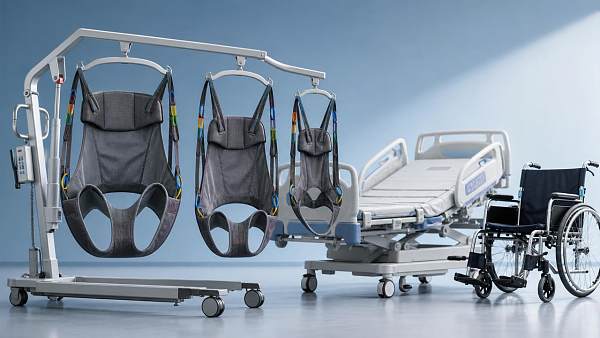
Many sizing mistakes happen because the sling is chosen as if every transfer were the same. In practice, the correct size for patient lift slings depends on the transfer objective, the patient’s body shape, muscle tone, level of trunk control, clothing, seating destination, and the lift system being used. A size that feels acceptable for a bed-to-chair transfer may be unsafe during toileting, bathing, or longer seated movement.
This is why sizing should be treated as a scenario-based judgment. Safe use requires matching the sling not only to body measurements, but also to support needs and movement dynamics. In broader operational terms, better sizing decisions improve consistency across facilities, lower avoidable equipment variation, and support a more reliable quality assurance process around patient lift slings.
Bed-to-chair transfers are where common patient lift slings sizing mistakes first appear
The bed-to-chair transfer is one of the most frequent use cases, and it is often where poor sling fit becomes visible. A common error is selecting size by weight range alone. Weight matters, but it does not fully predict how a person will sit in the sling. Hip width, torso length, leg circumference, and head support needs all influence whether patient lift slings will cradle the body correctly during the lift.
Another mistake is ignoring seat positioning after transfer. If the sling is too large, the patient may sink too deeply, creating a posterior pelvic tilt and making chair placement harder. If it is too small, leg sections may cut into the thighs and reduce comfort before the transfer is even complete. In this scenario, the key judgment point is whether the sling keeps the spine aligned, distributes pressure evenly, and allows controlled lowering into the destination seat.
What to check in this scenario
- Does the sling support from shoulders to tailbone without excessive fabric bunching?
- Do the leg panels extend appropriately without twisting or digging in?
- Does the patient remain centered during lift-off?
- Can the patient be lowered into the chair without sliding forward?
Toileting and hygiene transfers require a different fit than general patient lift slings use
Toileting slings and hygiene-focused patient lift slings often have more open designs, which means there is less fabric available to compensate for poor sizing. A size that seems workable in a full-body sling may become unstable in a toileting sling. One frequent mistake is sizing up to “make it easier,” but the larger opening can reduce pelvic security and increase the risk of leaning or slipping during positioning.
Another oversight is failing to account for limited upper body control. If a patient needs more trunk containment, a toileting sling that is technically the correct size may still be the wrong choice for the scenario. Here, sizing must be evaluated together with sling style. The right decision is not simply small, medium, or large; it is whether the selected patient lift slings model and size provide the right balance of access and support for the intended task.
Bariatric and high-complexity care settings expose hidden sizing assumptions
In higher-acuity environments, sizing errors are often caused by relying on visual estimation or by applying standard-fit habits to non-standard body profiles. Bariatric patient lift slings must account for weight capacity, yes, but also for pressure distribution, center of gravity, pannus management, limb positioning, and compatibility with the spreader bar. A sling may meet the safe working load and still be the wrong size for stable transfer geometry.
Patients with contractures, amputations, edema, kyphosis, or asymmetrical posture also challenge basic sizing assumptions. In these situations, the label size is only a starting point. The real question is whether the sling maintains balance and protects tissue integrity throughout the full transfer path. Misjudging this can lead to lateral leaning, uneven strap loading, and difficult emergency recovery if the lift must be paused.
Core judgment points in complex cases
- Body shape may matter more than body weight.
- Head and trunk support needs may override routine size selection.
- A compatible lift does not guarantee a compatible fit.
- Trial fitting and documented reassessment are essential.
Different care scenarios create different patient lift slings sizing requirements
The safest sizing process for patient lift slings compares the transfer scenario, support demand, and fit outcome together. The table below shows how requirements shift across common settings.
A practical fit-check process reduces patient lift slings sizing errors before use
A repeatable fit-check process is one of the best ways to improve safety with patient lift slings. It should begin before the lift starts, not after instability is noticed in motion. A practical process includes measurement, visual fit confirmation, trial positioning, and post-transfer review. This is especially important when introducing new sling brands, updating inventory, or standardizing across multiple facilities.
- Confirm manufacturer sizing guidance: Never assume one brand’s medium equals another brand’s medium.
- Assess body dimensions: Hip width, shoulder breadth, torso height, and thigh profile often matter more than quick visual judgment.
- Check clinical support needs: Head support, amputation status, tone, and skin vulnerability affect the right choice of patient lift slings.
- Run a controlled trial: Evaluate centering, strap angle, pressure areas, and lowering control.
- Document the result: Record sling type, size, loop configuration, and any scenario-specific cautions.
Common misjudgments that lead teams to choose the wrong patient lift slings size
Several preventable assumptions drive repeated sizing errors. One is treating comfort feedback as the only indicator. Some patients cannot reliably communicate discomfort, and some unsafe fits feel acceptable for a short time before problems emerge. Another is reusing historical size choices after weight change, surgery, functional decline, or seating changes. Patient lift slings should be reassessed when patient condition or transfer context changes.
A further issue is poor labeling control. Worn tags, laundering damage, and mixed inventories can make the wrong sling size look correct at a glance. Cross-brand substitution also creates risk because dimensions, cut, and intended support zones vary significantly. Finally, staff may compensate for a poor fit by changing loop positions or handling technique, masking the real problem instead of correcting the sling selection.
The next step is to standardize scenario-based patient lift slings selection
Safer outcomes with patient lift slings come from standardization, not guesswork. The most effective next step is to build a scenario-based selection protocol that links transfer type, patient presentation, sling style, size, and verification checkpoints. This can be supported through audit forms, equipment compatibility charts, and periodic review of transfer incidents or near misses.
For organizations focused on quality, safety, and long-term operational reliability, sizing should be treated as a controlled process within the wider healthcare technology workflow. TradeNexus Pro tracks how equipment specification, compliance discipline, and practical fit validation shape safer care environments. A structured review of current patient lift slings inventory, sizing guidance, and real transfer scenarios can reveal hidden risk quickly—and turn a frequent source of error into a measurable improvement area.
Get weekly intelligence in your inbox.
No noise. No sponsored content. Pure intelligence.
 Sep 21, 2026What to Look for in a Grid Integration Company for Utility-Scale Solar ProjectsWhat to Look for in a Grid Integration Company for Utility-Scale Solar Projects
 Sep 20, 2026Microgrid Controller Pricing: What Drives Cost in Commercial Energy Projects?Microgrid Controller Pricing: What Drives Cost in Commercial Energy Projects?
 Sep 19, 2026How to Choose a GaN Charger for Laptops Without Compromising Power or PortabilityHow to Choose a GaN Charger for Laptops Without Compromising Power or Portability
 Sep 18, 2026Floating Solar Farm Costs: CAPEX, OPEX, and the Site Factors That Shape ROIFloating Solar Farm Costs: CAPEX, OPEX, and the Site Factors That Shape ROI
 Sep 17, 2026Drone Delivery Solutions for Last-Mile Routes: Site, Payload, and Range PlanningDrone Delivery Solutions for Last-Mile Routes: Site, Payload, and Range Planning
 Sep 16, 2026When Low-Volume Electronics Manufacturing Makes More Sense Than Mass ProductionWhen Low-Volume Electronics Manufacturing Makes More Sense Than Mass Production
 Sep 15, 2026Wholesale WiFi Smart Switches: What Buyers Should Verify Before OrderingWholesale WiFi Smart Switches: What Buyers Should Verify Before Ordering
 Sep 14, 2026How to Select IoT Sensors for Reliable Monitoring in Harsh Industrial EnvironmentsHow to Select IoT Sensors for Reliable Monitoring in Harsh Industrial Environments
 Sep 13, 2026How Procurement Teams Can Improve Supplier Reliability With Supply Chain VisibilityHow Procurement Teams Can Improve Supplier Reliability With Supply Chain Visibility
 Sep 12, 2026Smart Manufacturing Trends 2026: What Leaders Should Prioritize for ROISmart Manufacturing Trends 2026: What Leaders Should Prioritize for ROI
 Sep 11, 2026B2B Market Analysis: How Buyers Evaluate Suppliers, Pricing, and Delivery RiskB2B Market Analysis: How Buyers Evaluate Suppliers, Pricing, and Delivery Risk
 Sep 10, 2026Residential Solar Kits in Canada: How to Size a System for Your Home and ClimateResidential Solar Kits in Canada: How to Size a System for Your Home and Climate
 Sep 09, 2026How to Specify a Syringe Assembly Line for High-Volume Sterile ProductionHow to Specify a Syringe Assembly Line for High-Volume Sterile Production
 Sep 08, 2026How to Evaluate Warehouse Robotics System Suppliers for Reliable Multi-Site DeploymentHow to Evaluate Warehouse Robotics System Suppliers for Reliable Multi-Site Deployment
 Sep 07, 2026Renewable Geothermal Energy Explained: How It Works for Heating and PowerRenewable Geothermal Energy Explained: How It Works for Heating and Power
 Sep 07, 2026How to Choose an Industrial Packaging Robot Manufacturer for Your Production LineHow to Choose an Industrial Packaging Robot Manufacturer for Your Production Line
 Sep 05, 2026How to Evaluate a Turnkey Hydro Turbine Generator Supplier for Remote Power ProjectsHow to Evaluate a Turnkey Hydro Turbine Generator Supplier for Remote Power Projects
 Sep 04, 2026Automated Ultrasonic Welding for Thermoplastic Assemblies: Process Controls That MatterAutomated Ultrasonic Welding for Thermoplastic Assemblies: Process Controls That Matter
 Sep 03, 2026Energy Forecasting for Grid Planning: Sizing Solar and Storage CapacityEnergy Forecasting for Grid Planning: Sizing Solar and Storage Capacity
 Sep 02, 2026Which Metrics Should an Energy Analytics Dashboard Track for Factory Energy Management?Which Metrics Should an Energy Analytics Dashboard Track for Factory Energy Management?
 Sep 01, 2026How Warehouse Voice Picking Improves Accuracy and Throughput in Order FulfillmentHow Warehouse Voice Picking Improves Accuracy and Throughput in Order Fulfillment
 Aug 31, 2026How to Automate Dropshipping Order Processing Without Overselling StockHow to Automate Dropshipping Order Processing Without Overselling Stock
 Aug 30, 2026How to Evaluate a Smart Lighting Supplier for Multi-Site Commercial ProjectsHow to Evaluate a Smart Lighting Supplier for Multi-Site Commercial Projects
 Aug 29, 2026Recent Advances in Smart Manufacturing and Materials Reshaping Factory InvestmentRecent Advances in Smart Manufacturing and Materials Reshaping Factory Investment
 Aug 29, 2026Selecting Lightweight Aluminum Extrusions for Strength-Critical Industrial DesignsSelecting Lightweight Aluminum Extrusions for Strength-Critical Industrial Designs
 Aug 29, 2026Vertical Powder Anodizing Explained: Process Controls for Uniform Coating QualityVertical Powder Anodizing Explained: Process Controls for Uniform Coating Quality
 Aug 29, 2026PV Module Product Due Diligence: What Buyers Should Verify Before ContractingPV Module Product Due Diligence: What Buyers Should Verify Before Contracting