Mobility Scooters: Why Turning Radius Matters Indoors
When choosing mobility scooters for indoor use, turning radius can make the difference between smooth movement and daily frustration. In tight hallways, elevators, kitchens, reception areas, clinics, and retail aisles, the ability to turn sharply affects comfort, safety, and independence. For buyers comparing specifications across a crowded market, turning radius is not a minor technical detail; it is one of the most practical indicators of whether mobility scooters will perform well in real environments rather than only on product sheets.
Turning Radius as a Core Indoor Performance Metric
Turning radius refers to the smallest circular turn a scooter can make. In simple terms, it shows how much space mobility scooters need to change direction. Indoors, this directly influences whether a user can pivot through apartment corridors, align with a dining table, enter a lift without repeated corrections, or move through narrow storefronts without clipping corners.
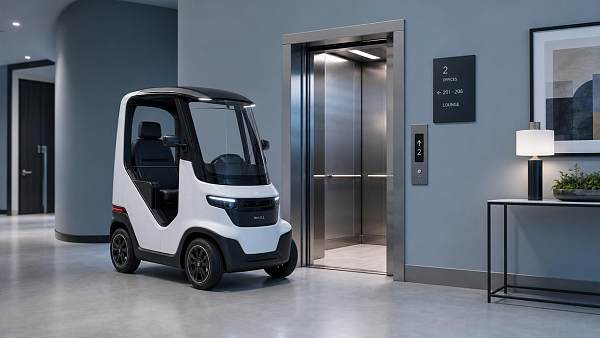
Many people initially focus on speed, battery range, or weight capacity. Those factors matter, but indoor usability often depends more on maneuverability. A scooter with a larger seat and longer wheelbase may look stable and robust, yet still feel cumbersome in compact spaces. By contrast, mobility scooters designed with a tighter turning radius often deliver better control in homes, care facilities, pharmacies, and mixed-use commercial interiors.
This specification is especially relevant in today’s built environment, where accessibility improvements coexist with older building layouts. Doorways may meet minimum standards while kitchens, storage rooms, and service counters remain restricted. As a result, evaluating indoor mobility scooters requires attention to both engineering data and the realities of space planning.
Why Indoor Environments Create Different Demands
Outdoor models are often optimized for longer travel, stronger suspension, and uneven terrain. Indoor use introduces a different set of priorities: precision, low-speed control, compact dimensions, and smooth navigation around obstacles. In these settings, turning radius affects not only convenience but also safety and wear on floors, walls, and furnishings.
A tight indoor path typically includes multiple transition points: doorway thresholds, corridor bends, elevator entries, checkout lanes, waiting areas, and furniture clusters. If mobility scooters need extra space to turn, users may need repeated reversing and repositioning. That can increase fatigue, reduce confidence, and create congestion in shared environments.
- Narrow residential hallways and compact kitchens
- Small elevators in older apartment or office buildings
- Clinic waiting rooms with fixed seating layouts
- Retail spaces with seasonal displays and changing aisle widths
- Assisted living interiors where circulation routes must remain clear
In all of these spaces, the best mobility scooters are not simply the most powerful. They are the ones that match spatial constraints while preserving user comfort and operational reliability.
Key Design Factors That Influence Turning Radius
Turning radius does not exist in isolation. It is shaped by a combination of chassis geometry, wheel configuration, steering system, and overall scooter proportions. Understanding these relationships helps buyers interpret product differences more accurately.
Because of these variables, comparing mobility scooters by turning radius alone is not enough. A well-designed indoor scooter balances compact turning, stable handling, and user-friendly controls. This is why demonstration in a real or simulated indoor setting remains valuable before final selection.
Current Industry Attention Around Compact Mobility Design
Across the broader mobility and accessibility market, compact performance is gaining more attention. Urban living spaces are shrinking in many regions, mixed-use buildings are becoming more common, and healthcare-related mobility products increasingly need to function across residential and commercial spaces without compromise. That has pushed manufacturers to refine indoor-friendly mobility scooters with better steering geometry, lighter frames, and tighter navigation profiles.
Several market signals explain this shift:
- Growing demand for scooters suitable for apartments, senior housing, clinics, and indoor public venues
- Rising expectation for products that combine transportability with dependable daily indoor use
- Increased scrutiny of user safety in confined shared spaces
- Greater emphasis on product specifications that translate into practical, measurable usability
For information platforms such as TradeNexus Pro, this category illustrates a wider procurement lesson: technical attributes become strategically meaningful when they connect directly to end-use conditions. In that context, turning radius is not only a consumer feature but also a critical evaluation point in product positioning, supplier comparison, and application fit.
Practical Value of a Tight Turning Radius
The benefits of maneuverable mobility scooters are immediate and measurable. A tighter turning radius can improve route efficiency, reduce accidental contact, and support smoother transitions between spaces. It also affects the emotional side of mobility by lowering hesitation and improving confidence indoors.
From an operational perspective, compact turning can help:
- Reduce repeated back-and-forth corrections in narrow passages
- Lower the chance of scraping walls, furniture, shelving, or door frames
- Make entrances, bathrooms, kitchens, and elevators more accessible
- Improve navigation in temporary layouts such as pop-up displays or waiting areas
- Support greater independence in daily indoor routines
For facilities evaluating accessible movement solutions, choosing mobility scooters with a suitable turning radius can also reduce friction in shared environments. Better maneuverability means fewer blockages, safer circulation, and less disruption in places where traffic patterns change throughout the day.
Typical Indoor Use Cases and Model Fit
Not every indoor scenario requires the same configuration. The right choice depends on space size, floor plan complexity, threshold conditions, and how often the scooter transitions between indoor and outdoor use.
This comparison shows why the best indoor mobility scooters are context-specific. A model that performs well in a wide lobby may still struggle in a galley kitchen or compact lift. Real suitability comes from matching specifications to route patterns and spatial constraints.
Selection Guidelines and Common Mistakes to Avoid
A practical evaluation process should go beyond brochure claims. Before comparing mobility scooters, measure the narrowest doorway, note the sharpest interior turn, and consider whether the scooter must rotate near furniture or enter elevators at an angle. These details often reveal more than maximum speed or headline range.
- Check turning radius alongside total scooter length and width
- Assess three-wheel and four-wheel trade-offs based on actual indoor routes
- Test steering responsiveness at low speed, not only open-floor movement
- Confirm clearance around armrests, footrests, and rear body sections
- Review flooring type, threshold height, and corner frequency in the intended space
One common mistake is assuming that a smaller-looking scooter automatically has a tighter turning radius. Another is treating all indoor environments as similar. In practice, mobility scooters can behave very differently depending on wheel layout, steering angle, and how body dimensions interact with the route. A short test in a showroom may be less useful than a structured fit assessment based on real measurements.
Next-Step Evaluation for Better Indoor Mobility
For anyone assessing mobility scooters, turning radius should be treated as a first-tier criterion for indoor use, not a secondary specification. It has a direct influence on usability, safety, comfort, and long-term satisfaction. The most effective next step is to build a short comparison checklist that includes turning radius, total dimensions, wheel configuration, steering feel, and route compatibility.
In a market where technical data can appear similar across models, practical indoor performance is often the real differentiator. By focusing on how mobility scooters handle corners, doorways, elevators, and furniture-dense spaces, buyers can make decisions grounded in actual use conditions. That approach leads to better fit, stronger confidence, and a more reliable mobility solution for daily indoor life.
Get weekly intelligence in your inbox.
No noise. No sponsored content. Pure intelligence.
 Sep 21, 2026What to Look for in a Grid Integration Company for Utility-Scale Solar ProjectsWhat to Look for in a Grid Integration Company for Utility-Scale Solar Projects
 Sep 20, 2026Microgrid Controller Pricing: What Drives Cost in Commercial Energy Projects?Microgrid Controller Pricing: What Drives Cost in Commercial Energy Projects?
 Sep 19, 2026How to Choose a GaN Charger for Laptops Without Compromising Power or PortabilityHow to Choose a GaN Charger for Laptops Without Compromising Power or Portability
 Sep 18, 2026Floating Solar Farm Costs: CAPEX, OPEX, and the Site Factors That Shape ROIFloating Solar Farm Costs: CAPEX, OPEX, and the Site Factors That Shape ROI
 Sep 17, 2026Drone Delivery Solutions for Last-Mile Routes: Site, Payload, and Range PlanningDrone Delivery Solutions for Last-Mile Routes: Site, Payload, and Range Planning
 Sep 16, 2026When Low-Volume Electronics Manufacturing Makes More Sense Than Mass ProductionWhen Low-Volume Electronics Manufacturing Makes More Sense Than Mass Production
 Sep 15, 2026Wholesale WiFi Smart Switches: What Buyers Should Verify Before OrderingWholesale WiFi Smart Switches: What Buyers Should Verify Before Ordering
 Sep 14, 2026How to Select IoT Sensors for Reliable Monitoring in Harsh Industrial EnvironmentsHow to Select IoT Sensors for Reliable Monitoring in Harsh Industrial Environments
 Sep 13, 2026How Procurement Teams Can Improve Supplier Reliability With Supply Chain VisibilityHow Procurement Teams Can Improve Supplier Reliability With Supply Chain Visibility
 Sep 12, 2026Smart Manufacturing Trends 2026: What Leaders Should Prioritize for ROISmart Manufacturing Trends 2026: What Leaders Should Prioritize for ROI
 Sep 11, 2026B2B Market Analysis: How Buyers Evaluate Suppliers, Pricing, and Delivery RiskB2B Market Analysis: How Buyers Evaluate Suppliers, Pricing, and Delivery Risk
 Sep 10, 2026Residential Solar Kits in Canada: How to Size a System for Your Home and ClimateResidential Solar Kits in Canada: How to Size a System for Your Home and Climate
 Sep 09, 2026How to Specify a Syringe Assembly Line for High-Volume Sterile ProductionHow to Specify a Syringe Assembly Line for High-Volume Sterile Production
 Sep 08, 2026How to Evaluate Warehouse Robotics System Suppliers for Reliable Multi-Site DeploymentHow to Evaluate Warehouse Robotics System Suppliers for Reliable Multi-Site Deployment
 Sep 07, 2026Renewable Geothermal Energy Explained: How It Works for Heating and PowerRenewable Geothermal Energy Explained: How It Works for Heating and Power
 Sep 07, 2026How to Choose an Industrial Packaging Robot Manufacturer for Your Production LineHow to Choose an Industrial Packaging Robot Manufacturer for Your Production Line
 Sep 05, 2026How to Evaluate a Turnkey Hydro Turbine Generator Supplier for Remote Power ProjectsHow to Evaluate a Turnkey Hydro Turbine Generator Supplier for Remote Power Projects
 Sep 04, 2026Automated Ultrasonic Welding for Thermoplastic Assemblies: Process Controls That MatterAutomated Ultrasonic Welding for Thermoplastic Assemblies: Process Controls That Matter
 Sep 03, 2026Energy Forecasting for Grid Planning: Sizing Solar and Storage CapacityEnergy Forecasting for Grid Planning: Sizing Solar and Storage Capacity
 Sep 02, 2026Which Metrics Should an Energy Analytics Dashboard Track for Factory Energy Management?Which Metrics Should an Energy Analytics Dashboard Track for Factory Energy Management?
 Sep 01, 2026How Warehouse Voice Picking Improves Accuracy and Throughput in Order FulfillmentHow Warehouse Voice Picking Improves Accuracy and Throughput in Order Fulfillment
 Aug 31, 2026How to Automate Dropshipping Order Processing Without Overselling StockHow to Automate Dropshipping Order Processing Without Overselling Stock
 Aug 30, 2026How to Evaluate a Smart Lighting Supplier for Multi-Site Commercial ProjectsHow to Evaluate a Smart Lighting Supplier for Multi-Site Commercial Projects
 Aug 29, 2026Recent Advances in Smart Manufacturing and Materials Reshaping Factory InvestmentRecent Advances in Smart Manufacturing and Materials Reshaping Factory Investment
 Aug 29, 2026Selecting Lightweight Aluminum Extrusions for Strength-Critical Industrial DesignsSelecting Lightweight Aluminum Extrusions for Strength-Critical Industrial Designs
 Aug 29, 2026Vertical Powder Anodizing Explained: Process Controls for Uniform Coating QualityVertical Powder Anodizing Explained: Process Controls for Uniform Coating Quality
 Aug 29, 2026PV Module Product Due Diligence: What Buyers Should Verify Before ContractingPV Module Product Due Diligence: What Buyers Should Verify Before Contracting