Portable Oxygen Cylinders: How Long Will They Last in Practice?
Portable oxygen cylinders can be lifesaving, but one of the most common questions users ask is how long they actually last in real-world use. The answer depends on tank size, flow rate, and whether oxygen is delivered continuously or on demand. In this guide, we break down the key factors that affect duration so consumers can plan safely, confidently, and with fewer surprises.
If you want the short answer first: a portable oxygen cylinder may last anywhere from under an hour to more than 10 hours in practice, depending mainly on three things—cylinder size, your prescribed oxygen flow rate, and the type of delivery system. A small cylinder used at a high continuous flow can empty surprisingly fast, while a larger cylinder paired with a pulse-dose conserver may last much longer.
For most people, the real issue is not just the number of hours printed on a chart. It is whether the cylinder will last through a clinic visit, a flight delay, a shopping trip, or an afternoon away from home. That is why understanding practical oxygen duration matters more than memorizing one generic estimate.
How long do portable oxygen cylinders last in real life?
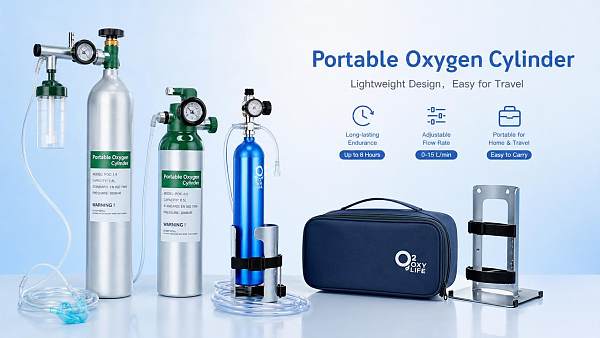
In real-world use, portable oxygen cylinders do not have one universal runtime. Duration changes with your oxygen prescription and how you use the system. As a rough example, a small portable tank may last about 1 to 3 hours on continuous flow at a moderate setting, while a larger portable cylinder may last several hours longer. If you use pulse-dose delivery, the same cylinder can sometimes last much longer because oxygen is released only when you inhale.
That said, “real life” is often different from the estimate on a supplier handout. Walking uphill, breathing faster, talking more, or feeling unwell can all increase oxygen demand. Travel delays, colder weather, and imperfect equipment handling can also affect how long your portable oxygen cylinders feel like they last in practice.
The safest mindset is this: treat all duration estimates as planning tools, not guarantees. Always leave room for delays, activity changes, and emergency needs.
What factors affect how long a portable oxygen cylinder will last?
The most important factor is flow rate. A cylinder used at 2 liters per minute lasts far longer than the same cylinder used at 4 liters per minute. If your doctor prescribed different settings for rest, sleep, and exertion, your runtime may change throughout the day.
The second factor is cylinder size. Portable cylinders come in several common sizes, often labeled with names such as M6, M9, D, or E, though naming can vary by supplier or region. In general, the larger the cylinder, the more oxygen it contains, but the heavier and less convenient it becomes to carry.
The third factor is the delivery mode. Continuous flow releases oxygen nonstop, whether you are inhaling or exhaling. Pulse-dose systems, often used with oxygen conservers, deliver oxygen in bursts during inhalation. Because less oxygen is wasted, pulse-dose can significantly extend cylinder duration for suitable users.
Another practical factor is starting pressure. A full tank lasts longer than a partially filled one, and not every cylinder handed to a user is topped off to the same level. The pressure gauge matters. If you leave home assuming the cylinder is full without checking it, your timing may be off before you even begin.
Temperature, regulator performance, and even user technique can play smaller roles as well. While these may not change duration dramatically, they can still matter when your margin is tight.
How do you calculate oxygen cylinder duration?
If you want a working estimate, the common calculation is based on cylinder pressure, a cylinder conversion factor, and your flow rate. A frequently used formula is:
Duration in minutes = (Cylinder pressure in psi × cylinder factor) ÷ flow rate
Some providers subtract a safety residual pressure, often around 200 psi, instead of assuming the tank can be fully emptied. In that case, the formula becomes:
Duration in minutes = ((Cylinder pressure − residual pressure) × cylinder factor) ÷ flow rate
For example, if an E cylinder has a factor of 0.28 and the gauge reads 2000 psi, a person using continuous flow at 2 liters per minute could estimate runtime like this:
((2000 − 200) × 0.28) ÷ 2 = about 252 minutes
That is roughly 4.2 hours. But remember, this is still an estimate. It assumes steady use at the same setting and does not account for changes in breathing pattern, pulse-dose performance, or unplanned delays.
If math feels inconvenient, ask your oxygen supplier for a cylinder duration chart matched to your specific tank size and delivery method. Many users keep a printed chart at home and another copy in a travel bag.
Why can actual runtime be shorter than expected?
This is one of the biggest frustrations for users. You may calculate a tank should last four hours, then find it seems low sooner than expected. In many cases, the explanation is simple: life is not steady-state. A cylinder estimate assumes consistent settings and ideal conditions, while actual use often varies minute to minute.
If you increase your flow during walking, if your breathing becomes faster, or if your provider’s pulse setting behaves differently from another model you used before, the tank may not last as long as you thought. A gauge that was not read carefully at the start can create the same confusion.
Another issue is that pulse-dose settings are not directly equivalent to liters per minute in the way many users assume. A pulse setting of 2 on one device may not match another device in the same way. This matters when consumers compare systems or rely on rough online advice.
Small losses can also happen through loose connections or handling mistakes. While modern systems are designed for everyday use, poor setup can reduce efficiency. If your tanks seem to run short repeatedly, ask your supplier to inspect the regulator, tubing, and conserver.
Continuous flow vs pulse dose: which lasts longer?
When people compare portable oxygen cylinders, this is often the most important practical question. In general, pulse dose lasts longer than continuous flow because it conserves oxygen. Instead of releasing oxygen all the time, it releases oxygen when inhalation is detected.
That benefit can be substantial for users who are good candidates for pulse-dose delivery. It may mean the difference between carrying one cylinder for an outing and needing two. For active users, that extra portability can improve confidence and independence.
However, longer runtime does not automatically mean better for every person. Some patients need continuous flow, especially during sleep, higher exertion, or certain medical conditions. Others may find that pulse-dose systems do not trigger reliably with shallow breathing. The right choice depends on your prescription and your provider’s guidance, not just convenience.
So if your main concern is how long portable oxygen cylinders last, pulse-dose may help extend runtime—but only if it is clinically appropriate for you.
What are typical duration ranges for common portable cylinder sizes?
Because cylinder labeling differs by market and supplier, exact figures vary, but broad patterns are still helpful. Very small cylinders designed for short trips may last under 2 hours at moderate continuous flow. Mid-size portable tanks may cover several hours. Larger portable cylinders can last much longer but are less convenient to carry over long distances.
Here is a general, simplified way to think about it:
Small portable cylinders: Often best for short appointments, quick errands, or backup use. At higher continuous settings, they may empty faster than many first-time users expect.
Mid-size portable cylinders: A balance between portability and runtime. Often preferred by users who need a practical option for longer outings without excessive weight.
Larger portable cylinders: Better when extended duration matters more than convenience. Useful for longer trips, but carrying comfort can become an issue.
Because the same cylinder can perform very differently at 1 liter per minute versus 4 liters per minute, it is smarter to compare tanks through your own prescription rather than through generic “hours of use” claims.
How much oxygen time should you plan for when leaving home?
A good rule is to plan for more oxygen than the trip should theoretically require. If an outing should take two hours, many experienced users prefer carrying enough oxygen for at least double that time when possible. This helps cover traffic, waiting rooms, weather delays, and unexpected exertion.
For medical visits, shopping, social events, and air or rail travel, build in extra time before and after the main event. Do not calculate only the time spent at the destination. Include transport, walking from parking areas, standing in line, and any chance that plans may change.
If you are new to oxygen therapy, keeping a simple log can help. Write down the cylinder size, start pressure, flow setting, type of activity, and when the tank was changed. After several outings, you will have a much more accurate personal sense of duration than any online estimate can provide.
What should consumers look for when choosing portable oxygen cylinders?
Most consumers naturally focus on size and weight first, but runtime should be considered alongside usability. Ask whether the cylinder supports your prescribed delivery mode, whether you can comfortably carry it, and whether replacement or refill logistics are easy in your area.
You should also look at gauge readability, regulator compatibility, and whether your routine involves predictable short trips or longer, less predictable travel. A lighter cylinder is not always the better choice if it creates anxiety about running out too soon.
For some users, the best setup is not one cylinder but a plan: a preferred portable cylinder size for daily outings, a backup cylinder at home or in the car, and a clear understanding of refill timing. Reliability often comes from planning, not just from product choice.
Safety tips for using portable oxygen cylinders with confidence
Never wait until a cylinder is nearly empty before thinking about the next one. Check the gauge before every outing. Confirm your prescribed setting. Make sure the regulator is secure and the tubing is not kinked.
Store cylinders properly and keep them away from heat sources, open flames, and smoking materials. Oxygen itself is not flammable, but it strongly supports combustion, which makes fire risks much more serious.
If you are traveling, carry your supplier’s contact information, extra tubing if needed, and a written note of your prescribed settings. For longer trips, confirm access to refills or replacement cylinders in advance.
Most importantly, do not change your oxygen flow rate simply to make a cylinder last longer unless your clinician has specifically advised that approach. Your oxygen prescription exists to protect your health, not to fit a tank’s limitations.
When should you ask your provider or supplier for help?
If your portable oxygen cylinders seem to run out much faster than expected, if your device alarms or behaves inconsistently, or if you are unsure whether pulse dose works well for you, ask for professional support. Many problems can be resolved through better equipment matching, clearer education, or a different cylinder setup.
You should also speak up if your lifestyle has changed. A user who once needed oxygen only for brief appointments may now need it for family travel, work-related movement, or more active daily routines. Your oxygen plan should fit your actual life, not just your original discharge paperwork.
Final thoughts: how long will portable oxygen cylinders last in practice?
In practice, portable oxygen cylinders can last anywhere from less than an hour to many hours, but there is no one-size-fits-all number. The real answer depends on tank size, pressure, flow rate, and whether oxygen is delivered continuously or on demand.
For consumers, the smartest approach is to combine a basic runtime calculation with real-world planning. Know your prescription, understand your cylinder type, check the gauge before leaving, and always carry more oxygen than your schedule seems to require.
Once you understand these basics, portable oxygen cylinders become far less mysterious. Instead of guessing how long they will last, you can make informed decisions, reduce stress, and move through daily life with greater safety and confidence.
Get weekly intelligence in your inbox.
No noise. No sponsored content. Pure intelligence.
 Sep 21, 2026What to Look for in a Grid Integration Company for Utility-Scale Solar ProjectsWhat to Look for in a Grid Integration Company for Utility-Scale Solar Projects
 Sep 20, 2026Microgrid Controller Pricing: What Drives Cost in Commercial Energy Projects?Microgrid Controller Pricing: What Drives Cost in Commercial Energy Projects?
 Sep 19, 2026How to Choose a GaN Charger for Laptops Without Compromising Power or PortabilityHow to Choose a GaN Charger for Laptops Without Compromising Power or Portability
 Sep 18, 2026Floating Solar Farm Costs: CAPEX, OPEX, and the Site Factors That Shape ROIFloating Solar Farm Costs: CAPEX, OPEX, and the Site Factors That Shape ROI
 Sep 17, 2026Drone Delivery Solutions for Last-Mile Routes: Site, Payload, and Range PlanningDrone Delivery Solutions for Last-Mile Routes: Site, Payload, and Range Planning
 Sep 16, 2026When Low-Volume Electronics Manufacturing Makes More Sense Than Mass ProductionWhen Low-Volume Electronics Manufacturing Makes More Sense Than Mass Production
 Sep 15, 2026Wholesale WiFi Smart Switches: What Buyers Should Verify Before OrderingWholesale WiFi Smart Switches: What Buyers Should Verify Before Ordering
 Sep 14, 2026How to Select IoT Sensors for Reliable Monitoring in Harsh Industrial EnvironmentsHow to Select IoT Sensors for Reliable Monitoring in Harsh Industrial Environments
 Sep 13, 2026How Procurement Teams Can Improve Supplier Reliability With Supply Chain VisibilityHow Procurement Teams Can Improve Supplier Reliability With Supply Chain Visibility
 Sep 12, 2026Smart Manufacturing Trends 2026: What Leaders Should Prioritize for ROISmart Manufacturing Trends 2026: What Leaders Should Prioritize for ROI
 Sep 11, 2026B2B Market Analysis: How Buyers Evaluate Suppliers, Pricing, and Delivery RiskB2B Market Analysis: How Buyers Evaluate Suppliers, Pricing, and Delivery Risk
 Sep 10, 2026Residential Solar Kits in Canada: How to Size a System for Your Home and ClimateResidential Solar Kits in Canada: How to Size a System for Your Home and Climate
 Sep 09, 2026How to Specify a Syringe Assembly Line for High-Volume Sterile ProductionHow to Specify a Syringe Assembly Line for High-Volume Sterile Production
 Sep 08, 2026How to Evaluate Warehouse Robotics System Suppliers for Reliable Multi-Site DeploymentHow to Evaluate Warehouse Robotics System Suppliers for Reliable Multi-Site Deployment
 Sep 07, 2026Renewable Geothermal Energy Explained: How It Works for Heating and PowerRenewable Geothermal Energy Explained: How It Works for Heating and Power
 Sep 07, 2026How to Choose an Industrial Packaging Robot Manufacturer for Your Production LineHow to Choose an Industrial Packaging Robot Manufacturer for Your Production Line
 Sep 05, 2026How to Evaluate a Turnkey Hydro Turbine Generator Supplier for Remote Power ProjectsHow to Evaluate a Turnkey Hydro Turbine Generator Supplier for Remote Power Projects
 Sep 04, 2026Automated Ultrasonic Welding for Thermoplastic Assemblies: Process Controls That MatterAutomated Ultrasonic Welding for Thermoplastic Assemblies: Process Controls That Matter
 Sep 03, 2026Energy Forecasting for Grid Planning: Sizing Solar and Storage CapacityEnergy Forecasting for Grid Planning: Sizing Solar and Storage Capacity
 Sep 02, 2026Which Metrics Should an Energy Analytics Dashboard Track for Factory Energy Management?Which Metrics Should an Energy Analytics Dashboard Track for Factory Energy Management?
 Sep 01, 2026How Warehouse Voice Picking Improves Accuracy and Throughput in Order FulfillmentHow Warehouse Voice Picking Improves Accuracy and Throughput in Order Fulfillment
 Aug 31, 2026How to Automate Dropshipping Order Processing Without Overselling StockHow to Automate Dropshipping Order Processing Without Overselling Stock
 Aug 30, 2026How to Evaluate a Smart Lighting Supplier for Multi-Site Commercial ProjectsHow to Evaluate a Smart Lighting Supplier for Multi-Site Commercial Projects
 Aug 29, 2026Recent Advances in Smart Manufacturing and Materials Reshaping Factory InvestmentRecent Advances in Smart Manufacturing and Materials Reshaping Factory Investment
 Aug 29, 2026Selecting Lightweight Aluminum Extrusions for Strength-Critical Industrial DesignsSelecting Lightweight Aluminum Extrusions for Strength-Critical Industrial Designs
 Aug 29, 2026Vertical Powder Anodizing Explained: Process Controls for Uniform Coating QualityVertical Powder Anodizing Explained: Process Controls for Uniform Coating Quality
 Aug 29, 2026PV Module Product Due Diligence: What Buyers Should Verify Before ContractingPV Module Product Due Diligence: What Buyers Should Verify Before Contracting