Hospital Beds Wholesale: Where Low Prices Can Backfire Later
Hospital beds wholesale deals can look cost-effective at first, but the lowest upfront price often hides long-term risks in durability, compliance, maintenance, and patient safety. For procurement professionals, choosing the right supplier means balancing unit cost with lifecycle value, service reliability, and market reputation. This article explores where cheap hospital bed sourcing can backfire—and how to avoid costly mistakes.
Why do low-price hospital beds wholesale offers create hidden procurement risk?
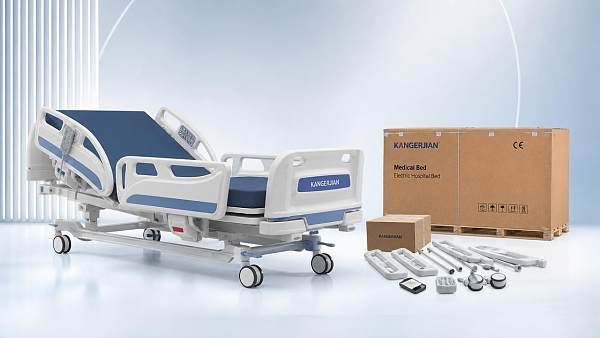
In healthcare procurement, a low quotation is rarely the full cost story. Hospital beds wholesale purchases affect patient mobility, nursing efficiency, infection control, room turnover, maintenance scheduling, and compliance exposure. A bed is not just a metal frame. It is a clinical asset expected to perform daily under pressure, often for years, across high-occupancy environments.
Many procurement teams focus first on unit price because budgets are tight and tender comparisons are usually price-led. Yet cheap hospital bed sourcing can trigger downstream costs that are far more difficult to reverse: repeated repairs, missing spare parts, unstable lead times, inconsistent weld quality, poor mattress compatibility, and weak after-sales support.
For buyers managing hospitals, clinics, eldercare facilities, medical distributors, or project-based healthcare builds, the real question is not whether the initial quote looks attractive. The question is whether the supplier can support safe, compliant, and durable deployment across the bed’s usable life.
- Lower-cost steel, motors, caster systems, and side rails may reduce factory cost but shorten service life under heavy use.
- Insufficient quality control can create inconsistency between samples and mass production.
- Incomplete technical documentation can delay import clearance, installation, or internal compliance review.
- Weak service networks can leave procurement teams exposed when parts fail during peak occupancy periods.
Where does hospital beds wholesale pricing usually break down?
The most common pricing mistake in hospital beds wholesale is comparing quotes without normalizing specifications. Two beds may look similar in a product sheet but differ in frame thickness, actuator source, load rating, powder coating process, braking system, headboard material, noise level, and availability of accessories. The cheaper quote often excludes value-critical details.
The table below shows where low-cost hospital bed procurement can diverge from better long-term value. It is especially useful when evaluating wholesale medical beds for projects that require predictable uptime and service continuity.
A low quote becomes expensive when the purchasing organization must absorb avoidable service calls, emergency replacements, operational disruption, or reputational risk. For procurement teams, the smarter comparison model is total landed and operating value, not ex-factory price alone.
What should procurement teams compare before choosing a hospital bed supplier?
Hospital beds wholesale evaluation should move through a structured scorecard. This is where disciplined procurement outperforms reactive buying. A reliable supplier is not simply one that offers a lower number; it is one that can prove consistency across production, documentation, delivery, and service response.
Core selection factors
- Clinical fit: manual, semi-electric, or full-electric configuration should match ward acuity, patient turnover, and staff workflow.
- Load capacity: safe working load should align with patient profile, mattress weight, and accessory use.
- Maintenance accessibility: actuators, handsets, wheels, and rails should be replaceable without excessive downtime.
- Parts continuity: buyers should confirm spare parts availability over a realistic support window.
- Supplier responsiveness: quotation clarity, technical answers, and sample coordination often predict future service quality.
TradeNexus Pro helps procurement professionals go beyond catalog-level comparison. In complex sectors such as healthcare technology and supply chain operations, decision-makers need market intelligence, sourcing signals, and supplier-screening context. That matters when a wholesale purchase influences both care delivery and asset reliability.
A practical selection matrix for hospital beds wholesale
Use the following framework to compare hospital beds wholesale suppliers on factors that affect both purchasing approval and long-term use.
This matrix is especially useful for procurement managers balancing tender requirements with practical deployment needs. It also supports internal alignment between sourcing, technical, compliance, and clinical stakeholders.
Which technical details matter most in wholesale medical bed sourcing?
When hospital beds wholesale discussions stay at brochure level, risk rises. Technical details shape patient safety, caregiver efficiency, and service life. Procurement teams should request a specification sheet that is detailed enough for engineering review and operational planning.
Key technical checkpoints
- Adjustment functions: backrest, knee rest, height adjustment, and trendelenburg functions should match actual care scenarios rather than marketing claims.
- Safe working load: verify whether the figure covers dynamic use or only static testing conditions.
- Surface treatment: powder coating quality influences durability, cleaning performance, and corrosion resistance.
- Side rails and locking mechanisms: these must operate smoothly and consistently to reduce patient fall risk.
- Caster size and brake design: maneuverability matters in emergency movement, housekeeping, and daily nursing tasks.
For procurement personnel, one practical warning is this: if a supplier cannot clearly explain the difference between nominal specification and validated operating performance, the buying risk increases. Ambiguity at quotation stage usually becomes a service dispute later.
How can compliance and documentation problems turn cheap beds into expensive ones?
Hospital bed procurement often crosses regulatory, customs, hospital approval, and insurance-related checkpoints. A low-cost supplier may ship acceptable-looking goods but fail to provide the paperwork needed for smooth market entry or institutional acceptance. For procurement teams, incomplete documentation can erase any initial savings.
Requirements vary by destination and use case, but buyers commonly review quality management evidence, electrical safety references, user manuals, labeling, packaging consistency, and technical declarations. Even where specific certifications are not legally required for every channel, procurement departments still need reliable documentation for due diligence and vendor approval.
- Ask whether documentation is prepared for the target market before production starts.
- Confirm whether manuals, labels, and carton marks match the consignee and destination requirements.
- Check whether replacement parts use the same naming and coding system as the main product files.
This is one reason procurement leaders increasingly rely on focused intelligence platforms. TNP supports buyers who need sharper visibility into supply-side credibility, category complexity, and sourcing risk signals rather than just broad listings with little verification context.
What are the most common hospital beds wholesale mistakes buyers make?
The biggest mistakes are usually not dramatic. They are small omissions during evaluation that compound after delivery. Wholesale hospital beds become costly when purchasing teams treat them as standard furniture rather than regulated care equipment with operational consequences.
Frequent procurement errors
- Choosing by headline price without normalizing configuration, warranty scope, and accessory inclusion.
- Approving samples without confirming whether production units use the same components.
- Ignoring spare parts planning, especially for handsets, actuators, castors, and side rail assemblies.
- Underestimating packaging, damage risk, and installation readiness for cross-border deliveries.
- Failing to involve end users such as nursing staff, biomedical teams, or facility managers early enough.
Procurement quality improves when purchasing teams create a short pre-award checklist and require each shortlisted supplier to answer the same operational questions. Standardization reduces comparison bias and exposes vague suppliers quickly.
How should buyers balance cost, alternatives, and lifecycle value?
The right hospital beds wholesale strategy depends on care setting, usage intensity, and replacement cycle. A district clinic, rehabilitation center, tertiary hospital, and temporary care project may all need different bed specifications. Budget control matters, but cost discipline is not the same as buying the lowest-grade option.
In some cases, a manual or semi-electric bed may be a sensible alternative to a full-electric model if the clinical workflow supports it. In other cases, reducing functions creates hidden labor inefficiency or lower patient comfort that affects operations every day. Lifecycle value should include maintenance labor, downtime, replacement interval, and compatibility with mattresses and accessories.
A useful procurement approach is to group purchase plans by use intensity:
- High-acuity or high-turnover wards: prioritize durability, motor reliability, braking quality, and fast service access.
- General inpatient or recovery settings: balance function set with maintainability and staff usability.
- Budget-sensitive or temporary projects: simplify features, but do not compromise safety-critical parts or documentation quality.
This type of segmentation helps buyers avoid over-specifying low-use areas while also preventing under-specification in demanding clinical environments.
FAQ: hospital beds wholesale questions procurement teams ask most
How do I compare hospital beds wholesale quotes fairly?
Build a side-by-side sheet that includes bed dimensions, functions, safe working load, actuator source, side rail type, caster specification, accessories, documentation package, spare parts plan, packaging method, warranty terms, and lead time. If these fields are not aligned, price comparison is unreliable.
Are cheaper hospital beds always lower quality?
Not always. Some suppliers achieve better pricing through scale, efficient sourcing, or streamlined configurations. The risk appears when low price comes from weaker materials, unstable quality control, or poor support capability. Buyers should verify the source of savings rather than assume the quote is competitive for the right reasons.
What is the biggest red flag when sourcing wholesale medical beds?
A major red flag is vague technical and service communication. If a supplier cannot provide clear answers on component origin, load rating basis, spare parts handling, documentation readiness, or production consistency, the probability of post-order problems increases sharply.
How important is after-sales support in hospital bed procurement?
It is critical. A bed out of service affects room utilization, nursing workflow, and patient experience. Even a competitively priced hospital beds wholesale contract loses value quickly if replacement handsets, actuators, or wheels cannot be supplied in a timely way.
Why work with TradeNexus Pro when evaluating hospital beds wholesale opportunities?
Procurement teams do not just need more supplier names. They need better sourcing judgment. TradeNexus Pro is built for enterprise buyers who operate in high-stakes categories where product reliability, supply chain shifts, and technical validation all influence purchasing outcomes. In healthcare technology sourcing, that means better context before the order is placed.
TNP supports procurement professionals with industry-focused intelligence, sharper category visibility, and a more strategic environment for evaluating supplier positioning. This is especially valuable when hospital beds wholesale decisions involve cross-border trade, project timelines, compliance review, or multi-stakeholder approval.
What you can discuss with us
- Specification confirmation for manual, semi-electric, or electric bed categories
- Supplier comparison criteria for hospital beds wholesale sourcing projects
- Lead time planning, packaging considerations, and project delivery coordination
- Documentation and certification checkpoints for target markets
- Sample evaluation priorities, spare parts planning, and quotation review support
If your team is reviewing hospital beds wholesale options, contact TradeNexus Pro to strengthen supplier screening, clarify technical questions, compare lifecycle cost factors, and prepare more confident sourcing decisions before price-driven shortcuts create expensive problems later.
Get weekly intelligence in your inbox.
No noise. No sponsored content. Pure intelligence.
 Sep 21, 2026What to Look for in a Grid Integration Company for Utility-Scale Solar ProjectsWhat to Look for in a Grid Integration Company for Utility-Scale Solar Projects
 Sep 20, 2026Microgrid Controller Pricing: What Drives Cost in Commercial Energy Projects?Microgrid Controller Pricing: What Drives Cost in Commercial Energy Projects?
 Sep 19, 2026How to Choose a GaN Charger for Laptops Without Compromising Power or PortabilityHow to Choose a GaN Charger for Laptops Without Compromising Power or Portability
 Sep 18, 2026Floating Solar Farm Costs: CAPEX, OPEX, and the Site Factors That Shape ROIFloating Solar Farm Costs: CAPEX, OPEX, and the Site Factors That Shape ROI
 Sep 17, 2026Drone Delivery Solutions for Last-Mile Routes: Site, Payload, and Range PlanningDrone Delivery Solutions for Last-Mile Routes: Site, Payload, and Range Planning
 Sep 16, 2026When Low-Volume Electronics Manufacturing Makes More Sense Than Mass ProductionWhen Low-Volume Electronics Manufacturing Makes More Sense Than Mass Production
 Sep 15, 2026Wholesale WiFi Smart Switches: What Buyers Should Verify Before OrderingWholesale WiFi Smart Switches: What Buyers Should Verify Before Ordering
 Sep 14, 2026How to Select IoT Sensors for Reliable Monitoring in Harsh Industrial EnvironmentsHow to Select IoT Sensors for Reliable Monitoring in Harsh Industrial Environments
 Sep 13, 2026How Procurement Teams Can Improve Supplier Reliability With Supply Chain VisibilityHow Procurement Teams Can Improve Supplier Reliability With Supply Chain Visibility
 Sep 12, 2026Smart Manufacturing Trends 2026: What Leaders Should Prioritize for ROISmart Manufacturing Trends 2026: What Leaders Should Prioritize for ROI
 Sep 11, 2026B2B Market Analysis: How Buyers Evaluate Suppliers, Pricing, and Delivery RiskB2B Market Analysis: How Buyers Evaluate Suppliers, Pricing, and Delivery Risk
 Sep 10, 2026Residential Solar Kits in Canada: How to Size a System for Your Home and ClimateResidential Solar Kits in Canada: How to Size a System for Your Home and Climate
 Sep 09, 2026How to Specify a Syringe Assembly Line for High-Volume Sterile ProductionHow to Specify a Syringe Assembly Line for High-Volume Sterile Production
 Sep 08, 2026How to Evaluate Warehouse Robotics System Suppliers for Reliable Multi-Site DeploymentHow to Evaluate Warehouse Robotics System Suppliers for Reliable Multi-Site Deployment
 Sep 07, 2026Renewable Geothermal Energy Explained: How It Works for Heating and PowerRenewable Geothermal Energy Explained: How It Works for Heating and Power
 Sep 07, 2026How to Choose an Industrial Packaging Robot Manufacturer for Your Production LineHow to Choose an Industrial Packaging Robot Manufacturer for Your Production Line
 Sep 05, 2026How to Evaluate a Turnkey Hydro Turbine Generator Supplier for Remote Power ProjectsHow to Evaluate a Turnkey Hydro Turbine Generator Supplier for Remote Power Projects
 Sep 04, 2026Automated Ultrasonic Welding for Thermoplastic Assemblies: Process Controls That MatterAutomated Ultrasonic Welding for Thermoplastic Assemblies: Process Controls That Matter
 Sep 03, 2026Energy Forecasting for Grid Planning: Sizing Solar and Storage CapacityEnergy Forecasting for Grid Planning: Sizing Solar and Storage Capacity
 Sep 02, 2026Which Metrics Should an Energy Analytics Dashboard Track for Factory Energy Management?Which Metrics Should an Energy Analytics Dashboard Track for Factory Energy Management?
 Sep 01, 2026How Warehouse Voice Picking Improves Accuracy and Throughput in Order FulfillmentHow Warehouse Voice Picking Improves Accuracy and Throughput in Order Fulfillment
 Aug 31, 2026How to Automate Dropshipping Order Processing Without Overselling StockHow to Automate Dropshipping Order Processing Without Overselling Stock
 Aug 30, 2026How to Evaluate a Smart Lighting Supplier for Multi-Site Commercial ProjectsHow to Evaluate a Smart Lighting Supplier for Multi-Site Commercial Projects
 Aug 29, 2026Recent Advances in Smart Manufacturing and Materials Reshaping Factory InvestmentRecent Advances in Smart Manufacturing and Materials Reshaping Factory Investment
 Aug 29, 2026Selecting Lightweight Aluminum Extrusions for Strength-Critical Industrial DesignsSelecting Lightweight Aluminum Extrusions for Strength-Critical Industrial Designs
 Aug 29, 2026Vertical Powder Anodizing Explained: Process Controls for Uniform Coating QualityVertical Powder Anodizing Explained: Process Controls for Uniform Coating Quality
 Aug 29, 2026PV Module Product Due Diligence: What Buyers Should Verify Before ContractingPV Module Product Due Diligence: What Buyers Should Verify Before Contracting