JIS T 0601-2-77:2026 Enforces 300% EMC Immunity Increase for Medical Diagnostic Devices
On May 7, 2026, Japan’s Industrial Standard (JIS) officially implemented JIS T 0601-2-77:2026, raising RF immunity requirements for medical diagnostic equipment—including MRI-adjacent devices and ultrasound probe interfaces—from 10 V/m to 30 V/m. Exporters of diagnostic equipment from China, particularly manufacturers and trading companies supplying the Japanese market, must now conduct full-scope EMC pre-compliance testing; models lacking adequate electromagnetic shielding face potential market exclusion.
Event Overview
The Japanese Industrial Standard JIS T 0601-2-77:2026 entered into force on May 7, 2026. This revision specifically elevates the radio-frequency electromagnetic immunity threshold for certain medical diagnostic devices—namely MRI peripheral equipment and ultrasound probe interfaces—to 30 V/m, representing a threefold increase over the previous requirement of 10 V/m. The standard applies to new product registrations and conformity assessments under Japan’s regulatory framework for medical devices.
Industries Affected by Segment
Direct Export Trading Companies
These firms are directly responsible for product registration and compliance documentation in Japan. The revised immunity level triggers mandatory re-evaluation of existing product portfolios; previously certified models may no longer meet the updated threshold without hardware or firmware modifications.
Medical Device Manufacturers (OEM/ODM)
Manufacturers producing diagnostic equipment for export—especially those with unshielded signal interfaces or legacy PCB layouts—are required to revise electromagnetic design practices. Units without integrated RF shielding, filter networks, or grounded enclosures may fail pre-testing, delaying time-to-market or necessitating costly redesigns.
EMC Testing & Certification Service Providers
Third-party laboratories and certification bodies serving Chinese exporters are expected to see increased demand for full-scope immunity testing at 30 V/m, including radiated RF immunity per IEC 61000-4-3. Capacity planning and test schedule alignment with JIS implementation timelines have become operationally critical.
Component & Subsystem Suppliers
Suppliers of interface connectors, cable assemblies, and front-end analog modules used in ultrasound probes or MRI monitoring systems must verify their components’ immunity performance under the new stress level. Compatibility declarations and material-level shielding specifications are now essential inputs for OEM qualification packages.
Key Focus Areas and Recommended Actions for Stakeholders
Monitor official interpretations and transitional arrangements
While JIS T 0601-2-77:2026 took effect on May 7, 2026, Japan’s Ministry of Health, Labour and Welfare (MHLW) and the Pharmaceuticals and Medical Devices Agency (PMDA) may issue supplementary guidance on grandfathering clauses or phased enforcement for legacy products. Stakeholders should subscribe to PMDA notifications and review updates via the JISC website.
Prioritize testing for high-risk product categories
Diagnostic equipment with external cabling, non-metallic housings, or direct connection to MRI magnets—such as patient monitoring units, ECG modules, or wireless ultrasound transducers—should be prioritized for pre-compliance RF immunity testing at 30 V/m. These configurations historically exhibit lower margin against radiated disturbances.
Distinguish between regulatory adoption and practical enforcement
Although the standard is active, customs clearance and PMDA review timelines for new submissions may reflect staggered application. Exporters should not assume immediate rejection of non-upgraded units but must prepare technical files demonstrating mitigation efforts—e.g., shielding retrofit plans or test reports from accredited labs—for pending applications.
Initiate internal EMC design reviews and supplier alignment
Manufacturers should audit current BOMs for shielding-relevant components (e.g., ferrite cores, conductive gaskets, shielded cables) and engage suppliers to confirm updated immunity specifications. Early engagement helps avoid bottlenecks in procurement and prototype validation cycles ahead of formal submission deadlines.
Editorial Perspective / Industry Observation
Observably, this revision signals a tightening of electromagnetic resilience expectations—not merely for safety-critical functions, but for operational continuity in increasingly dense clinical electromagnetic environments. Analysis shows the 30 V/m threshold aligns more closely with real-world MRI suite emissions than prior levels, suggesting Japan is proactively addressing interference risks beyond minimum international baselines. From an industry perspective, JIS T 0601-2-77:2026 functions less as an isolated update and more as a forward-looking indicator: it reflects growing regulatory emphasis on system-level EMC robustness in digitally integrated diagnostic workflows. Continuous monitoring is warranted, as similar thresholds may inform future revisions of IEC 60601-2-33 or regional adaptations in ASEAN markets.
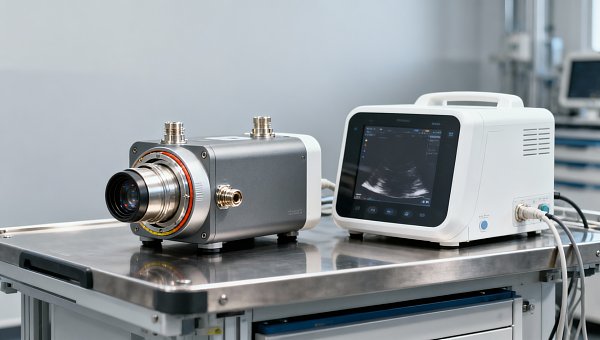
In summary, JIS T 0601-2-77:2026 marks a material escalation in EMC immunity expectations for medical diagnostic equipment entering Japan—not a procedural adjustment, but a functional design requirement. It underscores that electromagnetic compatibility is evolving from a compliance checkpoint to a core engineering specification. Current interpretation should treat this as an active, enforceable standard requiring technical response—not a hypothetical scenario or distant policy signal.
Source: Japanese Industrial Standards Committee (JISC), official publication of JIS T 0601-2-77:2026; effective date confirmed as May 7, 2026. Ongoing developments—including PMDA implementation notes or MHLW circulars—remain subject to observation and will be updated as publicly released.
Get weekly intelligence in your inbox.
No noise. No sponsored content. Pure intelligence.
 Sep 23, 2026How to Choose Lightweight ANC Headphones for Comfortable All-Day TravelHow to Choose Lightweight ANC Headphones for Comfortable All-Day Travel
 Sep 22, 2026IPX5 TWS Bluetooth Earbuds: What Protection Do They Offer for Workouts?IPX5 TWS Bluetooth Earbuds: What Protection Do They Offer for Workouts?
 Sep 21, 2026What to Look for in a Grid Integration Company for Utility-Scale Solar ProjectsWhat to Look for in a Grid Integration Company for Utility-Scale Solar Projects
 Sep 20, 2026Microgrid Controller Pricing: What Drives Cost in Commercial Energy Projects?Microgrid Controller Pricing: What Drives Cost in Commercial Energy Projects?
 Sep 19, 2026How to Choose a GaN Charger for Laptops Without Compromising Power or PortabilityHow to Choose a GaN Charger for Laptops Without Compromising Power or Portability
 Sep 18, 2026Floating Solar Farm Costs: CAPEX, OPEX, and the Site Factors That Shape ROIFloating Solar Farm Costs: CAPEX, OPEX, and the Site Factors That Shape ROI
 Sep 17, 2026Drone Delivery Solutions for Last-Mile Routes: Site, Payload, and Range PlanningDrone Delivery Solutions for Last-Mile Routes: Site, Payload, and Range Planning
 Sep 16, 2026When Low-Volume Electronics Manufacturing Makes More Sense Than Mass ProductionWhen Low-Volume Electronics Manufacturing Makes More Sense Than Mass Production
 Sep 15, 2026Wholesale WiFi Smart Switches: What Buyers Should Verify Before OrderingWholesale WiFi Smart Switches: What Buyers Should Verify Before Ordering
 Sep 14, 2026How to Select IoT Sensors for Reliable Monitoring in Harsh Industrial EnvironmentsHow to Select IoT Sensors for Reliable Monitoring in Harsh Industrial Environments
 Sep 13, 2026How Procurement Teams Can Improve Supplier Reliability With Supply Chain VisibilityHow Procurement Teams Can Improve Supplier Reliability With Supply Chain Visibility
 Sep 12, 2026Smart Manufacturing Trends 2026: What Leaders Should Prioritize for ROISmart Manufacturing Trends 2026: What Leaders Should Prioritize for ROI
 Sep 11, 2026B2B Market Analysis: How Buyers Evaluate Suppliers, Pricing, and Delivery RiskB2B Market Analysis: How Buyers Evaluate Suppliers, Pricing, and Delivery Risk
 Sep 10, 2026Residential Solar Kits in Canada: How to Size a System for Your Home and ClimateResidential Solar Kits in Canada: How to Size a System for Your Home and Climate
 Sep 09, 2026How to Specify a Syringe Assembly Line for High-Volume Sterile ProductionHow to Specify a Syringe Assembly Line for High-Volume Sterile Production
 Sep 08, 2026How to Evaluate Warehouse Robotics System Suppliers for Reliable Multi-Site DeploymentHow to Evaluate Warehouse Robotics System Suppliers for Reliable Multi-Site Deployment
 Sep 07, 2026Renewable Geothermal Energy Explained: How It Works for Heating and PowerRenewable Geothermal Energy Explained: How It Works for Heating and Power
 Sep 07, 2026How to Choose an Industrial Packaging Robot Manufacturer for Your Production LineHow to Choose an Industrial Packaging Robot Manufacturer for Your Production Line
 Sep 05, 2026How to Evaluate a Turnkey Hydro Turbine Generator Supplier for Remote Power ProjectsHow to Evaluate a Turnkey Hydro Turbine Generator Supplier for Remote Power Projects
 Sep 04, 2026Automated Ultrasonic Welding for Thermoplastic Assemblies: Process Controls That MatterAutomated Ultrasonic Welding for Thermoplastic Assemblies: Process Controls That Matter
 Sep 03, 2026Energy Forecasting for Grid Planning: Sizing Solar and Storage CapacityEnergy Forecasting for Grid Planning: Sizing Solar and Storage Capacity
 Sep 02, 2026Which Metrics Should an Energy Analytics Dashboard Track for Factory Energy Management?Which Metrics Should an Energy Analytics Dashboard Track for Factory Energy Management?
 Sep 01, 2026How Warehouse Voice Picking Improves Accuracy and Throughput in Order FulfillmentHow Warehouse Voice Picking Improves Accuracy and Throughput in Order Fulfillment
 Aug 31, 2026How to Automate Dropshipping Order Processing Without Overselling StockHow to Automate Dropshipping Order Processing Without Overselling Stock
 Aug 30, 2026How to Evaluate a Smart Lighting Supplier for Multi-Site Commercial ProjectsHow to Evaluate a Smart Lighting Supplier for Multi-Site Commercial Projects
 Aug 29, 2026Recent Advances in Smart Manufacturing and Materials Reshaping Factory InvestmentRecent Advances in Smart Manufacturing and Materials Reshaping Factory Investment
 Aug 29, 2026Selecting Lightweight Aluminum Extrusions for Strength-Critical Industrial DesignsSelecting Lightweight Aluminum Extrusions for Strength-Critical Industrial Designs