
Japan's JIS B 6336-2026 Grinding Machine Standard: Thermal Compensation Now Mandatory for Exports
Japan's JIS B 6336-2026 Grinding Machine Standard: Thermal Compensation Now Mandatory for Exports
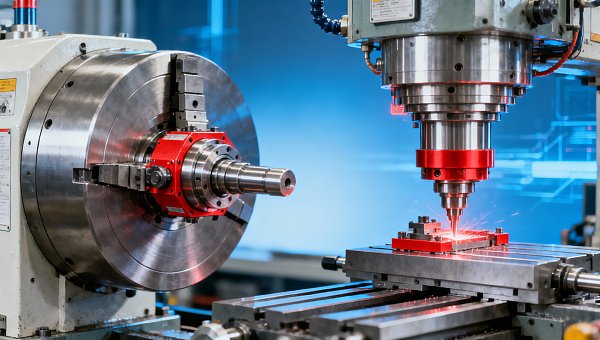
Introduction: On April 1, 2026, Japan's Ministry of Economy, Trade and Industry (METI) implemented the updated JIS B 6336 standard for cylindrical grinding machines, introducing mandatory thermal displacement compensation requirements. This revision directly impacts manufacturers exporting to Japan, particularly Chinese producers of vertical/horizontal cylindrical grinding machines, who must now integrate compensation modules or provide third-party thermal deformation test reports to pass JIS compliance audits.
Event Overview
The JIS B 6336-2026 revision adds compulsory testing for real-time spindle thermal displacement compensation under environmental temperature fluctuations. Effective immediately, non-compliant equipment without built-in compensation systems or certified test data will be barred from Japanese market entry through importers' JIS conformity checks.
Impacted Sub-Sectors
1. Grinding Machine Exporters
Chinese OEMs face immediate technical barriers. Over 60% of China's cylindrical grinding machine exports to Japan (2025 customs data) currently lack integrated thermal compensation systems, requiring urgent design modifications or testing partnerships.
2. Precision Component Suppliers
Downstream manufacturers using non-compliant grinders for Japanese automotive/aerospace parts may see rejected shipments. Tier-1 suppliers should verify equipment compliance in their supply chains.
3. Calibration Service Providers
Third-party testing labs with ISO/IEC 17025 accreditation for thermal deformation analysis stand to gain demand from manufacturers seeking compliance documentation.
Key Action Points
1. Technical Compliance Verification
Exporters should immediately audit existing machine designs against the new compensation requirements, prioritizing high-volume export models.
2. Certification Pathway Planning
Evaluate cost/lead-time tradeoffs between retrofitting compensation modules versus obtaining third-party test reports for legacy equipment.
3. Supply Chain Communication
Engage Japanese importers to clarify acceptable compliance documentation formats and testing methodologies before production adjustments.
Industry Perspective
Analysis suggests this represents Japan's strategic move toward smart manufacturing standards rather than temporary trade barriers. The compensation requirement aligns with global trends in precision machining, where thermal stability increasingly determines part tolerances below 5μm. However, the immediate implementation leaves minimal adaptation time, particularly affecting SMEs without R&D buffers.
Conclusion
While presenting technical challenges, the JIS update ultimately pushes manufacturers toward next-generation precision capabilities. Exporters should treat this as an inflection point for upgrading thermal management systems across product lines, not just Japan-bound equipment.
Information Sources
- Japan METI Official Gazette (2026-03-15)
- JIS B 6336-2026 Full Text (Japanese Industrial Standards Committee)
- China Machine Tool & Tool Builders' Association (CMTBA) Technical Bulletin (2026-04-05)
Note: Testing methodology details and grace period provisions remain under review by JISC working groups.
Get weekly intelligence in your inbox.
No noise. No sponsored content. Pure intelligence.
 Oct 08, 2026How Digital Health Improves Diagnostic Accuracy and Workflow in Clinical LabsHow Digital Health Improves Diagnostic Accuracy and Workflow in Clinical Labs
 Oct 07, 2026Selecting Voice Picking Systems for German Warehouses: Integration, Languages and ROISelecting Voice Picking Systems for German Warehouses: Integration, Languages and ROI
 Oct 06, 2026How to Choose Last Mile Dispatch Software for On-Time Delivery at ScaleHow to Choose Last Mile Dispatch Software for On-Time Delivery at Scale
 Oct 05, 2026Vietnam’s Consumer Electronics Market: Demand Shifts and Sourcing OpportunitiesVietnam’s Consumer Electronics Market: Demand Shifts and Sourcing Opportunities
 Oct 04, 2026Digital Health Investment Priorities for Providers: Improving Access, Outcomes, and EfficiencyDigital Health Investment Priorities for Providers: Improving Access, Outcomes, and Efficiency
 Oct 03, 2026How to Specify an FR4 Custom PCB Board for High-Voltage and High-Heat DesignsHow to Specify an FR4 Custom PCB Board for High-Voltage and High-Heat Designs
 Oct 02, 2026ERP Software Market Intelligence: Adoption, Pricing, and Vendor Signals to WatchERP Software Market Intelligence: Adoption, Pricing, and Vendor Signals to Watch
 Oct 01, 2026How to Select Calibrated Temperature Data Loggers for GMP Cold Storage MonitoringHow to Select Calibrated Temperature Data Loggers for GMP Cold Storage Monitoring
 Sep 30, 2026Custom Molded Rubber Pricing: What Drives Unit Cost and Tooling Fees?Custom Molded Rubber Pricing: What Drives Unit Cost and Tooling Fees?
 Sep 29, 2026How to Evaluate Energy Management Software Vendors for Multi-Site OperationsHow to Evaluate Energy Management Software Vendors for Multi-Site Operations
 Sep 28, 2026How to Select a DIN Rail Smart Meter for Multi-Circuit Energy MonitoringHow to Select a DIN Rail Smart Meter for Multi-Circuit Energy Monitoring
 Sep 27, 2026TWS Earbuds in Vietnam: Demand Drivers, Price Tiers, and Retail Channel OpportunitiesTWS Earbuds in Vietnam: Demand Drivers, Price Tiers, and Retail Channel Opportunities
 Sep 26, 2026How UAE Clinics Can Qualify a Smart Glucometer Supplier for Accuracy and ComplianceHow UAE Clinics Can Qualify a Smart Glucometer Supplier for Accuracy and Compliance
 Sep 25, 2026Buying Aesthetic Lasers in the USA: FDA Status, Wavelengths, and Service SupportBuying Aesthetic Lasers in the USA: FDA Status, Wavelengths, and Service Support
 Sep 24, 2026Laser Cutting Brass Sheet: How to Prevent Burrs and Heat Marks on Thin PartsLaser Cutting Brass Sheet: How to Prevent Burrs and Heat Marks on Thin Parts
 Sep 23, 2026How to Choose Lightweight ANC Headphones for Comfortable All-Day TravelHow to Choose Lightweight ANC Headphones for Comfortable All-Day Travel
 Sep 22, 2026IPX5 TWS Bluetooth Earbuds: What Protection Do They Offer for Workouts?IPX5 TWS Bluetooth Earbuds: What Protection Do They Offer for Workouts?
 Sep 21, 2026What to Look for in a Grid Integration Company for Utility-Scale Solar ProjectsWhat to Look for in a Grid Integration Company for Utility-Scale Solar Projects
 Sep 20, 2026Microgrid Controller Pricing: What Drives Cost in Commercial Energy Projects?Microgrid Controller Pricing: What Drives Cost in Commercial Energy Projects?
 Sep 19, 2026How to Choose a GaN Charger for Laptops Without Compromising Power or PortabilityHow to Choose a GaN Charger for Laptops Without Compromising Power or Portability
 Sep 18, 2026Floating Solar Farm Costs: CAPEX, OPEX, and the Site Factors That Shape ROIFloating Solar Farm Costs: CAPEX, OPEX, and the Site Factors That Shape ROI
 Sep 17, 2026Drone Delivery Solutions for Last-Mile Routes: Site, Payload, and Range PlanningDrone Delivery Solutions for Last-Mile Routes: Site, Payload, and Range Planning
 Sep 16, 2026When Low-Volume Electronics Manufacturing Makes More Sense Than Mass ProductionWhen Low-Volume Electronics Manufacturing Makes More Sense Than Mass Production
 Sep 15, 2026Wholesale WiFi Smart Switches: What Buyers Should Verify Before OrderingWholesale WiFi Smart Switches: What Buyers Should Verify Before Ordering
 Sep 14, 2026How to Select IoT Sensors for Reliable Monitoring in Harsh Industrial EnvironmentsHow to Select IoT Sensors for Reliable Monitoring in Harsh Industrial Environments
 Sep 13, 2026How Procurement Teams Can Improve Supplier Reliability With Supply Chain VisibilityHow Procurement Teams Can Improve Supplier Reliability With Supply Chain Visibility
 Sep 12, 2026Smart Manufacturing Trends 2026: What Leaders Should Prioritize for ROISmart Manufacturing Trends 2026: What Leaders Should Prioritize for ROI



























