Custom Molded Rubber for Seals and Gaskets: How to Choose the Right Material and Tolerance
Choosing custom molded rubber for seals and gaskets is rarely a simple matter of matching shape to groove. Material behavior, compression set, media exposure, temperature swings, and realistic molding tolerance all influence whether a part performs for months or fails early in service.
That is why this topic remains relevant across advanced manufacturing, energy systems, electronics, medical equipment, and industrial supply chains. In practical sourcing and evaluation work, custom molded rubber often sits at the intersection of performance risk, lifecycle cost, and supplier capability.
For decision-focused platforms such as TradeNexus Pro, these details matter because buyers increasingly compare technical credibility before they contact a supplier. A seal specification that looks acceptable on paper may still create avoidable leakage, assembly variation, or unnecessary tooling cost if the compound and tolerance strategy are not aligned.
What custom molded rubber really means in sealing applications
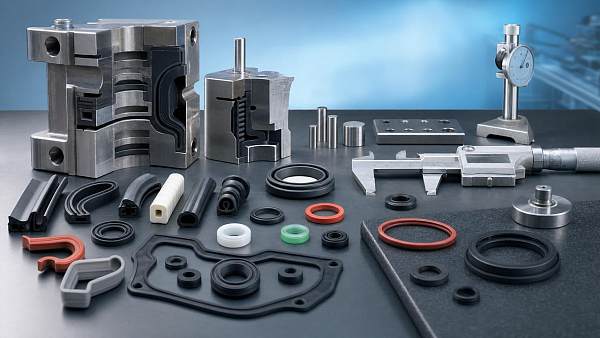
In sealing applications, custom molded rubber refers to elastomer parts made to a defined geometry rather than selected from a standard catalog size. The goal is not customization for its own sake. The goal is functional control.
That control may involve a nonstandard cross-section, integrated lip, bonded insert, unusual corner radius, or a geometry designed to improve compression under limited installation space. Custom molded rubber becomes valuable when standard O-rings or flat gaskets cannot manage the load, fluid, motion, or packaging limits.
In other words, the part design and the rubber compound must work together. A well-shaped gasket made from the wrong elastomer still fails. A premium compound with poor dimensional control may also fail.
Why material selection deserves more attention now
Industrial sealing requirements are becoming more demanding. Equipment is expected to run longer, tolerate broader environmental exposure, and fit into more compact assemblies. At the same time, compliance, traceability, and supplier reliability receive more scrutiny than before.
This is especially visible in sectors covered by TradeNexus Pro. Green energy systems face outdoor weathering and thermal cycling. Smart electronics often need low-outgassing seals in tight housings. Healthcare technology may require biocompatibility, cleanliness, and repeatable dimensions.
The result is a shift away from generic rubber selection. Technical evaluation now depends on how a compound behaves under actual process conditions, not only on headline hardness or tensile values from a datasheet.
The main rubber materials and where each one fits
No single elastomer works everywhere. The best custom molded rubber choice usually comes from balancing media resistance, operating temperature, mechanical stress, regulatory needs, and expected service life.
Common compound options
These categories are only the starting point. Different formulations within the same family can perform very differently. Fillers, cure systems, and hardness adjustments can change compression set, swell behavior, and molding response.
What to compare beyond the datasheet headline
- Actual fluid or gas exposure, including cleaning chemicals
- Continuous and peak temperature, not just nominal temperature
- Compression set after aging
- Tear strength for thin lips and complex edges
- Regulatory or cleanliness requirements
- Long-term availability of the same compound
Tolerance is a performance issue, not only a drawing issue
Many sealing problems are created by unrealistic dimensional expectations. Rubber is not machined metal. It flows, shrinks, relaxes, and responds to mold design, cure conditions, and post-processing.
That makes tolerance selection a technical decision. Tight tolerances can improve assembly consistency, but they also increase tooling complexity, inspection burden, scrap risk, and lead time. If a tolerance does not influence sealing function, it may be unnecessarily expensive.
More importantly, not every feature on a custom molded rubber part needs equal control. Critical sealing surfaces, groove interfaces, and compression-defining dimensions usually deserve the closest attention. Cosmetic surfaces usually do not.
Where tolerance decisions often go wrong
- Applying uniform tight tolerances to every dimension
- Ignoring shrink variation between compounds
- Using nominal dimensions without compression analysis
- Overlooking flash, parting line location, and gate influence
- Assuming prototype tooling predicts production tolerance exactly
A practical review should connect tolerance to function. Ask which dimensions control sealing force, which ones affect installation, and which ones only reflect drawing habit. This often simplifies the specification while improving manufacturability.
How application context changes the right choice
The best custom molded rubber solution for one sector may be a poor choice for another. Context shapes both the compound and the tolerance strategy.
Typical cross-sector considerations
From an evaluation standpoint, this is where market intelligence also matters. A technically suitable compound is less useful if regional supply is unstable, if qualification data are incomplete, or if the supplier cannot repeat the same process at scale.
Questions that improve supplier and design review
Better outcomes usually come from better questions early in the process. Custom molded rubber projects often move faster when the design review covers process capability, compound control, and test evidence at the same time.
Useful review points
- Which dimensions are function-critical, and why
- Which compound test data come from the same production formulation
- How the supplier manages lot consistency and traceability
- Whether post-curing, deflashing, or secondary inspection is required
- How sample validation reflects real production tooling
- What failure mode is most likely in the final application
This kind of review aligns well with the way TradeNexus Pro frames industrial decisions. Technical selection is no longer separated from supply chain visibility, risk assessment, and credibility signals. The strongest sourcing decisions combine all three.
A practical way to narrow the options
A useful workflow starts with failure risk, not with material preference. Identify the sealing media, thermal range, pressure behavior, motion, service life target, and compliance needs. Then rank which factors are non-negotiable.
After that, compare two or three realistic elastomer families rather than every possible rubber type. Review compression set, chemical resistance, and molding feasibility together. This is often where an acceptable custom molded rubber option becomes clearly superior to a theoretically ideal but impractical one.
Tolerance should be refined in parallel. Critical dimensions need evidence-based limits. Noncritical dimensions should remain manufacturable. That balance reduces rework, avoids overengineering, and supports stable serial production.
The next step is straightforward: build a short evaluation matrix covering compound behavior, tolerance sensitivity, validation data, and supplier repeatability. For any custom molded rubber program, that matrix usually reveals whether the proposed design is ready for qualification or needs another round of refinement.
Get weekly intelligence in your inbox.
No noise. No sponsored content. Pure intelligence.
 Oct 24, 2026Tesla Q3 2026 Storage Deployments Rank Second Highest as Revenue Falls 16%Tesla Q3 2026 Storage Deployments Rank Second Highest as Revenue Falls 16%
 Oct 24, 2026Freight Forwarding Services Pricing: Comparing Quotes Beyond Base RatesFreight Forwarding Services Pricing: Comparing Quotes Beyond Base Rates
 Oct 23, 2026IndexBox Issues Off-Grid Solar Outlook to 2035, Forecasting 8.2% CAGRIndexBox Issues Off-Grid Solar Outlook to 2035, Forecasting 8.2% CAGR
 Oct 23, 2026NSF/ANSI 49 Biosafety Cabinets: Product Certification vs. Field TestingNSF/ANSI 49 Biosafety Cabinets: Product Certification vs. Field Testing
 Oct 22, 2026Mitsubishi Electric Develops Industry-First Humanoid Robot–CNC Machining SystemMitsubishi Electric Develops Industry-First Humanoid Robot–CNC Machining System
 Oct 22, 2026Aerospace Aluminum Machining: How to Control Distortion in Thin-Wall PartsAerospace Aluminum Machining: How to Control Distortion in Thin-Wall Parts
 Oct 21, 2026Genesis Energy commissions 200 MWh battery storage system at HuntlyGenesis Energy commissions 200 MWh battery storage system at Huntly
 Oct 21, 2026Buying AMI Smart Meters Wholesale: Compatibility Checks and Total CostsBuying AMI Smart Meters Wholesale: Compatibility Checks and Total Costs
 Oct 20, 2026Werner Enterprises Issues Q3 Earnings Warning as Costs RiseWerner Enterprises Issues Q3 Earnings Warning as Costs Rise
 Oct 20, 2026Are Digital Twins Viable for SMEs? Costs, Use Cases, and Data RequirementsAre Digital Twins Viable for SMEs? Costs, Use Cases, and Data Requirements
 Oct 19, 2026Choosing a Wholesale Servo Motor Exporter: Traceability and Warranty ChecksChoosing a Wholesale Servo Motor Exporter: Traceability and Warranty Checks
 Oct 18, 2026Syringe Manufacturing Equipment: Evaluating Throughput and Assembly AccuracySyringe Manufacturing Equipment: Evaluating Throughput and Assembly Accuracy
 Oct 17, 2026Air Freight Forwarding Services: How to Compare Quotes for Urgent ShipmentsAir Freight Forwarding Services: How to Compare Quotes for Urgent Shipments
 Oct 16, 2026Wholesale Solar Panels: How to Compare Bulk Quotes by Total Landed CostWholesale Solar Panels: How to Compare Bulk Quotes by Total Landed Cost
 Oct 15, 2026Supply Chain Intelligence for Sourcing: How to Vet New SuppliersSupply Chain Intelligence for Sourcing: How to Vet New Suppliers
 Oct 14, 2026How energy costs shape smart manufacturing investment in EuropeHow energy costs shape smart manufacturing investment in Europe
 Oct 14, 2026How skills shortages slow smart manufacturing in Southeast AsiaHow skills shortages slow smart manufacturing in Southeast Asia
 Oct 14, 2026How CNC wire-cut machining maintains tight tolerances in thick partsHow CNC wire-cut machining maintains tight tolerances in thick parts
 Oct 14, 2026Can automated feeding stabilize metal forming in smart factories?Can automated feeding stabilize metal forming in smart factories?
 Oct 14, 2026Can CT inspection detect internal defects in metal additive parts?Can CT inspection detect internal defects in metal additive parts?
 Oct 14, 2026When does additive manufacturing reduce lead time for spare parts?When does additive manufacturing reduce lead time for spare parts?
 Oct 14, 2026How production volume affects ROI on an automated painting lineHow production volume affects ROI on an automated painting line
 Oct 14, 2026What data does manufacturing bottleneck analysis consulting need?What data does manufacturing bottleneck analysis consulting need?
 Oct 14, 2026When should you hire a consultant for manufacturing bottlenecks?When should you hire a consultant for manufacturing bottlenecks?
 Oct 14, 2026What Are Electronics Exporters' Top Supply Chain Resilience Gaps in 2026?What Are Electronics Exporters' Top Supply Chain Resilience Gaps in 2026?
 Oct 14, 2026How Do You Measure AI Adoption Maturity in a Traditional Factory?How Do You Measure AI Adoption Maturity in a Traditional Factory?
 Oct 14, 2026Are Chinese AI-Assisted Surgical Devices Gaining Global Trust?Are Chinese AI-Assisted Surgical Devices Gaining Global Trust?