EU Steel Duties Raise Export Cost Pressure
On May 21, 2026, the EU confirmed anti-dumping duties of up to 50% on certain imported steel products from China, with implementation set for July 1. The measure covers key industrial material categories including hot-rolled coil and stainless steel plate, and it deserves close attention because the change does not stop at raw material trade: it may affect export pricing, sourcing decisions, delivery planning, and certification alignment for downstream products used in CNC Machining, Factory Automation structures, and Solar PV mounting systems.
What the new trade measure clearly changes
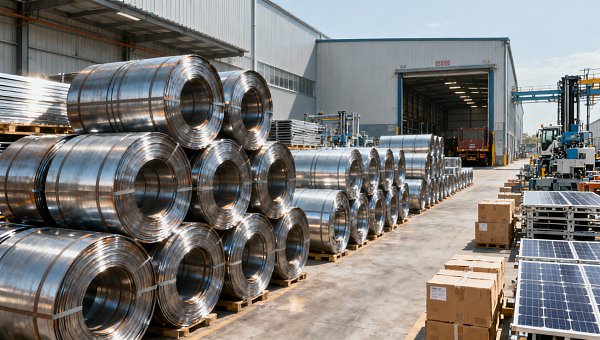
The confirmed change is a tariff increase by the EU on selected Chinese steel imports, reaching as high as 50% under anti-dumping rules. The products named in the provided information include hot-rolled coil and stainless steel plate, both of which are widely used as base materials in industrial manufacturing and export supply chains.
The implementation date is July 1, which means the rule change has a defined execution point rather than remaining a preliminary discussion. The provided information also states that the measure directly affects raw material costs and the end-price competitiveness of downstream export products, especially in CNC Machining, Factory Automation equipment structural parts, and Solar PV supports.
It is also confirmed that overseas buyers need to reassess suppliers' ability to pass through cost changes and to maintain alignment with CE and UKCA requirements. Beyond that, no further official detail is provided in the input, so any wider interpretation should be treated as observation rather than established fact.
Where pressure is likely to emerge across the supply chain
Export quotations face immediate review pressure
From an industry perspective, exporters that rely on the affected steel categories may be the first to feel the rule change in commercial negotiations. The main issue is not only higher material cost exposure, but also whether quoted prices, validity periods, and contractual assumptions still reflect the new tariff environment once the July 1 implementation date takes effect.
What deserves closer attention is the interaction between raw material sourcing and final export pricing. If downstream products are sold on tight margins, even a partial cost pass-through may alter competitiveness in buyer comparisons, especially where purchasers benchmark multiple suppliers on landed cost and technical compliance together.
Procurement teams may need to revisit material planning
For companies buying steel inputs for further processing, the effect is likely to appear in procurement schedules, supplier selection, and document review. Where hot-rolled coil or stainless steel plate are core inputs, procurement teams may need to check whether current sourcing assumptions, order timing, and supplier commitments remain workable under the new tariff condition.
Analysis shows that the operational risk is not limited to price. It may also extend to the consistency of technical documents, material declarations, and any product files that are linked to the selected source of steel, particularly when buyer approval depends on a stable specification path.
Manufacturers of finished structures must watch compliance continuity
Manufacturers serving CNC Machining, Factory Automation, and Solar PV applications may face a more complex issue than a simple increase in input cost. If the sourcing mix changes in response to tariff pressure, companies may need to confirm that product technical files, conformity documentation, and certification-related records remain aligned with the delivered configuration.
In this context, CE and UKCA are not just labeling questions. They become part of the wider compliance review, because overseas buyers are being prompted to reassess whether a supplier can absorb or transfer cost changes without creating uncertainty around conformity, documentation, or supply consistency.
Overseas buyers may tighten supplier due diligence
For procurement-side customers and channel partners, the stated need to reassess supplier cost pass-through ability suggests a likely increase in commercial and compliance screening. Buyers may pay closer attention to how suppliers explain price changes, how stable their material sourcing remains, and whether certification-related deliverables still match the shipped product.
Observably, this can affect supplier approval, tender comparisons, and delivery confidence even before any broader market reaction becomes clear. The practical concern is whether a supplier can maintain both competitive pricing and compliance continuity under a changed steel cost base.
Practical issues companies should monitor now
Check whether certification files remain aligned with sourcing changes
Where affected steel inputs are used in export products, companies should closely review whether any sourcing adjustment would require updates or rechecks in technical documentation tied to CE or UKCA-related delivery expectations. The input does not provide execution details, so this should be treated as a compliance checkpoint to watch rather than a confirmed mandatory re-certification outcome.
Re-examine quotation logic and contract timing
Businesses involved in active export offers should pay attention to quotation validity, cost assumptions, and delivery windows around the July 1 start date. Analysis shows that the timing of orders, procurement commitments, and shipment planning may become more sensitive where material cost changes need to be reflected without creating disputes over agreed commercial terms.
Review document consistency across bids and deliveries
For projects involving structured procurement or tender documents, companies should monitor whether bills of materials, technical submissions, inspection records, and supporting product files remain internally consistent if supplier or material arrangements change. This is especially relevant where buyers compare compliance readiness together with price.
Watch for further clarification in execution practice
The current information confirms the tariff decision and implementation date, but it does not provide the full execution framework. It is therefore important to continue tracking later official wording, buyer-side requirements, and any changes in how procurement documents or certification expectations are applied in practice.
How this development is best understood at this stage
Analysis shows that this development is better understood as an executed trade rule change with immediate commercial implications, rather than as a distant policy signal. The July 1 implementation date gives the market a near-term adjustment point, particularly for exporters and buyers exposed to steel-intensive industrial products.
At the same time, it is more appropriate to understand this as a rule change that still requires observation at the application level. The provided information confirms the tariff action and the compliance attention around CE and UKCA, but it does not yet define every downstream response in procurement, certification handling, or tender practice.
From an industry perspective, the key issue is whether market participants treat the measure only as a cost event or as a broader supply-chain compliance trigger. The latter may matter more in transactions where technical documentation, product conformity, and pricing discipline are assessed together.
Why the market should read this carefully
This event matters because it links trade regulation directly to industrial export execution. The confirmed tariff increase affects not only steel input economics, but also the way exporters, buyers, and compliance teams may evaluate pricing resilience, sourcing stability, and documentation alignment in cross-border business.
Current observation suggests that the development should be read as a real and near-term operating change, while many execution details still deserve continued monitoring. A measured interpretation is more appropriate than a broad conclusion: the rule is clear in principle, but its full impact on procurement behavior, certification handling, and commercial negotiation will depend on how market participants respond after implementation.
Basis of this article and what still needs verification
This article is generated from the user-provided news title, event date, and event summary. The analysis is limited to the confirmed information provided in that input and does not add unverified policy numbers, institutional statements, company examples, market data, or source links.
For developments of this type, commonly relevant source categories may include official announcements, releases from regulatory authorities, customs or trade administration information, industry association updates, standardization documents, and reporting by authoritative media. A specific official source link was not provided in the input, so continued verification is still necessary.
What still requires follow-up includes any later policy clarification, certification interpretation related to CE or UKCA, changes in tender or procurement documentation, industry feedback, and how companies implement sourcing and delivery adjustments after the July 1 start date.
Get weekly intelligence in your inbox.
No noise. No sponsored content. Pure intelligence.
 Oct 24, 2026Tesla Q3 2026 Storage Deployments Rank Second Highest as Revenue Falls 16%Tesla Q3 2026 Storage Deployments Rank Second Highest as Revenue Falls 16%
 Oct 24, 2026Freight Forwarding Services Pricing: Comparing Quotes Beyond Base RatesFreight Forwarding Services Pricing: Comparing Quotes Beyond Base Rates
 Oct 23, 2026IndexBox Issues Off-Grid Solar Outlook to 2035, Forecasting 8.2% CAGRIndexBox Issues Off-Grid Solar Outlook to 2035, Forecasting 8.2% CAGR
 Oct 23, 2026NSF/ANSI 49 Biosafety Cabinets: Product Certification vs. Field TestingNSF/ANSI 49 Biosafety Cabinets: Product Certification vs. Field Testing
 Oct 22, 2026Mitsubishi Electric Develops Industry-First Humanoid Robot–CNC Machining SystemMitsubishi Electric Develops Industry-First Humanoid Robot–CNC Machining System
 Oct 22, 2026Aerospace Aluminum Machining: How to Control Distortion in Thin-Wall PartsAerospace Aluminum Machining: How to Control Distortion in Thin-Wall Parts
 Oct 21, 2026Genesis Energy commissions 200 MWh battery storage system at HuntlyGenesis Energy commissions 200 MWh battery storage system at Huntly
 Oct 21, 2026Buying AMI Smart Meters Wholesale: Compatibility Checks and Total CostsBuying AMI Smart Meters Wholesale: Compatibility Checks and Total Costs
 Oct 20, 2026Werner Enterprises Issues Q3 Earnings Warning as Costs RiseWerner Enterprises Issues Q3 Earnings Warning as Costs Rise
 Oct 20, 2026Are Digital Twins Viable for SMEs? Costs, Use Cases, and Data RequirementsAre Digital Twins Viable for SMEs? Costs, Use Cases, and Data Requirements
 Oct 19, 2026Choosing a Wholesale Servo Motor Exporter: Traceability and Warranty ChecksChoosing a Wholesale Servo Motor Exporter: Traceability and Warranty Checks
 Oct 18, 2026Syringe Manufacturing Equipment: Evaluating Throughput and Assembly AccuracySyringe Manufacturing Equipment: Evaluating Throughput and Assembly Accuracy
 Oct 17, 2026Air Freight Forwarding Services: How to Compare Quotes for Urgent ShipmentsAir Freight Forwarding Services: How to Compare Quotes for Urgent Shipments
 Oct 16, 2026Wholesale Solar Panels: How to Compare Bulk Quotes by Total Landed CostWholesale Solar Panels: How to Compare Bulk Quotes by Total Landed Cost
 Oct 15, 2026Supply Chain Intelligence for Sourcing: How to Vet New SuppliersSupply Chain Intelligence for Sourcing: How to Vet New Suppliers
 Oct 14, 2026How energy costs shape smart manufacturing investment in EuropeHow energy costs shape smart manufacturing investment in Europe
 Oct 14, 2026How skills shortages slow smart manufacturing in Southeast AsiaHow skills shortages slow smart manufacturing in Southeast Asia
 Oct 14, 2026How CNC wire-cut machining maintains tight tolerances in thick partsHow CNC wire-cut machining maintains tight tolerances in thick parts
 Oct 14, 2026Can automated feeding stabilize metal forming in smart factories?Can automated feeding stabilize metal forming in smart factories?
 Oct 14, 2026Can CT inspection detect internal defects in metal additive parts?Can CT inspection detect internal defects in metal additive parts?
 Oct 14, 2026When does additive manufacturing reduce lead time for spare parts?When does additive manufacturing reduce lead time for spare parts?
 Oct 14, 2026How production volume affects ROI on an automated painting lineHow production volume affects ROI on an automated painting line
 Oct 14, 2026What data does manufacturing bottleneck analysis consulting need?What data does manufacturing bottleneck analysis consulting need?
 Oct 14, 2026When should you hire a consultant for manufacturing bottlenecks?When should you hire a consultant for manufacturing bottlenecks?
 Oct 14, 2026What Are Electronics Exporters' Top Supply Chain Resilience Gaps in 2026?What Are Electronics Exporters' Top Supply Chain Resilience Gaps in 2026?
 Oct 14, 2026How Do You Measure AI Adoption Maturity in a Traditional Factory?How Do You Measure AI Adoption Maturity in a Traditional Factory?
 Oct 14, 2026Are Chinese AI-Assisted Surgical Devices Gaining Global Trust?Are Chinese AI-Assisted Surgical Devices Gaining Global Trust?