How to choose intermediate bulk containers for produce
Selecting the right intermediate bulk containers for agricultural products is one of the most practical decisions produce operators make every day. The wrong container can bruise crops, slow loading, complicate cleaning, and create avoidable waste during storage or transport.
For most users, the best choice comes down to four factors: what produce you handle, how much weight the container must carry, how easily it can be cleaned, and whether it fits your real workflow. A container that looks strong on paper is not always the best match on the floor.
This guide explains how to evaluate intermediate bulk containers for produce in a way that supports safer handling, better hygiene, smoother movement, and more reliable product quality from packing area to destination.
What operators really need to check before choosing a produce container
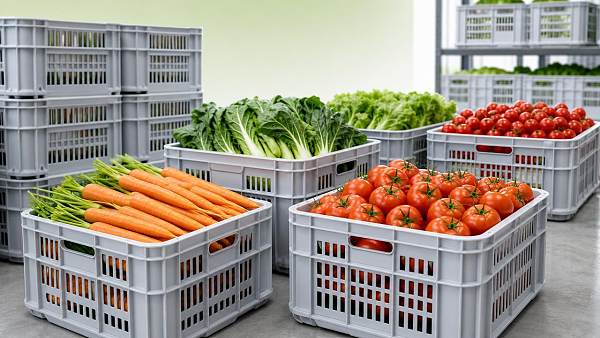
When users search for intermediate bulk containers for agricultural products, they usually do not want a generic packaging overview. They want to know which container will protect produce, work with their equipment, and reduce daily handling problems.
That means the main decision is not simply plastic versus metal, or rigid versus collapsible. The real issue is choosing a container that matches crop sensitivity, harvest volume, transport distance, stacking conditions, and washdown requirements.
For operators, the most important questions are practical. Will the container damage the produce? Is it easy to move with forklifts or pallet jacks? Does it drain properly? Can it be cleaned fast enough between loads? Will it hold up through repeated use?
These are the questions that should guide selection. Price matters, but in produce logistics, the cheapest option often becomes expensive if it causes bruising, contamination risk, poor airflow, or inefficient handling.
Start with the type of produce you handle
Different crops place very different demands on a bulk container. Leafy vegetables, root crops, fruit, melons, onions, and herbs each respond differently to pressure, moisture, and airflow. A container that works well for potatoes may be a poor choice for tomatoes.
For delicate produce, smooth interior walls and rounded corners help reduce pressure points and impact damage. Softer products also benefit from designs that limit overstacking and prevent the bottom layers from carrying too much weight.
For heavier or less fragile items such as carrots, onions, squash, or some root vegetables, load strength may matter more than cushioned handling. In these cases, users often need durable bins that support dense packing without bowing or cracking.
Ventilation is another crop-specific issue. Produce that releases moisture or needs temperature control often performs better in vented containers that encourage air circulation. In contrast, some products may need more enclosed protection from dust, splash, or cross-contact.
If your operation handles several product categories, a one-size-fits-all policy can create problems. It is often better to standardize around two or three container types based on crop behavior rather than forcing every item into the same system.
Match the container to your real load and stacking conditions
One common mistake is choosing a container based only on nominal capacity. Operators need to look beyond listed volume and check actual working loads, dynamic loads during movement, and static loads during stacked storage.
Fresh produce is heavy, and weight distribution is not always even. A container filled quickly in the field may place more stress on walls, corners, and base supports than a neatly packed load in a warehouse. That difference matters in daily use.
If containers will be stacked in cold storage or during transport, compression strength becomes critical. Weak bins can deform under weight, reducing stability and creating safety risks. They can also crush the produce in lower layers if the design does not distribute force properly.
Operators should also consider whether loads will be moved over uneven ground, ramps, or wet areas. A container may perform well in static testing but still become difficult to handle in rough field-to-truck transfers or busy wash-pack environments.
When reviewing intermediate bulk containers for agricultural products, ask suppliers for clear data on payload, stacking rating, bottom support design, and expected cycle life. These details tell you more than broad marketing claims.
Do not overlook hygiene, drainage, and cleaning time
For produce operations, hygiene is not a secondary issue. Containers come into direct or indirect contact with products that can carry soil, plant residue, moisture, and microbes. If a bin is difficult to clean, contamination risk rises quickly.
Look closely at interior surfaces, seams, joints, and drain paths. Smooth, non-porous surfaces are usually easier to wash and dry. Deep crevices, exposed hardware, and hard-to-reach corners often trap debris and increase labor during sanitation.
Drainage design matters especially for washed produce. If water pools at the bottom, containers may support mold growth, odor retention, or product deterioration. Properly designed drainage openings help remove excess moisture without weakening the structure.
Cleaning speed also affects productivity. Operators should ask how long a container takes to rinse, scrub, inspect, and dry between uses. A durable bin that doubles sanitation time may reduce overall line efficiency more than expected.
If your facility follows specific food safety protocols, container compatibility with detergents, sanitizers, and high-pressure wash systems should be checked in advance. Materials must resist repeated cleaning without becoming brittle, warped, or roughened.
Choose a design that fits daily handling equipment and workflow
A produce container may be technically suitable for the crop but still cause delays if it does not fit your operating environment. Users should evaluate how the container works with forklifts, pallet jacks, conveyors, lifts, and storage systems already in place.
Fork entry points should be easy to access from the directions your team actually uses. If workers regularly need to reposition bins just to pick them up, time loss adds up quickly. Poor entry design can also increase impacts and equipment wear.
Container footprint is equally important. Units that do not match trailer dimensions, rack spacing, or cold-room layouts can waste valuable space. Better cube utilization often reduces trips, simplifies staging, and improves inventory organization.
Collapsible or nestable models can be useful when returning empties or saving storage area. However, users should compare that benefit against folding complexity, hinge durability, and cleaning access. Space-saving features are helpful only if they do not slow operations.
In high-turn environments, ergonomics matter too. Handles, access points, discharge options, and overall container height affect how easily teams load, inspect, and unload produce. Good design reduces strain and lowers the chance of rushed handling mistakes.
Material choice affects durability, product protection, and maintenance
Many produce operations rely on food-grade plastic bulk containers because they balance strength, cleanability, and resistance to moisture. High-density polyethylene and similar materials are common because they perform well in repeated agricultural handling conditions.
Plastic containers are often preferred when corrosion resistance and washdown compatibility are priorities. They are also less likely than rougher materials to scratch delicate produce surfaces, provided the interior is molded smoothly and remains in good condition.
Metal containers may suit some industrial bulk applications, but for fresh produce they can be less ideal when hygiene, weight, or surface impact is a concern. If metal is considered, coating integrity and cleanability must be carefully reviewed.
Wood-based solutions may still appear in some produce chains, but they usually present more challenges in standardized cleaning, moisture absorption, splinter risk, and long-term consistency. For repeated-use systems, users often prefer more uniform reusable materials.
The best material is the one that holds up under your sanitation routine, temperature range, and handling intensity while continuing to protect product quality. Material selection should always be tied to operational reality, not general preference.
Check whether the container protects freshness during storage and transport
Protecting freshness is one of the core reasons for choosing the right intermediate bulk containers for agricultural products. Even strong containers fail their purpose if they accelerate bruising, heat buildup, dehydration, or moisture retention.
Ventilation slots should support airflow without creating pressure points or exposing produce to excessive movement. For some crops, controlled ventilation helps maintain temperature consistency and removes field heat more effectively during post-harvest handling.
Container depth also affects quality. Deep bins may increase capacity, but they can overload produce at the bottom if the crop is sensitive. Shallower designs sometimes preserve quality better, even if they require more units to move the same volume.
Lid options, liners, and internal dividers may be useful in specific applications, especially when transport distance is long or when mixed handling environments increase exposure to dust or contact damage. These features should be assessed case by case.
Users should review actual product loss patterns, not just container specifications. If certain crops arrive with bruising, moisture issues, or shortened shelf life, the container design may be contributing more than teams initially realize.
Think in terms of total operating cost, not purchase price alone
Operators and buyers often face pressure to control unit cost, but container decisions should be based on total operating value. A cheaper bulk bin may cost more over time if it breaks early, takes longer to clean, or causes higher product loss.
Useful cost factors include service life, repair frequency, cleaning labor, return logistics, storage efficiency, and damage reduction. In produce operations, even a small decrease in bruising or spoilage can justify a better container choice quickly.
It is also important to estimate how many handling cycles the container will complete each year. High-use systems place more emphasis on durability and process fit. Low-use seasonal applications may justify a different balance between performance and price.
If possible, run a field trial before scaling. Testing a small batch of containers with real produce, real staff, and real transport conditions often reveals issues that brochures never mention. Trials are one of the best ways to avoid costly standardization mistakes.
A practical checklist for selecting the right container
To make the process easier, users can work through a simple decision sequence. First, define the crop type and sensitivity. Second, confirm load weight and stacking conditions. Third, check hygiene and cleaning requirements. Fourth, verify equipment compatibility.
Then review ventilation, drainage, and product protection needs based on storage time and transport distance. After that, compare material durability, expected cycle life, and return handling. Finally, calculate total operating cost rather than focusing only on purchase price.
It is also wise to involve the people who actually use the containers every day. Forklift drivers, wash-line staff, harvest teams, and packhouse operators often identify practical issues that are missed during desk-based purchasing decisions.
When users are included in evaluation, the final choice is more likely to support smooth workflows and lower damage rates. In real operations, container success depends as much on usability as on technical specification.
Conclusion: the best produce container is the one that fits the crop and the workflow
Choosing intermediate bulk containers for agricultural products is not about finding the most advanced-looking model. It is about matching container design to crop behavior, handling conditions, sanitation needs, and the equipment people use every day.
For operators, the best containers protect freshness, move efficiently, clean easily, and hold up over repeated cycles without creating extra labor or safety risks. Those benefits matter far more than broad feature lists or low upfront price alone.
If you evaluate produce type, load demands, hygiene, handling compatibility, and total cost together, you can make a much better decision. The right container supports safer operations, better produce quality, and a more reliable logistics process from harvest to delivery.
Get weekly intelligence in your inbox.
No noise. No sponsored content. Pure intelligence.
 Oct 12, 2026How Predictive Maintenance AI Detects Machine Failures Before Unplanned DowntimeHow Predictive Maintenance AI Detects Machine Failures Before Unplanned Downtime
 Oct 10, 2026How to Scope Packaging Automation for High-Mix Lines Without Creating BottlenecksHow to Scope Packaging Automation for High-Mix Lines Without Creating Bottlenecks
 Oct 08, 2026How Digital Health Improves Diagnostic Accuracy and Workflow in Clinical LabsHow Digital Health Improves Diagnostic Accuracy and Workflow in Clinical Labs
 Oct 07, 2026Selecting Voice Picking Systems for German Warehouses: Integration, Languages and ROISelecting Voice Picking Systems for German Warehouses: Integration, Languages and ROI
 Oct 06, 2026How to Choose Last Mile Dispatch Software for On-Time Delivery at ScaleHow to Choose Last Mile Dispatch Software for On-Time Delivery at Scale
 Oct 05, 2026Vietnam’s Consumer Electronics Market: Demand Shifts and Sourcing OpportunitiesVietnam’s Consumer Electronics Market: Demand Shifts and Sourcing Opportunities
 Oct 04, 2026Digital Health Investment Priorities for Providers: Improving Access, Outcomes, and EfficiencyDigital Health Investment Priorities for Providers: Improving Access, Outcomes, and Efficiency
 Oct 03, 2026How to Specify an FR4 Custom PCB Board for High-Voltage and High-Heat DesignsHow to Specify an FR4 Custom PCB Board for High-Voltage and High-Heat Designs
 Oct 02, 2026ERP Software Market Intelligence: Adoption, Pricing, and Vendor Signals to WatchERP Software Market Intelligence: Adoption, Pricing, and Vendor Signals to Watch
 Oct 01, 2026How to Select Calibrated Temperature Data Loggers for GMP Cold Storage MonitoringHow to Select Calibrated Temperature Data Loggers for GMP Cold Storage Monitoring
 Sep 30, 2026Custom Molded Rubber Pricing: What Drives Unit Cost and Tooling Fees?Custom Molded Rubber Pricing: What Drives Unit Cost and Tooling Fees?
 Sep 29, 2026How to Evaluate Energy Management Software Vendors for Multi-Site OperationsHow to Evaluate Energy Management Software Vendors for Multi-Site Operations
 Sep 28, 2026How to Select a DIN Rail Smart Meter for Multi-Circuit Energy MonitoringHow to Select a DIN Rail Smart Meter for Multi-Circuit Energy Monitoring
 Sep 27, 2026TWS Earbuds in Vietnam: Demand Drivers, Price Tiers, and Retail Channel OpportunitiesTWS Earbuds in Vietnam: Demand Drivers, Price Tiers, and Retail Channel Opportunities
 Sep 26, 2026How UAE Clinics Can Qualify a Smart Glucometer Supplier for Accuracy and ComplianceHow UAE Clinics Can Qualify a Smart Glucometer Supplier for Accuracy and Compliance
 Sep 25, 2026Buying Aesthetic Lasers in the USA: FDA Status, Wavelengths, and Service SupportBuying Aesthetic Lasers in the USA: FDA Status, Wavelengths, and Service Support
 Sep 24, 2026Laser Cutting Brass Sheet: How to Prevent Burrs and Heat Marks on Thin PartsLaser Cutting Brass Sheet: How to Prevent Burrs and Heat Marks on Thin Parts
 Sep 23, 2026How to Choose Lightweight ANC Headphones for Comfortable All-Day TravelHow to Choose Lightweight ANC Headphones for Comfortable All-Day Travel
 Sep 22, 2026IPX5 TWS Bluetooth Earbuds: What Protection Do They Offer for Workouts?IPX5 TWS Bluetooth Earbuds: What Protection Do They Offer for Workouts?
 Sep 21, 2026What to Look for in a Grid Integration Company for Utility-Scale Solar ProjectsWhat to Look for in a Grid Integration Company for Utility-Scale Solar Projects
 Sep 20, 2026Microgrid Controller Pricing: What Drives Cost in Commercial Energy Projects?Microgrid Controller Pricing: What Drives Cost in Commercial Energy Projects?
 Sep 19, 2026How to Choose a GaN Charger for Laptops Without Compromising Power or PortabilityHow to Choose a GaN Charger for Laptops Without Compromising Power or Portability
 Sep 18, 2026Floating Solar Farm Costs: CAPEX, OPEX, and the Site Factors That Shape ROIFloating Solar Farm Costs: CAPEX, OPEX, and the Site Factors That Shape ROI
 Sep 17, 2026Drone Delivery Solutions for Last-Mile Routes: Site, Payload, and Range PlanningDrone Delivery Solutions for Last-Mile Routes: Site, Payload, and Range Planning
 Sep 16, 2026When Low-Volume Electronics Manufacturing Makes More Sense Than Mass ProductionWhen Low-Volume Electronics Manufacturing Makes More Sense Than Mass Production
 Sep 15, 2026Wholesale WiFi Smart Switches: What Buyers Should Verify Before OrderingWholesale WiFi Smart Switches: What Buyers Should Verify Before Ordering
 Sep 14, 2026How to Select IoT Sensors for Reliable Monitoring in Harsh Industrial EnvironmentsHow to Select IoT Sensors for Reliable Monitoring in Harsh Industrial Environments