When do IBC totes with stainless steel frame make sense?
Choosing the right bulk container affects safety, compliance, cleaning effort, and total lifecycle cost. In many industrial settings, ibc totes with stainless steel frame justify their premium when risk tolerance is low.
They are not automatically the best choice for every fluid or workflow. Their value appears when stronger structure, better corrosion resistance, and longer service life create measurable operational advantages.
Across integrated industries, specification decisions increasingly depend on durability, traceability, and audit readiness. That is why understanding when ibc totes with stainless steel frame make sense matters before standardizing a container fleet.
Definition and core performance profile
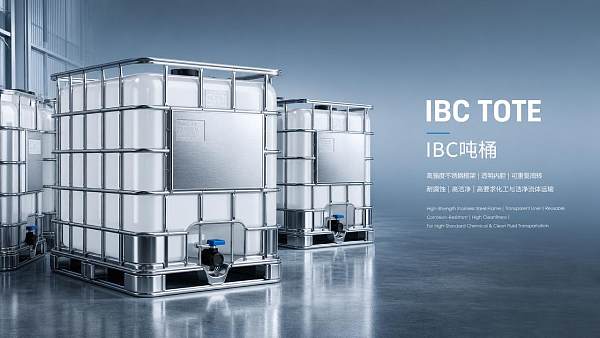
IBC stands for intermediate bulk container. These units are designed to store and move liquids or semi-liquids in a compact, stackable, and transport-friendly format.
ibc totes with stainless steel frame usually combine a bottle, tank, or liner system with an external stainless support cage. Some models also include stainless pallets, valves, or fittings.
The stainless frame improves resistance to rust, impact, washdown exposure, and repetitive handling stress. That makes the container more suitable for demanding indoor and outdoor operating conditions.
Compared with painted carbon steel cages, stainless steel better handles moisture, caustic cleaning, and contamination-sensitive environments. It also maintains a cleaner appearance over longer service periods.
However, not every application needs this upgrade. The decision should depend on the fluid, the cleaning regime, exposure conditions, reuse frequency, and regulatory requirements.
What distinguishes stainless steel frames
- Higher corrosion resistance in wet or chemically aggressive areas
- Better suitability for washdown and hygienic maintenance routines
- Lower risk of coating failure or rust transfer
- More stable long-term appearance for audited facilities
- Potentially longer usable life in closed-loop reuse systems
Current industry signals shaping container selection
Several market shifts are pushing buyers toward higher-spec reusable packaging. These shifts are visible across chemicals, food-adjacent processing, clean technology, electronics support fluids, and healthcare supply operations.
These trends do not mean stainless is always required. They do show why standard painted cages may become a weak point in high-accountability logistics and production systems.
Where ibc totes with stainless steel frame deliver practical value
The strongest case appears when the frame itself can affect uptime, compliance, contamination control, or asset longevity. In those settings, a cheaper cage may create hidden operational losses.
1. Corrosive or moisture-heavy environments
Facilities with regular washdowns, outdoor staging, coastal humidity, or chemical splash exposure often struggle with rusting support cages. Stainless frames reduce visible degradation and maintenance interruption.
2. Sensitive formulations and cleaner handling expectations
When product quality depends on controlled surfaces and lower contamination risk, ibc totes with stainless steel frame offer a more dependable support structure. This matters during repeated reuse and inspection.
3. High-cycle returnable logistics systems
Closed-loop transport systems expose containers to frequent forklift contact, stacking, unloading, and cleaning. Over time, frame durability becomes a cost driver rather than a technical detail.
4. Regulated or customer-audited supply chains
Audits often review equipment condition, sanitation compatibility, and visible maintenance standards. Stainless frames support stronger presentation and easier justification during quality or compliance reviews.
5. Long asset life planning
If the container is expected to remain in service for years, total cost often matters more than purchase price. Stainless construction can reduce repainting, repairs, and premature retirement.
Typical use cases across integrated sectors
The following scenarios show where ibc totes with stainless steel frame are commonly justified. The pattern is consistent: higher consequence, higher reuse, or harsher exposure supports the upgrade.
How to evaluate whether the upgrade is justified
A sound decision compares full operating conditions rather than unit price alone. ibc totes with stainless steel frame should be tested against a practical specification checklist.
Use these evaluation questions
- Will the tote face regular moisture, washdown, or corrosive splash?
- Is visual rust or coating damage unacceptable in the operating area?
- How many trips or reuse cycles are expected each year?
- Does the process require stronger sanitation compatibility?
- Will the container be audited by customers or regulators?
- What is the cost of downtime, rejected product, or container replacement?
If several answers point to elevated exposure or high consequence, stainless framing usually moves from optional to economically reasonable. The more demanding the environment, the stronger the case becomes.
Implementation considerations and common mistakes
Even a well-chosen container can underperform if details are ignored. Stainless framing improves one part of the system, but the complete tote specification still requires careful review.
Key implementation points
- Confirm stainless grade and finish, not just the word “stainless.”
- Check compatibility of bottle material, gaskets, valve seats, and caps.
- Review stacking, drop, and transport ratings for the actual load.
- Define cleaning methods before deployment into multi-use circulation.
- Inspect weld quality, drain accessibility, and repair procedures.
A common mistake is assuming stainless solves every durability problem. If the inner container, discharge assembly, or pallet base remains vulnerable, the expected performance gain may be limited.
Another mistake is ignoring return logistics. For low-cycle, low-risk, dry indoor applications, ibc totes with stainless steel frame may offer little financial advantage over standard options.
Decision guidance for the next specification step
ibc totes with stainless steel frame make sense when the environment is harsh, the product is sensitive, the asset is reused heavily, or visible condition affects compliance confidence.
They are especially relevant where corrosion risk, sanitation needs, and lifecycle economics intersect. In those conditions, the higher upfront cost often protects against larger downstream losses.
The next practical step is to map fluid chemistry, cleaning exposure, reuse frequency, and audit requirements into a written tote specification. That process reveals whether stainless framing is necessary or merely desirable.
For organizations building resilient supply systems, careful container selection supports safer handling, longer asset life, and stronger operational trust. That is where ibc totes with stainless steel frame create lasting value.
Get weekly intelligence in your inbox.
No noise. No sponsored content. Pure intelligence.
 Oct 12, 2026How Predictive Maintenance AI Detects Machine Failures Before Unplanned DowntimeHow Predictive Maintenance AI Detects Machine Failures Before Unplanned Downtime
 Oct 10, 2026How to Scope Packaging Automation for High-Mix Lines Without Creating BottlenecksHow to Scope Packaging Automation for High-Mix Lines Without Creating Bottlenecks
 Oct 08, 2026How Digital Health Improves Diagnostic Accuracy and Workflow in Clinical LabsHow Digital Health Improves Diagnostic Accuracy and Workflow in Clinical Labs
 Oct 07, 2026Selecting Voice Picking Systems for German Warehouses: Integration, Languages and ROISelecting Voice Picking Systems for German Warehouses: Integration, Languages and ROI
 Oct 06, 2026How to Choose Last Mile Dispatch Software for On-Time Delivery at ScaleHow to Choose Last Mile Dispatch Software for On-Time Delivery at Scale
 Oct 05, 2026Vietnam’s Consumer Electronics Market: Demand Shifts and Sourcing OpportunitiesVietnam’s Consumer Electronics Market: Demand Shifts and Sourcing Opportunities
 Oct 04, 2026Digital Health Investment Priorities for Providers: Improving Access, Outcomes, and EfficiencyDigital Health Investment Priorities for Providers: Improving Access, Outcomes, and Efficiency
 Oct 03, 2026How to Specify an FR4 Custom PCB Board for High-Voltage and High-Heat DesignsHow to Specify an FR4 Custom PCB Board for High-Voltage and High-Heat Designs
 Oct 02, 2026ERP Software Market Intelligence: Adoption, Pricing, and Vendor Signals to WatchERP Software Market Intelligence: Adoption, Pricing, and Vendor Signals to Watch
 Oct 01, 2026How to Select Calibrated Temperature Data Loggers for GMP Cold Storage MonitoringHow to Select Calibrated Temperature Data Loggers for GMP Cold Storage Monitoring
 Sep 30, 2026Custom Molded Rubber Pricing: What Drives Unit Cost and Tooling Fees?Custom Molded Rubber Pricing: What Drives Unit Cost and Tooling Fees?
 Sep 29, 2026How to Evaluate Energy Management Software Vendors for Multi-Site OperationsHow to Evaluate Energy Management Software Vendors for Multi-Site Operations
 Sep 28, 2026How to Select a DIN Rail Smart Meter for Multi-Circuit Energy MonitoringHow to Select a DIN Rail Smart Meter for Multi-Circuit Energy Monitoring
 Sep 27, 2026TWS Earbuds in Vietnam: Demand Drivers, Price Tiers, and Retail Channel OpportunitiesTWS Earbuds in Vietnam: Demand Drivers, Price Tiers, and Retail Channel Opportunities
 Sep 26, 2026How UAE Clinics Can Qualify a Smart Glucometer Supplier for Accuracy and ComplianceHow UAE Clinics Can Qualify a Smart Glucometer Supplier for Accuracy and Compliance
 Sep 25, 2026Buying Aesthetic Lasers in the USA: FDA Status, Wavelengths, and Service SupportBuying Aesthetic Lasers in the USA: FDA Status, Wavelengths, and Service Support
 Sep 24, 2026Laser Cutting Brass Sheet: How to Prevent Burrs and Heat Marks on Thin PartsLaser Cutting Brass Sheet: How to Prevent Burrs and Heat Marks on Thin Parts
 Sep 23, 2026How to Choose Lightweight ANC Headphones for Comfortable All-Day TravelHow to Choose Lightweight ANC Headphones for Comfortable All-Day Travel
 Sep 22, 2026IPX5 TWS Bluetooth Earbuds: What Protection Do They Offer for Workouts?IPX5 TWS Bluetooth Earbuds: What Protection Do They Offer for Workouts?
 Sep 21, 2026What to Look for in a Grid Integration Company for Utility-Scale Solar ProjectsWhat to Look for in a Grid Integration Company for Utility-Scale Solar Projects
 Sep 20, 2026Microgrid Controller Pricing: What Drives Cost in Commercial Energy Projects?Microgrid Controller Pricing: What Drives Cost in Commercial Energy Projects?
 Sep 19, 2026How to Choose a GaN Charger for Laptops Without Compromising Power or PortabilityHow to Choose a GaN Charger for Laptops Without Compromising Power or Portability
 Sep 18, 2026Floating Solar Farm Costs: CAPEX, OPEX, and the Site Factors That Shape ROIFloating Solar Farm Costs: CAPEX, OPEX, and the Site Factors That Shape ROI
 Sep 17, 2026Drone Delivery Solutions for Last-Mile Routes: Site, Payload, and Range PlanningDrone Delivery Solutions for Last-Mile Routes: Site, Payload, and Range Planning
 Sep 16, 2026When Low-Volume Electronics Manufacturing Makes More Sense Than Mass ProductionWhen Low-Volume Electronics Manufacturing Makes More Sense Than Mass Production
 Sep 15, 2026Wholesale WiFi Smart Switches: What Buyers Should Verify Before OrderingWholesale WiFi Smart Switches: What Buyers Should Verify Before Ordering
 Sep 14, 2026How to Select IoT Sensors for Reliable Monitoring in Harsh Industrial EnvironmentsHow to Select IoT Sensors for Reliable Monitoring in Harsh Industrial Environments