What Changes the Cost of Custom PCB Boards the Most?
The cost of custom PCB boards can shift dramatically based on design complexity, material selection, layer count, tolerances, and production volume. For buyers comparing components across smart humidifiers, smart kitchen appliances, wearable fitness trackers, robot vacuum cleaners, or even battery technology applications, understanding these cost drivers is essential for smarter sourcing, better budgeting, and lower production risk.
Which Factors Change Custom PCB Board Cost the Most?
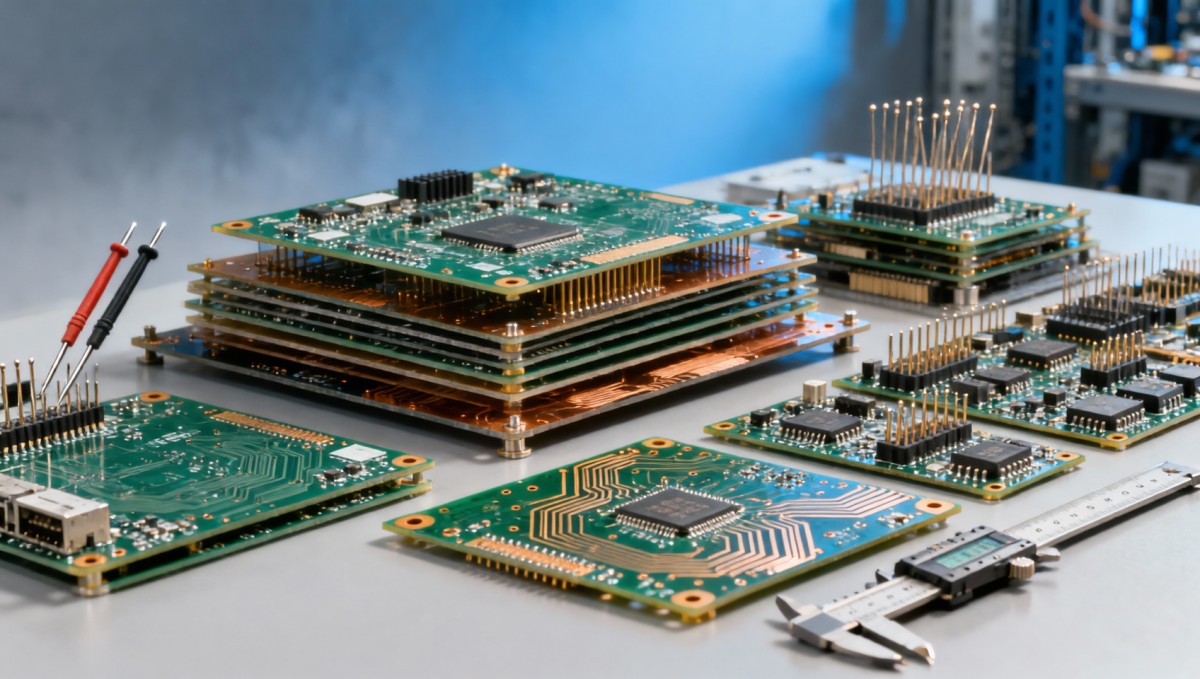
For most procurement teams, the biggest mistake is treating custom PCB board pricing as a simple unit-cost issue. In practice, the largest cost swings usually come from 5 core variables: layer count, board size, material grade, tolerance requirements, and order volume. A 2-layer board for a basic smart appliance control panel is priced very differently from a 6-layer compact board for a wearable tracker or sensor-dense healthcare device.
Complexity also multiplies cost in less obvious ways. Fine trace widths, dense BGA breakout, impedance control, via-in-pad design, blind or buried vias, and stricter testing plans all add process steps. Each added step affects engineering review, tooling, yield management, and inspection time. Even when the board outline looks small, the manufacturing difficulty can raise pricing faster than the raw material cost.
Lead time is another major lever. Standard production windows often fall in the 7–15 day range for routine custom PCB boards, while expedited builds can compress schedules to 48–96 hours depending on capacity and stack-up. Faster delivery generally means line priority, rush handling, and more constrained panel utilization, which can significantly change the quote seen by finance approvers and project managers.
In cross-sector sourcing, buyers also need to consider end-use risk. A board used in a robot vacuum cleaner, battery management module, or connected kitchen appliance may face different thermal, electrical, or reliability expectations. Cost should therefore be judged not only by quoted price per piece, but by total supply risk across design validation, production yield, compliance review, and field failure exposure.
The 6 most common PCB cost drivers
- Layer count: Moving from 2 layers to 4, 6, or 8 layers increases lamination steps, alignment demands, and process control requirements.
- Material choice: Standard FR-4 is common, but high-Tg, low-loss, heavy-copper, or metal-core options increase material and processing cost.
- Feature size and tolerance: Trace and space below common production ranges, tighter hole tolerance, or stricter flatness can reduce yield.
- Surface finish: HASL, ENIG, OSP, immersion tin, and immersion silver each have different cost and application trade-offs.
- Testing and quality control: Flying probe, fixture test, AOI, X-ray checks, and functional verification change total quote structure.
- Order volume and panel efficiency: Prototype lots, pilot runs, and mass production have very different setup cost absorption.
For sourcing teams, these variables should be reviewed together rather than one by one. A lower-priced quote on a custom PCB board may hide thinner copper, wider process tolerances, or reduced test scope. That trade-off may be acceptable in a basic consumer device, but not in a battery-related board or a connected product with high warranty exposure.
How Do Technical Specifications Affect Price in Real Projects?
Technical specifications directly shape manufacturing route, scrap rate, and inspection requirements. In practical buying scenarios, 3 categories usually deserve the closest review: stack-up complexity, conductor features, and reliability requirements. These categories influence whether a supplier can run the board on a standard line or must switch to a tighter, slower, and more expensive process window.
Layer count is often the most visible price driver, but not always the strongest one. A simple 4-layer custom PCB board with generous trace spacing may cost less to produce than a dense 2-layer board with tight routing, many vias, and strict coplanarity demands. Buyers in smart electronics and advanced manufacturing should therefore ask not only “how many layers,” but also “how difficult is the structure to fabricate consistently?”
Copper weight matters in power-oriented designs. Boards for motor control, battery management, charging circuits, or power conversion may require 2 oz or even heavier copper, while compact wearables often stay at lighter copper with fine-feature routing. Heavier copper can improve current handling, but it may also require wider features, more etching control, and different thermal balancing during fabrication.
Material selection is another turning point. Standard FR-4 fits many appliance and consumer electronics applications, but higher temperature stability, lower dielectric loss, or improved thermal performance may be needed in more demanding environments. That choice influences not just laminate price, but drill behavior, lamination control, and overall board yield across prototype, pilot, and production stages.
Typical specification changes and their cost impact
The table below helps procurement teams compare common custom PCB board specifications and how they typically affect quoting, lead time, and risk review across different application scenarios.
The key lesson is that a custom PCB board quote is a reflection of manufacturability, not just material input. If engineering teams optimize trace spacing, via strategy, or finish selection early, the final sourcing outcome can improve across three fronts at once: lower unit cost, shorter lead time, and better first-pass yield.
Why tolerances often cost more than buyers expect
Tolerance requests such as tighter hole sizing, controlled impedance, stricter thickness variation, or higher flatness targets can influence more than one department. They affect CAM review, tooling, process calibration, test verification, and quality documentation. In many sectors, especially healthcare technology and smart electronics, these requirements are justified, but they should be tied to actual application need rather than assumed as default.
When teams specify tighter tolerances than necessary, they often pay twice. First, the board itself becomes more expensive. Second, supplier options shrink because fewer factories can produce the board consistently within that process window. That can create a hidden supply chain risk during demand spikes, line changes, or regional sourcing shifts.
What Do Different Order Volumes and Use Cases Mean for Budget Planning?
Volume changes custom PCB board cost more than many non-technical stakeholders realize. Prototype orders, pilot runs, and mass production have fundamentally different cost structures because setup, tooling, engineering review, and testing overhead are spread across different quantities. A 20-piece engineering lot and a 20,000-piece production order should never be evaluated using the same price logic.
For business evaluators and finance approvers, the right question is not only “what is the piece price?” but also “what phase of the product lifecycle are we funding?” In early-stage projects, higher per-board cost may be reasonable because design validation and revision speed matter more than unit economics. In mature programs, stable yield, panel efficiency, and supply continuity become the dominant cost priorities.
Application also matters. Smart humidifiers and kitchen appliances may prioritize cost control at higher volumes, while wearable fitness trackers may emphasize compact routing and assembly compatibility. Robot vacuum cleaners may require stronger vibration tolerance and power path reliability. Battery-related applications often require more careful thermal and current-carrying design, which can increase both board complexity and verification scope.
These differences are why category managers and project leaders need a use-case-based sourcing framework. The same supplier may be competitive for 2-layer appliance boards in monthly batches, but less suitable for low-volume, fast-turn, high-density custom PCB boards used in prototype medical-adjacent devices or connected sensor products.
Volume stage comparison for sourcing teams
The following table shows how order stage changes cost logic, planning priorities, and supplier evaluation criteria for custom PCB boards.
This comparison is especially useful for distributors, OEM sourcing teams, and program owners balancing technical risk against capital discipline. The right custom PCB board supplier for one volume stage may not be the right one for the next. Pricing should always be reviewed together with revision frequency, forecast stability, and quality target.
A practical 4-step budget review method
- Separate NPI cost from recurring production cost so early engineering overhead does not distort long-term board economics.
- Confirm whether the current layout matches target volume, because panel efficiency often changes once quantities move from prototype to mass production.
- Check if test coverage and documentation level match end-use risk, especially in products with safety, thermal, or field-reliability exposure.
- Model lead-time scenarios such as standard, scheduled, and expedited supply to understand total landed cost under real demand conditions.
Using this structure helps decision-makers avoid false savings. A cheaper board can become a more expensive program if redesign cycles, delayed launch, or warranty claims rise after sourcing.
How Should Buyers Compare Quotes Without Missing Hidden Cost Risks?
Quote comparison is where many custom PCB board projects go wrong. Two suppliers may appear close in price, but one quote may include full electrical test, tighter quality review, and clearer stack-up confirmation, while another may only cover basic fabrication. Commercially, these are not equivalent offers. Procurement teams need a structured way to normalize supplier proposals before approval.
A reliable comparison should include at least 5 checkpoints: material specification, surface finish, testing scope, lead time basis, and scrap or remake policy. If any of these points remain vague, the quote may carry avoidable downstream risk. This is especially important when sourcing across regions or when a distributor is aggregating supply from more than one factory.
Quality and safety teams should also review whether the custom PCB board will support the final product’s compliance pathway. While PCB fabrication itself may not determine full product certification, board material behavior, trace spacing, thermal management, and process consistency can influence whether the assembled product moves smoothly through validation and reliability review.
In sectors linked to advanced manufacturing, green energy devices, and healthcare technology, documented process control often matters as much as nominal price. A board supplier that can explain panelization logic, test method, and revision handling is usually easier to manage in a scaling program than one offering an attractive quote with limited technical transparency.
Buyer checklist for quote normalization
- Confirm laminate type, copper weight, finished thickness range, and final surface finish in writing before commercial approval.
- Ask whether pricing is based on Gerber release, stack-up confirmation, or final engineering questions being closed.
- Verify included quality steps such as AOI, flying probe, fixture test, microsection review, or X-ray where relevant.
- Check lead time assumptions, including whether weekends, holidays, or logistics transit are included in the quoted schedule.
- Review remake, yield-loss, and engineering change handling so project owners understand the real cost of a revision cycle.
Common misconceptions that increase PCB spending
One common misconception is that the lowest unit price always produces the lowest total cost. In reality, boards with poor manufacturability can create more engineering iterations, lower assembly yields, and more field returns. Another misconception is that every application needs premium materials or premium finishes. Over-specification is just as costly as under-specification when margins are tight.
A third issue is overlooking communication speed. When engineering clarifications take 2–3 days per cycle, even a competitively priced custom PCB board can delay a product launch. For project managers, delayed validation often has a larger financial impact than modest differences in fabrication price.
This is where TradeNexus Pro adds practical value. TNP helps procurement directors, supply chain managers, and enterprise teams evaluate supplier-facing technical decisions in the wider context of market timing, production risk, and sector-specific demand shifts across smart electronics, healthcare technology, advanced manufacturing, and connected device ecosystems.
FAQ: What Do Decision-Makers Usually Ask Before Ordering Custom PCB Boards?
Before moving from design review to purchase order, teams across operations, engineering, finance, and channel management usually ask the same practical questions. Addressing them early can reduce quotation delays, design revisions, and supplier change risk.
How long does custom PCB board production usually take?
For standard designs, common production windows often fall around 7–15 days, depending on board complexity, material availability, testing scope, and shipping route. Prototype builds may move faster if the design fits standard process capability, while multilayer boards, special materials, or stricter quality checks can extend schedules into the 2–4 week range. Buyers should always distinguish factory lead time from total delivery time.
Which custom PCB board features are worth paying more for?
Features worth the extra cost are those tied directly to function, reliability, or compliance. Examples include heavier copper for higher current paths, controlled impedance for signal integrity, improved thermal materials for power electronics, or ENIG finish where flat pads support fine-pitch assembly. Features that do not clearly improve product performance or manufacturing stability should be challenged during DFM review.
What should finance teams ask before approving a PCB quote?
Finance teams should ask 4 basic questions: What quantity is this quote based on? What quality and test scope are included? Is this price tied to standard or expedited delivery? What assumptions could change price after engineering review? These questions help prevent approval based on a low initial quote that later increases due to hidden process requirements or revision handling.
Are cheaper alternatives always risky?
Not always. A lower-cost custom PCB board can be a sound option if the design uses standard materials, standard tolerances, and a realistic test plan for the target application. Risk appears when the quote is cheaper because critical controls are missing, trace geometry is near process limits, or the supplier is unclear about lead-time assumptions. The safer approach is to compare cost against intended use, not against price alone.
Why Work With TradeNexus Pro When Evaluating PCB Sourcing Decisions?
Custom PCB board purchasing sits at the intersection of engineering detail, supply chain timing, and commercial risk. That is exactly where TradeNexus Pro is most useful. TNP is built for procurement directors, program leaders, quality stakeholders, distributors, and enterprise decision-makers who need more than surface-level market commentary. It connects technical sourcing questions to broader sector intelligence across advanced manufacturing, green energy, smart electronics, healthcare technology, and supply chain software environments.
Instead of forcing teams to interpret scattered supplier claims on their own, TNP helps frame decisions around the issues that matter most: cost drivers, manufacturability, category trends, delivery risk, and commercial trade-offs. That matters when evaluating custom PCB boards for devices with short launch windows, regulated use conditions, multi-region sourcing exposure, or tight cost targets.
If your team is comparing board stack-ups, validating whether a quote reflects real process difficulty, or planning transitions from prototype to volume production, TNP can support smarter discussion points before supplier commitment. You can use our platform to refine parameter confirmation, compare sourcing scenarios, understand likely lead-time pressure, and identify where design choices may be inflating cost unnecessarily.
Contact TradeNexus Pro to discuss custom PCB board selection, quote interpretation, lead-time planning, sample support strategy, compliance-related review points, or tailored sourcing research for your product category. Whether your project involves connected appliances, wearables, robotics, battery-related electronics, or other B2B device programs, a clearer decision framework now can prevent expensive delays later.
Get weekly intelligence in your inbox.
No noise. No sponsored content. Pure intelligence.
 Apr 23, 2026Taobao Factory Spark 3.0 Launches AI Workbench for SME Export FactoriesTaobao Factory Spark 3.0 Launches AI Workbench for SME Export Factories
 Apr 23, 2026TENENG Group Inspects IoT Safety Compliance at Jiangnan ChemicalTENENG Group Inspects IoT Safety Compliance at Jiangnan Chemical
 Apr 23, 2026China Launches First Embodied AI Open Data CommunityChina Launches First Embodied AI Open Data Community
 Apr 23, 2026PV Glass Prices Flat for 9 Weeks Amid Rising Integrated ProcurementPV Glass Prices Flat for 9 Weeks Amid Rising Integrated Procurement
 Apr 23, 20262984 NQI One-Stop Platforms Launched Nationwide2984 NQI One-Stop Platforms Launched Nationwide
 Apr 23, 2026China’s Green Smart Ship Tech Norms Accelerate BMS & Shore Power ExportChina’s Green Smart Ship Tech Norms Accelerate BMS & Shore Power Export
 Apr 23, 2026China Builds World's Largest Agri-Meteorological IoT NetworkChina Builds World's Largest Agri-Meteorological IoT Network
 Apr 23, 2026EU CBAM Carbon Tariff Enters Enforcement on April 1, 2026EU CBAM Carbon Tariff Enters Enforcement on April 1, 2026
 Apr 23, 2026Five Ministries Issue Zero-Carbon Factory Guidance for Export IndustriesFive Ministries Issue Zero-Carbon Factory Guidance for Export Industries
 Apr 23, 2026ISO Releases First Zero-Carbon City Standard — China’s Practices IncludedISO Releases First Zero-Carbon City Standard — China’s Practices Included
 Apr 22, 2026China Leads Global Offshore Wind Installations for 5th YearChina Leads Global Offshore Wind Installations for 5th Year
 Apr 22, 2026China Launches National Mine Safety IoT Monitoring NetworkChina Launches National Mine Safety IoT Monitoring Network
 Apr 22, 2026Yinchuan Boiler Pure Water Solution Certified for Middle East ProjectsYinchuan Boiler Pure Water Solution Certified for Middle East Projects
 Apr 22, 2026China to Enforce Mandatory EV Battery Recycling Standards by 2026China to Enforce Mandatory EV Battery Recycling Standards by 2026
 Apr 22, 2026Vietnam Launches Anti-Circumvention Probe on Electronic ComponentsVietnam Launches Anti-Circumvention Probe on Electronic Components
 Apr 22, 20262026 Shanghai Fastener Show: Robotic Fasteners Drive Overseas Procurement2026 Shanghai Fastener Show: Robotic Fasteners Drive Overseas Procurement
 Apr 22, 2026US BIS Adds EV On-Board Charger Crypto Modules to EAR Appendix 7US BIS Adds EV On-Board Charger Crypto Modules to EAR Appendix 7
 Apr 22, 2026TÜV Rheinland Updates BESS Certification: Propagation Blocking Now MandatoryTÜV Rheinland Updates BESS Certification: Propagation Blocking Now Mandatory
 Apr 22, 2026Red Sea Crisis Escalates: Suez AI Speed Limits & Slot Review from Apr 19Red Sea Crisis Escalates: Suez AI Speed Limits & Slot Review from Apr 19
 Apr 22, 2026EU CBAM Carbon Tariff Takes Effect April 1, 2026EU CBAM Carbon Tariff Takes Effect April 1, 2026
 Apr 21, 2026When to Replace CT Scanner Parts Before Downtime StartsWhen to Replace CT Scanner Parts Before Downtime Starts
 Apr 21, 2026How to Cut Costs in Lathe Turning Without ReworkHow to Cut Costs in Lathe Turning Without Rework
 Apr 21, 2026Lathe Turning Tolerances: What Can You Expect?Lathe Turning Tolerances: What Can You Expect?
 Apr 21, 2026How to Avoid Risks in Solar Panels WholesaleHow to Avoid Risks in Solar Panels Wholesale
 Apr 21, 2026Solar Panels Wholesale: How to Compare SuppliersSolar Panels Wholesale: How to Compare Suppliers
 Apr 21, 2026Solar Mounting Cost Factors You Should KnowSolar Mounting Cost Factors You Should Know
 Apr 21, 2026Solar Mounting Options: Which One Fits Your Project?Solar Mounting Options: Which One Fits Your Project?