AR Glasses for Field Work: Worth It or Not?
As field teams seek faster workflows and safer operations, AR glasses are moving from pilot projects to serious business consideration. The short answer is this: AR glasses can absolutely be worth it for field work, but only in the right workflows. They tend to deliver the strongest value in inspection, maintenance, remote support, picking, and guided task execution where hands-free access to information reduces errors, travel, and downtime. For buyers, operators, and evaluators, the real question is not whether AR glasses are impressive technology, but whether they fit the job, integrate with existing systems, and produce measurable ROI within a practical deployment window.
Are AR glasses for field work worth it in real business terms?
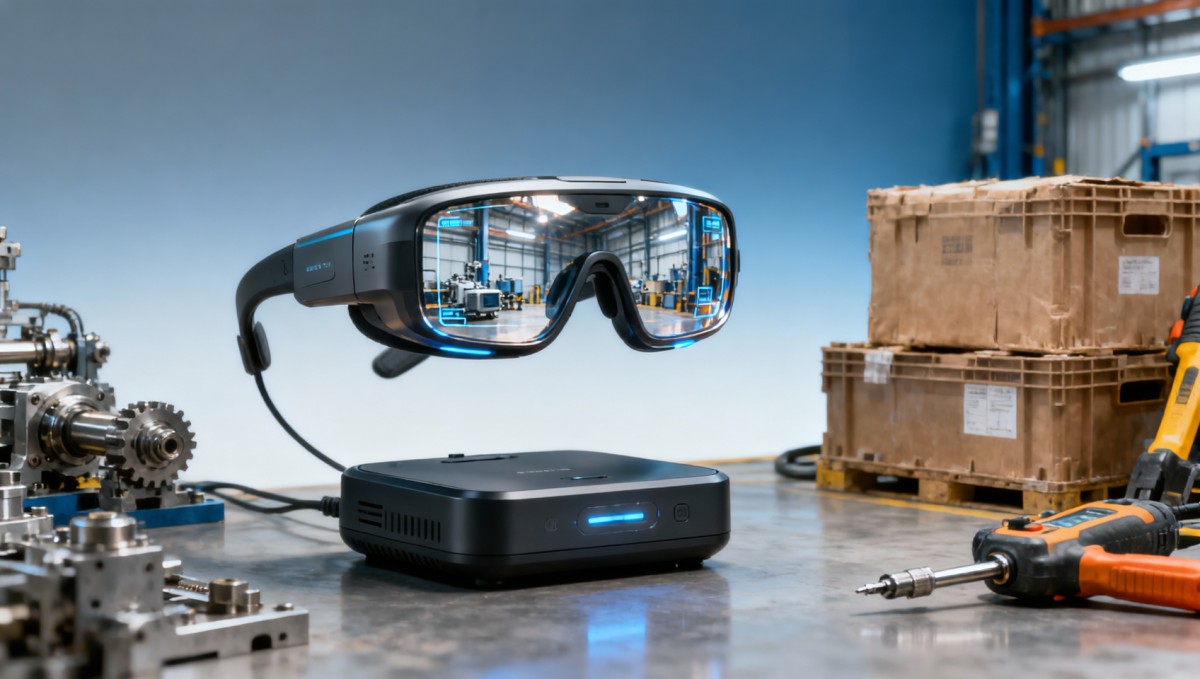
For most enterprise teams, AR glasses are worth considering when field work suffers from one or more of these problems: repeated human error, long training cycles, inefficient inspections, technician shortages, excessive expert travel, or safety risks caused by stopping work to check manuals or handheld devices.
In practical terms, AR glasses are most valuable when they help workers do one of the following:
- Access instructions without using their hands
- Receive remote expert guidance during service or repair
- Follow standardized inspection or maintenance steps
- Capture and document field data in real time
- Reduce warehouse picking errors and speed up task completion
- Shorten onboarding time for new operators
They are usually less worthwhile when work is highly variable, the environment is visually complex but offers little benefit from overlays, connectivity is poor, or the process itself is not standardized enough to support digital guidance.
For enterprise decision-makers, that means AR glasses should be treated as a workflow tool, not a novelty device. If the process is repetitive, costly, safety-sensitive, or dependent on scarce expertise, the business case becomes much stronger.
What are target users actually trying to evaluate before buying?
Different stakeholders look at AR glasses from different angles, but their concerns usually converge around a few core questions.
- Operators and field technicians: Are the glasses comfortable, reliable, easy to use, and genuinely helpful during tasks?
- Technical evaluators: Can the device integrate with ERP, WMS, CMMS, MES, 3PL, or remote support platforms?
- Business evaluators and project managers: Will deployment improve productivity, service quality, and response time?
- Finance approvers: Is there a realistic payback period, and what hidden costs are involved?
- Safety and quality managers: Does the solution improve compliance, reduce mistakes, and support auditable procedures?
- Enterprise leaders: Is this scalable across sites, teams, and use cases?
Because of this, a useful evaluation must go beyond device specifications. The buying decision is usually driven by operational fit, software integration, user adoption, and measurable impact on KPIs.
Where AR glasses deliver the clearest ROI
Not every field activity benefits equally. The strongest ROI tends to appear in use cases where time savings, reduced mistakes, and remote collaboration create direct financial value.
1. Maintenance and repair
For equipment maintenance, AR glasses can display step-by-step procedures, machine history, exploded views, and safety prompts while keeping both hands free. This reduces task interruption and improves consistency. Remote expert assistance is especially valuable when senior technicians cannot be physically present at every site.
Potential benefits include:
- Faster troubleshooting
- Lower equipment downtime
- Reduced repeat service visits
- Better first-time fix rates
- Faster training for less experienced technicians
2. Inspection and quality assurance
In structured inspections, AR glasses can guide workers through checklists, image capture, defect logging, and compliance procedures. This is useful in manufacturing plants, energy facilities, healthcare technology environments, and logistics assets where missed steps can be expensive or unsafe.
For quality and safety teams, the value often comes from better documentation, more standardized execution, and stronger traceability.
3. Warehouse operations and logistics
AR glasses can support picking, sorting, location guidance, and verification workflows. When connected to warehouse management systems, they can reduce picker hesitation and improve route efficiency. In high-volume operations or complex SKU environments, even small efficiency gains can produce meaningful returns.
This is particularly relevant for companies working with 3PL logistics providers or multi-site fulfillment operations, where consistency and speed matter just as much as labor utilization.
4. Remote support for distributed operations
If a business manages geographically dispersed sites, remote guidance can be one of the most compelling use cases. Instead of flying specialists to a site, organizations can use AR glasses to let local staff share a live visual feed while receiving instructions. That can lower travel costs, shorten response time, and keep assets running.
When AR glasses are probably not worth it
AR glasses are not an automatic upgrade for every field team. In some situations, the cost and complexity outweigh the gains.
They may be a poor fit when:
- Tasks are too short or too simple to justify wearable guidance
- Workers must frequently switch protective gear that conflicts with the device
- The work environment is too hot, dusty, wet, or hazardous for the selected hardware
- Connectivity is unstable and offline workflows are weak
- Existing digital work instructions are outdated or inconsistent
- User resistance is high and training support is minimal
In these cases, tablets, handheld scanners, or improved process digitization may produce faster and cheaper results. The best buyers compare AR glasses against realistic alternatives instead of assuming wearables are always the next step.
What costs should enterprises include in the ROI calculation?
A credible business case must include more than device pricing. Hardware is only one part of the total investment.
Typical cost categories include:
- AR glasses hardware and accessories
- Software licensing
- Integration with WMS, ERP, MES, CMMS, or service platforms
- Content creation for workflows and digital instructions
- Training and change management
- IT security, device management, and support
- Replacement, maintenance, and refresh cycles
On the value side, organizations should estimate gains from:
- Lower downtime
- Reduced travel for experts and trainers
- Higher picking or service productivity
- Fewer quality escapes or compliance misses
- Reduced onboarding time
- Improved labor utilization
- Better energy efficiency through faster diagnostics and optimized service execution
That last point is increasingly important. In industrial settings and infrastructure operations, faster maintenance and better field visibility can help reduce unnecessary equipment runtime, improve calibration, and support energy efficiency goals. While AR glasses do not directly save energy on their own, they can contribute to more efficient operations.
What technical factors matter most during evaluation?
For technical assessment teams, hardware specs alone do not determine success. The more important question is whether the solution can perform reliably within the operating environment and connect to the enterprise stack.
Key evaluation criteria include:
- Display usability: Is the information readable without obstructing vision?
- Battery life: Can the device support a full shift or key task windows?
- Comfort: Is it wearable long enough for actual field use?
- Durability: Does it meet environmental needs for dust, impact, or temperature?
- Voice and gesture input: Do controls work in noisy or gloved conditions?
- Camera and remote collaboration quality: Is visual support clear enough for expert guidance?
- System integration: Can it connect to the existing digital ecosystem?
- Security and governance: Does it meet enterprise privacy and IT policy requirements?
If the use case depends on warehouse execution, field service, or quality workflows, integration with existing systems is often the make-or-break factor. A strong AR deployment should fit into current operational data flows rather than create isolated information silos.
How should companies run a realistic pilot?
The best way to answer whether AR glasses are worth it is to run a tightly scoped pilot with measurable outcomes. A weak pilot often focuses on demonstrations. A strong pilot focuses on workflow improvement.
A useful pilot should:
- Select one high-friction use case, such as maintenance, inspection, or picking
- Define baseline KPIs before deployment
- Limit the pilot to a manageable team and operating environment
- Use real work instructions and real system integrations where possible
- Measure adoption, not just performance improvement
- Collect operator feedback on comfort, fatigue, and usability
- Evaluate scalability after the pilot, not just short-term novelty
Good KPIs may include task completion time, error rate, downtime reduction, training time, first-time fix rate, travel reduction, safety compliance, and documentation completeness.
For enterprise buyers, a pilot should answer one simple question: did the technology improve a business-critical process enough to justify scaling?
How different stakeholders should decide
For operators and supervisors: prioritize comfort, clarity, and whether the device genuinely removes friction from daily work.
For technical evaluators: focus on integration, reliability, security, and content management.
For finance and business approvers: ask whether the use case has enough repetition, labor cost, downtime exposure, or travel burden to generate payback.
For quality and safety leaders: examine whether AR glasses improve procedure adherence, evidence capture, and risk control.
For executives: decide based on operational scalability, not on the appeal of emerging technology.
Final verdict: worth it or not?
AR glasses for field work are worth it when they are deployed against high-value, structured workflows where hands-free guidance, real-time visibility, and remote support can improve performance in measurable ways. They are especially promising in maintenance, inspections, warehouse operations, and distributed service environments.
They are not worth it simply because a company wants to modernize its image or experiment with wearable tech. Without workflow fit, integration readiness, user adoption, and a clear ROI model, even advanced hardware will struggle to deliver value.
For most organizations, the smartest path is neither blind adoption nor outright dismissal. It is a focused pilot built around one painful operational process. If that pilot shows reduced errors, faster execution, lower downtime, or improved safety, AR glasses can move from interesting concept to justified investment.
Get weekly intelligence in your inbox.
No noise. No sponsored content. Pure intelligence.
 Apr 21, 2026China Builds National Mine Safety Risk Monitoring 'Single Network'China Builds National Mine Safety Risk Monitoring 'Single Network'
 Apr 21, 2026MIIT Releases First List of AI+Manufacturing IncubatorsMIIT Releases First List of AI+Manufacturing Incubators
 Apr 21, 20262026 Shanghai Fastener Show: 1,423 Exhibitors, Robot-Specialized Fasteners in Focus2026 Shanghai Fastener Show: 1,423 Exhibitors, Robot-Specialized Fasteners in Focus
 Apr 21, 2026Vietnam Launches Anti-Circumvention Probe on Chinese-Assembled Electronic ComponentsVietnam Launches Anti-Circumvention Probe on Chinese-Assembled Electronic Components
 Apr 21, 2026China Academy Releases 2026 Digital Passport White PaperChina Academy Releases 2026 Digital Passport White Paper
 Apr 21, 2026Suez Canal AI Speed & Stowage Control Starts Apr 19, 2026Suez Canal AI Speed & Stowage Control Starts Apr 19, 2026
 Apr 21, 2026US BIS Adds EV Onboard Chargers with AES-256+ Encryption to Export ControlsUS BIS Adds EV Onboard Chargers with AES-256+ Encryption to Export Controls
 Apr 21, 2026TÜV Rheinland Updates BESS Certification: Thermal Cascade Protection Now MandatoryTÜV Rheinland Updates BESS Certification: Thermal Cascade Protection Now Mandatory
 Apr 21, 2026Shanghai Port Launches Green Clearance Channel for New Energy EquipmentShanghai Port Launches Green Clearance Channel for New Energy Equipment
 Apr 21, 2026IEC 63275:2026 Released: Global EMC Immunity Testing Standard for Warehouse RobotsIEC 63275:2026 Released: Global EMC Immunity Testing Standard for Warehouse Robots
 Apr 20, 2026Energy Efficiency Upgrades That Cut Operating CostsEnergy Efficiency Upgrades That Cut Operating Costs
 Apr 20, 2026How to Avoid Common Solar Street Light FailuresHow to Avoid Common Solar Street Light Failures
 Apr 20, 2026Solar Street Lights: When Do They Really Pay Off?Solar Street Lights: When Do They Really Pay Off?
 Apr 20, 2026What Makes an Ultrasound Machine Worth the Cost?What Makes an Ultrasound Machine Worth the Cost?
 Apr 20, 2026Ultrasound Machines: New vs Refurbished in 2026Ultrasound Machines: New vs Refurbished in 2026
 Apr 20, 2026How to Evaluate Clean Energy ROI in 2026How to Evaluate Clean Energy ROI in 2026
 Apr 20, 2026Clean Energy Projects: Where Savings Really Come FromClean Energy Projects: Where Savings Really Come From
 Apr 20, 2026Air Quality Monitors: What to Check Before BuyingAir Quality Monitors: What to Check Before Buying
 Apr 20, 2026How Accurate Are Air Quality Monitors Indoors?How Accurate Are Air Quality Monitors Indoors?
 Apr 20, 2026Smart Door Locks: Which Type Fits Your Property?Smart Door Locks: Which Type Fits Your Property?
 Apr 20, 2026How AR Glasses Improve Remote MaintenanceHow AR Glasses Improve Remote Maintenance
 Apr 20, 2026AR Glasses for Field Work: Worth It or Not?AR Glasses for Field Work: Worth It or Not?
 Apr 20, 2026Which AED Defibrillators Are Easiest to Use?Which AED Defibrillators Are Easiest to Use?
 Apr 20, 2026AED Defibrillators: What Buyers Often MissAED Defibrillators: What Buyers Often Miss
 Apr 20, 2026How to Compare 3PL Logistics Providers for GrowthHow to Compare 3PL Logistics Providers for Growth
 Apr 20, 20263PL Logistics Costs Explained Before You Outsource3PL Logistics Costs Explained Before You Outsource
 Apr 20, 2026WMS vs ERP: What Matters on the Warehouse Floor?WMS vs ERP: What Matters on the Warehouse Floor?