How AR Glasses Improve Remote Maintenance
AR glasses improve remote maintenance by turning a phone call or video session into a guided, hands-free service workflow. For most organizations, the biggest benefits are practical rather than futuristic: faster troubleshooting, fewer repeat visits, lower downtime, safer interventions, and better use of scarce technical expertise across multiple sites. For companies in manufacturing, energy, warehousing, electronics, and service-heavy operations, the value is strongest when maintenance tasks are complex, equipment uptime matters, and expert support is not always available on site.
For decision-makers, the key question is not whether augmented reality looks innovative, but whether it can shorten mean time to repair, reduce travel, improve first-time fix rates, and support workforce training at scale. For operators and engineering teams, the focus is simpler: can AR glasses help them solve problems faster and with fewer mistakes? In many cases, the answer is yes, provided the deployment is tied to real maintenance workflows, compatible software, and measurable service KPIs.
Why AR glasses matter most in remote maintenance
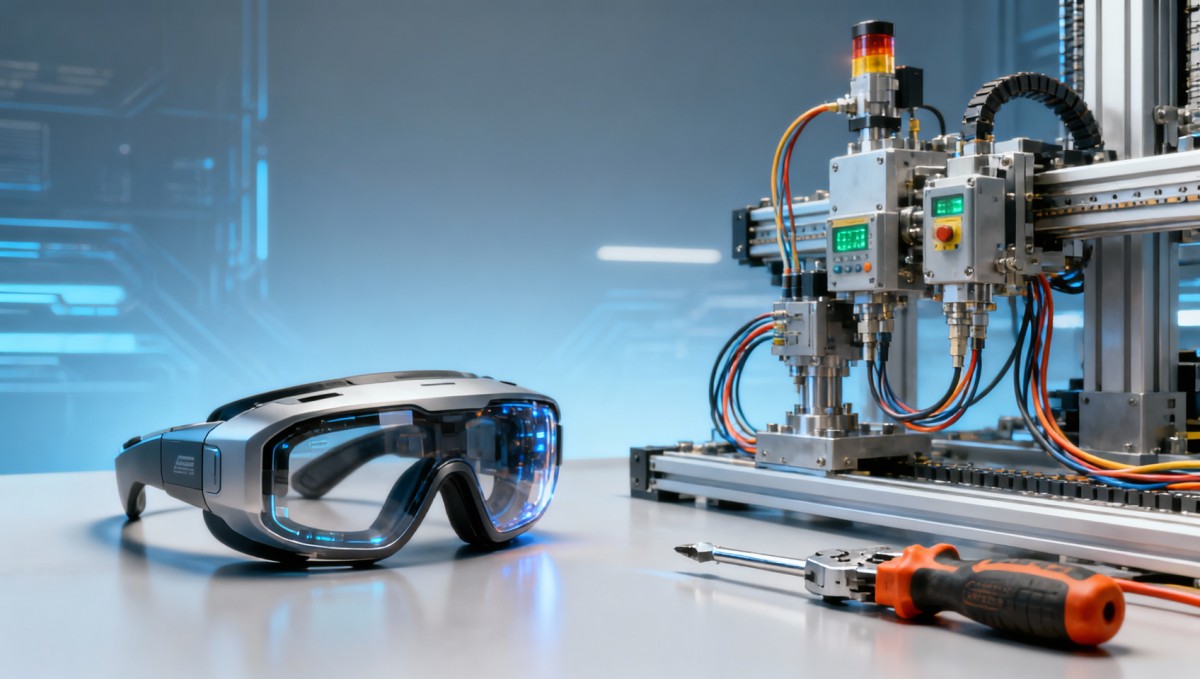
Traditional remote support often relies on voice calls, handheld video, emailed manuals, and delayed escalations. This creates friction at the exact moment speed and accuracy matter most. A field technician may struggle to describe an issue, an off-site expert may not see the right component, and both sides may lose time switching between tools, documents, and screens.
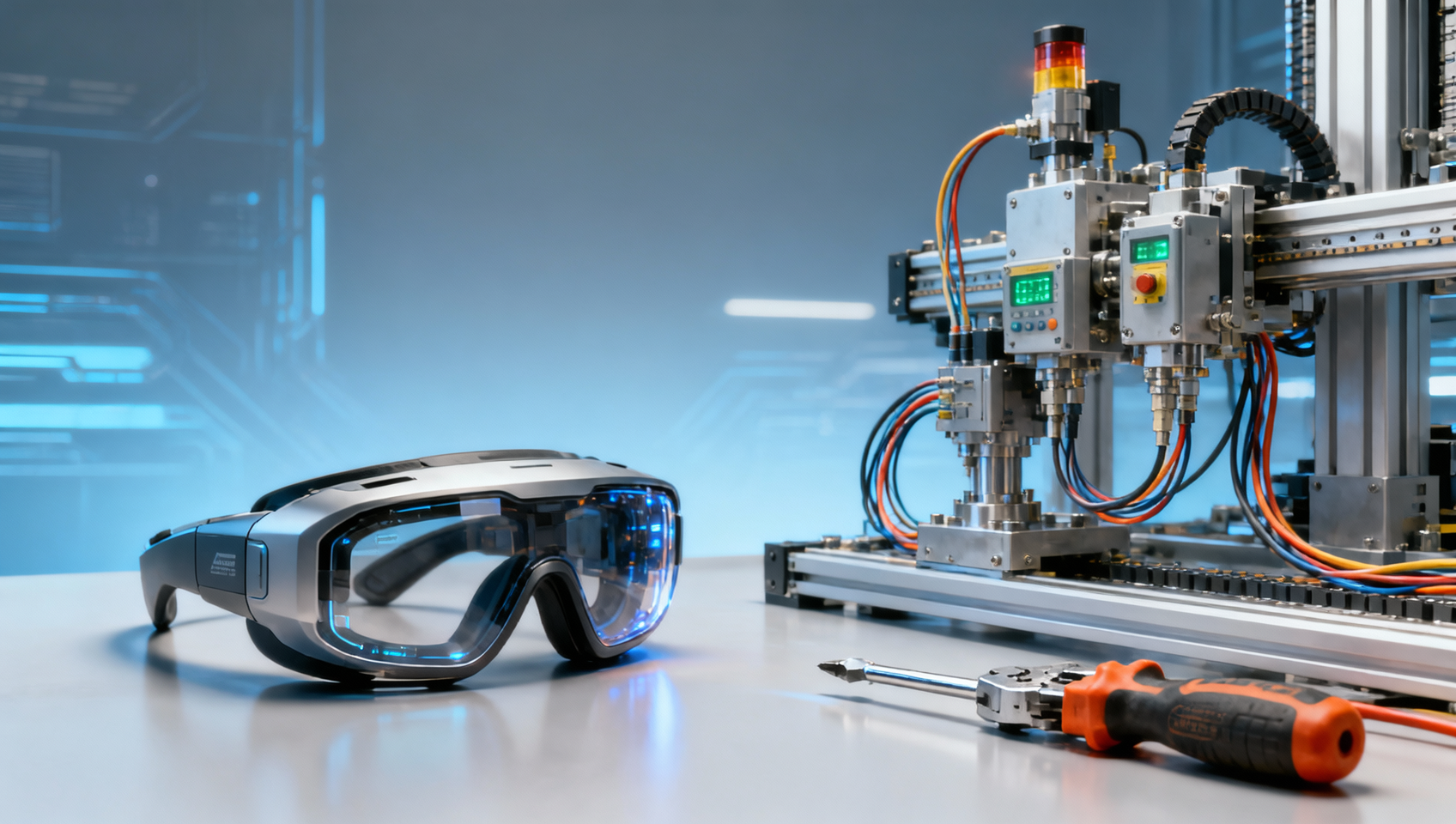
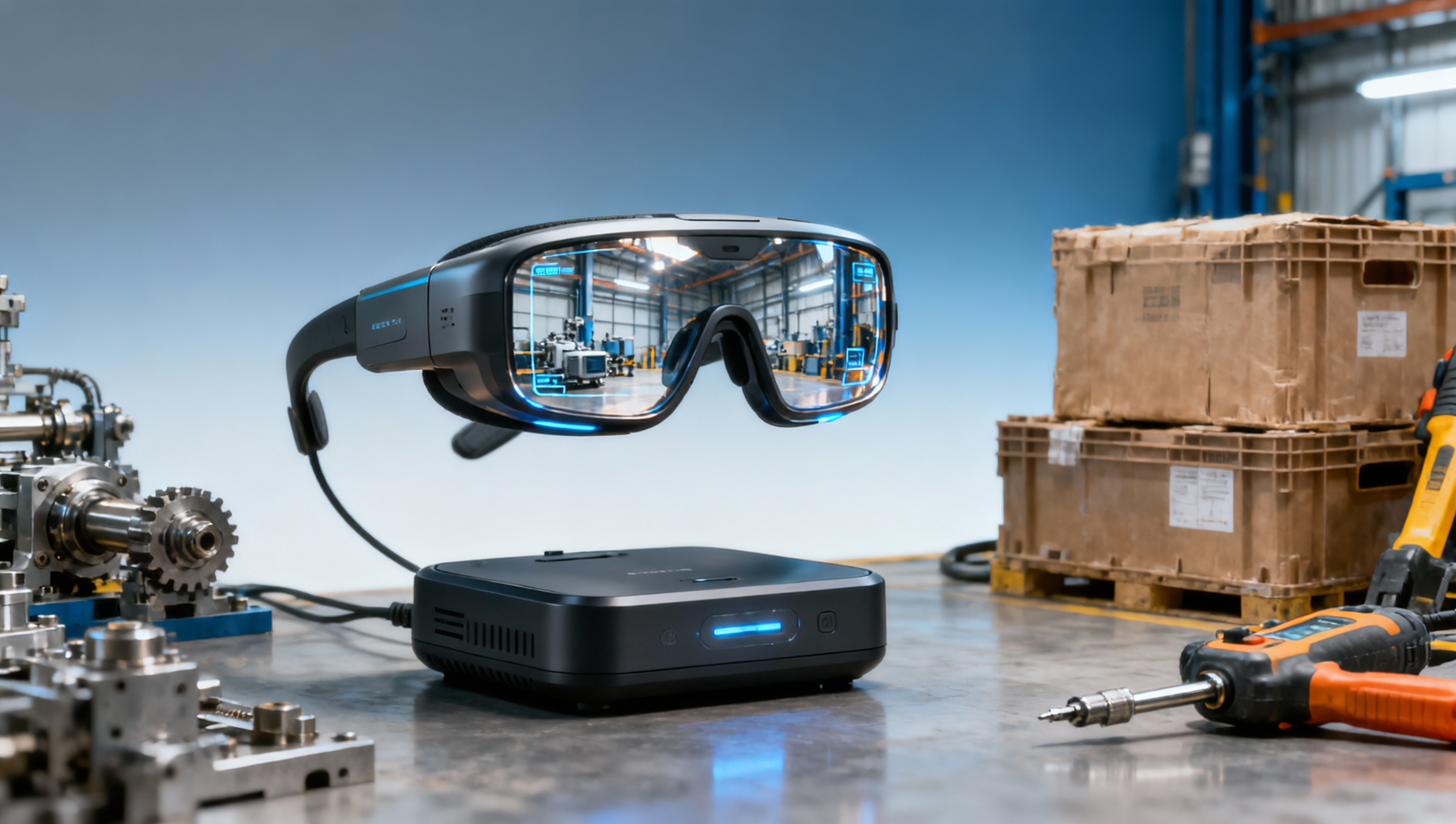
AR glasses address this by placing relevant support directly in the technician’s line of sight while keeping both hands free. Through live video sharing, annotation overlays, step-by-step instructions, and access to digital work orders, the technician can inspect equipment and act on expert guidance without stopping the job to hold a tablet or phone.
This shift is especially useful in environments where maintenance delays are expensive or risky, such as:
- Advanced manufacturing lines with high downtime costs
- Warehouse automation and conveyor systems that affect order flow
- Energy and utilities assets spread across multiple sites
- Smart electronics production with precise calibration requirements
- Healthcare technology environments where equipment availability is critical
In these settings, AR glasses improve remote maintenance because they reduce communication gaps between the person on site and the person with the deepest expertise.
How AR glasses improve maintenance performance in day-to-day operations
The strongest case for AR-enabled maintenance comes from workflow improvement. Instead of speaking in general terms about digital transformation, it is more useful to look at what changes on the ground.
Faster fault identification
When a technician can stream their exact viewpoint to a remote specialist, diagnosis becomes more precise. Experts can highlight a valve, cable, sensor, or fastener directly in the visual field, reducing guesswork. This is particularly valuable for intermittent faults, unfamiliar machines, and multi-component systems.
Lower mean time to repair
Repair time often expands because technicians pause to consult manuals, confirm part locations, wait for callbacks, or recheck procedures. AR glasses streamline these steps by bringing instructions, diagrams, and expert feedback into one continuous workflow.
Better first-time fix rates
Repeat service visits are costly. They increase labor expense, travel time, equipment downtime, and customer frustration. With real-time visual collaboration, technicians are more likely to complete the repair correctly on the first attempt, especially when dealing with specialized machinery or non-routine service events.
Improved documentation and knowledge capture
Many AR maintenance platforms can record sessions, capture photos, and log service actions. This helps build a reusable knowledge base for future incidents. Over time, organizations can reduce dependence on a small number of senior experts by turning tribal knowledge into structured digital guidance.
Hands-free safety and compliance support
In maintenance environments, handheld devices are not always practical or safe. AR glasses allow workers to follow procedures while maintaining physical control of tools, ladders, and equipment. For safety managers and quality teams, this can support better procedural adherence and reduce avoidable errors caused by distraction or incomplete instruction.
What business leaders usually want to know before investing
Enterprise buyers and financial approvers rarely ask whether AR glasses are interesting. They ask whether the technology can justify deployment costs and operational change. The most common evaluation points include business impact, implementation risk, scalability, and compatibility with existing systems.
1. Will AR glasses actually reduce service costs?
They often can, especially where expert travel is frequent or downtime is expensive. Cost savings typically come from fewer site visits, shorter outages, reduced training time, and more productive use of senior technical staff. The highest returns usually appear in multi-site operations where one expert can remotely support many locations.
2. What KPIs should be measured?
Useful metrics include:
- Mean time to repair (MTTR)
- First-time fix rate
- Downtime hours per incident
- Number of expert travel dispatches avoided
- Training time for new technicians
- Remote resolution rate
- Safety or procedural compliance performance
Without a KPI framework, AR projects can remain pilot-stage experiments rather than operational tools with clear ROI.
3. Which maintenance scenarios are the best fit?
AR glasses deliver the most value when tasks are visually complex, equipment is critical, and support expertise is centralized. Good-fit scenarios include troubleshooting automation faults, guided inspections, commissioning support, field repairs, warehouse equipment servicing, and remote assistance for less-experienced technicians.
Lower-value scenarios may include very simple maintenance tasks, environments with poor connectivity, or workflows where the worker rarely needs remote input.
4. What are the main deployment risks?
Common concerns include user resistance, uncomfortable hardware, weak battery life, limited field-of-view, data security issues, and poor integration with service systems such as CMMS, ERP, or digital work instruction platforms. These risks are manageable, but only if addressed early during vendor evaluation and pilot design.
What operators, engineers, and project teams care about in real use
For frontline users, value depends less on strategy language and more on whether the tool helps them do the job without adding friction.
Ease of use in the field
If the glasses are heavy, difficult to navigate, or unreliable under real operating conditions, adoption will drop quickly. Technicians need intuitive controls, clear displays, stable video, and fast access to remote experts or digital instructions.
Compatibility with PPE and work environments
In factories, warehouses, and energy sites, AR glasses must work alongside helmets, eye protection, hearing protection, and other PPE. Environmental conditions also matter: dust, heat, glare, noise, and movement can all affect usability.
Clarity of instruction
AR content must be designed for action. Workers need concise prompts, accurate overlays, and simple decision paths. Poorly designed interfaces or overly dense visual instructions can slow work instead of improving it.
Reliable connectivity and support
Remote maintenance tools depend on stable network performance. If a site has weak Wi-Fi or inconsistent mobile coverage, the system may fail when it is needed most. Project teams should assess network readiness before wider rollout.
How AR glasses support training, standardization, and workforce resilience
One of the most important long-term advantages of AR glasses is their role in workforce development. Many industrial organizations face a shortage of experienced maintenance personnel, while senior experts are nearing retirement or spread too thin across global sites.
AR-assisted support helps newer technicians perform at a higher level by connecting them with real-time expertise during actual work. This shortens the learning curve and reduces the risk of errors during early-stage field experience.
At the same time, standardized visual workflows can improve consistency across plants, warehouses, and service teams. Instead of relying on local habits or undocumented practices, organizations can deploy shared procedures supported by digital instructions and recorded examples.
For project leaders and operations managers, this means AR glasses are not just a repair tool. They can also become part of a broader strategy for training, quality control, and operational continuity.
How to evaluate whether AR glasses are worth adopting
A practical evaluation should focus on business fit, not novelty. Organizations considering AR remote maintenance should ask the following:
- Where are current maintenance delays happening?
- How often do experts travel to support field teams?
- Which assets create the highest cost when downtime occurs?
- Are technicians struggling with complex procedures or skill gaps?
- Can existing systems support digital work instructions and service data integration?
- Do target sites have sufficient connectivity and IT support?
A strong pilot usually starts with one or two high-value use cases rather than a broad enterprise rollout. Examples include remote troubleshooting for bottleneck equipment, guided repair for distributed sites, or technician onboarding in a labor-constrained environment. The pilot should define baseline metrics, measure outcomes against current performance, and include feedback from both frontline users and business stakeholders.
Vendor selection should also go beyond hardware specifications. Buyers should assess software usability, integration options, security standards, recording and documentation features, device manageability, and long-term support.
Where AR glasses create the most strategic value across sectors
Although the title focuses on remote maintenance generally, the strategic value of AR glasses becomes clearer when viewed through sector-specific use cases.
Advanced Manufacturing
AR glasses help reduce line stoppages, improve expert support coverage, and standardize maintenance procedures across plants. They are particularly useful for automation systems, CNC equipment, robotics, and packaging lines.
Green Energy
Distributed assets such as solar, wind, storage systems, and energy control infrastructure often require remote support across large geographic areas. AR-enabled maintenance can reduce travel and speed fault resolution.
Smart Electronics
Precision assembly and testing environments benefit from guided service workflows and visual verification, especially when maintenance requires exact component identification or calibration.
Healthcare Technology
Equipment uptime, compliance, and service documentation are critical. AR support can help field teams maintain complex devices while preserving access to centralized expertise.
Supply Chain and Warehouse Operations
Conveyors, scanners, sortation systems, AMRs, and warehouse management-linked infrastructure all depend on fast service response. AR glasses can help reduce delays that ripple through fulfillment and logistics performance.
Conclusion
AR glasses improve remote maintenance by making technical support more visual, immediate, and actionable. Their value is not limited to futuristic user experience. In the right operational setting, they help organizations reduce downtime, improve first-time fix rates, support safer hands-free work, and extend expert knowledge across multiple sites.
For operators, the benefit is faster and clearer problem-solving. For engineers and project teams, it is better workflow control and knowledge capture. For enterprise leaders, it is a practical way to improve service efficiency, workforce resilience, and maintenance ROI.
The best approach is to evaluate AR glasses against real maintenance pain points, measurable KPIs, and deployment readiness. When aligned with the right use cases, AR-enabled remote maintenance is not just a useful tool. It can become a meaningful operational advantage.
Get weekly intelligence in your inbox.
No noise. No sponsored content. Pure intelligence.
 Apr 21, 2026China Builds National Mine Safety Risk Monitoring 'Single Network'China Builds National Mine Safety Risk Monitoring 'Single Network'
 Apr 21, 2026MIIT Releases First List of AI+Manufacturing IncubatorsMIIT Releases First List of AI+Manufacturing Incubators
 Apr 21, 20262026 Shanghai Fastener Show: 1,423 Exhibitors, Robot-Specialized Fasteners in Focus2026 Shanghai Fastener Show: 1,423 Exhibitors, Robot-Specialized Fasteners in Focus
 Apr 21, 2026Vietnam Launches Anti-Circumvention Probe on Chinese-Assembled Electronic ComponentsVietnam Launches Anti-Circumvention Probe on Chinese-Assembled Electronic Components
 Apr 21, 2026China Academy Releases 2026 Digital Passport White PaperChina Academy Releases 2026 Digital Passport White Paper
 Apr 21, 2026Suez Canal AI Speed & Stowage Control Starts Apr 19, 2026Suez Canal AI Speed & Stowage Control Starts Apr 19, 2026
 Apr 21, 2026US BIS Adds EV Onboard Chargers with AES-256+ Encryption to Export ControlsUS BIS Adds EV Onboard Chargers with AES-256+ Encryption to Export Controls
 Apr 21, 2026TÜV Rheinland Updates BESS Certification: Thermal Cascade Protection Now MandatoryTÜV Rheinland Updates BESS Certification: Thermal Cascade Protection Now Mandatory
 Apr 21, 2026Shanghai Port Launches Green Clearance Channel for New Energy EquipmentShanghai Port Launches Green Clearance Channel for New Energy Equipment
 Apr 21, 2026IEC 63275:2026 Released: Global EMC Immunity Testing Standard for Warehouse RobotsIEC 63275:2026 Released: Global EMC Immunity Testing Standard for Warehouse Robots
 Apr 20, 2026How to Prioritize Energy Efficiency Projects in 2026How to Prioritize Energy Efficiency Projects in 2026
 Apr 20, 2026Energy Efficiency Upgrades That Cut Operating CostsEnergy Efficiency Upgrades That Cut Operating Costs
 Apr 20, 2026How to Avoid Common Solar Street Light FailuresHow to Avoid Common Solar Street Light Failures
 Apr 20, 2026Solar Street Lights: When Do They Really Pay Off?Solar Street Lights: When Do They Really Pay Off?
 Apr 20, 2026What Makes an Ultrasound Machine Worth the Cost?What Makes an Ultrasound Machine Worth the Cost?
 Apr 20, 2026Ultrasound Machines: New vs Refurbished in 2026Ultrasound Machines: New vs Refurbished in 2026
 Apr 20, 2026How to Evaluate Clean Energy ROI in 2026How to Evaluate Clean Energy ROI in 2026
 Apr 20, 2026Clean Energy Projects: Where Savings Really Come FromClean Energy Projects: Where Savings Really Come From
 Apr 20, 2026Air Quality Monitors: What to Check Before BuyingAir Quality Monitors: What to Check Before Buying
 Apr 20, 2026How Accurate Are Air Quality Monitors Indoors?How Accurate Are Air Quality Monitors Indoors?
 Apr 20, 2026Smart Door Lock Costs Beyond the HardwareSmart Door Lock Costs Beyond the Hardware
 Apr 20, 2026Smart Door Locks: Which Type Fits Your Property?Smart Door Locks: Which Type Fits Your Property?
 Apr 20, 2026How AR Glasses Improve Remote MaintenanceHow AR Glasses Improve Remote Maintenance
 Apr 20, 2026AR Glasses for Field Work: Worth It or Not?AR Glasses for Field Work: Worth It or Not?
 Apr 20, 2026Which AED Defibrillators Are Easiest to Use?Which AED Defibrillators Are Easiest to Use?
 Apr 20, 2026AED Defibrillators: What Buyers Often MissAED Defibrillators: What Buyers Often Miss
 Apr 20, 2026How to Compare 3PL Logistics Providers for GrowthHow to Compare 3PL Logistics Providers for Growth