MIIT Releases First List of AI+Manufacturing Incubators
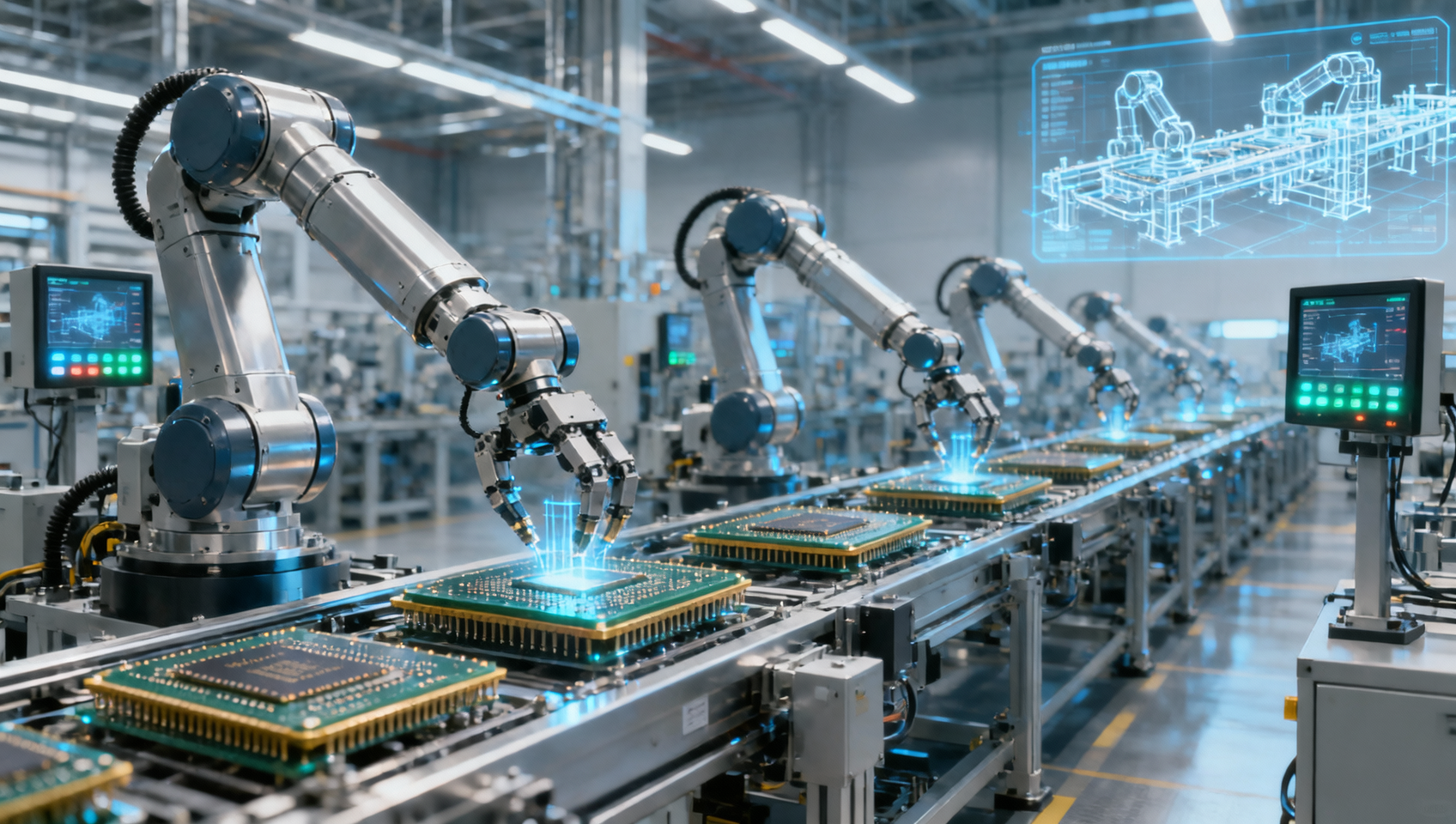
China’s Ministry of Industry and Information Technology (MIIT) announced the first batch of national-level technology enterprise incubators on April 16, 2026 — designating 14 institutions, including Beihang Tianhui, as ‘Outstanding-Level’ AI+Factory Automation incubators. All 14 focus exclusively on four core technical domains: AI chips, industrial vision, predictive maintenance, and digital twins. This development signals growing maturity in China’s foundational supply capacity for AI-driven factory automation — with direct implications for semiconductor suppliers, industrial equipment OEMs, edge-AI hardware integrators, and smart manufacturing service providers.
Event Overview
On April 16, 2026, the Ministry of Industry and Information Technology (MIIT) published the inaugural list of nationally recognized technology enterprise incubators. Fourteen incubators were awarded the ‘Outstanding-Level’ designation. All are specialized in AI+manufacturing verticals — specifically AI chips, industrial vision systems, predictive maintenance platforms, and digital twin implementation tools. According to MIIT, these incubators have collectively nurtured 32 hard-tech enterprises capable of mass-producing ISO/IEC 23053-compliant edge AI inference modules.
Industries Affected
Semiconductor & Edge AI Module Suppliers
These suppliers face increased demand pressure and specification alignment requirements. The fact that 32 incubated firms have achieved ISO/IEC 23053 certification for edge AI inference modules implies tightening standardization expectations across the supply chain — particularly for low-power, real-time inference hardware targeting factory-floor deployment.
Industrial Equipment OEMs
OEMs integrating AI capabilities into CNC machines, PLCs, or robotic controllers must now align with incubator-developed architectures. Since all 14 ‘Outstanding-Level’ incubators concentrate on predictive maintenance and industrial vision, OEMs may see accelerated adoption of standardized sensor fusion pipelines and model-on-device frameworks — especially those validated under MIIT-endorsed incubation programs.
Smart Manufacturing System Integrators
Integrators delivering turnkey digital twin or AI-powered condition monitoring solutions will encounter both opportunity and pressure. The incubators’ shared focus on digital twin and predictive maintenance suggests a de facto convergence around interoperable data models and time-series AI workflows — potentially reducing customization overhead but raising benchmark expectations for certified deployment readiness.
What Enterprises and Practitioners Should Monitor and Do Now
Track MIIT’s upcoming technical guidance documents
MIIT has not yet released detailed evaluation criteria for ‘Outstanding-Level’ status or implementation roadmaps for ISO/IEC 23053 in industrial settings. Enterprises should monitor official MIIT channels for supplementary technical notices — especially those referencing inference latency thresholds, functional safety integration, or certification pathways for edge-AI hardware.
Assess alignment with the four prioritized technical domains
Companies developing or sourcing AI chips, industrial vision components, predictive maintenance SaaS tools, or digital twin modeling engines should evaluate whether their current architecture maps to the incubators’ validated stack — e.g., model quantization methods, sensor interface protocols, or OPC UA–AI middleware patterns.
Distinguish policy endorsement from commercial scalability
The incubator list reflects institutional validation — not market adoption. While 32 firms meet ISO/IEC 23053 production readiness, actual volume deployment in Tier-1 automotive, electronics, or heavy equipment factories remains unconfirmed. Stakeholders should treat this as an early signal of technical direction, not proof of near-term revenue traction.
Prepare for upstream component qualification reviews
Suppliers providing chipsets, imaging sensors, or real-time OS kernels used by incubated startups may soon receive requests for documentation aligned with MIIT’s emerging AI-in-manufacturing compliance framework — including test reports, traceability logs, and inference accuracy benchmarks under industrial ambient conditions.
Editorial Perspective / Industry Observation
From industry perspective, this list is best understood as a structural signal — not an operational milestone. It confirms MIIT’s strategic prioritization of vertically integrated AI capability in factory automation, rather than broad-based AI platform development. Analysis来看, the uniformity across all 14 incubators (four domains, no overlap with generative AI or enterprise LLMs) suggests intentional narrowing toward deterministic, real-time, hardware-aware AI applications. Observation来看, the emphasis on ISO/IEC 23053 — a relatively new standard for edge AI modules — indicates China is accelerating standardization at the hardware-software interface layer, likely to support domestic substitution and export-readiness of AI-enabled industrial products. Current more appropriate interpretation is that this marks the formal start of coordinated technical alignment — not yet evidence of scaled industrial deployment.
This announcement underscores a deliberate shift toward codified, certifiable AI capabilities in physical production environments. Its significance lies less in immediate commercial impact and more in its role as a reference anchor for R&D investment, procurement criteria, and technical roadmap planning across the industrial AI value chain. For stakeholders, it is more useful as a calibration point than a catalyst — indicating where foundational work is being institutionally validated, and where future regulatory and ecosystem expectations are likely to crystallize.
Information Source: Ministry of Industry and Information Technology (MIIT), official notice issued April 16, 2026. Note: Details regarding incubator selection methodology, regional distribution, and long-term evaluation metrics remain pending official disclosure and are subject to ongoing observation.
Get weekly intelligence in your inbox.
No noise. No sponsored content. Pure intelligence.
 Apr 21, 2026China Builds National Mine Safety Risk Monitoring 'Single Network'China Builds National Mine Safety Risk Monitoring 'Single Network'
 Apr 21, 2026MIIT Releases First List of AI+Manufacturing IncubatorsMIIT Releases First List of AI+Manufacturing Incubators
 Apr 21, 20262026 Shanghai Fastener Show: 1,423 Exhibitors, Robot-Specialized Fasteners in Focus2026 Shanghai Fastener Show: 1,423 Exhibitors, Robot-Specialized Fasteners in Focus
 Apr 21, 2026Vietnam Launches Anti-Circumvention Probe on Chinese-Assembled Electronic ComponentsVietnam Launches Anti-Circumvention Probe on Chinese-Assembled Electronic Components
 Apr 21, 2026China Academy Releases 2026 Digital Passport White PaperChina Academy Releases 2026 Digital Passport White Paper
 Apr 21, 2026Suez Canal AI Speed & Stowage Control Starts Apr 19, 2026Suez Canal AI Speed & Stowage Control Starts Apr 19, 2026
 Apr 21, 2026US BIS Adds EV Onboard Chargers with AES-256+ Encryption to Export ControlsUS BIS Adds EV Onboard Chargers with AES-256+ Encryption to Export Controls
 Apr 21, 2026TÜV Rheinland Updates BESS Certification: Thermal Cascade Protection Now MandatoryTÜV Rheinland Updates BESS Certification: Thermal Cascade Protection Now Mandatory
 Apr 21, 2026Shanghai Port Launches Green Clearance Channel for New Energy EquipmentShanghai Port Launches Green Clearance Channel for New Energy Equipment
 Apr 21, 2026IEC 63275:2026 Released: Global EMC Immunity Testing Standard for Warehouse RobotsIEC 63275:2026 Released: Global EMC Immunity Testing Standard for Warehouse Robots
 Apr 20, 2026Solar Street Lights: When Do They Really Pay Off?Solar Street Lights: When Do They Really Pay Off?
 Apr 20, 2026What Makes an Ultrasound Machine Worth the Cost?What Makes an Ultrasound Machine Worth the Cost?
 Apr 20, 2026Ultrasound Machines: New vs Refurbished in 2026Ultrasound Machines: New vs Refurbished in 2026
 Apr 20, 2026How to Evaluate Clean Energy ROI in 2026How to Evaluate Clean Energy ROI in 2026
 Apr 20, 2026Clean Energy Projects: Where Savings Really Come FromClean Energy Projects: Where Savings Really Come From
 Apr 20, 2026Air Quality Monitors: What to Check Before BuyingAir Quality Monitors: What to Check Before Buying
 Apr 20, 2026How Accurate Are Air Quality Monitors Indoors?How Accurate Are Air Quality Monitors Indoors?
 Apr 20, 2026AR Glasses for Field Work: Worth It or Not?AR Glasses for Field Work: Worth It or Not?
 Apr 20, 2026Which AED Defibrillators Are Easiest to Use?Which AED Defibrillators Are Easiest to Use?
 Apr 20, 2026AED Defibrillators: What Buyers Often MissAED Defibrillators: What Buyers Often Miss
 Apr 20, 2026How to Compare 3PL Logistics Providers for GrowthHow to Compare 3PL Logistics Providers for Growth
 Apr 20, 20263PL Logistics Costs Explained Before You Outsource3PL Logistics Costs Explained Before You Outsource
 Apr 20, 2026WMS vs ERP: What Matters on the Warehouse Floor?WMS vs ERP: What Matters on the Warehouse Floor?
 Apr 20, 2026How to Choose a Warehouse Management System in 2026How to Choose a Warehouse Management System in 2026
 Apr 20, 2026TENS Units: When Do They Help and When Don’t They?TENS Units: When Do They Help and When Don’t They?
 Apr 20, 2026Why Electronic Health Records Software Projects Go Over BudgetWhy Electronic Health Records Software Projects Go Over Budget
 Apr 20, 2026Electronic Health Records Software: What Should You Compare First?Electronic Health Records Software: What Should You Compare First?