How to Choose a Warehouse Management System in 2026
Choosing the right warehouse management systems in 2026 means balancing automation, visibility, cost control, and integration across increasingly complex supply chains. For teams comparing 3PL logistics capabilities, energy efficiency goals, and smart technology ecosystems—from smart door locks and air quality monitors to AR glasses—this guide helps decision-makers evaluate the features, risks, and ROI that matter most before investing.
What matters most when choosing a warehouse management system in 2026?

A warehouse management system is no longer just a tool for inventory control. In 2026, it sits at the center of labor planning, order orchestration, quality traceability, dock scheduling, returns handling, and multi-site visibility. For manufacturers, distributors, healthcare suppliers, electronics firms, and fast-scaling B2B operations, the right WMS must support both operational speed and management-level decision quality.
Most buying teams are not evaluating software in isolation. They are comparing warehouse management systems against ERP fit, 3PL readiness, automation compatibility, compliance requirements, and total operating cost over a 3–5 year horizon. That is why selection mistakes often happen: one group focuses on features, another on implementation time, and finance focuses on payback period and license structure.
In cross-industry environments, the most reliable WMS selection framework usually starts with 5 core questions: what inventory complexity you manage, how many locations must be connected, which workflows need automation, what service levels customers expect, and how much process change your team can absorb in the first 6–12 months.
TradeNexus Pro tracks these decision patterns across advanced manufacturing, green energy, smart electronics, healthcare technology, and supply chain SaaS. That cross-sector view is useful because many warehouse management system requirements now overlap. A battery component supplier, medical device distributor, and electronics assembler may all need serialized tracking, environmental monitoring, real-time exception alerts, and partner integration.
The practical definition buyers should use
For procurement and project teams, a warehouse management system should be defined as the execution layer that controls inbound, putaway, storage, picking, packing, shipping, cycle counting, and inventory accuracy in real time. It should also support measurable workflow rules, user permissions, scanning logic, and data exchange with adjacent systems.
If a platform only offers static stock records without task management, slotting logic, wave planning, exception handling, or labor traceability, it may behave more like basic inventory software than a full warehouse management system. That distinction matters during vendor comparison and budget approval.
Typical decision drivers in 2026
- Multi-channel fulfillment pressure, where order cut-off times shrink to same-day or next-day windows.
- Labor variability, especially in facilities that depend on seasonal workers or multi-shift operations.
- Demand for integration with conveyors, handheld scanners, robotics, smart locks, environmental sensors, and transport platforms.
- Greater accountability for traceability, quality events, and exception documentation across regulated or high-value inventory.
How should different stakeholders evaluate warehouse management systems?
A strong warehouse management system selection process works best when each stakeholder group evaluates the platform from its own risk perspective. Operators care about screen simplicity, scanning speed, and task clarity. Technical evaluators care about APIs, device support, data structure, and integration reliability. Finance teams care about implementation scope, hidden services, and ongoing support cost.
This is where many projects stall. Teams ask whether a WMS has a feature, but not whether that feature is usable under actual warehouse conditions. A useful test is to walk through 8–10 real workflows: receiving mixed pallets, lot-controlled putaway, partial picking, urgent replenishment, returns inspection, quality hold, cross-dock shipping, and cycle count variance handling.
A warehouse management system should also be judged by its fit across the first 90 days after go-live. Can supervisors train users in 2–5 days for standard tasks? Can inventory be migrated without long downtime? Can exception queues be reviewed quickly during high-volume weeks? These practical questions often matter more than a long feature checklist.
For enterprises operating across multiple industries or regions, a scalable warehouse management system should support role-based access, site-level rule differences, and phased deployment. Rolling out to 1 warehouse is very different from extending to 3–12 facilities with distinct product handling requirements.
Stakeholder-based evaluation matrix
The table below helps buying teams align technical, operational, financial, and compliance priorities before shortlisting a warehouse management system vendor.
This matrix shows why warehouse management systems should never be selected by IT or operations alone. The best outcomes usually come from a 4-party review involving operations, IT, finance, and quality, followed by a pilot validation with representative workflows and data.
A short list of non-negotiable requirements
- Real-time inventory updates across receiving, movement, picking, and shipping.
- Support for barcode or mobile scanning, with clear exception prompts.
- Integration readiness for ERP, TMS, e-commerce, or 3PL platforms within a realistic 2–8 week interface window.
- Auditability for lot, serial, user actions, and inventory adjustments.
- Scalability for future automation, additional sites, or changing order profiles.
Which warehouse management system features create real operational value?
Not every feature delivers equal value. In practice, warehouse management systems create the strongest return when they improve inventory accuracy, reduce travel time, shorten cycle counting effort, and support faster exception resolution. Features that look advanced in a demo may have limited value if your warehouse still struggles with basic location discipline or inconsistent master data.
For example, if your facility handles serialized electronics, medical components, or high-value industrial parts, lot and serial traceability may produce more business value than complex gamified labor dashboards. If your operation runs cross-docking or high-SKU e-commerce, wave management and pick path logic may outrank deep manufacturing execution links.
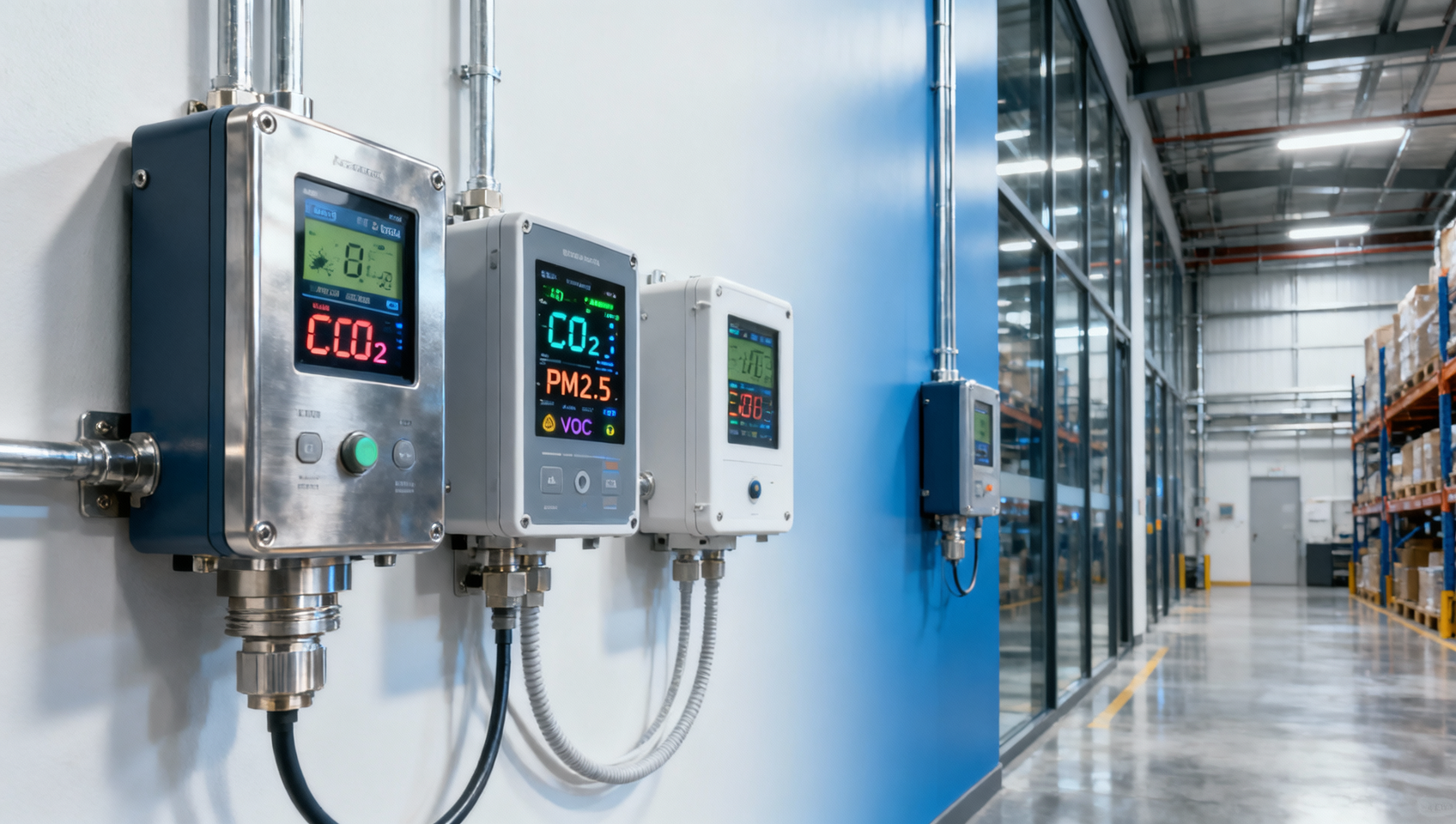
A 2026-ready warehouse management system should also support edge devices and smart infrastructure. That may include handheld scanners, label printers, smart door locks for controlled areas, air quality monitors for sensitive stock zones, and AR glasses for assisted picking in selected workflows. The key is not to add every tool, but to ensure the WMS can receive, process, and act on operational signals.
When TradeNexus Pro evaluates technology ecosystems across supply chain SaaS and industrial operations, one pattern is clear: the best-performing warehouses adopt digital layers in stages. They usually start with scanning, visibility, and rules-based execution, then add automation interfaces, sensor integration, and predictive analytics over 2–3 rollout phases.
Feature priorities by warehouse profile
Use this comparison table to connect warehouse management system features with the type of operation you run, rather than buying based on trend alone.
The table highlights a key buying principle: warehouse management systems should be aligned to operational profile first, then extended through integration. This reduces the risk of overbuying advanced modules that your team may not use during the first 12 months.
Technical checks before shortlisting
Integration and device readiness
- Confirm whether APIs are standard, documented, and suitable for ERP, TMS, and 3PL data exchange.
- Check support for Android handhelds, browser-based supervisor access, printers, scanners, and label workflows.
- Ask how the system handles offline or weak-connectivity scenarios in large facilities.
Process control and analytics
- Review task prioritization, replenishment triggers, cycle count methods, and queue visibility.
- Ask which KPIs can be tracked daily, weekly, and monthly without custom reporting delays.
- Verify whether data exports support audit review, operational planning, and finance reconciliation.
How do cost, implementation timeline, and risk affect WMS selection?
The cost of a warehouse management system is rarely limited to software licensing. Buyers should assess 4 major cost layers: subscription or license fees, implementation services, integration work, and post-go-live support. In many mid-complexity projects, service scope and process redesign have as much impact on total cost as the core platform itself.
Implementation timing also affects financial value. A warehouse management system that takes 9–12 months to deploy may be justified for a large multi-site transformation, but not for an operation that urgently needs inventory accuracy and faster picking within the next quarter. Smaller facilities often target a 6–12 week core deployment, while more complex environments may require 3–6 months across phased milestones.
Risk should be quantified early. Common risk categories include poor item master data, unclear warehouse processes, limited internal project ownership, under-tested interfaces, and unrealistic cutover timing. If these are not addressed, even a capable warehouse management system may underperform after launch.
A useful ROI model should look beyond headcount reduction. Many operations gain value from lower inventory variance, fewer shipping errors, shorter receiving cycles, and better customer service metrics. These improvements may appear in several departments, which is why finance approval should include cross-functional benefit mapping.
Cost and implementation comparison
The following table offers a practical way to compare warehouse management system project types without assuming one model fits every business.
This comparison helps project sponsors set realistic expectations. A faster timeline is possible, but only if process scope is contained, data is ready, and internal owners can make decisions quickly during workshops and testing.
Risk checklist before approval
- Map at least 6 key warehouse workflows before vendor demos so comparisons stay practical.
- Request a clear statement of implementation assumptions, exclusions, and support response levels.
- Validate data migration scope, especially for locations, units of measure, lot rules, and user permissions.
- Plan user training by role, not as a single generic session.
- Schedule cutover outside peak demand periods whenever possible.
What compliance, sustainability, and future-readiness issues should buyers consider?
In 2026, warehouse management system selection increasingly intersects with compliance, environmental control, and digital resilience. Buyers in healthcare technology, electronics, green energy equipment, and advanced manufacturing often need stronger traceability, controlled access, and documented process adherence. Even where there is no strict industry regulation, customers may still require documented stock movement and exception history.
A warehouse management system should also support sustainability goals in practical ways. That includes better slotting to reduce travel distance, smarter replenishment to avoid duplicate handling, and visibility into returns, idle inventory, and packaging workflows. In facilities using air quality monitors or energy management tools, WMS-connected event data can also support better handling of sensitive goods and restricted zones.
Future-readiness is not about chasing every trend. It is about choosing warehouse management systems that can support modular growth over the next 24–36 months. This may include adding 3PL integration, introducing robotics, enabling yard visibility, or connecting AI-based planning tools. A platform that cannot evolve usually becomes expensive to replace just when the business needs flexibility most.
For global B2B firms, another advantage comes from better market intelligence before purchase. TradeNexus Pro helps procurement directors and supply chain leaders compare not only software features but also sector-specific workflow needs, technology integration trends, and deployment trade-offs across industries that are shaping tomorrow’s supply networks.
Common misconceptions and FAQ
Is a warehouse management system only for large enterprises?
No. Smaller and mid-sized operations often benefit quickly when they handle high SKU counts, frequent order errors, multiple storage locations, or quality-sensitive inventory. The right warehouse management system can make sense long before a company runs a fully automated distribution center.
Should we choose the system with the most features?
Not necessarily. A better approach is to prioritize 10–15 operationally relevant capabilities and test them against real workflows. Excess modules can increase cost, training burden, and project time without improving performance in the first year.
How long does user adoption usually take?
For standard receiving, picking, and packing tasks, basic user adoption may begin within 2–5 training days if screens are simple and workflows are well defined. Supervisor confidence, exception handling, and reporting use often take longer and should be supported for several weeks after go-live.
Can a WMS help with quality and safety management?
Yes, especially when the warehouse management system supports quarantine status, lot or serial traceability, location restrictions, controlled release rules, and auditable user actions. It is not a substitute for full quality systems, but it can strengthen execution and traceability inside warehouse operations.
Why work with TradeNexus Pro when evaluating warehouse management systems?
Choosing a warehouse management system is rarely just a software decision. It is a supply chain design decision involving process maturity, technology compatibility, partner coordination, and investment timing. TradeNexus Pro supports that evaluation with focused B2B intelligence across manufacturing, green energy, smart electronics, healthcare technology, and supply chain SaaS.
That means your team can move beyond generic vendor lists and compare warehouse management systems in the context of actual market shifts, integration priorities, and operational constraints. Whether you are reviewing one-site deployment, 3PL readiness, serialized inventory control, or smart warehouse expansion, the decision framework becomes more precise and more useful for executive approval.
If you are preparing a 2026 WMS project, TradeNexus Pro can help you clarify selection criteria, compare solution directions, and frame stakeholder requirements before formal sourcing begins. This is especially valuable when multiple departments need alignment on process fit, timeline, and commercial risk.
Contact TradeNexus Pro to discuss warehouse management system evaluation priorities, feature comparison points, implementation timing, integration considerations, 3PL workflow fit, compliance expectations, or sector-specific shortlisting criteria. You can also use the platform to explore case-based insights, supplier visibility, and practical questions for vendor demos, pilot planning, and budget approval.
Get weekly intelligence in your inbox.
No noise. No sponsored content. Pure intelligence.
 Apr 21, 2026China Builds National Mine Safety Risk Monitoring 'Single Network'China Builds National Mine Safety Risk Monitoring 'Single Network'
 Apr 21, 2026MIIT Releases First List of AI+Manufacturing IncubatorsMIIT Releases First List of AI+Manufacturing Incubators
 Apr 21, 20262026 Shanghai Fastener Show: 1,423 Exhibitors, Robot-Specialized Fasteners in Focus2026 Shanghai Fastener Show: 1,423 Exhibitors, Robot-Specialized Fasteners in Focus
 Apr 21, 2026Vietnam Launches Anti-Circumvention Probe on Chinese-Assembled Electronic ComponentsVietnam Launches Anti-Circumvention Probe on Chinese-Assembled Electronic Components
 Apr 21, 2026China Academy Releases 2026 Digital Passport White PaperChina Academy Releases 2026 Digital Passport White Paper
 Apr 21, 2026Suez Canal AI Speed & Stowage Control Starts Apr 19, 2026Suez Canal AI Speed & Stowage Control Starts Apr 19, 2026
 Apr 21, 2026US BIS Adds EV Onboard Chargers with AES-256+ Encryption to Export ControlsUS BIS Adds EV Onboard Chargers with AES-256+ Encryption to Export Controls
 Apr 21, 2026TÜV Rheinland Updates BESS Certification: Thermal Cascade Protection Now MandatoryTÜV Rheinland Updates BESS Certification: Thermal Cascade Protection Now Mandatory
 Apr 21, 2026Shanghai Port Launches Green Clearance Channel for New Energy EquipmentShanghai Port Launches Green Clearance Channel for New Energy Equipment
 Apr 21, 2026IEC 63275:2026 Released: Global EMC Immunity Testing Standard for Warehouse RobotsIEC 63275:2026 Released: Global EMC Immunity Testing Standard for Warehouse Robots
 Apr 20, 2026Ultrasound Machines: New vs Refurbished in 2026Ultrasound Machines: New vs Refurbished in 2026
 Apr 20, 2026How to Evaluate Clean Energy ROI in 2026How to Evaluate Clean Energy ROI in 2026
 Apr 20, 2026Clean Energy Projects: Where Savings Really Come FromClean Energy Projects: Where Savings Really Come From
 Apr 20, 2026Air Quality Monitors: What to Check Before BuyingAir Quality Monitors: What to Check Before Buying
 Apr 20, 2026How Accurate Are Air Quality Monitors Indoors?How Accurate Are Air Quality Monitors Indoors?
 Apr 20, 2026AED Defibrillators: What Buyers Often MissAED Defibrillators: What Buyers Often Miss
 Apr 20, 2026How to Compare 3PL Logistics Providers for GrowthHow to Compare 3PL Logistics Providers for Growth
 Apr 20, 20263PL Logistics Costs Explained Before You Outsource3PL Logistics Costs Explained Before You Outsource
 Apr 20, 2026WMS vs ERP: What Matters on the Warehouse Floor?WMS vs ERP: What Matters on the Warehouse Floor?
 Apr 20, 2026How to Choose a Warehouse Management System in 2026How to Choose a Warehouse Management System in 2026
 Apr 20, 2026Electronic Health Records Software: What Should You Compare First?Electronic Health Records Software: What Should You Compare First?
 Apr 20, 2026How to Pick Smart Thermostats That Fit Older HVAC SystemsHow to Pick Smart Thermostats That Fit Older HVAC Systems
 Apr 20, 2026Smart Thermostats: Do They Really Cut Energy Bills?Smart Thermostats: Do They Really Cut Energy Bills?
 Apr 20, 2026Are Portable Monitors Worth It for a Dual-Screen Setup?Are Portable Monitors Worth It for a Dual-Screen Setup?
 Apr 20, 2026Portable Monitors: Which Features Matter for Work Trips?Portable Monitors: Which Features Matter for Work Trips?
 Apr 20, 2026China Academy of IMT Releases Digital Passport White Paper for Industrial MaterialsChina Academy of IMT Releases Digital Passport White Paper for Industrial Materials
 Apr 20, 2026Suez Canal AI Speed & Load Limits Effective Apr 19, 2026Suez Canal AI Speed & Load Limits Effective Apr 19, 2026