Are Portable Monitors Worth It for a Dual-Screen Setup?
Portable monitors can absolutely be worth it for a dual-screen setup, but not for everyone. For most business users, mobile professionals, procurement teams, and technical evaluators, the real question is not “Are portable monitors good?” but “Do they improve workflow enough to justify the cost, complexity, and durability trade-offs?” In practice, they deliver strong value when teams work across locations, travel frequently, present on-site, or need flexible screen expansion without committing to fixed desktop hardware. They are less compelling when the setup is mostly stationary, screen size matters more than portability, or long-hour comfort is the top priority.
For buyers comparing portable monitors with other mobile productivity tools such as wireless chargers, docking accessories, and portable power stations, the decision should come down to five factors: use case, display quality, connection reliability, power draw, and return on investment. If those align, a portable monitor can be a practical and cost-effective upgrade. If not, a standard desktop monitor may offer better long-term value.
Are portable monitors worth it for a dual-screen setup in real business use?
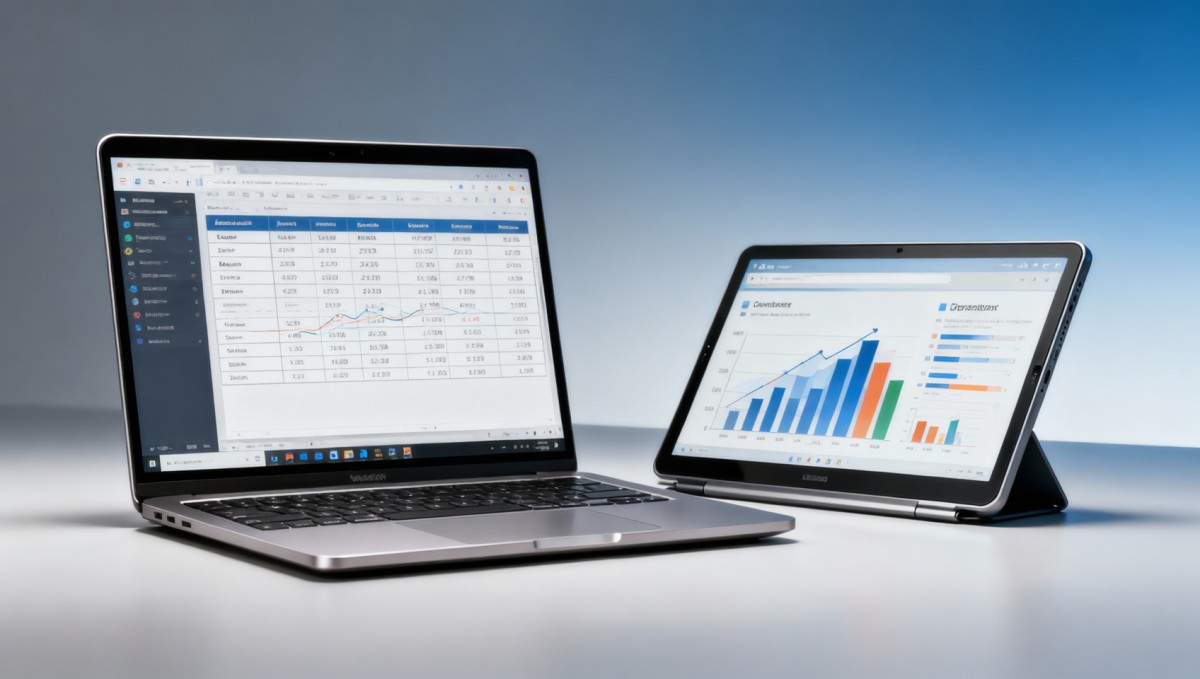
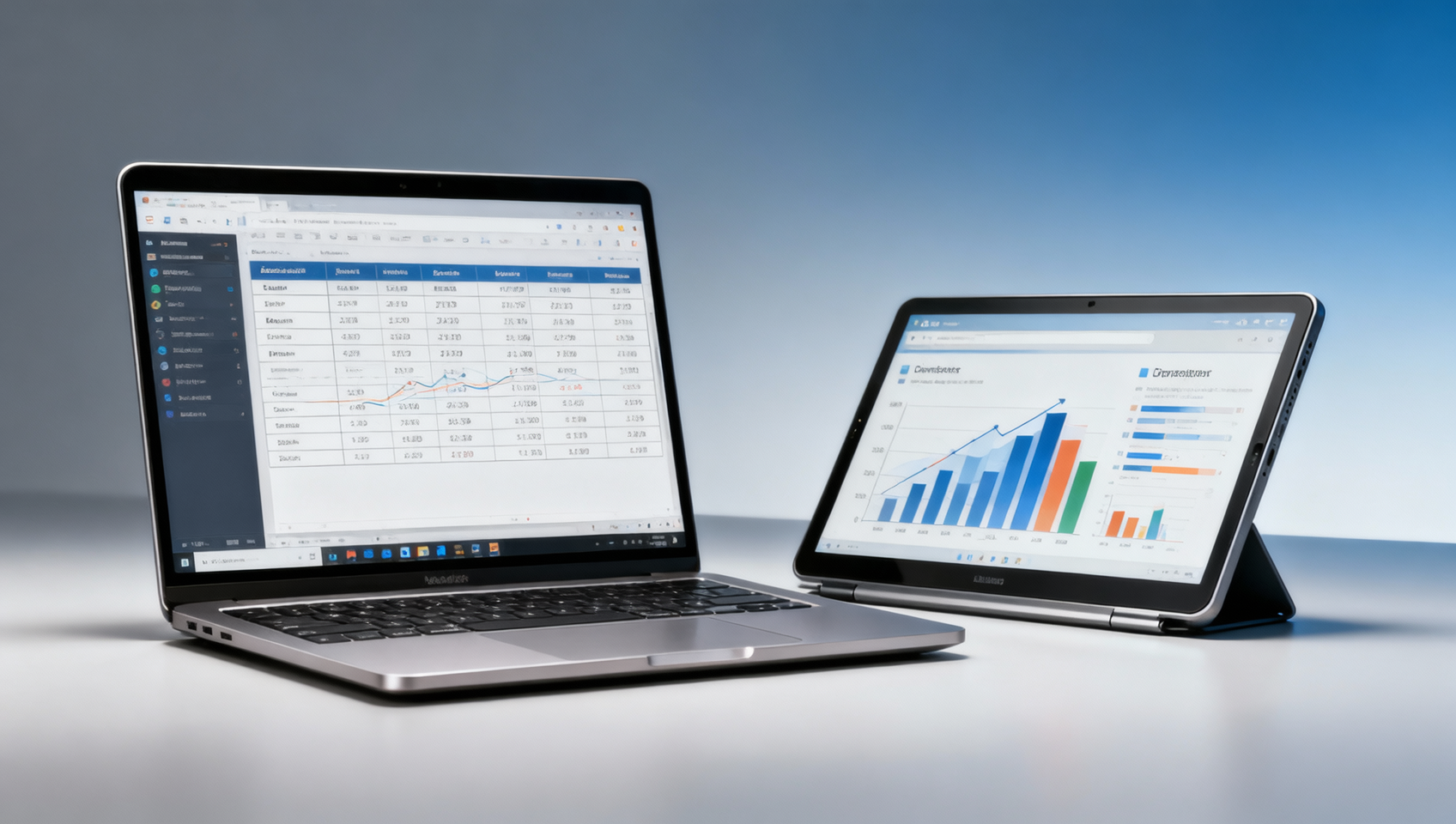
Yes, in many scenarios they are worth it, especially when mobility is part of the workflow. A portable monitor gives laptop users an immediate second screen for multitasking, data comparison, presentations, reporting, procurement analysis, remote meetings, and field coordination. That benefit becomes meaningful when users routinely switch between spreadsheets, dashboards, ERP systems, CAD references, communication tools, and documentation.
For enterprise and B2B environments, portable monitors are most valuable when:
- Employees travel frequently and need a consistent dual-screen workflow
- Project managers and engineers work on-site and need extra screen space without carrying desktop equipment
- Sales teams, distributors, or sourcing professionals need better presentation flexibility in client or supplier meetings
- Hybrid workers alternate between home, office, and travel locations
- Decision-makers want lightweight productivity tools rather than larger workstation investments
However, if the user works primarily from one desk, a conventional monitor is usually the better choice. It normally offers a larger display, better ergonomics, stronger brightness, and lower cost per inch. In that case, a portable monitor may be convenient, but not the most efficient investment.
What do target buyers care about most before purchasing?
Different stakeholders evaluate portable monitors through different lenses, but their concerns are usually practical rather than theoretical.
Information researchers and technical evaluators want to know whether the monitor actually improves workflow, what connectivity standards it supports, and whether it performs reliably with laptops, tablets, or phones.
Business evaluators and enterprise decision-makers focus more on productivity impact, deployment fit, user adoption, and whether the monitor supports mobile work strategies without creating support issues.
Financial approvers care about total cost of ownership. They want to know whether the gain in efficiency offsets purchase cost, accessory requirements, replacement risk, and compatibility limitations.
Quality and safety personnel may look at durability, overheating risk, cable stability, transport protection, and usability in field environments.
Operators and daily users care about simple questions: Is it easy to carry? Is setup fast? Is the screen bright enough? Does it need too many cables? Does it drain the laptop battery?
That means the best SEO article for this topic should not spend too much space explaining what a portable monitor is. Instead, it should help readers decide whether one makes sense for their actual working conditions.
When does a portable monitor add clear value?
A portable monitor is most worth it when the second screen solves a recurring workflow bottleneck.
1. Travel-heavy professionals
If a user frequently works in airports, hotels, customer sites, temporary offices, or trade events, a portable monitor can recreate a dual-screen setup almost anywhere. For procurement directors, supply chain managers, and business development teams, this can reduce the friction of reviewing bids, contracts, logistics dashboards, and communication threads on a single laptop screen.
2. Field operations and project coordination
Project managers, site engineers, and technical teams often need to view drawings, reports, checklists, and live communications at the same time. A portable monitor can support faster decision-making without requiring bulky desktop hardware.
3. Hybrid and remote work
Not every employee has a permanent office setup. Portable monitors work well for flexible work policies because they let users maintain a more efficient workspace across home, office, and travel locations.
4. Sales demos and client-facing presentations
For distributors, agents, and sales teams, a second screen can improve customer interactions. One screen can face the client while the other remains available for notes, pricing, inventory, or presentation controls.
5. Temporary or space-limited workstations
Some users simply do not have room for a full-size monitor. In compact work areas, a portable monitor can offer a practical compromise between productivity and space efficiency.
When is a traditional second monitor the better investment?
Portable monitors are not automatically the best dual-screen option. In many fixed-location environments, a standard monitor remains the more rational purchase.
A traditional monitor is usually better when:
- The user works at the same desk most of the time
- Screen size is critical for design, analysis, or long-form document work
- Comfort and ergonomics are higher priorities than portability
- The business wants the lowest cost per workstation
- Users need stronger brightness, higher refresh rates, or more robust color performance
For example, if an analyst spends eight hours daily reviewing large data tables or multiple applications, a 24-inch or 27-inch desktop monitor will often outperform a 14-inch or 15.6-inch portable monitor in comfort and efficiency. Likewise, teams that do not travel much may gain little from paying extra for portability they rarely use.
What specifications actually matter in a portable monitor?
For buyers trying to decide whether portable monitors are worth it, specifications matter only if they affect real-world usability. The most important buying criteria are below.
Display size and resolution
Most portable monitors range from 13.3 to 17.3 inches. Full HD is usually sufficient for general business work, while 2K or 4K may benefit detail-heavy applications. For spreadsheets, dashboards, and presentations, clarity matters more than extreme resolution.
Brightness
Brightness has a direct effect on usability, especially in offices with strong lighting or while traveling. A dim screen quickly becomes frustrating. Many business users should treat adequate brightness as a priority, not a luxury.
Connectivity
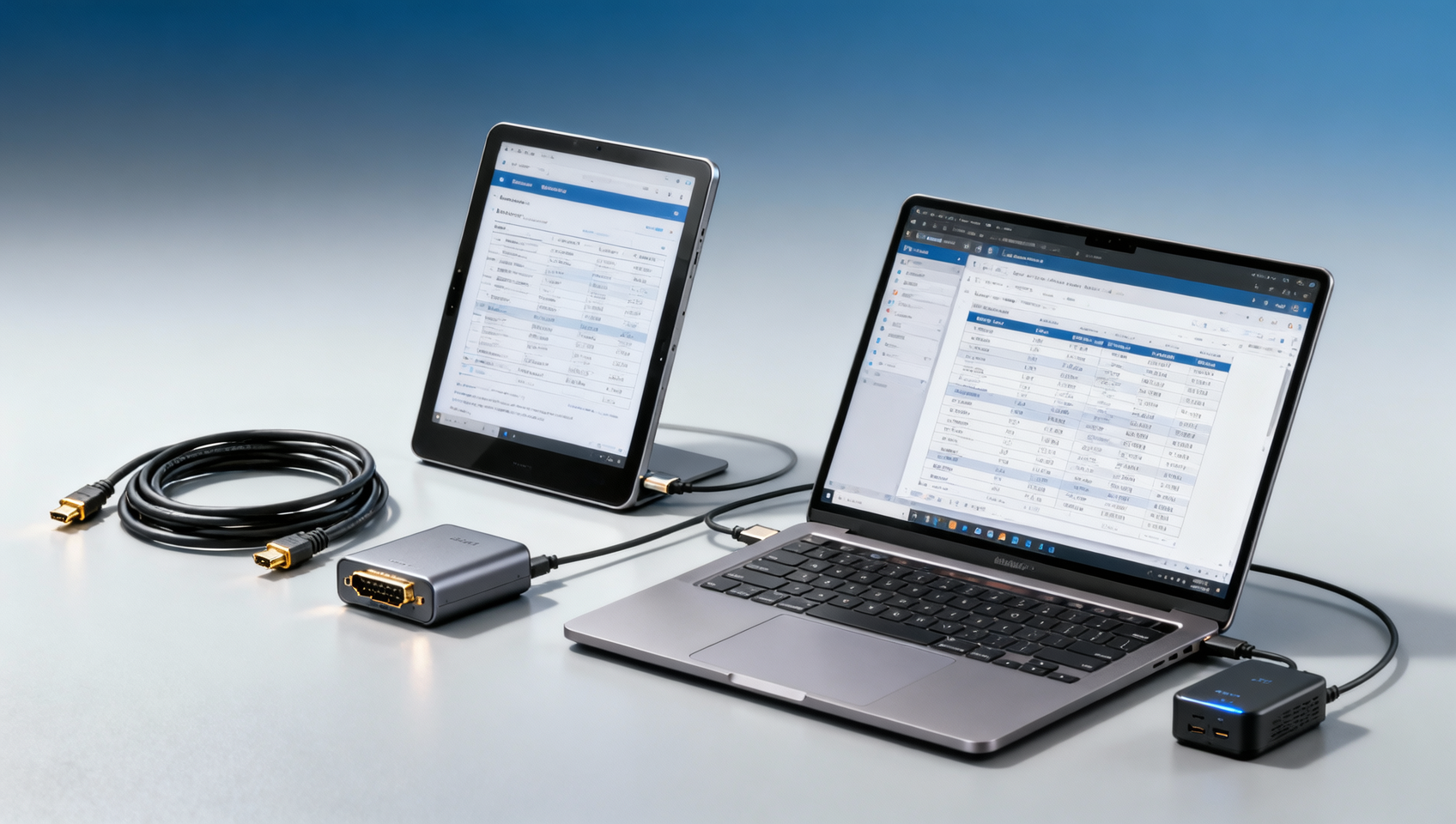
USB-C with video and power delivery is the most convenient option. HDMI support adds flexibility. Buyers should confirm whether their laptops support full-function USB-C, because not all ports carry display signals.
Power consumption
Some portable monitors draw power from the host device, which can reduce laptop battery life. For mobile workers, this factor matters as much as image quality. In some workflows, pairing a monitor with a docking solution or portable power accessory may be necessary.
Weight and thickness
Portability is only valuable if the device is actually easy to carry. A monitor that is too heavy or awkward may end up left behind.
Stand design and stability
An unstable stand can be a daily annoyance, especially on temporary desks or during travel. Integrated covers that double as stands are common, but not always ideal.
Durability
For B2B users, durability is critical. Frequent transport increases the risk of panel damage, connector wear, and cosmetic issues. This should be considered in total ownership cost.
How should businesses evaluate ROI and long-term value?
Portable monitors are worth the investment when they reduce friction in high-frequency tasks. The ROI case is usually strongest when the device saves time repeatedly rather than delivering a one-time convenience.
Businesses should evaluate ROI through questions like these:
- How often will the monitor be used each week?
- Does it reduce time spent switching windows or rechecking information?
- Will it improve output quality, accuracy, or meeting effectiveness?
- Can it support hybrid work without requiring multiple fixed monitors?
- Will it reduce employee frustration and improve consistency across work locations?
For example, if a sourcing manager regularly compares supplier quotes, logistics schedules, and internal communications, a second screen may save meaningful time every day. Across months, that can justify the device cost quickly. But if the monitor is only used on occasional trips, ROI may be weak compared with a basic office monitor.
It is also important to account for hidden costs, including protective sleeves, extra cables, adapters, replacement risk, and potential support requests from users with mixed device environments.
What are the most common drawbacks and buyer concerns?
Even good portable monitors involve trade-offs. Buyers should understand them before making procurement decisions.
- Smaller screen area: Helpful for multitasking, but still less comfortable than a larger desktop display
- Battery drain: Bus-powered models can shorten laptop runtime
- Compatibility issues: USB-C confusion is common, especially with older laptops
- Lower stability: Some stands are not ideal for cramped or uneven surfaces
- Durability risks: Frequent transport increases the chance of damage
- Variable quality: Not all models offer strong brightness, color consistency, or build quality
These drawbacks do not mean portable monitors are a poor choice. They simply mean buyers should match the product to the usage pattern rather than assuming all dual-screen needs are the same.
Who should buy one and who should skip it?
A portable monitor is a smart buy for:
- Frequent travelers
- Hybrid workers
- Field teams
- Procurement and supply chain professionals managing multiple data sources
- Sales and business development teams needing mobile presentation support
- Users with limited desk space
It may not be worth it for:
- Mostly desk-based employees
- Users who need maximum screen size and ergonomic comfort
- Organizations optimizing only for lowest upfront hardware cost
- Workflows where a second screen is only occasionally useful
Final verdict: are portable monitors worth it for a dual-screen setup?
Yes, portable monitors are worth it for a dual-screen setup when flexibility, travel, and workspace mobility are part of the job. They can significantly improve productivity for professionals who regularly work across locations and need a lightweight second screen for analysis, communication, coordination, or presentations.
But they are not the universal best option. If the work is mostly stationary, a traditional monitor usually delivers better comfort, larger viewing area, and stronger value for money. The smartest decision is to assess how often the monitor will be used, what tasks it supports, and whether portability is a true operational need rather than a nice-to-have feature.
For business buyers, the answer is simple: choose a portable monitor when mobility creates measurable value. Choose a desktop monitor when permanence and screen comfort matter more. That distinction is what determines whether the investment is genuinely worth it.
Get weekly intelligence in your inbox.
No noise. No sponsored content. Pure intelligence.
 Apr 20, 2026Ultrasound Machines: New vs Refurbished in 2026Ultrasound Machines: New vs Refurbished in 2026
 Apr 20, 2026How to Evaluate Clean Energy ROI in 2026How to Evaluate Clean Energy ROI in 2026
 Apr 20, 2026Clean Energy Projects: Where Savings Really Come FromClean Energy Projects: Where Savings Really Come From
 Apr 20, 2026Air Quality Monitors: What to Check Before BuyingAir Quality Monitors: What to Check Before Buying
 Apr 20, 2026How Accurate Are Air Quality Monitors Indoors?How Accurate Are Air Quality Monitors Indoors?
 Apr 20, 2026AED Defibrillators: What Buyers Often MissAED Defibrillators: What Buyers Often Miss
 Apr 20, 2026How to Compare 3PL Logistics Providers for GrowthHow to Compare 3PL Logistics Providers for Growth
 Apr 20, 20263PL Logistics Costs Explained Before You Outsource3PL Logistics Costs Explained Before You Outsource
 Apr 20, 2026WMS vs ERP: What Matters on the Warehouse Floor?WMS vs ERP: What Matters on the Warehouse Floor?
 Apr 20, 2026How to Choose a Warehouse Management System in 2026How to Choose a Warehouse Management System in 2026
 Apr 20, 2026Electronic Health Records Software: What Should You Compare First?Electronic Health Records Software: What Should You Compare First?
 Apr 20, 2026How to Pick Smart Thermostats That Fit Older HVAC SystemsHow to Pick Smart Thermostats That Fit Older HVAC Systems
 Apr 20, 2026Smart Thermostats: Do They Really Cut Energy Bills?Smart Thermostats: Do They Really Cut Energy Bills?
 Apr 20, 2026Are Portable Monitors Worth It for a Dual-Screen Setup?Are Portable Monitors Worth It for a Dual-Screen Setup?
 Apr 20, 2026Portable Monitors: Which Features Matter for Work Trips?Portable Monitors: Which Features Matter for Work Trips?
 Apr 20, 2026China Academy of IMT Releases Digital Passport White Paper for Industrial MaterialsChina Academy of IMT Releases Digital Passport White Paper for Industrial Materials
 Apr 20, 2026Suez Canal AI Speed & Load Limits Effective Apr 19, 2026Suez Canal AI Speed & Load Limits Effective Apr 19, 2026
 Apr 20, 2026IEC 63275:2026 Published for Warehouse Robotics EMC TestingIEC 63275:2026 Published for Warehouse Robotics EMC Testing
 Apr 20, 20262026 Shanghai Fastener Show: 1427 Exhibitors, Robot-Specific Fasteners in Focus2026 Shanghai Fastener Show: 1427 Exhibitors, Robot-Specific Fasteners in Focus
 Apr 20, 2026US BIS Expands EV Infrastructure Export ControlsUS BIS Expands EV Infrastructure Export Controls
 Apr 20, 2026TÜV Rheinland Updates ESS Certification with Propagation Blocking RequirementTÜV Rheinland Updates ESS Certification with Propagation Blocking Requirement
 Apr 20, 2026Shanghai Port Launches Green Clearance Channel for PV InvertersShanghai Port Launches Green Clearance Channel for PV Inverters
 Apr 20, 2026Vietnam Launches Anti-Circumvention Probe on Chinese Electronic ComponentsVietnam Launches Anti-Circumvention Probe on Chinese Electronic Components
 Apr 20, 2026CPSC Urges Recall of China-Made Smart Plugs Over Firmware VulnerabilitiesCPSC Urges Recall of China-Made Smart Plugs Over Firmware Vulnerabilities
 Apr 20, 2026EU AI Act CE Compliance for IoT Devices Takes Effect Apr 18, 2026EU AI Act CE Compliance for IoT Devices Takes Effect Apr 18, 2026
 Apr 19, 20262026 Dongguan Whole-House Customization List Released2026 Dongguan Whole-House Customization List Released
 Apr 19, 2026Global Shipping Alliances Launch Green Slot Priority for Asia-Europe RoutesGlobal Shipping Alliances Launch Green Slot Priority for Asia-Europe Routes