Suez Canal AI Speed & Load Limits Effective Apr 19, 2026
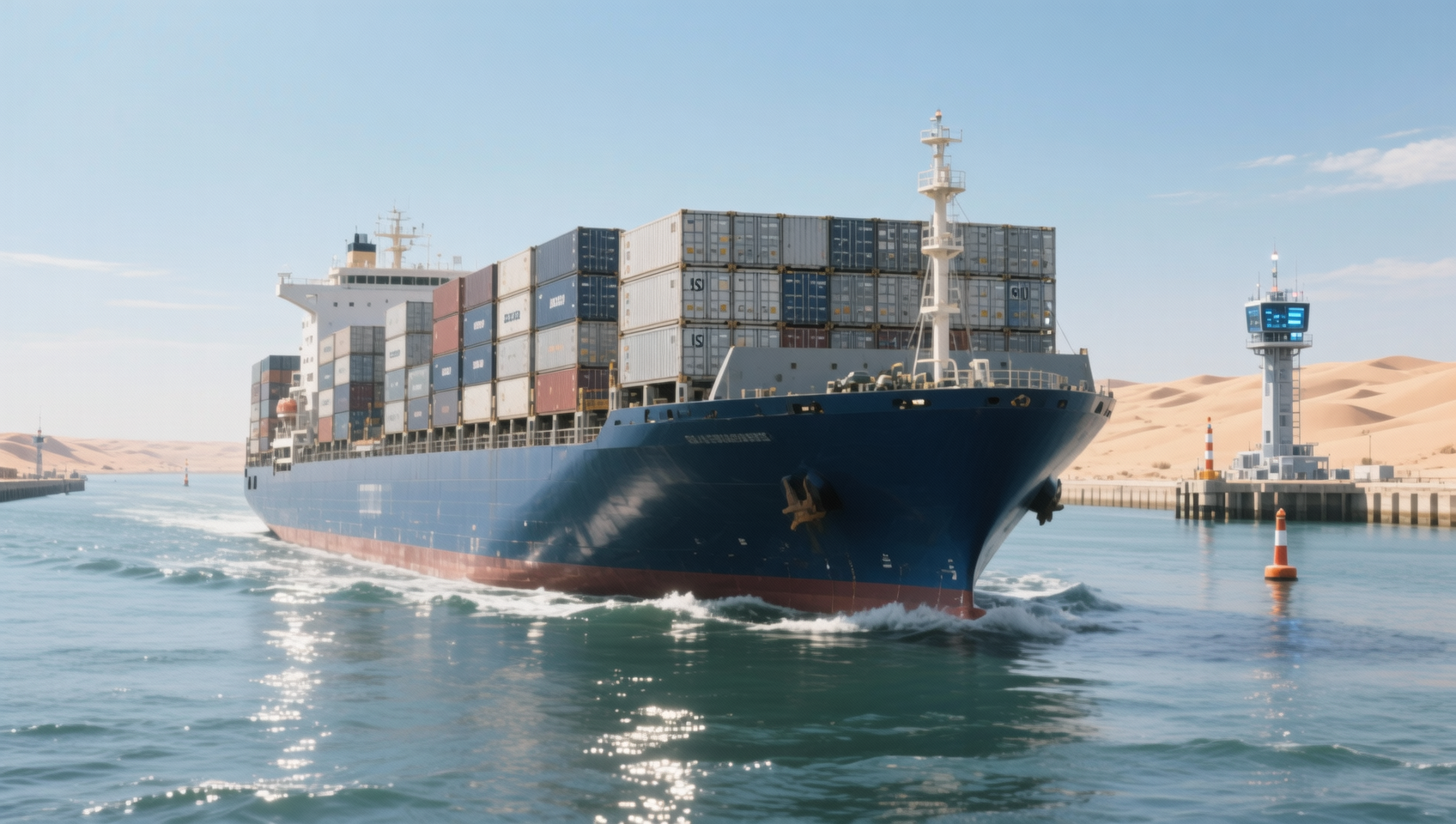
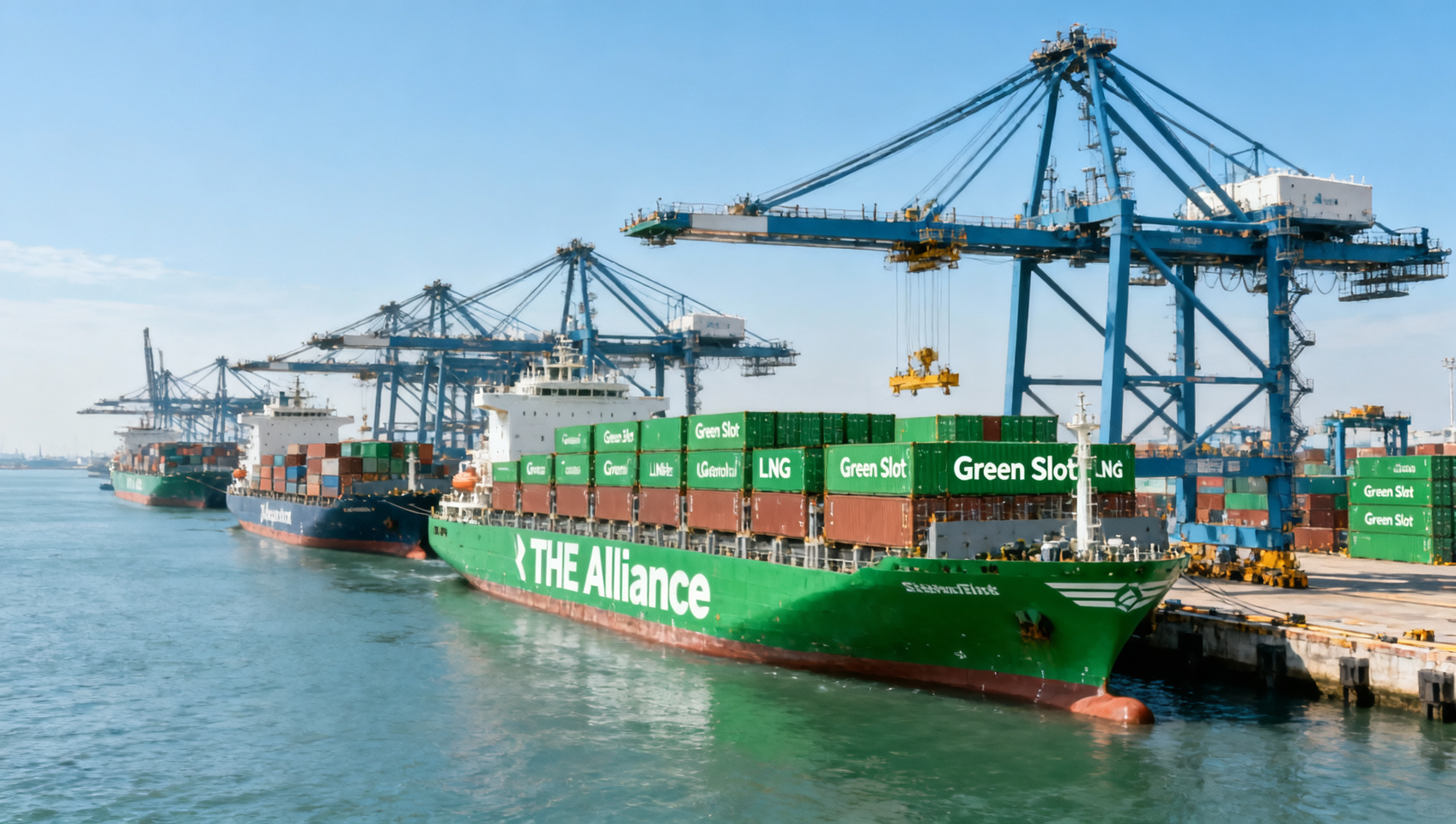
On April 19, 2026, the Suez Canal Authority (SCA) implemented an AI-driven ‘Navigation Resilience Assessment System’ for all container vessels transiting the canal — introducing dynamic speed limits and mandatory stowage plan verification. This measure directly affects maritime logistics, global container shipping, and cross-border trade operators, particularly those engaged in Asia–Europe routes.
Event Overview
Effective April 19, 2026, the Suez Canal Authority (SCA) activated an AI-powered ‘Navigation Resilience Assessment System’. The system uses real-time satellite imagery, meteorological data, and vessel structural models to dynamically assign maximum permissible speeds and enforce pre-clearance review of container stowage plans for all container ships. As confirmed by SCA public statements, this has extended average Asia–Europe transit times by 12–18 hours, and triggered a 9.3% same-day increase in 40HQ freight rates from East China ports to Rotterdam.
Impact on Specific Industry Segments
Direct Trading Enterprises
These companies face immediate pressure on delivery reliability and landed cost predictability. The enforced stowage plan review adds procedural delay risk at the canal transit stage, while extended voyage duration tightens delivery windows — especially for time-sensitive contracts or just-in-time supply chains.
Raw Material Procurement Entities
Procurement teams sourcing components or commodities via Asia–Europe sea lanes may experience longer lead times and higher inbound freight costs. The 9.3% spot rate surge on key lanes signals potential cost pass-through into procurement budgets — particularly for high-volume, low-margin commodity imports.
Manufacturing Exporters
Export-oriented manufacturers relying on fixed departure schedules (e.g., for automotive or electronics shipments) must now account for added variability in port-to-port transit time. Delayed canal clearance could compress inland transport buffers, increasing the risk of missed vessel cutoffs or demurrage charges.
Supply Chain Service Providers
Freight forwarders, NVOCCs, and logistics coordinators are required to submit verified stowage plans earlier in the booking cycle. Their operational workflows must now integrate AI-system compatibility checks — including structural model alignment and real-time weather contingency planning — prior to canal transit scheduling.
What Relevant Enterprises or Practitioners Should Monitor and Do Now
Track official SCA implementation guidance and exception protocols
The SCA has not yet published detailed technical criteria for AI-based speed assignment or stowage approval thresholds. Enterprises should monitor SCA’s official portal and IMO-recognized maritime advisories for updates on acceptable documentation formats, appeal mechanisms, and transitional allowances.
Assess exposure across specific lane–vessel–cargo combinations
Impact is not uniform: vessels with older hull models or non-standard container stacking configurations may face stricter speed caps or repeated stowage rejections. Companies should prioritize reviewing upcoming sailings on the East China–Rotterdam corridor, especially those using 40HQ-heavy or top-heavy stowage patterns.
Distinguish between policy signal and operational reality
While the AI system is active, early adoption phase limitations — such as processing latency or manual override frequency — remain unconfirmed. Current rate hikes and delays may reflect short-term market reaction rather than fully stabilized system performance. Treat initial metrics as provisional until multi-week operational data emerges.
Update contingency planning for inland coordination and customer communication
Extend buffer timelines for rail/road handoffs at origin and destination ports. Proactively revise ETAs in customer-facing systems and internal production planning tools. Where contracts include service-level agreements (SLAs), document canal-related delays as external force majeure triggers per standard BIMCO clauses.
Editorial Observation / Industry Perspective
From an industry perspective, this development is best understood not as a one-off regulatory adjustment, but as an early-stage institutionalization of AI-enabled maritime risk governance. Analysis来看, the SCA’s move signals a shift toward predictive, data-intensive canal management — where vessel-specific physical attributes and environmental conditions increasingly determine operational permissions. Observation来看, the current impact (12–18 hour delays, 9.3% rate jump) reflects both technical constraints of the new system and market anticipation; it remains unclear whether these effects will persist, moderate, or intensify as calibration continues. Current more appropriate interpretation is that this is a structural signal — indicating growing integration of AI into critical global chokepoint governance — rather than a transient disruption.
Conclusion
While the April 19, 2026 SCA policy change introduces measurable near-term friction in Asia–Europe container flows, its broader significance lies in the precedent it sets: real-time, AI-assisted navigation control is now operationally embedded in a major global trade artery. For stakeholders, this is less about reacting to a single speed limit and more about adapting to a new layer of data-dependent, vessel-specific compliance in maritime transit. It is currently more appropriate to interpret this as a systemic recalibration — requiring updated operational assumptions, not just revised voyage estimates.
Information Sources
Main source: Official announcement by the Suez Canal Authority (SCA), effective April 19, 2026.
Note: Technical parameters of the AI system (e.g., algorithmic weighting, stowage rejection criteria, override procedures) remain pending formal publication and are subject to ongoing observation.
Get weekly intelligence in your inbox.
No noise. No sponsored content. Pure intelligence.
 Apr 20, 2026China Academy of IMT Releases Digital Passport White Paper for Industrial MaterialsChina Academy of IMT Releases Digital Passport White Paper for Industrial Materials
 Apr 20, 2026Suez Canal AI Speed & Load Limits Effective Apr 19, 2026Suez Canal AI Speed & Load Limits Effective Apr 19, 2026
 Apr 20, 2026IEC 63275:2026 Published for Warehouse Robotics EMC TestingIEC 63275:2026 Published for Warehouse Robotics EMC Testing
 Apr 20, 20262026 Shanghai Fastener Show: 1427 Exhibitors, Robot-Specific Fasteners in Focus2026 Shanghai Fastener Show: 1427 Exhibitors, Robot-Specific Fasteners in Focus
 Apr 20, 2026US BIS Expands EV Infrastructure Export ControlsUS BIS Expands EV Infrastructure Export Controls
 Apr 20, 2026TÜV Rheinland Updates ESS Certification with Propagation Blocking RequirementTÜV Rheinland Updates ESS Certification with Propagation Blocking Requirement
 Apr 20, 2026Shanghai Port Launches Green Clearance Channel for PV InvertersShanghai Port Launches Green Clearance Channel for PV Inverters
 Apr 20, 2026Vietnam Launches Anti-Circumvention Probe on Chinese Electronic ComponentsVietnam Launches Anti-Circumvention Probe on Chinese Electronic Components
 Apr 20, 2026CPSC Urges Recall of China-Made Smart Plugs Over Firmware VulnerabilitiesCPSC Urges Recall of China-Made Smart Plugs Over Firmware Vulnerabilities
 Apr 20, 2026EU AI Act CE Compliance for IoT Devices Takes Effect Apr 18, 2026EU AI Act CE Compliance for IoT Devices Takes Effect Apr 18, 2026
 Apr 19, 20262026 Dongguan Whole-House Customization List Released2026 Dongguan Whole-House Customization List Released
 Apr 19, 2026Global Shipping Alliances Launch Green Slot Priority for Asia-Europe RoutesGlobal Shipping Alliances Launch Green Slot Priority for Asia-Europe Routes
 Apr 19, 2026Vietnam Imposes AD Duties on Chinese Electronic ComponentsVietnam Imposes AD Duties on Chinese Electronic Components
 Apr 19, 2026Dongguan Victor Tops Local Full-Home Customization ListDongguan Victor Tops Local Full-Home Customization List
 Apr 19, 2026Guosheng Zhike Launches High-Precision Mold Machine Project in TaizhouGuosheng Zhike Launches High-Precision Mold Machine Project in Taizhou
 Apr 19, 2026CRRC Changchun Wins Jiaxing Urban Rail EMU ProjectCRRC Changchun Wins Jiaxing Urban Rail EMU Project
 Apr 19, 2026China Releases Green Design Guidelines 2026 for Industrial ProductsChina Releases Green Design Guidelines 2026 for Industrial Products
 Apr 19, 2026CATL Establishes $3B Era Resources Group for Global Mineral ControlCATL Establishes $3B Era Resources Group for Global Mineral Control
 Apr 19, 2026Shanghai Electric Gas Turbine Backlog Extends to 2028Shanghai Electric Gas Turbine Backlog Extends to 2028
 Apr 19, 2026Hormuz Strait Reopens, China Fertilizer Export Quota Easing ExpectedHormuz Strait Reopens, China Fertilizer Export Quota Easing Expected
 Apr 18, 2026TradeNexus Pro Launches Global Compliance RadarTradeNexus Pro Launches Global Compliance Radar
 Apr 18, 2026JIS T 2304:2026 Takes Effect June 1, 2026 for IVD SoftwareJIS T 2304:2026 Takes Effect June 1, 2026 for IVD Software
 Pathway for Rehab Devices with AI Modules") Apr 18, 2026FDA Updates 510(k) Pathway for Rehab Devices with AI ModulesFDA Updates 510(k) Pathway for Rehab Devices with AI Modules
Apr 18, 2026FDA Updates 510(k) Pathway for Rehab Devices with AI ModulesFDA Updates 510(k) Pathway for Rehab Devices with AI Modules Apr 18, 2026India BIS Approves 3 Chinese IoT Labs for IS 16444:2026 CertificationIndia BIS Approves 3 Chinese IoT Labs for IS 16444:2026 Certification
 Apr 18, 2026THE Alliance Launches Green Slot Priority for China PortsTHE Alliance Launches Green Slot Priority for China Ports
 Apr 18, 2026TÜV Rheinland Releases Dual-Standard ESS Certification Guide for ChinaTÜV Rheinland Releases Dual-Standard ESS Certification Guide for China
 Apr 18, 2026Vietnam Imposes AD Duties on Chinese Electronic ComponentsVietnam Imposes AD Duties on Chinese Electronic Components