Dongguan Victor Tops Local Full-Home Customization List
Dongguan Victor ranked first on the Dongguan Home Furnishing Association’s 2026 competitiveness list for local full-home customization brands, released in April 2026. This development signals a structural shift in China’s custom furniture supply chain — from nationally franchised retail models toward direct-sourced, factory-led production. Overseas importers, cross-border e-commerce sellers, and international distributors should pay close attention, as the rise of localized, high-capacity origin factories reshapes sourcing feasibility, lead time, and ODM responsiveness.
Event Overview
In April 2026, the Dongguan Home Furnishing Association published its official competitiveness ranking for local full-home customization brands. Dongguan Victor ranked #1. According to the association’s survey data, local Dongguan-based full-home customization origin factory brands collectively held a 62% market share — up 14 percentage points from 2023.
Industries Affected
Direct Trade Enterprises
These enterprises — including overseas importers and independent trading companies — face reduced intermediation layers. With over 60% of domestic output now concentrated among verified local origin factories, procurement can shift from multi-tiered distributors to direct factory engagement. Impact includes shorter order-to-delivery cycles, lower unit logistics overhead, and increased exposure to factory-level customization capabilities.
Cross-Border E-Commerce Sellers
Sellers on platforms such as Amazon, Wayfair, or Etsy benefit from improved scalability in private-label development. The 62% market share reflects a consolidated, standardized yet flexible production base — enabling faster SKU iteration, smaller MOQs, and quicker response to regional trend shifts without relying on third-party design or fulfillment partners.
International Distributors
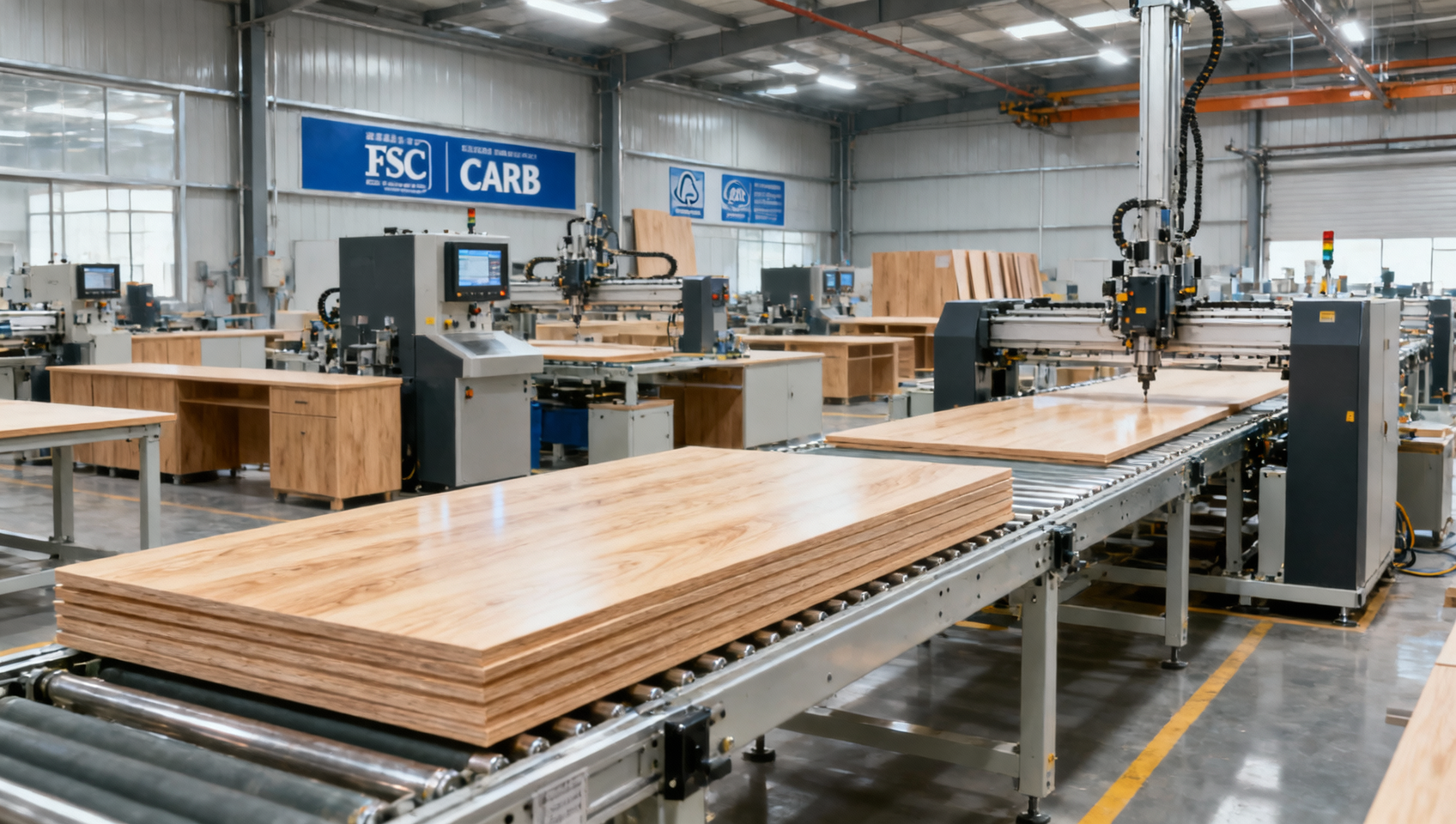
Distributors managing regional warehousing and B2B sales channels gain access to more stable, traceable, and technically documented supply sources. Higher origin-factory concentration implies greater consistency in material compliance (e.g., CARB, FSC), labeling, and export documentation — reducing pre-shipment verification friction and customs hold risks.
What Stakeholders Should Monitor & Act On
Track official updates from the Dongguan Home Furnishing Association
The April 2026 list is the latest public benchmark. Subsequent releases may clarify methodology, expand coverage (e.g., include export capacity metrics or sustainability certifications), or introduce tiered classifications — all of which affect supplier vetting criteria.
Assess sourcing alignment with ‘origin factory’ capability tiers
Not all listed factories offer equal ODM depth or export readiness. Prioritize those explicitly cited for rapid prototyping, bilingual technical documentation, or prior export experience — rather than assuming uniform capability across the 62% cohort.
Review current procurement contracts for indirect sourcing dependencies
If existing supply agreements route through Guangzhou- or Shenzhen-based trading firms, reassess whether direct factory onboarding is operationally viable — especially for products where color matching, hardware integration, or packaging localization are critical.
Validate lead-time assumptions against actual factory dispatch data
The ‘shorter supply chain’ advantage depends on real-world dispatch performance — not just proximity. Request recent shipment records (e.g., last three sea/air shipments) before scaling orders, particularly for seasonal or promotional inventory planning.
Editorial Perspective / Industry Observation
From industry perspective, this 62% market share figure is better understood as an indicator of consolidation maturity — not merely brand preference. It reflects years of infrastructure investment, regulatory alignment (e.g., environmental compliance upgrades), and OEM-to-ODM capability evolution within Dongguan’s industrial cluster. Analysis来看, it signals that the ‘origin factory’ model has moved beyond niche adoption into scalable, bankable infrastructure — but does not yet imply full standardization across quality control, IP protection, or multilingual service capacity. Current more appropriate interpretation is: a maturing, geographically anchored production ecosystem — one that lowers entry barriers for global buyers, yet still requires due diligence at the individual factory level.
Conclusion
This milestone confirms Dongguan’s emergence as a centralized, high-share hub for full-home customization manufacturing — not just as a component supplier, but as a coordinated, responsive, and increasingly transparent origin point. It does not eliminate sourcing complexity, but reconfigures its locus: from brand reputation and channel reach to factory capability verification and operational integration. For international stakeholders, it is less about ‘disruption’ and more about recalibrating procurement logic around verifiable origin-factory capacity.
Source Attribution
Main source: Dongguan Home Furnishing Association — April 2026 Competitiveness Ranking and Market Share Survey Report. Note: The 62% figure and 14-percentage-point increase are publicly disclosed findings; ongoing observation is recommended for methodology transparency and future cohort definitions (e.g., whether ‘origin factory’ includes contract manufacturers or only vertically integrated producers).
Get weekly intelligence in your inbox.
No noise. No sponsored content. Pure intelligence.
 Apr 19, 20262026 Dongguan Whole-House Customization List Released2026 Dongguan Whole-House Customization List Released
 Apr 19, 2026Global Shipping Alliances Launch Green Slot Priority for Asia-Europe RoutesGlobal Shipping Alliances Launch Green Slot Priority for Asia-Europe Routes
 Apr 19, 2026Vietnam Imposes AD Duties on Chinese Electronic ComponentsVietnam Imposes AD Duties on Chinese Electronic Components
 Apr 19, 2026Dongguan Victor Tops Local Full-Home Customization ListDongguan Victor Tops Local Full-Home Customization List
 Apr 19, 2026Guosheng Zhike Launches High-Precision Mold Machine Project in TaizhouGuosheng Zhike Launches High-Precision Mold Machine Project in Taizhou
 Apr 19, 2026CRRC Changchun Wins Jiaxing Urban Rail EMU ProjectCRRC Changchun Wins Jiaxing Urban Rail EMU Project
 Apr 19, 2026China Releases Green Design Guidelines 2026 for Industrial ProductsChina Releases Green Design Guidelines 2026 for Industrial Products
 Apr 19, 2026CATL Establishes $3B Era Resources Group for Global Mineral ControlCATL Establishes $3B Era Resources Group for Global Mineral Control
 Apr 19, 2026Shanghai Electric Gas Turbine Backlog Extends to 2028Shanghai Electric Gas Turbine Backlog Extends to 2028
 Apr 19, 2026Hormuz Strait Reopens, China Fertilizer Export Quota Easing ExpectedHormuz Strait Reopens, China Fertilizer Export Quota Easing Expected
 Apr 18, 2026TradeNexus Pro Launches Global Compliance RadarTradeNexus Pro Launches Global Compliance Radar
 Apr 18, 2026JIS T 2304:2026 Takes Effect June 1, 2026 for IVD SoftwareJIS T 2304:2026 Takes Effect June 1, 2026 for IVD Software
 Pathway for Rehab Devices with AI Modules") Apr 18, 2026FDA Updates 510(k) Pathway for Rehab Devices with AI ModulesFDA Updates 510(k) Pathway for Rehab Devices with AI Modules
Apr 18, 2026FDA Updates 510(k) Pathway for Rehab Devices with AI ModulesFDA Updates 510(k) Pathway for Rehab Devices with AI Modules Apr 18, 2026India BIS Approves 3 Chinese IoT Labs for IS 16444:2026 CertificationIndia BIS Approves 3 Chinese IoT Labs for IS 16444:2026 Certification
 Apr 18, 2026THE Alliance Launches Green Slot Priority for China PortsTHE Alliance Launches Green Slot Priority for China Ports
 Apr 18, 2026TÜV Rheinland Releases Dual-Standard ESS Certification Guide for ChinaTÜV Rheinland Releases Dual-Standard ESS Certification Guide for China
 Apr 18, 2026Vietnam Imposes AD Duties on Chinese Electronic ComponentsVietnam Imposes AD Duties on Chinese Electronic Components
 Apr 18, 2026SASO Launches PV Carbon Footprint Labeling from July 2026SASO Launches PV Carbon Footprint Labeling from July 2026
 Apr 18, 2026U.S. Adds 17 Smart Warehouse Robot Components to Export Control ListU.S. Adds 17 Smart Warehouse Robot Components to Export Control List
 Apr 18, 2026EU Enforces EN IEC 62443-4-2:2026 for Industrial Control Devices from 18 Apr 2026EU Enforces EN IEC 62443-4-2:2026 for Industrial Control Devices from 18 Apr 2026
 Apr 17, 2026Why Industry Veterans question impressive but vague specsWhy Industry Veterans question impressive but vague specs
 Apr 17, 2026What Industry Veterans notice first in weak supplier contentWhat Industry Veterans notice first in weak supplier content
 Apr 17, 2026A practical Editorial Framework for multi-topic industry sitesA practical Editorial Framework for multi-topic industry sites
 Apr 17, 2026Editorial Framework choices that weaken technical content SEOEditorial Framework choices that weaken technical content SEO
 Apr 17, 2026Temperature data loggers drift unpredictably inside lithium-ion battery storage enclosuresTemperature data loggers drift unpredictably inside lithium-ion battery storage enclosures
 Apr 17, 2026Are solar microinverters really worth the extra cost?Are solar microinverters really worth the extra cost?
 Apr 17, 2026Bifacial solar panels: How much more energy can they generate?Bifacial solar panels: How much more energy can they generate?