EU Enforces EN IEC 62443-4-2:2026 for Industrial Control Devices from 18 Apr 2026
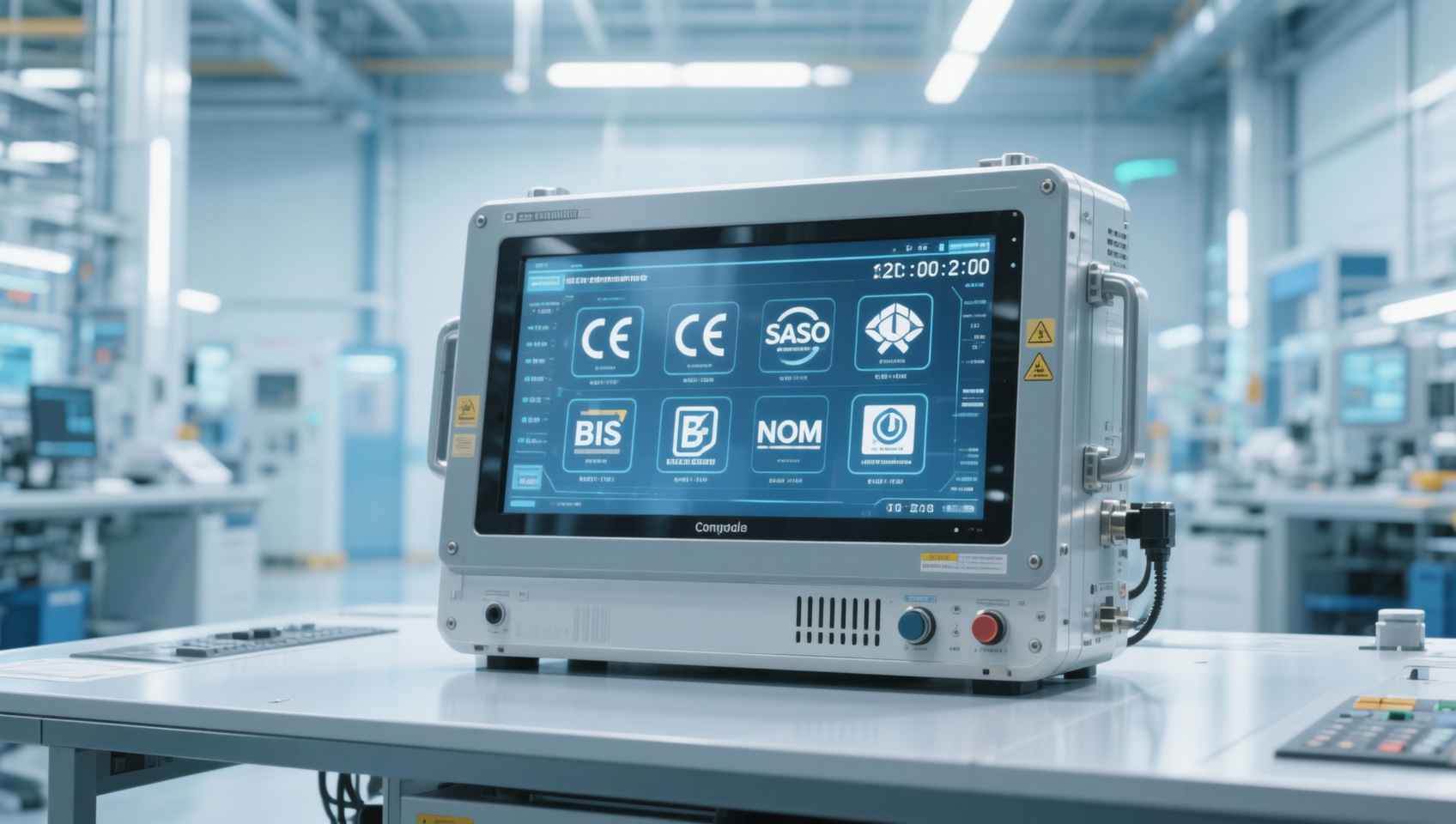
Starting 18 April 2026, the European Union will enforce EN IEC 62443-4-2:2026 — a new cybersecurity standard for industrial automation and control systems (IACS). This regulation directly impacts manufacturers of PLCs, HMIs, SCADA components, and factory automation equipment exporting to the EU, especially in Germany, the Netherlands, and Sweden. It signals a tightening of market access requirements for industrial control hardware suppliers, particularly those based in China.
Event Overview
The European Union Agency for Cybersecurity (ENISA) and CENELEC jointly mandated the implementation of EN IEC 62443-4-2:2026 on 18 April 2026. Under this requirement, all imported programmable logic controllers (PLCs), human-machine interfaces (HMIs), supervisory control and data acquisition (SCADA) components, and factory automation devices must demonstrate compliance with the Security Development Lifecycle (SDL) as defined in the standard. Manufacturers are required to obtain and submit a Declaration of Conformity issued by accredited certification bodies such as TÜV or DEKRA. Non-compliant products risk rejection at customs in key EU member states including Germany, the Netherlands, and Sweden.
Industries Affected
Direct Exporters of Industrial Control Equipment
Manufacturers exporting PLCs, HMIs, SCADA hardware, or integrated automation systems to the EU face immediate regulatory gatekeeping. Compliance is now a prerequisite for customs clearance — not merely a competitive differentiator. Failure to meet the SDL certification requirement may result in shipment delays, rework costs, or outright refusal of entry.
Contract Manufacturers & OEM Suppliers
Companies producing subassemblies or embedded control modules for EU-bound automation equipment are indirectly bound by the standard. Since the final product’s conformity depends on secure development practices across the supply chain, these suppliers may be asked to provide evidence of SDL integration — including threat modeling records, secure coding guidelines, and vulnerability management logs — even if they do not hold the final certificate themselves.
Distribution & Channel Partners in EU Markets
Importers, distributors, and system integrators placing industrial devices on the EU market assume legal responsibility under the EU’s market surveillance framework. They must verify and retain valid Declarations of Conformity before placing products on the market. Absence of verifiable documentation could expose them to liability, withdrawal orders, or penalties under national enforcement regimes.
What Enterprises and Practitioners Should Focus On Now
Monitor official interpretations and transitional arrangements
While the mandatory date is set for 18 April 2026, national market surveillance authorities may issue guidance on enforcement scope, grandfathering provisions for existing stock, or accepted certification pathways. Enterprises should track updates from national bodies (e.g., Germany’s BAM, the Netherlands’ NCC, Sweden’s SCC) and CENELEC’s official communications.
Prioritize high-risk product categories and key entry points
Given that German, Dutch, and Swedish customs have been explicitly cited as enforcement locations, exporters should prioritize certification for products destined to these markets first. High-volume or high-value items — such as modular PLCs with network connectivity or cloud-connected HMIs — warrant earlier SDL assessment due to elevated attack surface exposure.
Distinguish between policy signal and operational readiness
The publication of EN IEC 62443-4-2:2026 reflects an established technical consensus, but its enforcement relies on national administrative capacity and coordination. Analysis来看, early-stage enforcement may focus on documentation review and post-market surveillance rather than pre-clearance physical inspection — meaning robust recordkeeping is as critical as technical compliance.
Initiate internal SDL alignment and third-party engagement now
SDL certification requires documented evidence across design, development, testing, and maintenance phases. From industry角度看, lead times for audit preparation and certification with TÜV or DEKRA typically exceed 4–6 months. Companies should begin internal gap assessments, assign SDL ownership, and engage notified bodies well ahead of Q1 2026 to avoid bottlenecks.
Editorial Perspective / Industry Observation
This regulation is better understood as a formalized escalation of long-standing EU cybersecurity expectations for critical infrastructure components — not an isolated policy shift. Observation来看, it consolidates earlier guidance from ENISA’s IACS cybersecurity recommendations and aligns EU practice with global IEC 62443 adoption trends. Analysis来看, its significance lies less in introducing novel technical requirements and more in converting voluntary best practices into binding market access conditions. Current enforcement momentum suggests it functions primarily as a structural barrier — one that rewards proactive governance over reactive compliance. The broader implication is that cybersecurity is no longer a feature add-on for industrial hardware, but a foundational element of product eligibility in regulated markets.

In summary, EN IEC 62443-4-2:2026 marks a definitive step toward embedding cybersecurity accountability across the industrial control equipment value chain in the EU. Its practical effect is to raise the minimum threshold for market participation — especially for non-EU suppliers — without substituting for broader functional safety or interoperability standards. At present, it is more accurately interpreted as an enforceable compliance checkpoint than a comprehensive security transformation mandate.
Source: Official announcements from the European Union Agency for Cybersecurity (ENISA) and CENELEC; confirmed implementation date and scope per publicly released standard adoption notice. Ongoing verification of national enforcement protocols remains advised.
Get weekly intelligence in your inbox.
No noise. No sponsored content. Pure intelligence.
 Apr 18, 2026TradeNexus Pro Launches Global Compliance RadarTradeNexus Pro Launches Global Compliance Radar
 Apr 18, 2026JIS T 2304:2026 Takes Effect June 1, 2026 for IVD SoftwareJIS T 2304:2026 Takes Effect June 1, 2026 for IVD Software
 Pathway for Rehab Devices with AI Modules") Apr 18, 2026FDA Updates 510(k) Pathway for Rehab Devices with AI ModulesFDA Updates 510(k) Pathway for Rehab Devices with AI Modules
Apr 18, 2026FDA Updates 510(k) Pathway for Rehab Devices with AI ModulesFDA Updates 510(k) Pathway for Rehab Devices with AI Modules Apr 18, 2026India BIS Approves 3 Chinese IoT Labs for IS 16444:2026 CertificationIndia BIS Approves 3 Chinese IoT Labs for IS 16444:2026 Certification
 Apr 18, 2026THE Alliance Launches Green Slot Priority for China PortsTHE Alliance Launches Green Slot Priority for China Ports
 Apr 18, 2026TÜV Rheinland Releases Dual-Standard ESS Certification Guide for ChinaTÜV Rheinland Releases Dual-Standard ESS Certification Guide for China
 Apr 18, 2026Vietnam Imposes AD Duties on Chinese Electronic ComponentsVietnam Imposes AD Duties on Chinese Electronic Components
 Apr 18, 2026SASO Launches PV Carbon Footprint Labeling from July 2026SASO Launches PV Carbon Footprint Labeling from July 2026
 Apr 18, 2026U.S. Adds 17 Smart Warehouse Robot Components to Export Control ListU.S. Adds 17 Smart Warehouse Robot Components to Export Control List
 Apr 18, 2026EU Enforces EN IEC 62443-4-2:2026 for Industrial Control Devices from 18 Apr 2026EU Enforces EN IEC 62443-4-2:2026 for Industrial Control Devices from 18 Apr 2026
 Apr 17, 2026Temperature data loggers drift unpredictably inside lithium-ion battery storage enclosuresTemperature data loggers drift unpredictably inside lithium-ion battery storage enclosures
 Apr 17, 2026Are solar microinverters really worth the extra cost?Are solar microinverters really worth the extra cost?
 Apr 17, 2026Bifacial solar panels: How much more energy can they generate?Bifacial solar panels: How much more energy can they generate?
 Apr 17, 2026Gear manufacturing: How to optimize production for high precision?Gear manufacturing: How to optimize production for high precision?
 Apr 17, 2026Why power transmission components fail earlier than expectedWhy power transmission components fail earlier than expected
 Apr 17, 2026Linear motion systems: belt drive or ball screw for speed?Linear motion systems: belt drive or ball screw for speed?
 Apr 17, 2026Industrial bearing suppliers: what signals reliable quality?Industrial bearing suppliers: what signals reliable quality?
 Apr 17, 2026When pneumatic valves wholesale gets expensive laterWhen pneumatic valves wholesale gets expensive later
 Apr 17, 2026Hydraulic cylinder fabrication mistakes that cause oil leaksHydraulic cylinder fabrication mistakes that cause oil leaks
 Apr 17, 2026Heavy equipment manufacturing delays often start hereHeavy equipment manufacturing delays often start here
 Apr 17, 2026Custom heatsinks: when a larger size solves nothingCustom heatsinks: when a larger size solves nothing
 Apr 17, 2026Electronic enclosure fabrication: steel or aluminum?Electronic enclosure fabrication: steel or aluminum?
 Apr 17, 2026Automotive parts machining tolerances that drive up scrapAutomotive parts machining tolerances that drive up scrap
 Apr 17, 2026Medical device manufacturing changes under tighter traceabilityMedical device manufacturing changes under tighter traceability
 Apr 17, 2026How to Choose Solid State Batteries in 2026How to Choose Solid State Batteries in 2026
 Apr 17, 2026Are Solid State Batteries Worth the Cost Yet?Are Solid State Batteries Worth the Cost Yet?
 Apr 17, 2026Commercial Energy Storage Sizing: What Matters Most?Commercial Energy Storage Sizing: What Matters Most?