How to Choose Solid State Batteries in 2026
As demand rises across EVs, commercial energy storage, and off grid solar systems, choosing solid state batteries in 2026 requires more than comparing specs. Buyers must assess safety, lifecycle cost, supply chain maturity, and compatibility with technologies like solar microinverters and thin film solar cells. This guide helps technical teams and decision-makers identify practical selection criteria for reliable, future-ready investment.
For procurement leaders, engineers, distributors, and financial approvers, the challenge is no longer whether solid state batteries are promising. The real issue is how to separate pilot-stage marketing claims from solutions that can support production, field deployment, and long-term serviceability across multiple industries.
In 2026, battery selection decisions increasingly affect project bankability, operational safety, warranty exposure, and replacement planning over 8-15 years. A sound evaluation framework should combine electrochemical performance, pack integration, thermal behavior, supplier readiness, quality controls, and total cost of ownership rather than focusing on energy density alone.
What Solid State Batteries Mean in the 2026 Buying Landscape
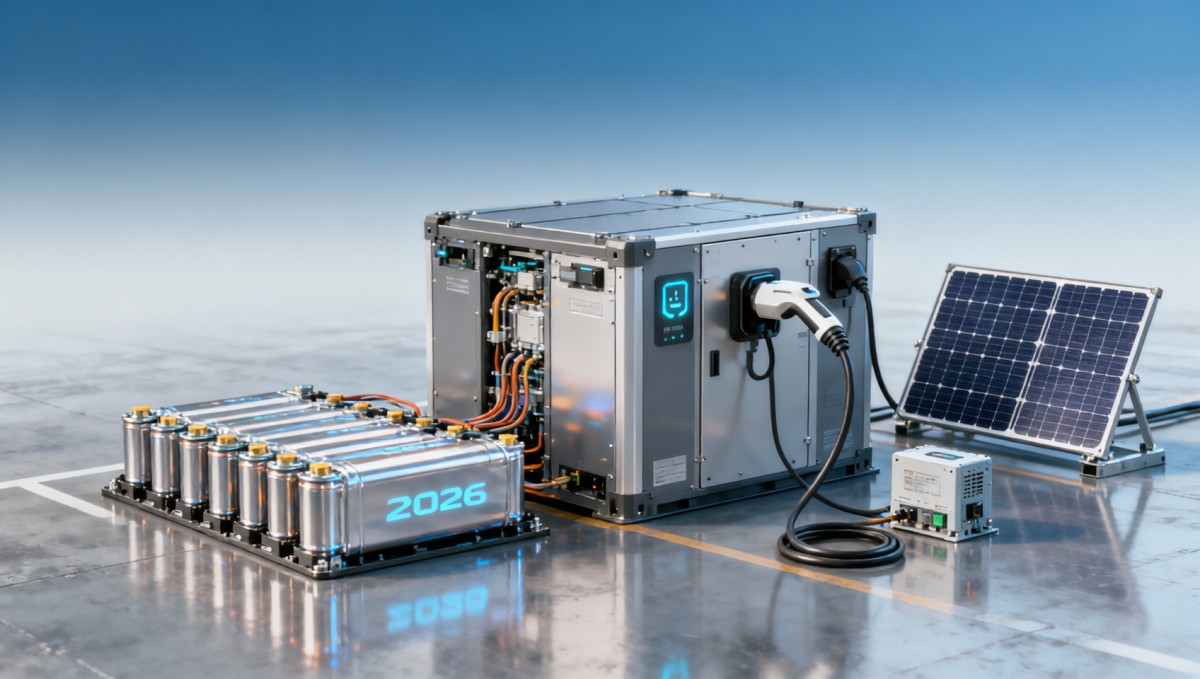
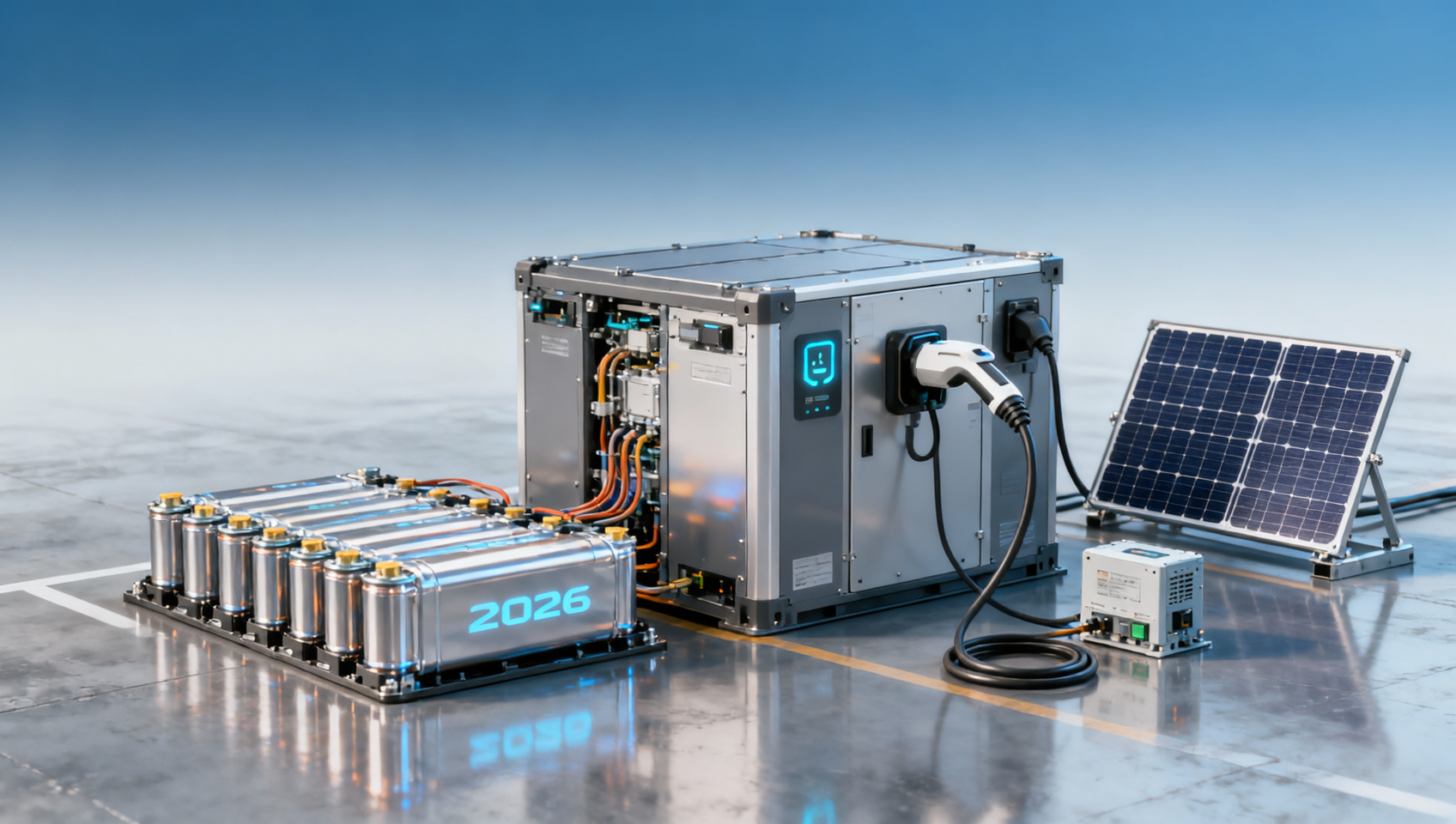
The term solid state batteries covers several architectures, and that matters for buyers. Some products use fully solid electrolytes, while others are semi-solid or hybrid systems that combine solid layers with gel or polymer interfaces. In practical procurement, this distinction can affect safety testing, charging behavior, and manufacturability more than headline capacity figures.
Across EV platforms, stationary storage, and intelligent electronics, solid state batteries are being evaluated for higher volumetric energy density, lower flammability risk, and improved low-temperature behavior. However, these benefits vary by chemistry, cell format, and operating window. A battery rated for 350-450 Wh/L in a controlled lab environment may perform very differently in a field installation facing vibration, irregular charging, and temperature swings from -20°C to 55°C.
For B2B buyers, the market in 2026 is still transitional. Some suppliers can support pilot runs of 500-2,000 units, but fewer can consistently deliver industrial-scale volumes above 10,000 units per batch with stable yields, traceability, and after-sales support. That gap is especially important for project managers and distributors who need repeatable lead times and replacement inventory.
Why the definition matters in sourcing
A sourcing team should request technical clarification on electrolyte type, cycle test conditions, charging protocol, pack safety design, and storage requirements. Without this, comparisons between vendors can become misleading because one supplier may quote data from a single-layer prototype while another provides figures for a production-ready multi-cell module.
The table below shows how common commercial categories differ in procurement relevance.
The key takeaway is simple: in 2026, choosing solid state batteries begins with category discipline. A buyer who defines the application, duty cycle, and scale first will avoid being drawn into unrealistic comparisons based on prototype-level claims.
Core Selection Criteria for Safety, Performance, and Lifecycle Cost
A practical buying decision should use at least 6 evaluation dimensions: safety profile, usable energy, cycle life, charging window, environmental tolerance, and lifecycle economics. For enterprise buyers, these criteria must be judged at cell level, module level, and system level because field failures often occur at interfaces rather than inside the chemistry itself.
Safety remains the first filter. Buyers should review abuse-test data such as overcharge, external short-circuit, crush, vibration, and thermal stability behavior. Even when a solid state battery reduces flammability compared with conventional lithium-ion formats, pack-level protection, venting design, and BMS logic still determine whether the system can be deployed in enclosed cabinets, mobile platforms, or public-facing infrastructure.
Cycle life should be tied to the application profile. A battery for daily commercial storage may need 3,000-8,000 cycles at a specified depth of discharge, while a premium industrial device may prioritize 1,000-2,000 cycles with high energy density and lower footprint. Financial approvers should calculate cost per delivered kWh over the expected service term instead of comparing purchase price alone.
The metrics that matter most
When choosing solid state batteries, technical evaluators should ask whether the quoted values are nominal, usable, or peak. A cell may advertise fast charging from 10% to 80% in 15-25 minutes, but repeated operation at that rate can accelerate interface degradation if thermal control and charging protocols are not tightly managed.
- Energy density: useful for mobile and space-limited applications, but only meaningful when paired with cycle retention and safety data.
- Cycle retention: review remaining capacity at 80% after a stated number of cycles, and confirm the temperature and discharge rate used for testing.
- Operating temperature: many buyers should target validated performance across at least -10°C to 45°C, or wider for outdoor deployments.
- Charge rate: determine whether the battery can handle routine fast charging or only occasional high-rate events.
- Warranty structure: check whether it covers capacity fade, manufacturing defects, or both, and whether thresholds are clearly defined.
The comparison matrix below can help project teams align technical and commercial priorities before RFQ issuance.
For finance teams, the strongest purchasing decisions come from combining technical durability with expected service cost. A battery priced 15% higher may still be the better option if it reduces thermal management overhead, shortens maintenance intervals, or extends replacement cycles by 2-4 years.
Matching Solid State Batteries to Real Applications
Different sectors prioritize different benefits. In EV and mobility systems, energy density and fast charging are often central. In commercial energy storage, predictable cycle life, thermal stability, and integration with PCS and EMS platforms usually carry more weight. In off grid solar systems, compatibility with solar microinverters, DC coupling strategies, and variable charging conditions becomes critical.
Battery buyers should therefore define a duty profile before vendor shortlisting. This profile should include average daily cycles, charge-discharge depth, ambient conditions, expected standby duration, and whether the system must operate with thin film solar cells, hybrid inverters, or modular expansion cabinets. Without that application map, a technically impressive battery may still underperform in the installed environment.
Operators and safety managers also need to evaluate maintenance realities. A solution intended for remote telecom backup, rural solar storage, or distributed commercial sites should minimize field service complexity. Features such as modular battery blocks, remote diagnostics, and clear fault isolation can reduce mean time to repair from several hours to under 60 minutes.
Application-fit checklist
- Define whether the priority is runtime, power burst, fast charging, or cycle longevity.
- Map the expected environmental range, including dust, humidity, vibration, and altitude.
- Confirm electrical compatibility with inverter, charger, BMS, and site communication protocols.
- Estimate service access frequency and spare parts availability for a 3-10 year window.
- Review enclosure requirements for indoor racks, outdoor cabinets, mobile equipment, or embedded electronics.
Typical fit by scenario
For commercial storage systems of 50 kWh to 500 kWh, buyers usually benefit from modules optimized for thermal safety, stable daily cycling, and predictable software integration. For compact smart electronics or medical-adjacent devices, pack size, discharge consistency, and certification pathways may outweigh sheer cycle count. For solar-linked installations, charge acceptance under intermittent generation is a major performance filter.
Distributors should also assess portfolio fit. If most customers need practical deployment in 4-8 weeks rather than experimental performance gains, the best solid state battery option may be the one with the strongest documentation, clearer warranty language, and better regional support rather than the highest laboratory density number.
Supply Chain Maturity, Quality Control, and Vendor Due Diligence
In 2026, supply chain maturity is one of the most underestimated factors when choosing solid state batteries. A technically capable supplier can still become a weak partner if raw material sourcing, line qualification, packaging controls, or export readiness are unstable. This is particularly important for enterprise buyers planning serial deliveries, regional distribution, or multi-site deployment.
Technical teams should review whether the vendor can provide lot traceability, incoming inspection routines, cell matching protocols, and shipment handling guidance. Quality managers should also verify how nonconformities are documented, how returns are processed, and what corrective action timeline applies. A response window of 24-72 hours for critical issues is usually more practical than vague support promises.
Lead time discipline matters as much as chemistry. For example, samples may ship in 2-4 weeks, but production lots can require 8-16 weeks depending on electrolyte materials, module assembly complexity, and testing queues. Buyers who overlook this gap often face project delays, especially when batteries must be coordinated with inverter commissioning, cabinet fabrication, or export inspection schedules.
Vendor review points before contract approval
The table below organizes due diligence factors that matter to procurement, engineering, and quality assurance teams.
A mature supplier is not defined only by manufacturing scale. It is defined by whether technical claims, delivery commitments, and support obligations can be documented, audited, and sustained over multiple purchase cycles.
Common procurement mistakes
- Selecting a supplier based on prototype performance without confirming repeatable production quality.
- Ignoring storage and transport conditions that affect battery health before installation.
- Assuming module compatibility with existing chargers, microinverters, or control software without integration testing.
- Failing to define acceptance criteria for voltage consistency, internal resistance spread, or shipment inspection.
Implementation Planning, Risk Control, and 2026 Buying Strategy
Even the right solid state battery can fail commercially if implementation is rushed. A disciplined rollout should move through 4 stages: requirement definition, sample validation, pilot deployment, and scaled purchasing. This phased approach helps technical teams verify charging behavior, thermal response, and software compatibility before committing to annual contracts or distributor inventory.
Pilot validation should include at least one real-use stress period, often 30-90 days depending on the application. For stationary storage, that may involve repeated partial state-of-charge cycling, inverter interaction checks, and ambient temperature variation. For mobile equipment, vibration, peak-load discharge, and recharge frequency should be included. The goal is to identify performance gaps that are not visible in datasheets.
Risk control should also cover documentation and contract structure. Buyers should specify acceptance thresholds, replacement terms, field failure reporting, and service responsibilities. If the application is linked to commercial solar, backup systems, or energy storage finance models, these details can directly affect commissioning schedules and asset-level risk exposure.
A practical buying workflow
- Define the load profile, target runtime, charge pattern, and environmental conditions.
- Issue an RFQ requiring cycle data, safety test summary, warranty terms, and delivery lead time.
- Validate samples for 2-8 weeks with application-specific test criteria.
- Run a pilot batch with installation, monitoring, and service simulation.
- Scale purchases only after reviewing cost per delivered kWh, failure rates, and support responsiveness.
FAQ for decision-makers
How should enterprises compare solid state batteries with advanced lithium-ion options? They should compare usable lifecycle value, thermal management burden, safety architecture, and integration cost. In many cases, the premium is justified only when space limits, safety constraints, or fast-charge demands are strategically important.
How long is the typical procurement-to-deployment cycle? For structured projects, it often ranges from 6 to 20 weeks including technical review, sampling, pilot testing, and shipment. Complex multi-site or customized module programs can take longer.
What should quality teams inspect on arrival? They should check packaging condition, voltage consistency, labeling, traceability records, and storage history. For modules, connector integrity, communication readiness, and visible enclosure damage should also be reviewed before installation.
Can solid state batteries work well with solar microinverters and thin film solar cells? Yes, but only when charge control logic, voltage range, and system architecture are evaluated together. Compatibility should be confirmed at system level, not assumed from a cell datasheet.
Choosing solid state batteries in 2026 is ultimately a cross-functional decision. The most successful buyers balance performance ambition with field reality, supplier maturity, and long-term service economics. For operators, engineers, finance teams, and distributors, the smartest path is a structured evaluation process built around application fit, safety evidence, quality controls, and scale readiness.
TradeNexus Pro supports global decision-makers with deeper market intelligence across green energy, smart electronics, advanced manufacturing, and supply chain strategy. If you are evaluating solid state battery options for EV, storage, or solar-linked deployment, contact us to discuss sourcing priorities, compare vendor pathways, and get a more tailored solution framework for your next project.
Get weekly intelligence in your inbox.
No noise. No sponsored content. Pure intelligence.
 Apr 17, 2026Temperature data loggers drift unpredictably inside lithium-ion battery storage enclosuresTemperature data loggers drift unpredictably inside lithium-ion battery storage enclosures
 Apr 17, 2026Are solar microinverters really worth the extra cost?Are solar microinverters really worth the extra cost?
 Apr 17, 2026Bifacial solar panels: How much more energy can they generate?Bifacial solar panels: How much more energy can they generate?
 Apr 17, 2026Gear manufacturing: How to optimize production for high precision?Gear manufacturing: How to optimize production for high precision?
 Apr 17, 2026Why power transmission components fail earlier than expectedWhy power transmission components fail earlier than expected
 Apr 17, 2026Linear motion systems: belt drive or ball screw for speed?Linear motion systems: belt drive or ball screw for speed?
 Apr 17, 2026Industrial bearing suppliers: what signals reliable quality?Industrial bearing suppliers: what signals reliable quality?
 Apr 17, 2026When pneumatic valves wholesale gets expensive laterWhen pneumatic valves wholesale gets expensive later
 Apr 17, 2026Hydraulic cylinder fabrication mistakes that cause oil leaksHydraulic cylinder fabrication mistakes that cause oil leaks
 Apr 17, 2026Heavy equipment manufacturing delays often start hereHeavy equipment manufacturing delays often start here
 Apr 17, 2026Custom heatsinks: when a larger size solves nothingCustom heatsinks: when a larger size solves nothing
 Apr 17, 2026Electronic enclosure fabrication: steel or aluminum?Electronic enclosure fabrication: steel or aluminum?
 Apr 17, 2026Automotive parts machining tolerances that drive up scrapAutomotive parts machining tolerances that drive up scrap
 Apr 17, 2026Medical device manufacturing changes under tighter traceabilityMedical device manufacturing changes under tighter traceability
 Apr 17, 2026How to Choose Solid State Batteries in 2026How to Choose Solid State Batteries in 2026
 Apr 17, 2026Are Solid State Batteries Worth the Cost Yet?Are Solid State Batteries Worth the Cost Yet?
 Apr 17, 2026Commercial Energy Storage Sizing: What Matters Most?Commercial Energy Storage Sizing: What Matters Most?
 Apr 17, 2026Commercial Energy Storage ROI: How to Assess ItCommercial Energy Storage ROI: How to Assess It
 Apr 17, 2026Off Grid Solar Systems: What to Avoid FirstOff Grid Solar Systems: What to Avoid First
 Apr 17, 2026Who Should Use Off Grid Solar Systems?Who Should Use Off Grid Solar Systems?
 Apr 17, 2026Solar Microinverters vs String Inverters: Which Fits?Solar Microinverters vs String Inverters: Which Fits?
 Apr 17, 2026When Do Solar Microinverters Make More Sense?When Do Solar Microinverters Make More Sense?
 Apr 17, 2026How digital freight matching for international shipping cuts transit time by up to 22% in 2026How digital freight matching for international shipping cuts transit time by up to 22% in 2026
 Apr 17, 2026Why port automation tech for smart logistics reduces container handling errors by 37% at Tier-1 terminalsWhy port automation tech for smart logistics reduces container handling errors by 37% at Tier-1 terminals
 Apr 17, 2026What yard management systems for port operations actually deliver in real-world deploymentsWhat yard management systems for port operations actually deliver in real-world deployments
 Apr 17, 2026Can digital customs clearance for sea freight reduce D/O processing from 48 hours to under 90 minutesCan digital customs clearance for sea freight reduce D/O processing from 48 hours to under 90 minutes
 Apr 17, 2026How returnable transport packaging for automotive parts lowers TCO by 18–25% over 3 yearsHow returnable transport packaging for automotive parts lowers TCO by 18–25% over 3 years