Medical device manufacturing changes under tighter traceability
As tighter traceability rules reshape medical device manufacturing, buyers and engineers must reassess every link in the supply chain—from automotive parts machining and electronic enclosure fabrication to custom heatsinks, linear motion systems, and industrial bearing suppliers. This article explores how compliance, data visibility, and supplier qualification are becoming decisive factors for quality, risk control, and long-term competitiveness.
For procurement teams, quality managers, technical evaluators, and project leaders, traceability is no longer a back-office documentation task. It now influences supplier approval, change control, CAPA response speed, audit readiness, and even product launch timing. In many device categories, a missing batch record or an incomplete material history can delay release by 2–6 weeks, create rework costs, or trigger customer escalation.
This shift reaches far beyond final assembly. Contract machining partners, enclosure fabricators, thermal component suppliers, motion system vendors, and bearing manufacturers are all being measured on their ability to provide lot-level visibility, revision control, process consistency, and timely records. In a global B2B environment, companies that treat traceability as a strategic capability, rather than a compliance burden, are better positioned to reduce risk and win higher-value programs.
Why traceability is changing medical device manufacturing economics
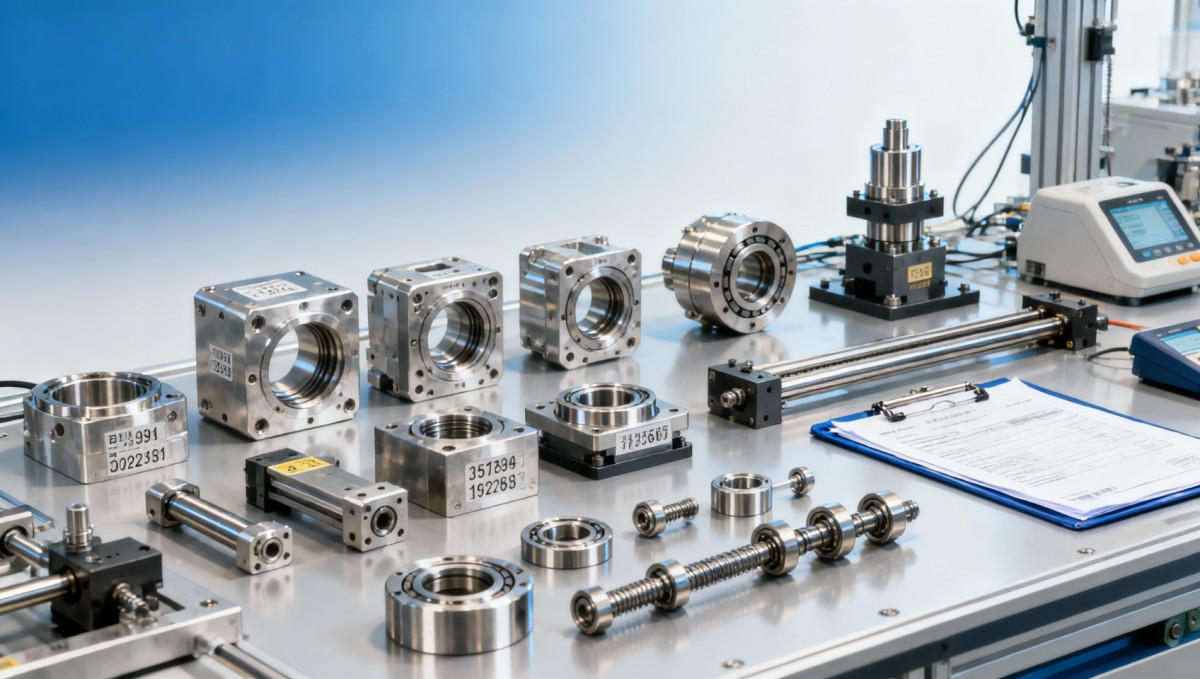
Medical device manufacturing has always required disciplined documentation, but tighter traceability expectations are changing cost structures and supplier relationships. The key difference is scope: manufacturers are expected to track not only finished goods, but also raw materials, subcomponents, software revisions, inspection status, and process history across multiple tiers. For complex devices, one product family may involve 20–50 critical components from 8–15 suppliers.
That level of visibility changes how buyers evaluate price. A lower unit quote can become expensive if the supplier cannot provide heat numbers, coating certificates, process parameters, calibration records, or serialized shipment data within 24–48 hours. When nonconformance investigations begin, the ability to isolate affected lots quickly can reduce containment from thousands of units to a few hundred, which directly affects scrap, recall exposure, and working capital.
The impact is especially visible in cross-industry supply chains. Automotive parts machining vendors entering healthcare programs may already run capable CNC operations, but medical customers usually expect tighter document retention periods, more formal change notification, and clearer linkage between machine settings, operator records, and inspection outputs. The same applies to smart electronics housings, custom heatsinks, and precision motion assemblies used in imaging, diagnostics, and laboratory systems.
From a business standpoint, traceability also affects quoting lead time and supplier onboarding. A supplier with stable ERP-MES-QMS integration may complete qualification in 4–8 weeks, while a supplier relying on spreadsheets and disconnected systems may take significantly longer. For enterprise decision-makers and finance approvers, this means digital maturity is no longer optional; it is a measurable factor in time-to-revenue.
Where the hidden costs usually appear
- Manual record retrieval that adds 3–5 hours to every deviation or customer complaint review.
- Lot mixing risks during subcontract processing such as anodizing, passivation, or heat treatment.
- Engineering changes implemented without synchronized drawing revisions across suppliers.
- Incomplete incoming inspection linkage between certificates, PO lines, and actual received lots.
Typical operational signals of weak traceability
If a supplier needs more than 1 business day to retrieve batch documentation, cannot map material certificates to delivered serial numbers, or lacks a formal revision history for tooling and inspection programs, the risk level is already high. These issues may not appear in a simple RFQ review, but they become critical during scale-up, regulatory review, or field complaint analysis.
How traceability requirements now extend across component categories
The supply base for medical devices is broad, and traceability expectations differ by component type. Machined metal parts may require full material origin, process route records, and dimensional inspection retention. Electronic enclosures often need revision-controlled drawings, coating compliance documentation, and environmental test linkage. Custom heatsinks add thermal performance consistency, while linear motion systems and industrial bearings introduce life-cycle, lubrication, and wear-related quality concerns.
For technical evaluation teams, the challenge is to define what level of traceability is proportionate to product risk. Not every washer needs serialization, but safety-critical, performance-critical, and contamination-sensitive parts often need lot-level or unit-level control. In practice, many organizations group components into 3 traceability tiers: standard, controlled, and critical. Each tier determines retention rules, test evidence, and supplier reporting depth.
The table below outlines how traceability emphasis shifts across common upstream categories that support healthcare technology manufacturing and adjacent industrial supply chains.
The key takeaway is that traceability should follow function and risk, not just product category. A low-cost part can still be high-risk if it affects thermal stability, motion precision, sterility support, or electrical shielding. Procurement and QA teams should align supplier controls with these failure modes early, ideally before pilot builds and validation runs begin.
A practical 3-tier component model
Tier 1: Standard parts
Require PO-to-lot linkage, basic certificate retention, and receiving inspection records for 2–5 years depending on internal policy.
Tier 2: Controlled parts
Require process traceability, revision control, and nonconformance containment procedures with retrieval in less than 24 hours.
Tier 3: Critical parts
Often require serialized records, tighter change notification windows, extended retention, and deeper supplier audit frequency such as every 12 months.
Supplier qualification now depends on data readiness as much as machining quality
Traditional supplier approval often emphasized machine capacity, price competitiveness, and sample quality. Those criteria still matter, but tighter traceability raises the importance of data systems, document discipline, and escalation responsiveness. A supplier producing parts within tolerance of ±0.01 mm can still be a poor fit if document retrieval is slow or process changes are not formally logged.
For business evaluators and project managers, a more resilient qualification model includes both technical and informational capability. During onboarding, manufacturers should verify how the supplier handles lot segregation, digital traveler records, operator training records, gauge calibration, and subcontractor control. These details strongly influence whether a future issue can be contained in 4 hours or drags on for 4 weeks.
A useful approach is to score suppliers across five dimensions: process capability, traceability depth, change control, response speed, and capacity stability. The score does not need to be overly complex; even a 1–5 scale can create better purchasing discipline than a price-only comparison. What matters is consistency across all candidates and periodic re-evaluation every 6–12 months.
The table below can help procurement teams compare suppliers beyond unit cost and identify which vendors are ready for regulated or quality-sensitive programs.
This comparison framework helps finance, sourcing, and quality teams speak the same language. A supplier with a 3% lower quote may still be the weaker commercial choice if it increases audit load, complaint resolution time, or inventory buffers. In regulated manufacturing, total supply risk often matters more than nominal piece price.
Recommended qualification steps
- Map the component’s risk profile and define whether lot-level or serial-level traceability is needed.
- Audit the supplier’s document flow, including subcontract processes and calibration records.
- Run a pilot order with at least 2 lots to verify segregation, labeling, and certificate consistency.
- Test record retrieval with a mock deviation case before approving full production release.
- Review performance after the first 90 days and update the supplier risk score.
Implementation priorities for manufacturers and procurement teams
Companies do not need to transform everything at once. In most organizations, the best results come from a phased traceability roadmap covering people, process, and systems. Phase 1 usually focuses on high-risk components, existing document gaps, and supplier segmentation. Phase 2 integrates data flows between procurement, production, inspection, and complaint handling. Phase 3 improves predictive control through better analytics and supplier performance tracking.
For operators and engineering teams, the first gains often come from standardizing labels, traveler formats, and revision release rules. Even simple controls such as barcode scanning at receiving, clear lot segregation in WIP, and digital storage of certificates can reduce manual search time by 30–50%. For quality and safety personnel, faster access to evidence also shortens investigation cycles and supports more disciplined CAPA closure.
Project leaders should also define a realistic governance cadence. Monthly review of top-risk suppliers, quarterly audit of change notifications, and semiannual traceability drills are practical starting points. The purpose is not to create bureaucracy, but to verify that data remains usable under pressure. A traceability system only proves its value when teams can answer three questions quickly: what was used, where it went, and what else is affected.
The following checklist is a practical guide for manufacturers looking to strengthen traceability without overengineering the program.
Priority checklist for the first 6 months
- Identify the top 10–20 components with the highest quality, patient safety, or downtime impact.
- Define required records for each category: material certs, inspection data, process logs, and shipment linkage.
- Set supplier response targets, such as 24-hour document retrieval and 5-day initial root cause updates.
- Align engineering change notices with purchasing and receiving controls to prevent revision mix-ups.
- Run one mock recall or containment exercise per quarter to test real-world traceability speed.
Common implementation mistakes
Trying to serialize every item
This can add cost without reducing risk. Use tiered controls so the strongest methods are reserved for critical parts and assemblies.
Ignoring sub-tier suppliers
A machined part may look stable until a plating or heat treatment subcontractor changes process chemistry or cycle conditions without notice.
Treating traceability as QA-only
Procurement, engineering, operations, and finance all influence supplier selection, inventory exposure, and response costs. Ownership must be cross-functional.
FAQ: what buyers and engineers should ask before approving a supplier
Many sourcing decisions fail because the right questions are asked too late. The FAQ below is designed for information researchers, technical evaluators, distributors, and decision-makers who need practical screening criteria for regulated or quality-sensitive supply chains.
How long should record retention typically be?
Retention depends on product risk, contract requirements, and internal quality policy. In practice, many manufacturers keep key production and inspection records for at least 2–7 years, while critical device-related documentation may be held longer. The more important point is retrievability: retention is not useful if records cannot be located within the same business day.
What is the minimum traceability data a component supplier should provide?
At minimum, buyers should expect PO linkage, lot or batch identification, revision-controlled part information, shipment date, inspection status, and supporting certificates where applicable. For critical parts, add process parameters, subcontractor records, and serial or sub-lot mapping. If any of these elements are missing, containment and root cause analysis become slower and less reliable.
How do lead times change when traceability requirements increase?
Initial qualification often becomes longer by 1–3 weeks because documentation reviews, pilot lot checks, and system verification take time. However, stronger traceability usually reduces disruption later. Companies often recover that time through fewer holds, faster deviation closure, and lower emergency freight caused by unclear inventory status.
What should distributors or agents verify before representing a supplier?
Distributors should confirm document responsiveness, lot labeling discipline, complaint escalation paths, and consistency between quotations, technical files, and shipped product. They should also verify whether the supplier can support customer audits and provide evidence packages during qualification. This is especially important when serving healthcare technology accounts with strict onboarding workflows.
Tighter traceability is redefining how medical device manufacturing supply chains are built, evaluated, and scaled. It affects machining partners, enclosure suppliers, thermal component manufacturers, motion system vendors, bearing sources, and every team involved in procurement, quality, project delivery, and financial approval. The organizations that adapt fastest are the ones that connect compliance, data visibility, and supplier qualification into one operational model.
For companies navigating these changes, the practical goal is clear: reduce uncertainty, accelerate investigations, protect product quality, and make supplier decisions based on measurable readiness rather than assumptions. If you are reviewing your sourcing strategy, supplier screening framework, or component traceability roadmap, now is the right time to act. Contact TradeNexus Pro to explore tailored market intelligence, compare capable suppliers, and get a more resilient path to compliant growth.
Get weekly intelligence in your inbox.
No noise. No sponsored content. Pure intelligence.
 Apr 17, 2026Temperature data loggers drift unpredictably inside lithium-ion battery storage enclosuresTemperature data loggers drift unpredictably inside lithium-ion battery storage enclosures
 Apr 17, 2026Are solar microinverters really worth the extra cost?Are solar microinverters really worth the extra cost?
 Apr 17, 2026Bifacial solar panels: How much more energy can they generate?Bifacial solar panels: How much more energy can they generate?
 Apr 17, 2026Gear manufacturing: How to optimize production for high precision?Gear manufacturing: How to optimize production for high precision?
 Apr 17, 2026Why power transmission components fail earlier than expectedWhy power transmission components fail earlier than expected
 Apr 17, 2026Linear motion systems: belt drive or ball screw for speed?Linear motion systems: belt drive or ball screw for speed?
 Apr 17, 2026Industrial bearing suppliers: what signals reliable quality?Industrial bearing suppliers: what signals reliable quality?
 Apr 17, 2026When pneumatic valves wholesale gets expensive laterWhen pneumatic valves wholesale gets expensive later
 Apr 17, 2026Hydraulic cylinder fabrication mistakes that cause oil leaksHydraulic cylinder fabrication mistakes that cause oil leaks
 Apr 17, 2026Heavy equipment manufacturing delays often start hereHeavy equipment manufacturing delays often start here
 Apr 17, 2026Custom heatsinks: when a larger size solves nothingCustom heatsinks: when a larger size solves nothing
 Apr 17, 2026Electronic enclosure fabrication: steel or aluminum?Electronic enclosure fabrication: steel or aluminum?
 Apr 17, 2026Automotive parts machining tolerances that drive up scrapAutomotive parts machining tolerances that drive up scrap
 Apr 17, 2026Medical device manufacturing changes under tighter traceabilityMedical device manufacturing changes under tighter traceability
 Apr 17, 2026How to Choose Solid State Batteries in 2026How to Choose Solid State Batteries in 2026
 Apr 17, 2026Are Solid State Batteries Worth the Cost Yet?Are Solid State Batteries Worth the Cost Yet?
 Apr 17, 2026Commercial Energy Storage Sizing: What Matters Most?Commercial Energy Storage Sizing: What Matters Most?
 Apr 17, 2026Commercial Energy Storage ROI: How to Assess ItCommercial Energy Storage ROI: How to Assess It
 Apr 17, 2026Off Grid Solar Systems: What to Avoid FirstOff Grid Solar Systems: What to Avoid First
 Apr 17, 2026Who Should Use Off Grid Solar Systems?Who Should Use Off Grid Solar Systems?
 Apr 17, 2026Solar Microinverters vs String Inverters: Which Fits?Solar Microinverters vs String Inverters: Which Fits?
 Apr 17, 2026When Do Solar Microinverters Make More Sense?When Do Solar Microinverters Make More Sense?
 Apr 17, 2026How digital freight matching for international shipping cuts transit time by up to 22% in 2026How digital freight matching for international shipping cuts transit time by up to 22% in 2026
 Apr 17, 2026Why port automation tech for smart logistics reduces container handling errors by 37% at Tier-1 terminalsWhy port automation tech for smart logistics reduces container handling errors by 37% at Tier-1 terminals
 Apr 17, 2026What yard management systems for port operations actually deliver in real-world deploymentsWhat yard management systems for port operations actually deliver in real-world deployments
 Apr 17, 2026Can digital customs clearance for sea freight reduce D/O processing from 48 hours to under 90 minutesCan digital customs clearance for sea freight reduce D/O processing from 48 hours to under 90 minutes
 Apr 17, 2026How returnable transport packaging for automotive parts lowers TCO by 18–25% over 3 yearsHow returnable transport packaging for automotive parts lowers TCO by 18–25% over 3 years