Hydraulic cylinder fabrication mistakes that cause oil leaks
Oil leaks in hydraulic cylinder fabrication rarely come from seals alone—they often start with machining tolerances, surface finish errors, poor welding control, and flawed assembly practices. For teams in heavy equipment manufacturing evaluating power transmission components and linear motion systems, understanding these avoidable mistakes is critical to reliability, safety, and lifecycle cost. This article outlines the most common fabrication failures and how to prevent them.
In B2B equipment supply chains, a leaking hydraulic cylinder is not just a maintenance issue. It can trigger unplanned downtime, warranty claims, safety incidents, contaminated work areas, and accelerated component wear. For procurement managers, quality engineers, project owners, and distributors, the cost impact often extends far beyond the price of a replacement seal kit.
Most leak-related failures can be traced back to a handful of fabrication-stage mistakes. These include incorrect bore finishing, rod surface defects, poor concentricity, heat distortion during welding, contamination during assembly, and weak inspection discipline. When these problems are prevented upstream, cylinder service life can improve substantially, and field failure rates typically drop within the first 500 to 1,000 operating hours.
Machining Tolerance Errors That Create Early Leak Paths
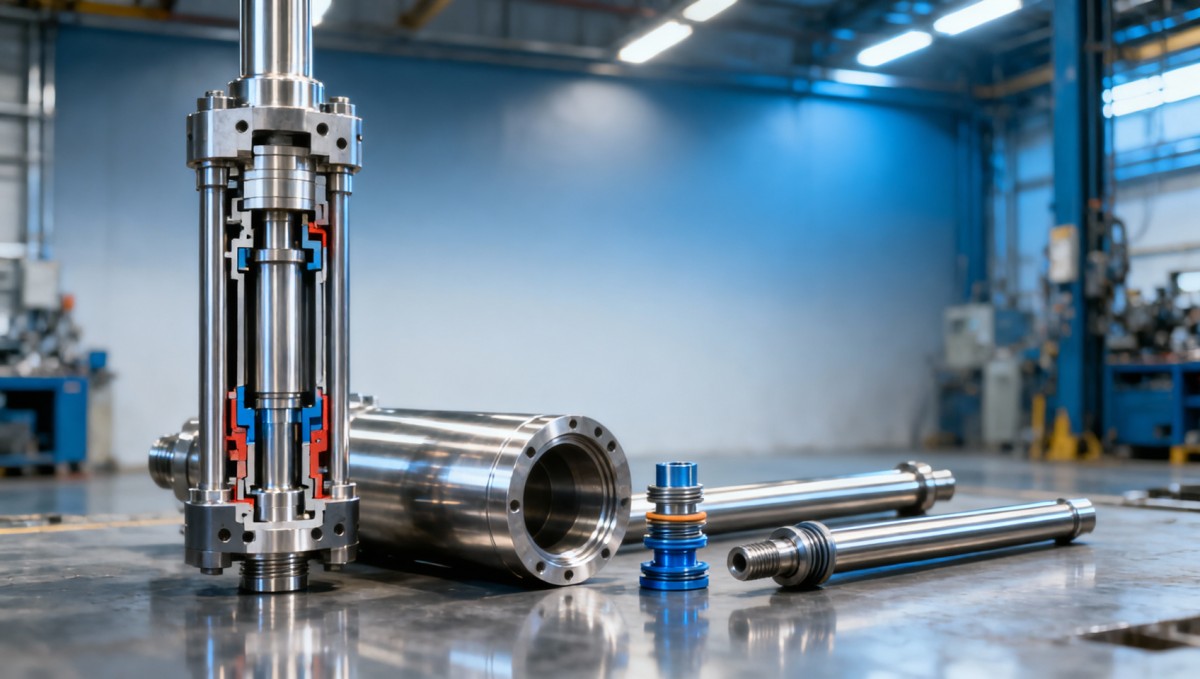
Machining accuracy is the first control point in hydraulic cylinder fabrication. If the tube bore, gland, rod, piston groove, or seal housing falls outside an acceptable tolerance band, oil leakage often appears early in service. In many industrial applications, bore roundness, straightness, and rod diameter consistency must stay within a narrow range, often measured in hundredths of a millimeter rather than whole millimeters.
A common fabrication mistake is treating the cylinder tube like a general welded structure instead of a precision fluid-power component. Even a small mismatch between piston seal geometry and bore size can cause bypass leakage under pressure. For example, if internal bore variation exceeds the seal’s compensation range, the sealing contact becomes uneven, especially under 160 to 250 bar working pressure.
Rod machining errors are equally serious. A rod that is slightly undersized may not maintain proper sealing pressure at the rod seal and wiper interface. A rod that is oversized can damage the seal lip during assembly or early cycling. In long-stroke cylinders used in construction, material handling, or agricultural machinery, runout and straightness errors become more visible as stroke length increases beyond 800 mm or 1,200 mm.
Critical dimensions that should never be treated as routine
Fabricators often focus on major dimensions and overlook geometric quality. In practice, leakage risk is influenced by more than nominal diameter. Buyers and quality teams should check whether the supplier controls concentricity, groove depth, groove edge condition, surface waviness, and alignment between the tube axis and gland interface.
- Tube bore diameter variation should be matched to the selected seal profile and pressure class.
- Rod diameter, roundness, and straightness should be verified before chrome plating or final finishing.
- Piston groove width and depth should be inspected after machining, not assumed from CNC program settings.
- Threaded gland and head components should be checked for fit, lead accuracy, and flank damage.
The table below summarizes typical fabrication points where tolerance errors translate directly into leakage, assembly damage, or shortened seal life.
For sourcing teams, the key takeaway is simple: ask how dimensional control is verified, not just what the nominal dimensions are. A supplier that provides inspection records for bore size, rod straightness, and groove tolerance offers a much lower leak risk than one that only confirms basic drawing compliance.
Surface Finish and Material Preparation Problems
Even when dimensions are correct, a poor surface finish can undermine hydraulic cylinder sealing performance. Seal lips depend on controlled surface texture to retain a stable lubrication film while preventing oil escape. If the rod or bore is too rough, the seal wears quickly. If it is too smooth, lubrication may become unstable and micro-leakage can develop under repeated cycling.
One frequent mistake is inconsistent finishing between batches. A cylinder rod polished to one surface roughness level in the first lot and a noticeably different finish in the next lot can produce different field results using the same seal material. This inconsistency is especially problematic for OEMs standardizing cylinders across multiple machine platforms or distributors managing mixed supplier inventories.
Chrome plating and post-plating finishing also deserve attention. Cracked plating, inadequate adhesion, local pitting, and unremoved polishing debris can all shorten seal life. In outdoor duty cycles exposed to dust, rain, fertilizer, or washdown environments, these defects may trigger visible leakage within a few months rather than after several thousand hours.
Where surface preparation breaks down
Material preparation errors often begin before the final grinding or polishing stage. Improper handling, poor storage, or contamination from welding and machining operations can introduce scratches and embedded particles. Once these defects are trapped under a seal lip, they become continuous wear points.
Common high-risk conditions
- Rod surfaces with longitudinal scratches that act as oil channels during extension or retraction.
- Bore finishes with torn metal or chatter marks that disrupt piston seal contact.
- Unprotected rods stored in humid conditions for 2 to 6 weeks before assembly.
- Seal installation over sharp edges without lead-in chamfers or temporary sleeves.
The following table helps technical buyers compare surface-related issues and their likely operational consequences.
For most industrial procurement reviews, it is practical to ask suppliers about their finishing sequence, storage controls, and incoming material inspection. These process answers are often more revealing than a generic claim of “high-quality polishing.”
Welding Distortion, Heat Input, and Structural Misalignment
Welding is one of the most overlooked causes of hydraulic cylinder oil leaks. Many cylinder designs require welded ports, end caps, clevises, trunnions, or mounting features. If heat input is excessive or weld sequence is poorly planned, the tube can distort, the bore can lose roundness, and the rod path can shift off-axis. The result is not always visible at delivery, but leakage often appears after repeated pressure cycles.
A typical problem occurs when port welding is completed after bore finishing without adequate fixturing or thermal compensation. The localized heat can slightly deform the tube wall. That small change may be enough to create tight spots for the piston seal or uneven contact at the head and gland. In cylinders working at 210 bar, 250 bar, or higher, minor structural distortion can quickly become a sealing issue.
Misalignment also affects rod loading. If the end fittings are not square to the cylinder axis, side loading increases during operation. Side loading accelerates bushing wear, destabilizes rod seal contact, and often produces leakage that operators mistakenly blame on the seal material. For project managers and OEM engineers, this is why fabrication process control matters as much as design intent.
How fabricators can reduce weld-related leak risks
Leak prevention in welded cylinders depends on sequencing, fixturing, and post-weld verification. High-performing suppliers usually combine welding procedures with mechanical checks rather than treating welding as a separate shop function.
- Control weld sequence so heat is distributed instead of concentrated on one side of the tube.
- Use fixtures that maintain alignment during welding and cooling, especially on long-stroke or thin-wall tubes.
- Inspect bore geometry and end alignment after welding, not only before final assembly.
- Apply post-weld machining where needed to restore critical interfaces and seal contact surfaces.
In sourcing decisions, buyers should not only ask whether a cylinder is welded or tie-rod type. They should ask how weld distortion is controlled, what is re-machined afterward, and which dimensions are rechecked before pressure testing. Those three questions can prevent costly field returns.
As a practical benchmark, any cylinder with multiple welded attachments, long strokes above 1,000 mm, or demanding duty cycles such as mining, marine handling, or high-frequency automation deserves stricter verification of alignment and bore stability than a basic light-duty unit.
Assembly and Cleanliness Mistakes That Damage Seals Before Startup
Many hydraulic cylinders leave the factory with hidden assembly damage. The problem is not always obvious because the unit may pass a short pressure test and still fail in the field. Seal lips nicked during installation, incorrect lubricant use, mixed seal orientations, or contaminated internal parts can all cause oil leaks in the first days or weeks of operation.
Cleanliness is especially important. Fine metal chips, abrasive dust, thread compound excess, or welding residue can circulate inside the cylinder and score the rod or bore. In systems with tight filtration targets, contamination introduced during cylinder assembly may also spread to valves and pumps, increasing total maintenance cost far beyond the cylinder itself.
Assembly errors often increase when production is rushed or when seal kits are substituted without confirming groove compatibility. A seal that appears close in size may still have different energizing characteristics, lip geometry, or pressure limits. Under repeated cycling, the wrong profile can produce leakage, extrusion, or twisting, especially in temperature ranges from -20°C to 80°C or above.
Assembly controls worth auditing
For quality teams and buyers evaluating fabrication partners, the most revealing questions are usually process-based. Ask how seals are installed, what cleanliness checks are used, and whether each cylinder is assembled in a controlled area rather than next to cutting or welding operations.
- Use installation sleeves, tapered guides, or protective wraps to prevent seal cutting over threads and sharp edges.
- Verify seal orientation with work instructions and visual confirmation, especially for asymmetric rod seals and buffer seals.
- Separate clean assembly areas from machining and welding zones to reduce airborne contamination.
- Flush and inspect internal passages before final closure and testing.
A robust assembly process generally includes at least 4 stages: component cleaning, seal preparation, guided installation, and post-assembly verification. When any one of these stages is skipped, the cylinder may still look correct externally while carrying the seeds of an early leak failure.
For distributors and aftermarket buyers, this section also matters when comparing low-cost suppliers. Price differences of 5% to 12% can disappear quickly if poor assembly practices create warranty returns, machine downtime, and customer dissatisfaction within the first operating season.
Testing, Inspection, and Procurement Controls That Prevent Repeat Failures
The final barrier against hydraulic cylinder oil leaks is disciplined inspection and realistic testing. A supplier may machine and assemble components well, but without consistent verification, leak-causing defects still escape. Pressure testing, dimensional inspection, surface checks, and documentation review are all part of a practical risk-control system for B2B buyers.
Short test times are a common weakness. A cylinder that holds pressure for 30 seconds may still leak under repeated extension and retraction. Depending on cylinder size and application, a more useful factory protocol may include static pressure holding, low-pressure functional cycling, and visual inspection after several cycles. This is particularly important for export equipment, rental fleets, and machines with limited service access.
Procurement teams should also align inspection depth with application risk. A basic agricultural cylinder and a high-duty mining or lifting cylinder should not be qualified in the same way. The more severe the duty cycle, the greater the value of traceable process checks, final inspection records, and a clear nonconformance response plan.
A practical supplier evaluation checklist
The table below provides a straightforward framework for technical and commercial assessment when sourcing fabricated hydraulic cylinders.
This framework is useful for enterprise decision-makers, financial approvers, and quality managers because it links manufacturing discipline with total cost of ownership. Spending more time on supplier validation at the quotation and pilot stage can reduce rework, delivery disruption, and service claims over the next 12 to 24 months.
FAQ for buyers, engineers, and maintenance teams
How can you tell whether a leak is caused by fabrication rather than normal wear?
Leaks that appear very early, often within the first 100 to 300 operating hours, usually point to fabrication or assembly issues rather than end-of-life seal wear. Repeated leakage on multiple cylinders from the same batch is another strong sign of an upstream process problem.
What should buyers ask before approving a new cylinder supplier?
Ask for inspection scope, weld control practices, seal installation methods, and test procedures. Also confirm whether the supplier can provide records for critical dimensions and whether pilot samples will be validated under representative pressure and stroke conditions.
Are low-cost cylinders always a leak risk?
Not always, but lower pricing often reflects reduced process control, less inspection time, or weaker cleanliness management. The real question is not unit price alone but whether the supplier can demonstrate stable fabrication quality across batches, lead times, and operating environments.
Hydraulic cylinder fabrication mistakes that cause oil leaks are usually preventable. The biggest risks are rarely limited to seal material alone; they begin with machining accuracy, surface condition, weld distortion, assembly discipline, and weak final verification. For manufacturers, distributors, and enterprise buyers, these factors directly affect uptime, safety, warranty exposure, and lifecycle cost.
A stronger sourcing strategy starts with better technical questions and clearer acceptance criteria. If your team is comparing cylinder suppliers, validating a new production partner, or troubleshooting recurring leak failures in heavy equipment applications, TradeNexus Pro can help you assess fabrication capability, supply risk, and supplier fit with greater precision.
Contact us today to explore tailored sourcing intelligence, supplier evaluation support, and deeper industry insights for hydraulic components, motion systems, and advanced manufacturing supply chains.
Get weekly intelligence in your inbox.
No noise. No sponsored content. Pure intelligence.
 Apr 17, 2026Temperature data loggers drift unpredictably inside lithium-ion battery storage enclosuresTemperature data loggers drift unpredictably inside lithium-ion battery storage enclosures
 Apr 17, 2026Are solar microinverters really worth the extra cost?Are solar microinverters really worth the extra cost?
 Apr 17, 2026Bifacial solar panels: How much more energy can they generate?Bifacial solar panels: How much more energy can they generate?
 Apr 17, 2026Gear manufacturing: How to optimize production for high precision?Gear manufacturing: How to optimize production for high precision?
 Apr 17, 2026Why power transmission components fail earlier than expectedWhy power transmission components fail earlier than expected
 Apr 17, 2026Linear motion systems: belt drive or ball screw for speed?Linear motion systems: belt drive or ball screw for speed?
 Apr 17, 2026Industrial bearing suppliers: what signals reliable quality?Industrial bearing suppliers: what signals reliable quality?
 Apr 17, 2026When pneumatic valves wholesale gets expensive laterWhen pneumatic valves wholesale gets expensive later
 Apr 17, 2026Hydraulic cylinder fabrication mistakes that cause oil leaksHydraulic cylinder fabrication mistakes that cause oil leaks
 Apr 17, 2026Heavy equipment manufacturing delays often start hereHeavy equipment manufacturing delays often start here
 Apr 17, 2026Custom heatsinks: when a larger size solves nothingCustom heatsinks: when a larger size solves nothing
 Apr 17, 2026Electronic enclosure fabrication: steel or aluminum?Electronic enclosure fabrication: steel or aluminum?
 Apr 17, 2026Automotive parts machining tolerances that drive up scrapAutomotive parts machining tolerances that drive up scrap
 Apr 17, 2026Medical device manufacturing changes under tighter traceabilityMedical device manufacturing changes under tighter traceability
 Apr 17, 2026How to Choose Solid State Batteries in 2026How to Choose Solid State Batteries in 2026
 Apr 17, 2026Are Solid State Batteries Worth the Cost Yet?Are Solid State Batteries Worth the Cost Yet?
 Apr 17, 2026Commercial Energy Storage Sizing: What Matters Most?Commercial Energy Storage Sizing: What Matters Most?
 Apr 17, 2026Commercial Energy Storage ROI: How to Assess ItCommercial Energy Storage ROI: How to Assess It
 Apr 17, 2026Off Grid Solar Systems: What to Avoid FirstOff Grid Solar Systems: What to Avoid First
 Apr 17, 2026Who Should Use Off Grid Solar Systems?Who Should Use Off Grid Solar Systems?
 Apr 17, 2026Solar Microinverters vs String Inverters: Which Fits?Solar Microinverters vs String Inverters: Which Fits?
 Apr 17, 2026When Do Solar Microinverters Make More Sense?When Do Solar Microinverters Make More Sense?
 Apr 17, 2026How digital freight matching for international shipping cuts transit time by up to 22% in 2026How digital freight matching for international shipping cuts transit time by up to 22% in 2026
 Apr 17, 2026Why port automation tech for smart logistics reduces container handling errors by 37% at Tier-1 terminalsWhy port automation tech for smart logistics reduces container handling errors by 37% at Tier-1 terminals
 Apr 17, 2026What yard management systems for port operations actually deliver in real-world deploymentsWhat yard management systems for port operations actually deliver in real-world deployments
 Apr 17, 2026Can digital customs clearance for sea freight reduce D/O processing from 48 hours to under 90 minutesCan digital customs clearance for sea freight reduce D/O processing from 48 hours to under 90 minutes
 Apr 17, 2026How returnable transport packaging for automotive parts lowers TCO by 18–25% over 3 yearsHow returnable transport packaging for automotive parts lowers TCO by 18–25% over 3 years