Custom heatsinks: when a larger size solves nothing
In thermal design, bigger is not always better. For engineers and sourcing teams evaluating custom heatsinks, the real challenge is balancing airflow, material choice, enclosure limits, and system efficiency. Much like in heavy equipment manufacturing or electronic enclosure fabrication, oversizing a component can increase cost and complexity without solving the root heat problem.
That tradeoff matters across advanced manufacturing, smart electronics, healthcare devices, green energy controls, and supply chain hardware infrastructure. A custom heatsink that is 20% larger in volume may still fail if airflow is restricted, contact pressure is uneven, or the heat source is intermittent rather than continuous. For technical evaluators, buyers, project managers, and finance approvers, the real question is not “How big can it be?” but “What thermal bottleneck are we actually fixing?”
In B2B procurement, a poor heatsink decision can affect more than junction temperature. It can alter enclosure design, fan sizing, EMI shielding strategy, assembly time, transport cost, maintenance access, and total landed cost. This article explains why a larger custom heatsink often solves nothing by itself, how to assess the actual heat path, and what criteria should guide specification, sourcing, and implementation.
Why Oversizing a Custom Heatsink Often Misses the Real Problem
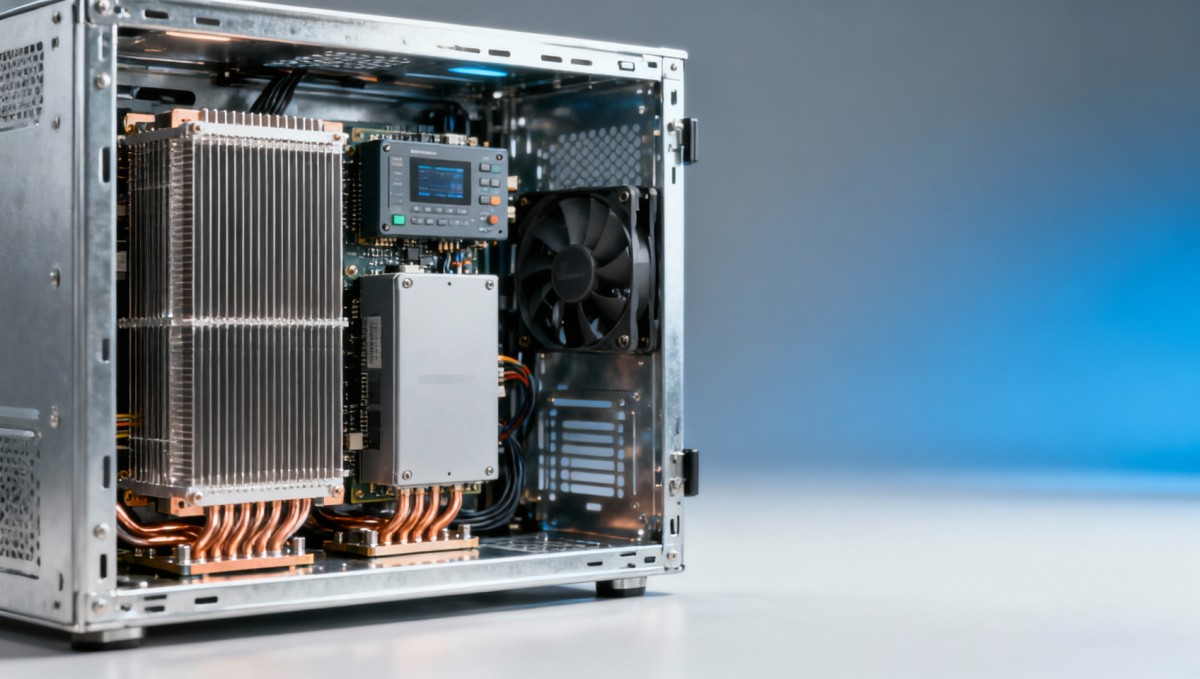
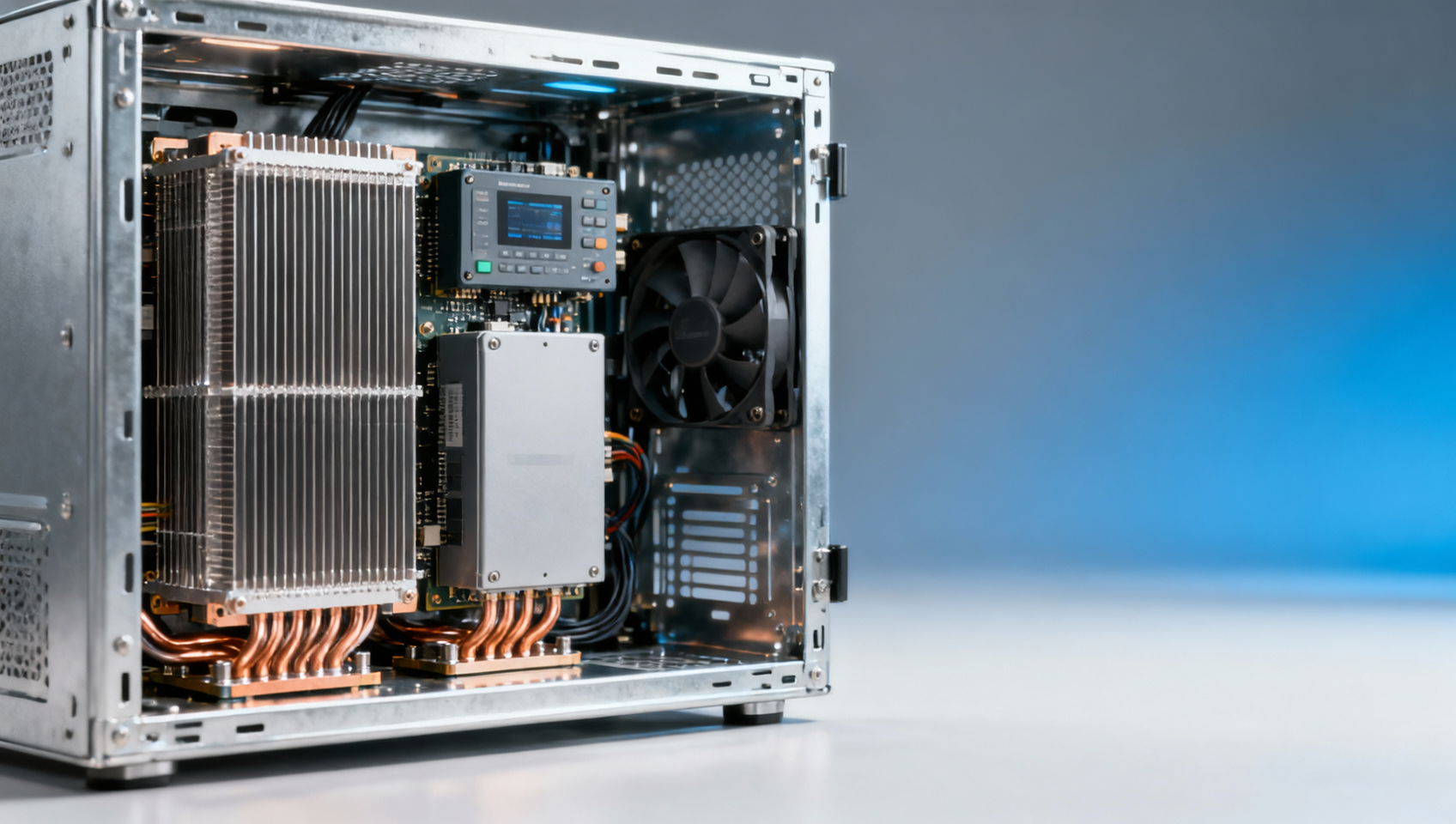
A heatsink removes heat only as effectively as the full thermal chain allows. That chain typically includes the semiconductor package, thermal interface material, mounting pressure, base flatness, conduction path, fin geometry, airflow pattern, and ambient temperature. If one of those elements is weak, adding more aluminum or copper may increase mass without delivering a meaningful drop in operating temperature.
In many industrial assemblies, the limiting factor is not heatsink size but air movement. A passive heatsink designed for 1.5 m/s airflow behaves very differently at 0.3 m/s inside a sealed enclosure. In compact electronics cabinets, dead zones near cables, power supplies, and side walls can reduce effective convection by 30% to 50%, making extra fin area far less useful than expected.
Another frequent issue is poor source-to-sink contact. A larger custom heatsink cannot compensate for a thermal interface gap of 0.2 mm, warped mounting surfaces, or inconsistent torque across screws. In field deployments, even a 2°C to 5°C gain from larger mass can disappear if the interface layer is overapplied or if vibration loosens attachment points over time.
Common design assumptions that lead to oversizing
Oversizing usually comes from one of four assumptions: more surface area always means better cooling, heavier parts are more robust, spare thermal capacity is always safe, or a custom heatsink is easier to scale up than to redesign. In reality, those assumptions ignore airflow direction, duty cycle, and packaging limits. A heatsink that works at 40% load in a lab may fail during peak operation at 85% load in a dusty factory or high-humidity outdoor cabinet.
- Assuming peak wattage equals continuous wattage, even when the load cycle lasts only 10 to 30 seconds.
- Ignoring enclosure recirculation, where hot exhaust air re-enters the fins and raises inlet temperature.
- Selecting the tallest possible fin stack, even though adjacent components block the intended airflow path.
- Using safety margin as a substitute for thermal modeling, which often adds cost without improving reliability.
What operational teams should verify first
Before requesting a larger custom heatsink, teams should verify three basics: actual heat dissipation in watts, allowable temperature rise in °C, and available airflow in m/s or CFM. They should also check whether the thermal issue appears during startup, continuous operation, seasonal ambient variation, or only under stacked system loads. That distinction often changes the recommended solution completely.
The Right Thermal Decision Framework: Heat Path, Materials, and Space Constraints
A better approach to custom heatsinks begins with heat path mapping. Instead of asking for “a bigger sink,” technical teams should define where heat is generated, how many watts each source contributes, what thermal resistance target is acceptable, and which mechanical limits are non-negotiable. In many projects, a 10 mm change in fin spacing can outperform a 25 mm increase in total sink height because airflow becomes less restricted.
Material choice also matters, but not always in the way buyers assume. Aluminum is often preferred for its weight, machinability, and cost efficiency, while copper offers better conductivity but adds mass and budget pressure. In assemblies that must meet shipping, mounting, or vibration constraints, copper may improve transfer near the base yet create handling and fastening issues that offset the gain.
Space constraints are especially important in integrated B2B products such as inverters, medical electronics, motor drives, telecom edge devices, and battery control modules. A custom heatsink competes for volume with connectors, wiring bends, access panels, sensors, and safety clearances. If a larger part forces a tighter cable radius, reduces service access, or blocks ventilation slots, the full system may run hotter despite the larger cooling component.
Key evaluation variables before finalizing geometry
The table below highlights the variables that usually affect thermal performance more than simple size growth. These are practical inputs for engineering, sourcing, quality, and project management teams reviewing a custom heatsink specification.
For procurement and commercial review, this means the most effective custom heatsink project often starts with better data, not a larger bill of materials. When airflow, interface quality, and mounting conditions are defined early, suppliers can recommend geometry and process options with fewer design iterations and less scrap risk.
A practical specification checklist
- Define continuous and peak heat load separately, for example 60 W continuous and 90 W peak for 20 seconds.
- Set the maximum allowed case or junction temperature and the expected ambient range.
- Confirm airflow condition: passive, forced air, ducted flow, or fan-assisted enclosure.
- Document envelope limits, mounting pattern, weight tolerance, and service access requirements.
- Specify finish, corrosion exposure, and expected maintenance cycle, such as 6-month or 12-month cleaning intervals.
Custom Heatsink Options Compared: When Geometry Beats Sheer Volume
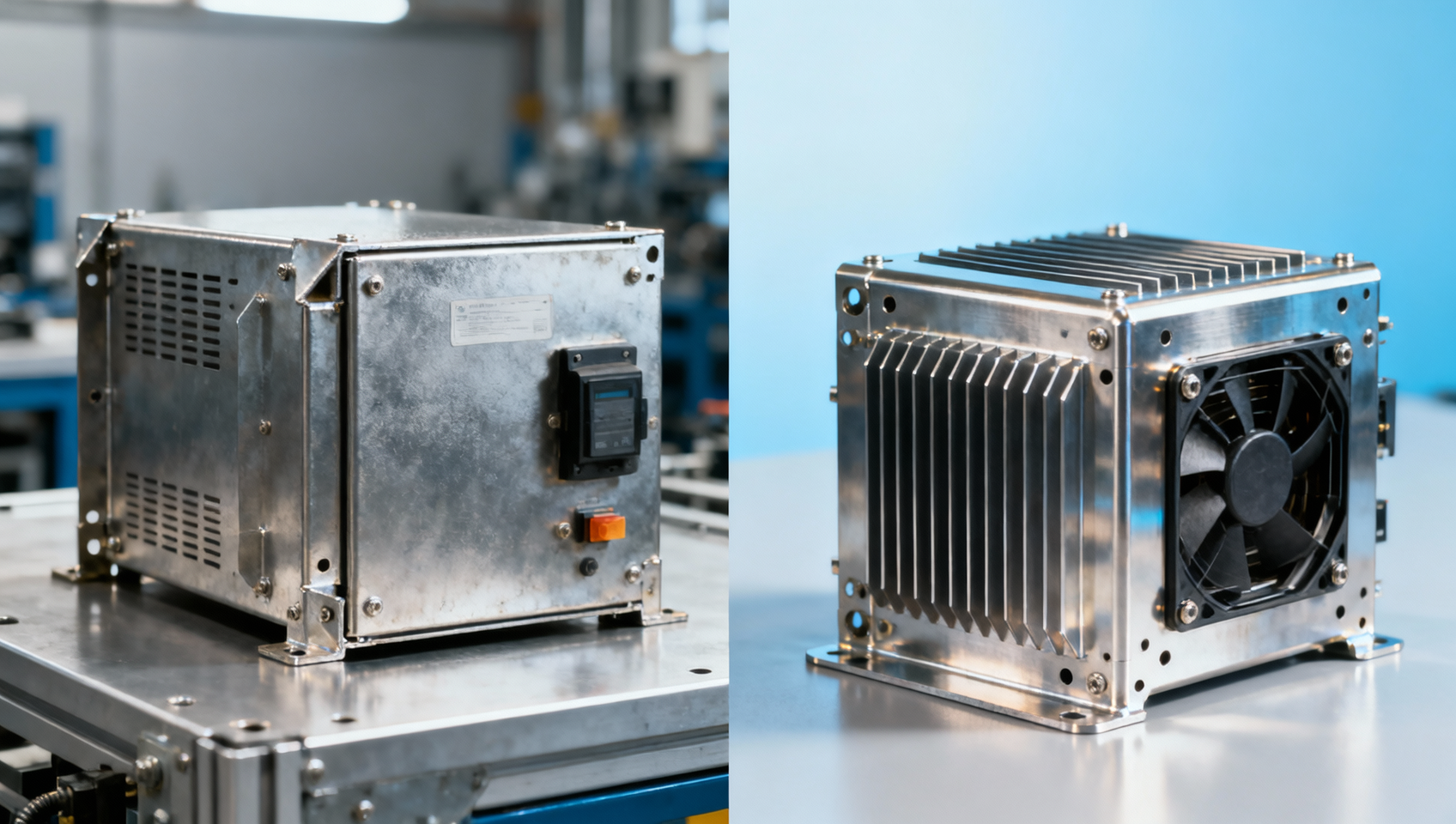
Different custom heatsink structures solve different problems. Extruded profiles are often efficient for medium-volume production and standard airflow conditions. Machined sinks allow more precise local features and base modifications. Bonded fins can increase area in constrained spaces. Skived fins can be effective where dense fin arrays are needed, though they also require careful airflow planning to avoid backpressure and dust loading.
In compact industrial electronics, geometry often matters more than total mass. A shorter fin with better spacing may outperform a taller dense-fin design when airflow is weak or multidirectional. In passive systems, vertical orientation and chimney effect can matter more than another 15% of material volume. For mobile or vibration-prone equipment, lower mass may also improve long-term mechanical stability.
The comparison below helps technical and commercial teams identify which custom heatsink route aligns with target performance, production volume, and enclosure reality.
The key conclusion is simple: selecting the right custom heatsink architecture can reduce temperature rise more effectively than increasing size alone. For example, a well-spaced extruded design under 1.2 m/s airflow may outperform a larger dense-fin part that chokes the same air path. This is why geometry, assembly method, and environment should be reviewed together.
Typical application patterns by sector
Across TNP’s core sectors, buying logic varies. Smart electronics projects often prioritize compactness and repeatability. Green energy controls may need outdoor durability and wider ambient tolerance. Healthcare technology applications usually require easier cleaning access, low contamination risk, and tighter documentation. Advanced manufacturing systems often prioritize vibration resistance and serviceability over pure material mass.
- Motor drives and power electronics: prioritize airflow path, base contact, and maintenance access.
- Battery management and inverter controls: review peak loads, cycling behavior, and enclosure heat recirculation.
- Medical electronics: balance low noise cooling, cleanability, and documented thermal validation.
- Edge devices and industrial networking: optimize within strict enclosure space and connector density.
Procurement, Validation, and Delivery: What Buyers Should Ask Before Approval
For business evaluators and finance approvers, the risk of a custom heatsink project is rarely the unit price alone. The greater cost often comes from redesign loops, tooling revisions, delayed pilot builds, assembly nonconformance, or field overheating. That is why supplier review should include engineering responsiveness, process suitability, sample validation capability, and revision control discipline.
A practical sourcing process usually runs in 4 stages: requirement capture, thermal and mechanical review, sample verification, and volume release. Depending on complexity, prototypes may take 7 to 15 working days, while production with tooling can take 3 to 6 weeks. If anodizing, secondary machining, inserts, or flatness inspection are required, lead times can extend further unless documented at the quotation stage.
Quality and safety teams should verify more than dimensions. They should review burr control, surface finish consistency, mounting hole tolerance, packaging protection, and traceability where needed. In heatsinks for regulated or mission-critical equipment, even small assembly deviations can create localized hot spots that are difficult to detect during a short bench test but critical during full-load service life.
Buyer checklist for supplier evaluation
The following table can support cross-functional decision-making when comparing custom heatsink suppliers or internal design options.
For distributors, agents, and project leaders, a disciplined approval path helps avoid hidden downstream costs. If a supplier can explain why a smaller or differently shaped custom heatsink is better, that is often a positive sign. It suggests the design is being matched to physics and manufacturability rather than to a simplistic “bigger is safer” assumption.
Minimum documents worth requesting
- 2D drawing with critical tolerances and mounting detail.
- Material and finish specification, including corrosion or insulation considerations.
- Prototype acceptance criteria covering fit, flatness, and visual quality.
- Packaging method for fin protection during transport and storage.
- Revision history for any geometry changes after test feedback.
Practical FAQ and Decision Guidance for Cross-Functional Teams
Cross-functional teams often view custom heatsinks from different angles. Engineers focus on thermal resistance and fit. Operators care about assembly ease. Procurement looks at cost and lead time. Quality teams evaluate consistency and field risk. The best decisions come when these viewpoints are aligned early, ideally before samples are cut or tooling is approved.
Below are common questions that appear during specification, sourcing, and approval. They reflect real search intent from information researchers, technical assessors, project managers, and decision-makers comparing custom heatsink strategies.
How do you know a larger custom heatsink will not help?
If the current issue comes from low airflow, poor thermal interface contact, hot air recirculation, or mounting distortion, a larger custom heatsink may only provide marginal benefit. As a practical rule, if enclosure airflow is below about 0.5 m/s and fins are already densely packed, geometry optimization and air-path redesign often outperform size growth.
What should be prioritized first: material, fin count, or base design?
Base design and interface quality usually come first because heat must enter the custom heatsink efficiently before fin performance matters. After that, airflow-compatible fin spacing is often more important than maximum fin count. Material selection should then be judged against weight, corrosion exposure, machinability, and budget rather than conductivity alone.
What delivery timeline is realistic for a custom heatsink project?
For low-volume machined prototypes, 7 to 15 working days is common if drawings are complete. For extrusion-based programs with tooling, 3 to 6 weeks is a practical planning range, depending on finish requirements and secondary operations. If testing reveals changes to hole positions, base thickness, or fin profile, expect another review cycle before full release.
Which mistakes create the highest hidden cost?
The most expensive mistakes are usually not obvious in the quotation. Common examples include overdesigned weight that increases mounting complexity, fin density that traps dust in industrial environments, unclear critical tolerances that create assembly rejects, and thermal validation based on unrealistic ambient conditions. Any of these can increase total project cost far more than the initial part price difference.
A successful custom heatsink program is therefore a system decision, not a single-part purchase. Teams that define thermal duty, airflow reality, service constraints, and approval criteria upfront are more likely to hit performance targets without unnecessary size, cost, or delay.
When a thermal issue appears, the safest assumption is not that the custom heatsink must be larger. The better path is to identify the actual bottleneck, compare geometry and process options, and validate the design against real enclosure and operating conditions. That approach reduces redesign risk, supports faster approvals, and improves lifecycle value for both technical and commercial stakeholders.
For organizations evaluating thermal components across advanced manufacturing, green energy, smart electronics, healthcare technology, or related industrial systems, a structured custom heatsink review can reveal savings in material, assembly, and downtime while protecting performance margins. To discuss application details, request a custom solution, or review sourcing options with a sector-focused B2B perspective, contact TradeNexus Pro and explore more thermal design solutions.
Get weekly intelligence in your inbox.
No noise. No sponsored content. Pure intelligence.
 Apr 17, 2026Temperature data loggers drift unpredictably inside lithium-ion battery storage enclosuresTemperature data loggers drift unpredictably inside lithium-ion battery storage enclosures
 Apr 17, 2026Are solar microinverters really worth the extra cost?Are solar microinverters really worth the extra cost?
 Apr 17, 2026Bifacial solar panels: How much more energy can they generate?Bifacial solar panels: How much more energy can they generate?
 Apr 17, 2026Gear manufacturing: How to optimize production for high precision?Gear manufacturing: How to optimize production for high precision?
 Apr 17, 2026Why power transmission components fail earlier than expectedWhy power transmission components fail earlier than expected
 Apr 17, 2026Linear motion systems: belt drive or ball screw for speed?Linear motion systems: belt drive or ball screw for speed?
 Apr 17, 2026Industrial bearing suppliers: what signals reliable quality?Industrial bearing suppliers: what signals reliable quality?
 Apr 17, 2026When pneumatic valves wholesale gets expensive laterWhen pneumatic valves wholesale gets expensive later
 Apr 17, 2026Hydraulic cylinder fabrication mistakes that cause oil leaksHydraulic cylinder fabrication mistakes that cause oil leaks
 Apr 17, 2026Heavy equipment manufacturing delays often start hereHeavy equipment manufacturing delays often start here
 Apr 17, 2026Custom heatsinks: when a larger size solves nothingCustom heatsinks: when a larger size solves nothing
 Apr 17, 2026Electronic enclosure fabrication: steel or aluminum?Electronic enclosure fabrication: steel or aluminum?
 Apr 17, 2026Automotive parts machining tolerances that drive up scrapAutomotive parts machining tolerances that drive up scrap
 Apr 17, 2026Medical device manufacturing changes under tighter traceabilityMedical device manufacturing changes under tighter traceability
 Apr 17, 2026How to Choose Solid State Batteries in 2026How to Choose Solid State Batteries in 2026
 Apr 17, 2026Are Solid State Batteries Worth the Cost Yet?Are Solid State Batteries Worth the Cost Yet?
 Apr 17, 2026Commercial Energy Storage Sizing: What Matters Most?Commercial Energy Storage Sizing: What Matters Most?
 Apr 17, 2026Commercial Energy Storage ROI: How to Assess ItCommercial Energy Storage ROI: How to Assess It
 Apr 17, 2026Off Grid Solar Systems: What to Avoid FirstOff Grid Solar Systems: What to Avoid First
 Apr 17, 2026Who Should Use Off Grid Solar Systems?Who Should Use Off Grid Solar Systems?
 Apr 17, 2026Solar Microinverters vs String Inverters: Which Fits?Solar Microinverters vs String Inverters: Which Fits?
 Apr 17, 2026When Do Solar Microinverters Make More Sense?When Do Solar Microinverters Make More Sense?
 Apr 17, 2026How digital freight matching for international shipping cuts transit time by up to 22% in 2026How digital freight matching for international shipping cuts transit time by up to 22% in 2026
 Apr 17, 2026Why port automation tech for smart logistics reduces container handling errors by 37% at Tier-1 terminalsWhy port automation tech for smart logistics reduces container handling errors by 37% at Tier-1 terminals
 Apr 17, 2026What yard management systems for port operations actually deliver in real-world deploymentsWhat yard management systems for port operations actually deliver in real-world deployments
 Apr 17, 2026Can digital customs clearance for sea freight reduce D/O processing from 48 hours to under 90 minutesCan digital customs clearance for sea freight reduce D/O processing from 48 hours to under 90 minutes
 Apr 17, 2026How returnable transport packaging for automotive parts lowers TCO by 18–25% over 3 yearsHow returnable transport packaging for automotive parts lowers TCO by 18–25% over 3 years