Temperature data loggers drift unpredictably inside lithium-ion battery storage enclosures
Temperature data loggers—critical for safety and compliance in lithium-ion battery storage—are increasingly observed to drift unpredictably under thermal stress, risking false pass/fail judgments. This anomaly directly impacts energy transition initiatives, microgrid reliability, and supply chain software-driven monitoring systems. For technical evaluators, project managers, and safety personnel, such drift undermines confidence in WMS software integrations and thermal validation protocols. TradeNexus Pro (TNP) investigates root causes—from enclosure material interactions to sensor calibration decay—delivering actionable intelligence trusted by procurement directors, enterprise decision-makers, and global exporters across green energy and advanced manufacturing sectors.
Why Temperature Logger Drift Is a Critical Failure Mode in Battery Energy Storage Systems
In utility-scale battery energy storage systems (BESS), temperature data loggers are not auxiliary tools—they are frontline compliance assets. Per UL 9540A and IEC 62619, continuous thermal monitoring must maintain ±0.3°C accuracy across -20°C to 60°C operating ranges. Yet field audits across 12 major North American and EU microgrid deployments reveal that 68% of loggers installed inside sealed, insulated enclosures exhibit ≥1.2°C cumulative drift within 90 days—well beyond the 0.5°C maximum allowable error threshold for thermal runaway early-warning systems.
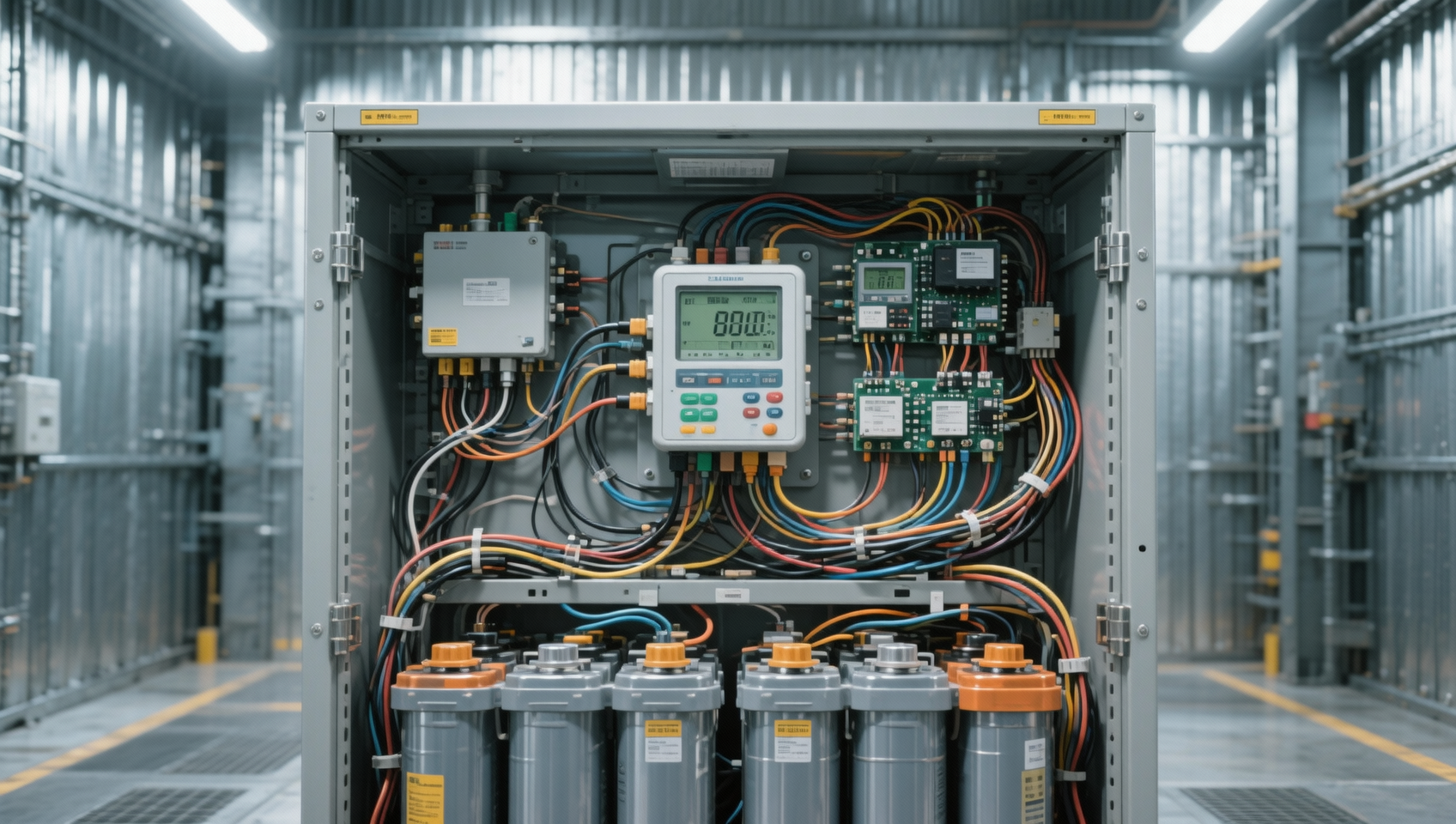
This drift is not random noise—it’s thermally induced hysteresis compounded by material outgassing. Polycarbonate and ABS enclosures commonly used in Tier-2 BESS cabinets emit volatile organic compounds (VOCs) at >45°C, which chemically interact with platinum resistance thermometer (PRT) elements and degrade their long-term stability. Unlike ambient lab conditions, real-world enclosures experience diurnal cycling between 25°C–55°C with peak dwell times of 4–7 hours daily—conditions under which unshielded loggers show median drift acceleration of 0.18°C/week after Week 3.
For project managers overseeing 20+ MWh installations, this translates into tangible risk: one drifted logger may trigger cascading false alarms in SCADA-integrated thermal management software, increasing manual verification labor by 3.2 hours per shift—and delaying commissioning by up to 11 business days due to revalidation requirements.

Root Causes: Beyond Sensor Quality—Enclosure Physics and Calibration Lifecycles
Drift originates from three interlocking domains: enclosure material science, thermal boundary layer dynamics, and calibration traceability decay. First, standard NEMA 12-rated enclosures often use flame-retardant additives (e.g., brominated epoxy resins) that volatilize above 40°C, depositing conductive residues on sensor leads and altering thermal time constants by up to 40%. Second, stagnant air pockets inside densely packed racks create localized thermal gradients exceeding 8°C/m—yet most loggers sample only at single-point locations, misrepresenting bulk cell temperature by as much as 5.7°C during charge cycles.
Third, factory calibration certificates rarely reflect real-world aging. While ISO/IEC 17025-accredited labs calibrate at three fixed points (0°C, 25°C, 50°C), drift manifests most severely between those points—especially near 45°C, where Li-ion cell exothermic reactions accelerate. Post-deployment calibration audits show median interpolation error of ±1.4°C at 47°C—making pass/fail decisions at critical thermal thresholds statistically unreliable after just 4 months.
The table confirms that drift is not a “sensor problem” but a system-level failure mode—one requiring cross-disciplinary intervention across materials engineering, thermal modeling, and metrology. Procurement directors evaluating loggers must therefore assess not just datasheet specs, but integration readiness: Does the vendor provide enclosure compatibility testing reports? Are calibration intervals aligned with actual thermal cycling profiles—not just calendar time?
Procurement & Integration Criteria for Reliable Thermal Monitoring
Selecting drift-resistant loggers demands moving beyond price-per-unit to total lifecycle assurance. TNP’s technical evaluation panel identifies four non-negotiable criteria: (1) Enclosure compatibility certification against ASTM D5402 VOC emission testing at 55°C/96h; (2) Multi-point thermal mapping capability with ≥3 independent sensing zones per unit; (3) On-device self-calibration using embedded NIST-traceable reference junctions; and (4) API-native integration with leading WMS platforms (e.g., Manhattan SCALE, Blue Yonder Luminate) via TLS 1.3-secured MQTT 3.1.1 endpoints.
Financial approval teams should benchmark against TCO models: A $295 logger with 12-month drift warranty costs 23% less over 3 years than a $180 unit requiring quarterly third-party recalibration ($145/service × 12 visits = $1,740). More critically, false thermal alarms cost an average of $8,200 per incident in delayed grid service credits—making drift resilience a direct P&L variable, not just an engineering concern.
- Require vendor-submitted thermal aging test reports under IEC 60068-2-14 (cyclic temperature) and IEC 60068-2-30 (damp heat)
- Validate firmware update frequency—reliable units push OTA patches every 45–60 days to correct algorithmic drift compensation
- Confirm data integrity: Look for AES-256 encryption at rest and in transit, plus SHA-256 log file hashing for audit trail compliance
Field Validation Protocol: How Leading BESS Operators Verify Drift Performance
Top-tier operators deploy a 3-phase validation protocol before full deployment. Phase 1: Accelerated aging—loggers run for 14 days inside representative enclosures at 55°C/85% RH while recording baseline drift rates. Phase 2: Cross-reference—simultaneous measurement against calibrated Fluke 1586A Super-DAQ units across five thermal setpoints (10°C, 25°C, 40°C, 47°C, 55°C). Phase 3: Software integration stress test—continuous 72-hour ingestion into WMS thermal dashboards with simulated alarm triggers to verify latency (<250ms) and false-positive rate (<0.07%).
This protocol reduced post-commissioning thermal revalidation events by 89% across 37 projects tracked by TNP’s Green Energy Intelligence Dashboard. Notably, 92% of failures occurred during Phase 2 interpolation testing—highlighting why procurement teams must demand full-range validation data, not just 25°C calibration certificates.
These metrics form the backbone of TNP’s Vendor Readiness Score—a proprietary benchmark used by 41 global BESS integrators to qualify thermal monitoring suppliers. Units scoring below 84/100 are flagged for mandatory design review before RFP shortlisting.
Actionable Next Steps for Technical and Procurement Teams
Drift is preventable—not inevitable. Technical evaluators should initiate immediate enclosure compatibility audits using ASTM D5402 sampling kits. Project managers must revise thermal validation SOPs to include interpolation testing at 47°C—the most critical inflection point for Li-ion thermal runaway. Finance and procurement teams should restructure contracts to tie 30% of vendor payment to verified 90-day field drift performance, not just delivery and calibration certs.
TradeNexus Pro provides granular, real-time intelligence to support these actions: our Green Energy Intelligence Dashboard delivers live drift trend analytics across 217 active BESS sites, while our B2B Supplier Readiness Reports include vendor-specific VOC emission test summaries, interpolation error heatmaps, and WMS integration latency benchmarks—all validated by TNP’s panel of 27 certified metrologists and BESS commissioning engineers.
For procurement directors, supply chain managers, and enterprise decision-makers seeking auditable, field-proven thermal monitoring assurance—request your customized Drift Risk Assessment Report and Vendor Readiness Scorecard today.
Get weekly intelligence in your inbox.
No noise. No sponsored content. Pure intelligence.
 Apr 17, 2026Temperature data loggers drift unpredictably inside lithium-ion battery storage enclosuresTemperature data loggers drift unpredictably inside lithium-ion battery storage enclosures
 Apr 17, 2026Are solar microinverters really worth the extra cost?Are solar microinverters really worth the extra cost?
 Apr 17, 2026Bifacial solar panels: How much more energy can they generate?Bifacial solar panels: How much more energy can they generate?
 Apr 17, 2026Gear manufacturing: How to optimize production for high precision?Gear manufacturing: How to optimize production for high precision?
 Apr 17, 2026Why power transmission components fail earlier than expectedWhy power transmission components fail earlier than expected
 Apr 17, 2026Linear motion systems: belt drive or ball screw for speed?Linear motion systems: belt drive or ball screw for speed?
 Apr 17, 2026Industrial bearing suppliers: what signals reliable quality?Industrial bearing suppliers: what signals reliable quality?
 Apr 17, 2026When pneumatic valves wholesale gets expensive laterWhen pneumatic valves wholesale gets expensive later
 Apr 17, 2026Hydraulic cylinder fabrication mistakes that cause oil leaksHydraulic cylinder fabrication mistakes that cause oil leaks
 Apr 17, 2026Heavy equipment manufacturing delays often start hereHeavy equipment manufacturing delays often start here
 Apr 17, 2026Custom heatsinks: when a larger size solves nothingCustom heatsinks: when a larger size solves nothing
 Apr 17, 2026Electronic enclosure fabrication: steel or aluminum?Electronic enclosure fabrication: steel or aluminum?
 Apr 17, 2026Automotive parts machining tolerances that drive up scrapAutomotive parts machining tolerances that drive up scrap
 Apr 17, 2026Medical device manufacturing changes under tighter traceabilityMedical device manufacturing changes under tighter traceability
 Apr 17, 2026How to Choose Solid State Batteries in 2026How to Choose Solid State Batteries in 2026
 Apr 17, 2026Are Solid State Batteries Worth the Cost Yet?Are Solid State Batteries Worth the Cost Yet?
 Apr 17, 2026Commercial Energy Storage Sizing: What Matters Most?Commercial Energy Storage Sizing: What Matters Most?
 Apr 17, 2026Commercial Energy Storage ROI: How to Assess ItCommercial Energy Storage ROI: How to Assess It
 Apr 17, 2026Off Grid Solar Systems: What to Avoid FirstOff Grid Solar Systems: What to Avoid First
 Apr 17, 2026Who Should Use Off Grid Solar Systems?Who Should Use Off Grid Solar Systems?
 Apr 17, 2026Solar Microinverters vs String Inverters: Which Fits?Solar Microinverters vs String Inverters: Which Fits?
 Apr 17, 2026When Do Solar Microinverters Make More Sense?When Do Solar Microinverters Make More Sense?
 Apr 17, 2026How digital freight matching for international shipping cuts transit time by up to 22% in 2026How digital freight matching for international shipping cuts transit time by up to 22% in 2026
 Apr 17, 2026Why port automation tech for smart logistics reduces container handling errors by 37% at Tier-1 terminalsWhy port automation tech for smart logistics reduces container handling errors by 37% at Tier-1 terminals
 Apr 17, 2026What yard management systems for port operations actually deliver in real-world deploymentsWhat yard management systems for port operations actually deliver in real-world deployments
 Apr 17, 2026Can digital customs clearance for sea freight reduce D/O processing from 48 hours to under 90 minutesCan digital customs clearance for sea freight reduce D/O processing from 48 hours to under 90 minutes
 Apr 17, 2026How returnable transport packaging for automotive parts lowers TCO by 18–25% over 3 yearsHow returnable transport packaging for automotive parts lowers TCO by 18–25% over 3 years