When Do Solar Microinverters Make More Sense?
Choosing between string inverters and solar microinverters depends on more than panel count—it affects uptime, monitoring, safety, and long-term ROI. For buyers evaluating off grid solar systems, commercial energy storage, bifacial solar panels, or thin film solar cells, understanding where microinverters deliver measurable value can improve project performance and investment confidence.
For operators, technical evaluators, project leaders, and financial approvers, the decision is rarely about a single component. It is about how the inverter architecture performs under shading, mixed orientations, phased expansion, maintenance constraints, and safety compliance across 10–25 years of asset life.
In B2B solar procurement, microinverters are not automatically the better choice. They make more sense in specific operating conditions where module-level optimization, lower design compromise, and detailed monitoring can outweigh higher upfront hardware cost. The key is matching system architecture to energy goals, site complexity, and service strategy.
Where Solar Microinverters Deliver the Strongest Practical Advantage
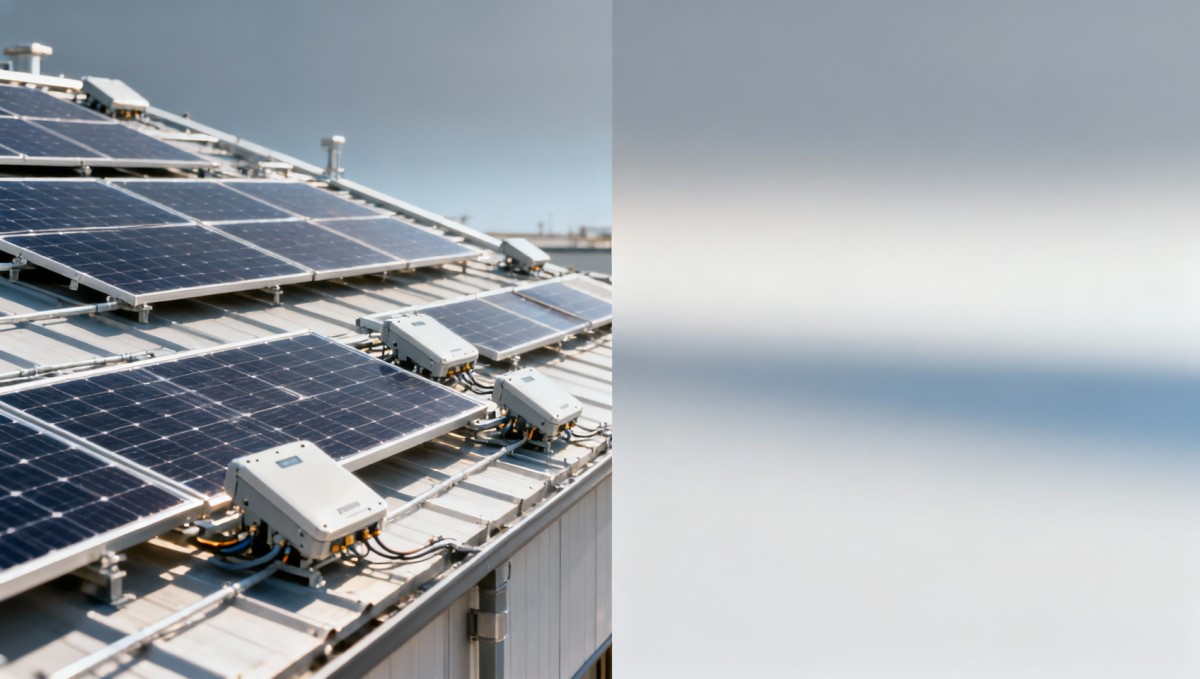
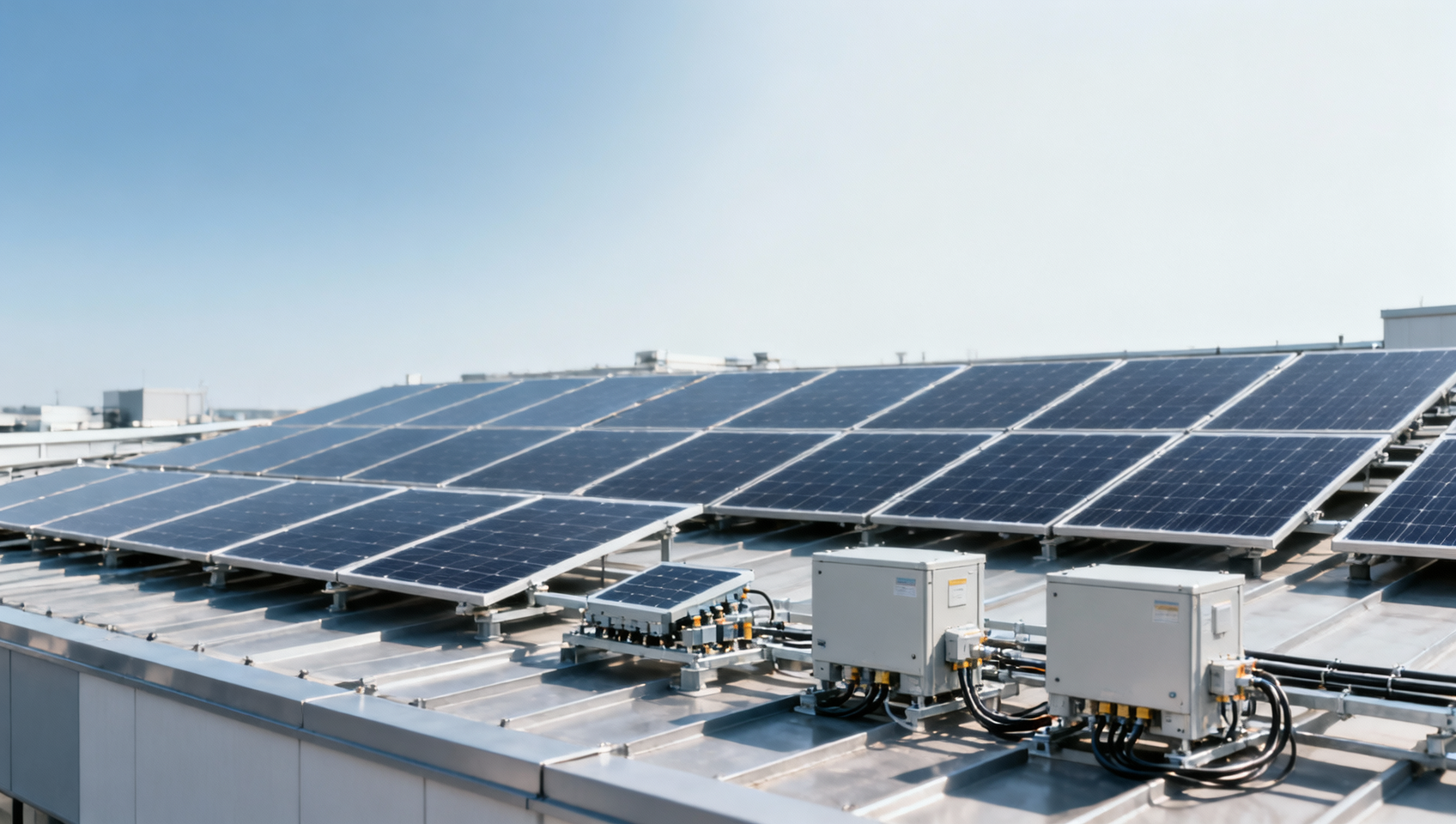
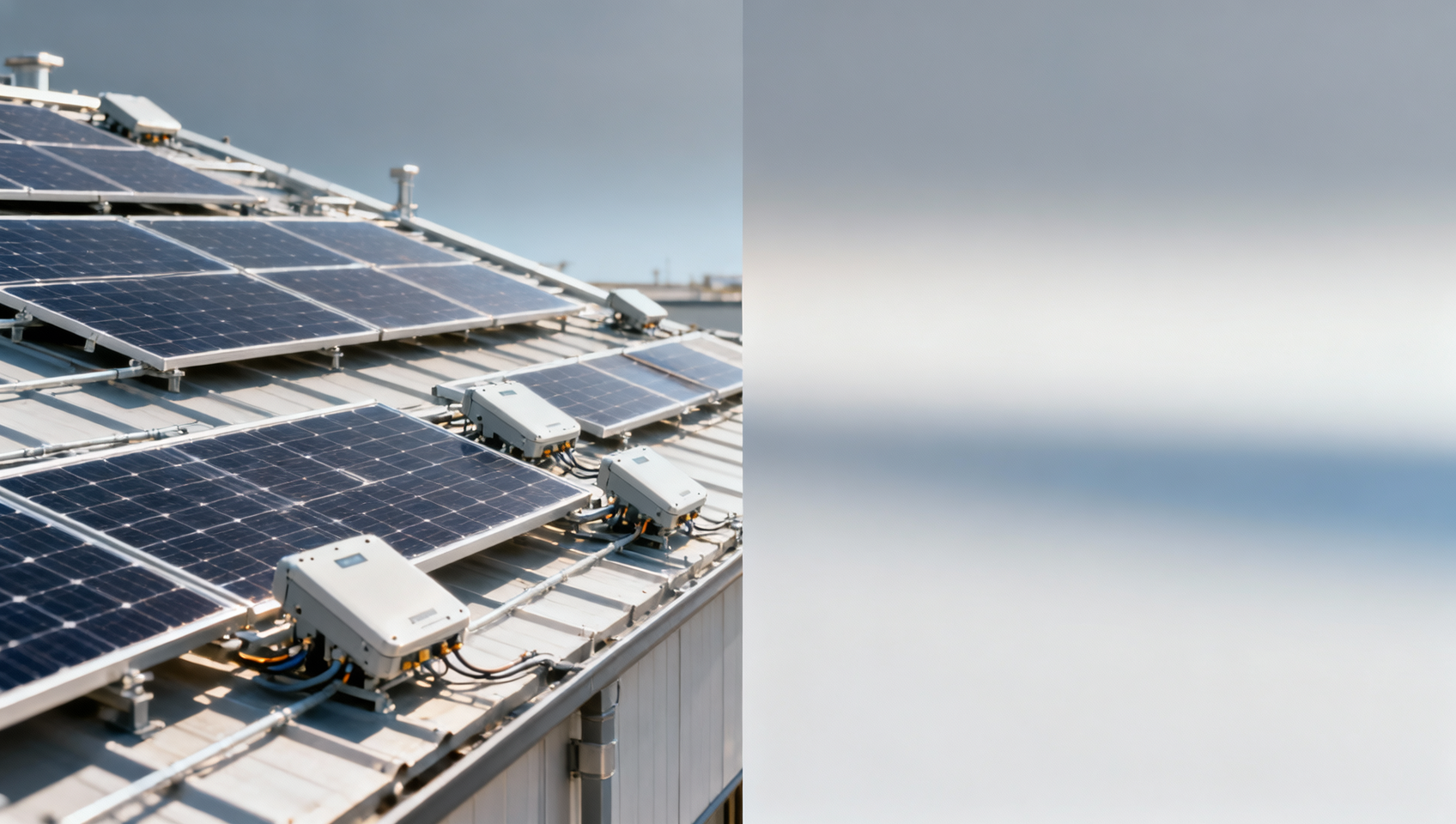
A solar microinverter converts DC to AC at each individual panel, rather than processing multiple modules through one central or string inverter. In practical terms, this means every module can operate more independently. If one panel is shaded, dirty, degraded, or facing a different azimuth, the performance loss is usually contained more effectively than in a conventional string layout.
This architecture tends to make the most sense on roofs with 2–4 orientations, partial shading during 1–3 hours of the day, or irregular layouts caused by HVAC units, skylights, vents, parapets, or code setbacks. In these cases, forcing all panels into a few strings can create mismatch losses that reduce annual production more than expected during the design stage.
Microinverters also become attractive when uptime visibility matters. In a 50-panel array, module-level monitoring helps teams identify underperforming panels in days rather than waiting for a quarterly inspection. For distributed commercial portfolios, that difference can reduce fault investigation time from several site visits to one targeted dispatch.
Another strong use case is phased deployment. Some businesses start with 20kW–50kW and expand later as demand grows or financing clears. With microinverters, adding panels is often more straightforward because designers do not need to re-balance long DC strings in the same way required by traditional architectures.
Typical site conditions that favor microinverters
- Roofs with multiple tilt angles or east-west-south mixed exposure.
- Sites where shading varies by season, especially from 9:00–11:00 or 15:00–17:00.
- Installations under 100kW where detailed panel-level monitoring is valued.
- Projects expected to expand in 2 or more stages over 12–36 months.
- Assets where safety teams want lower high-voltage DC exposure on the roof.
The table below highlights where microinverters are usually favored over string inverters in real project planning, not just in theory.
The main conclusion is straightforward: microinverters create the most value when the site itself is variable, constrained, or difficult to optimize with uniform strings. On a clean, open, homogeneous array, that advantage often narrows.
Cost, Yield, and ROI: When Higher Unit Cost Still Makes Financial Sense
The most common objection to solar microinverters is higher initial cost. At system level, the premium can vary depending on scale, region, labor rate, and monitoring package. On small and mid-size commercial rooftops, buyers often see a noticeable CAPEX increase versus basic string designs. However, procurement decisions should not stop at purchase price alone.
Financially, the right comparison is installed cost versus lifetime energy value, service burden, downtime exposure, and expansion flexibility. If microinverters improve annual generation by even 3%–8% on a shaded or mixed-orientation roof, that gain compounds over 15–25 years. In electricity markets with high daytime tariffs, the revenue impact can be meaningful.
For finance approvers, the best question is not “Are microinverters cheaper?” but “Do they protect yield where the roof would otherwise underperform?” In projects with frequent roof-level shading events, a lower-cost inverter architecture may produce a weaker internal business case once lost generation and service visits are included.
There is also a labor economics angle. When each panel can be monitored remotely, technicians can isolate issues faster. On geographically dispersed assets, reducing 2–3 unnecessary site visits per year can offset part of the technology premium, especially where dispatch costs, safety permits, or roof access coordination are expensive.
ROI factors that deserve closer review
- Expected mismatch losses from shading, soiling, orientation, and module aging.
- Local power tariff profile, especially peak daytime value and demand charge exposure.
- Service logistics, including travel time, access restrictions, and technician availability.
- Planned expansion from year 1 to year 3 or year 5.
- Downtime sensitivity for critical loads or facilities with backup integration.
The comparison below shows how the decision can shift depending on site and business conditions.
If a project team expects a flat, unshaded yield profile and one-time build-out, the extra spend may be hard to justify. If the roof is operationally messy or monitoring-driven asset management is a priority, microinverters can become the more rational financial choice despite the higher unit price.
Compatibility with Off Grid Systems, Storage, Bifacial Modules, and Thin Film Applications
Buyers often ask whether solar microinverters are the right fit for off grid solar systems or for sites planning commercial energy storage. The answer depends on system architecture. Many microinverter deployments are strongest in grid-tied environments, but hybrid configurations can still work when AC-coupling strategy, battery controls, and backup logic are designed carefully from the start.
For commercial energy storage, microinverters can be useful when the project favors AC-coupled expansion. This approach can simplify retrofits because existing PV arrays do not always need a full DC-side redesign. That said, project managers should verify interoperability between PV conversion, battery inverter, energy management controls, and site protection settings before procurement is approved.
With bifacial solar panels, the decision is more site-specific. Bifacial modules show their best value where rear-side irradiance is meaningful, such as elevated canopies, reflective roofs, or certain ground-mount conditions. If those bifacial modules are also installed across multiple orientations or exposed to uneven irradiance, microinverters may help preserve module-level performance visibility.
Thin film solar cells create another evaluation path. Some thin film applications are selected for lightweight roofs, low-light response, or specific temperature behavior. In these projects, electrical characteristics and mounting design should be checked carefully. The inverter choice must align with module voltage window, attachment method, maintenance access, and long-term replacement planning.
A practical compatibility checklist
Before finalizing a microinverter design, confirm these 4 areas
- Whether the project is grid-tied, off grid, or hybrid, and how backup loads will be prioritized.
- Battery integration method, especially AC-coupled versus DC-coupled expansion strategy.
- Module electrical profile, including power range, operating voltage, and expected temperature conditions.
- Monitoring and controls compatibility across PV, storage, gateway, and site management systems.
For technical assessment teams, this is where many selection mistakes happen. A microinverter may look ideal from the rooftop perspective yet be awkward in a storage-heavy architecture if integration planning is weak. The goal is not choosing the most advanced device on paper, but the most coherent system for the load profile and expansion roadmap.
Safety, Quality Control, and Maintenance Implications for Enterprise Buyers
For quality managers and safety officers, microinverters are often evaluated beyond energy yield. One recurring advantage is the reduction of long high-voltage DC runs on rooftops. In many commercial settings, that can improve service confidence, reduce perceived electrical risk during maintenance, and support safer shutdown planning during emergency access situations.
Maintenance strategy also changes. With string inverters, a single equipment fault can affect a large portion of the array, but replacement is concentrated at one accessible point. With microinverters, faults are distributed at the module level, which can reduce system-wide impact but may require rooftop replacement work on individual units over time. The service model must fit the facility’s access realities.
This is why enterprise procurement should ask two separate questions: how often might failures occur, and how disruptive is each failure mode? On a facility where roof access requires permits, lift equipment, or production downtime, even small maintenance events carry operational cost. Conversely, on a site where uptime is critical, limiting the impact of a single failure may be more valuable than centralized replacement convenience.
Quality control teams should also review enclosure ratings, connector reliability, thermal performance, and environmental suitability. In regions with ambient temperatures above 40°C, salt exposure, snow load risk, or frequent thermal cycling, installation quality and component matching become just as important as the inverter topology itself.
Operational checks before approval
The following checklist helps project owners balance safety, maintainability, and quality requirements during vendor comparison.
The procurement insight here is simple: safety and O&M are not side topics. They are core value drivers. A solar microinverter solution makes more sense when lower system-wide fault impact, stronger visibility, and safer rooftop electrical design support the facility’s operational priorities.
How to Decide: A B2B Selection Framework for Technical and Financial Stakeholders
A useful selection framework starts with five filters: site complexity, energy goals, maintenance model, integration requirements, and lifecycle economics. If at least 3 of those 5 factors point toward module-level flexibility, microinverters deserve serious consideration. If only 1 or 2 do, a string-based design may be the more disciplined choice.
Project managers should map roof geometry first. Count orientation groups, identify shaded zones by hour, and estimate whether 5%–10% of modules are likely to deviate materially from the average operating profile. This step often reveals whether a “simple” string design is actually hiding long-term yield compromise.
Financial approvers should then review cost in 3 layers: installation CAPEX, annual energy benefit, and service burden over 10–20 years. Technical evaluators should validate monitoring depth, interoperability with storage and controls, and maintenance accessibility. Safety and quality teams should assess shutdown behavior, component durability, and installation quality controls.
Distributors and channel partners can also use this framework to qualify customer demand faster. Instead of promoting one architecture universally, they can segment leads by roof complexity, portfolio size, and future expansion likelihood. That improves proposal accuracy and reduces late-stage redesign risk.
A practical 5-step decision sequence
- Audit the site for shading windows, orientation diversity, and roof obstructions.
- Define whether the project is grid-tied, off grid, or hybrid with storage.
- Estimate the value of module-level monitoring for operations and service response.
- Compare 10-year and 20-year ownership scenarios, not just purchase price.
- Confirm service access, safety needs, and expansion plans before final approval.
Common buying mistakes to avoid
- Choosing microinverters only because they seem technologically advanced, without a site-specific yield case.
- Rejecting microinverters on price alone, without quantifying mismatch losses or dispatch costs.
- Ignoring storage interoperability until after PV architecture is selected.
- Overlooking rooftop maintenance constraints that can alter real O&M economics.
When evaluated properly, the answer is not ideological. Solar microinverters make more sense when they solve measurable site, monitoring, safety, or expansion problems better than a string inverter can. That is the threshold enterprise buyers should use.
FAQ for Procurement Teams and Project Stakeholders
Are microinverters better for all commercial solar projects?
No. They are often strongest on complex rooftops, smaller distributed assets, and projects where panel-level visibility matters. On large, uniform, unshaded sites, string inverters may offer stronger cost efficiency. The right choice depends on system size, roof design, shading profile, and service model.
Do microinverters work well with commercial energy storage?
They can, especially in AC-coupled architectures or retrofit scenarios. However, teams should check compatibility across PV conversion, battery inverter logic, site controls, and backup priorities. A storage-ready design review should happen before purchase orders are finalized.
How much extra yield can microinverters provide?
There is no universal number. On uniform sites, the gain may be limited. On roofs with mixed orientation, recurring shading, or module mismatch, the improvement can be noticeable over a full year. Buyers should request scenario modeling using the actual site layout rather than relying on generic percentages.
What should financial approvers ask before approving a microinverter project?
They should ask for a side-by-side model covering CAPEX, expected annual generation, monitoring benefits, O&M assumptions, and 10–20 year ownership cost. If the proposal includes off grid solar systems, bifacial solar panels, or thin film solar cells, integration assumptions should be clearly documented.
Solar microinverters make the most sense when project conditions are uneven, expansion is likely, monitoring is operationally valuable, or safety priorities favor module-level conversion. They are not a universal answer, but in the right commercial context, they can improve resilience, diagnostics, and long-term performance confidence.
For enterprise buyers navigating green energy sourcing, component selection, and system integration strategy, a structured evaluation is far more valuable than headline cost comparison alone. To explore tailored guidance across solar architecture, storage compatibility, and B2B procurement planning, connect with TradeNexus Pro to get a customized solution review, compare options, and discuss project-specific requirements in more detail.
Get weekly intelligence in your inbox.
No noise. No sponsored content. Pure intelligence.
 Apr 17, 2026Temperature data loggers drift unpredictably inside lithium-ion battery storage enclosuresTemperature data loggers drift unpredictably inside lithium-ion battery storage enclosures
 Apr 17, 2026Are solar microinverters really worth the extra cost?Are solar microinverters really worth the extra cost?
 Apr 17, 2026Bifacial solar panels: How much more energy can they generate?Bifacial solar panels: How much more energy can they generate?
 Apr 17, 2026Gear manufacturing: How to optimize production for high precision?Gear manufacturing: How to optimize production for high precision?
 Apr 17, 2026Why power transmission components fail earlier than expectedWhy power transmission components fail earlier than expected
 Apr 17, 2026Linear motion systems: belt drive or ball screw for speed?Linear motion systems: belt drive or ball screw for speed?
 Apr 17, 2026Industrial bearing suppliers: what signals reliable quality?Industrial bearing suppliers: what signals reliable quality?
 Apr 17, 2026When pneumatic valves wholesale gets expensive laterWhen pneumatic valves wholesale gets expensive later
 Apr 17, 2026Hydraulic cylinder fabrication mistakes that cause oil leaksHydraulic cylinder fabrication mistakes that cause oil leaks
 Apr 17, 2026Heavy equipment manufacturing delays often start hereHeavy equipment manufacturing delays often start here
 Apr 17, 2026Custom heatsinks: when a larger size solves nothingCustom heatsinks: when a larger size solves nothing
 Apr 17, 2026Electronic enclosure fabrication: steel or aluminum?Electronic enclosure fabrication: steel or aluminum?
 Apr 17, 2026Automotive parts machining tolerances that drive up scrapAutomotive parts machining tolerances that drive up scrap
 Apr 17, 2026Medical device manufacturing changes under tighter traceabilityMedical device manufacturing changes under tighter traceability
 Apr 17, 2026How to Choose Solid State Batteries in 2026How to Choose Solid State Batteries in 2026
 Apr 17, 2026Are Solid State Batteries Worth the Cost Yet?Are Solid State Batteries Worth the Cost Yet?
 Apr 17, 2026Commercial Energy Storage Sizing: What Matters Most?Commercial Energy Storage Sizing: What Matters Most?
 Apr 17, 2026Commercial Energy Storage ROI: How to Assess ItCommercial Energy Storage ROI: How to Assess It
 Apr 17, 2026Off Grid Solar Systems: What to Avoid FirstOff Grid Solar Systems: What to Avoid First
 Apr 17, 2026Who Should Use Off Grid Solar Systems?Who Should Use Off Grid Solar Systems?
 Apr 17, 2026Solar Microinverters vs String Inverters: Which Fits?Solar Microinverters vs String Inverters: Which Fits?
 Apr 17, 2026When Do Solar Microinverters Make More Sense?When Do Solar Microinverters Make More Sense?
 Apr 17, 2026How digital freight matching for international shipping cuts transit time by up to 22% in 2026How digital freight matching for international shipping cuts transit time by up to 22% in 2026
 Apr 17, 2026Why port automation tech for smart logistics reduces container handling errors by 37% at Tier-1 terminalsWhy port automation tech for smart logistics reduces container handling errors by 37% at Tier-1 terminals
 Apr 17, 2026What yard management systems for port operations actually deliver in real-world deploymentsWhat yard management systems for port operations actually deliver in real-world deployments
 Apr 17, 2026Can digital customs clearance for sea freight reduce D/O processing from 48 hours to under 90 minutesCan digital customs clearance for sea freight reduce D/O processing from 48 hours to under 90 minutes
 Apr 17, 2026How returnable transport packaging for automotive parts lowers TCO by 18–25% over 3 yearsHow returnable transport packaging for automotive parts lowers TCO by 18–25% over 3 years