Electronic enclosure fabrication: steel or aluminum?
When comparing steel and aluminum for electronic enclosure fabrication, the right choice depends on cost, strength, corrosion resistance, heat dissipation, and application demands. For buyers across heavy equipment manufacturing, medical device manufacturing, and custom heatsinks projects, understanding these trade-offs is essential to making reliable, cost-effective sourcing and engineering decisions.
In B2B sourcing, enclosure material selection affects more than the housing itself. It influences machining routes, coating options, ingress protection, shipping weight, total installed cost, and long-term maintenance risk. For technical evaluators and project managers, the wrong material can create design revisions, overheating, field corrosion, or compliance delays. For procurement and finance teams, it can also shift the budget by 10%–30% depending on volume, fabrication complexity, and finish requirements.
This guide breaks down how steel and aluminum perform in real industrial conditions, where each material delivers better value, and what decision criteria matter most when specifying electronic enclosure fabrication for industrial controls, healthcare devices, smart electronics, and custom thermal management assemblies.
Material fundamentals: how steel and aluminum differ in enclosure fabrication
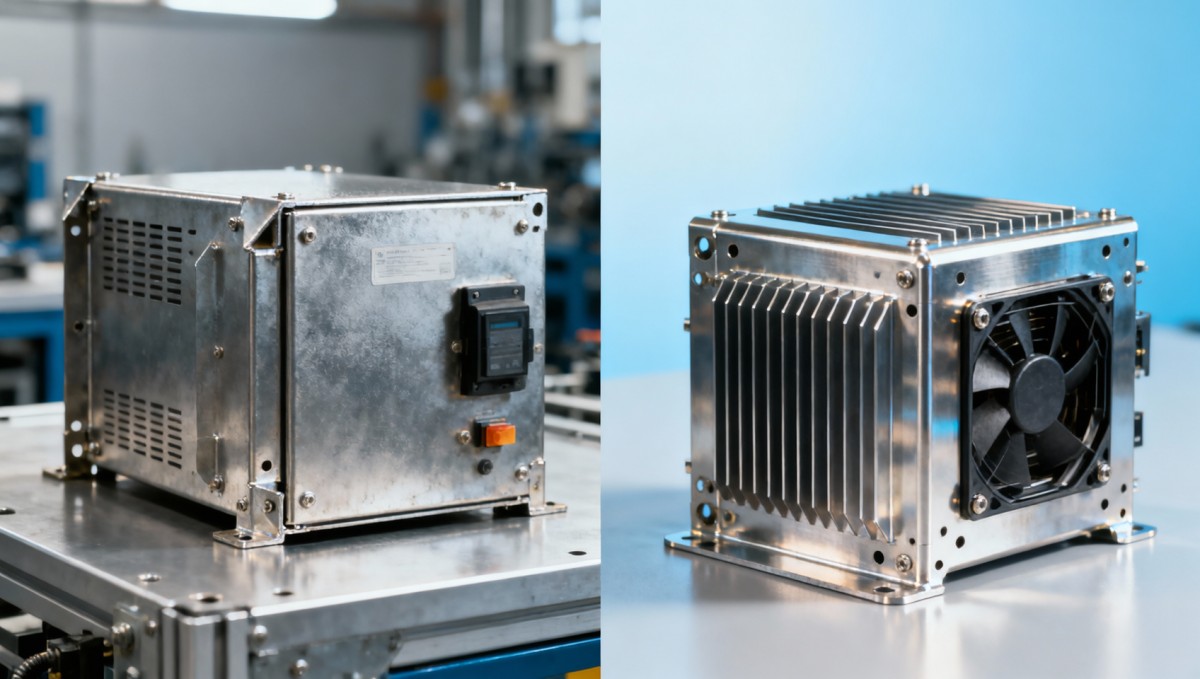
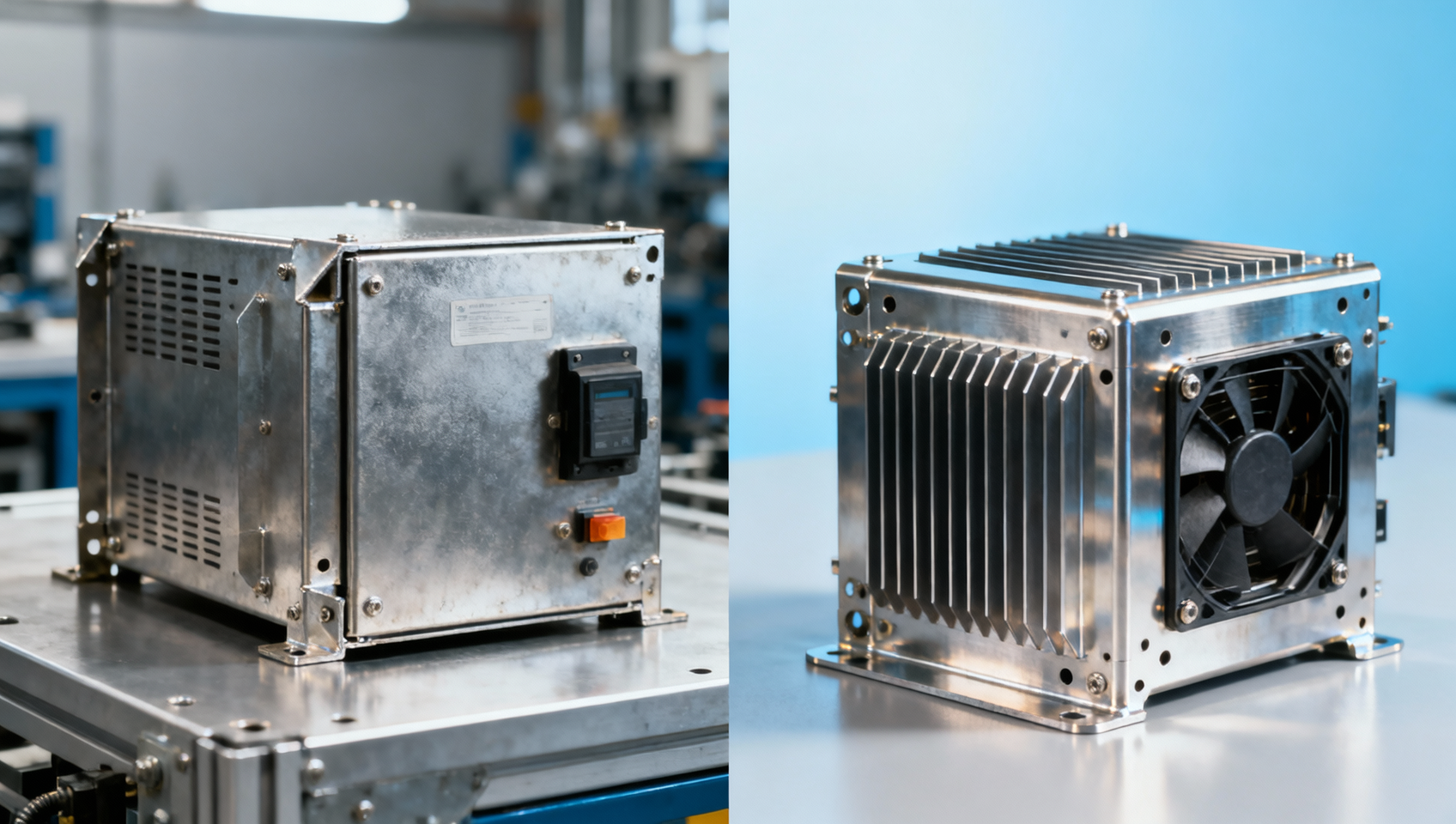
Steel and aluminum are both widely used in electronic enclosure fabrication, but they serve different engineering priorities. Steel is typically selected when mechanical strength, impact resistance, and lower raw material cost are critical. Aluminum is often preferred when weight reduction, corrosion resistance, and heat dissipation have higher value. In many procurement cycles, the decision begins with these 4 factors before moving into process and lifecycle analysis.
From a density standpoint, aluminum is roughly one-third the weight of steel. That difference matters when enclosures are mounted on moving equipment, installed on walls, or shipped internationally in high volume. A 100-unit shipment of medium-sized aluminum housings may reduce freight weight significantly versus steel, especially when each enclosure falls in the 8 kg–20 kg range.
Steel, however, offers higher stiffness and better resistance to denting in many industrial settings. For enclosures exposed to forklift traffic, machine vibration, or operator contact, thicker steel panels may provide a more durable structure. Carbon steel and stainless steel are both used, but for most cost-sensitive fabricated housings, buyers are comparing painted mild steel with unfinished, anodized, or powder-coated aluminum.
Fabrication routes also differ. Aluminum is generally easier to machine and often performs well in CNC milling, extrusion-based designs, and thermally functional housings. Steel is common in sheet metal bending, welded cabinets, and large electrical boxes where rigidity and lower material cost per structure matter. Typical enclosure wall thicknesses may range from 1.0 mm–3.0 mm for sheet applications, though the exact gauge depends on load, mounting method, and IP target.
Key physical and production differences
The table below summarizes practical differences that engineering, sourcing, and quality teams usually review during early-stage enclosure specification.
The main takeaway is that steel often wins on structural economy, while aluminum often wins on portability, corrosion performance, and thermal functionality. The right choice depends on the enclosure’s role in the full assembly, not just on raw material price.
Cost, manufacturability, and total ownership impact
Many buyers assume steel is always cheaper and aluminum is always premium. In reality, total cost depends on 5 linked variables: material price, fabrication time, finishing method, shipping weight, and expected service life. A low-cost steel enclosure may become more expensive over 3–5 years if corrosion, repainting, or heavy logistics are part of the operating profile.
For medium to high production volumes, steel sheet fabrication can be cost-efficient because laser cutting, punching, bending, and welding are widely available. Tooling and setup are familiar to most fabrication shops, and powder coating lines are common. For large floor-standing cabinets, steel often delivers the lowest initial cost per unit, especially when thickness exceeds 1.5 mm and thermal performance is not a primary concern.
Aluminum can reduce downstream cost in applications where machining precision, heat transfer, or weight-sensitive installation is important. In custom heatsinks projects or compact electronics, aluminum may eliminate secondary components such as separate thermal spreaders or oversized cooling features. In some designs, that integration can offset a higher raw material cost by simplifying the bill of materials by 1–3 parts.
Lead time also matters. Standard fabricated steel enclosures may move through sourcing and production in 2–4 weeks for repeat orders, while custom aluminum housings with CNC features, tapped holes, surface finishing, and tight tolerances may require 3–6 weeks depending on complexity and finishing capacity. Buyers should compare landed cost and project timing together rather than treating unit price as the only benchmark.
Typical cost drivers procurement teams should review
- Material thickness and grade, such as mild steel versus stainless steel or general aluminum alloy grades.
- Fabrication mix, including bending, welding, CNC machining, PEM insertion, and sealing features.
- Surface treatment requirements, such as powder coating, anodizing, passivation, or conductive finishing.
- Shipping and handling cost for domestic versus international distribution.
- Field environment, including humidity, washdown exposure, chemicals, and outdoor installation cycles.
A practical sourcing view
For budget holders and commercial evaluators, the most useful question is not “Which metal is cheaper?” but “Which metal delivers the lowest risk-adjusted cost for this enclosure over its operating life?” In a static indoor control box, steel may be the best commercial answer. In portable medical equipment or thermally sensitive electronics, aluminum may create better value even at a higher material rate.
Performance under real operating conditions
Application environment should drive material selection more than habit. Heavy equipment manufacturing, healthcare technology, and smart electronics each impose different demands on enclosure fabrication. Steel performs strongly where vibration, accidental impact, and rigid mounting are common. Aluminum performs strongly where thermal control, mobility, or corrosion exposure shape reliability outcomes.
In outdoor or semi-outdoor environments, corrosion resistance becomes a major differentiator. Painted steel can perform well, but coating damage around corners, fasteners, or cable entry points can lead to rust over time. Aluminum naturally forms a protective oxide layer, making it a practical option for marine-adjacent locations, humid climates, and equipment requiring lower maintenance frequency across 12–36 month service intervals.
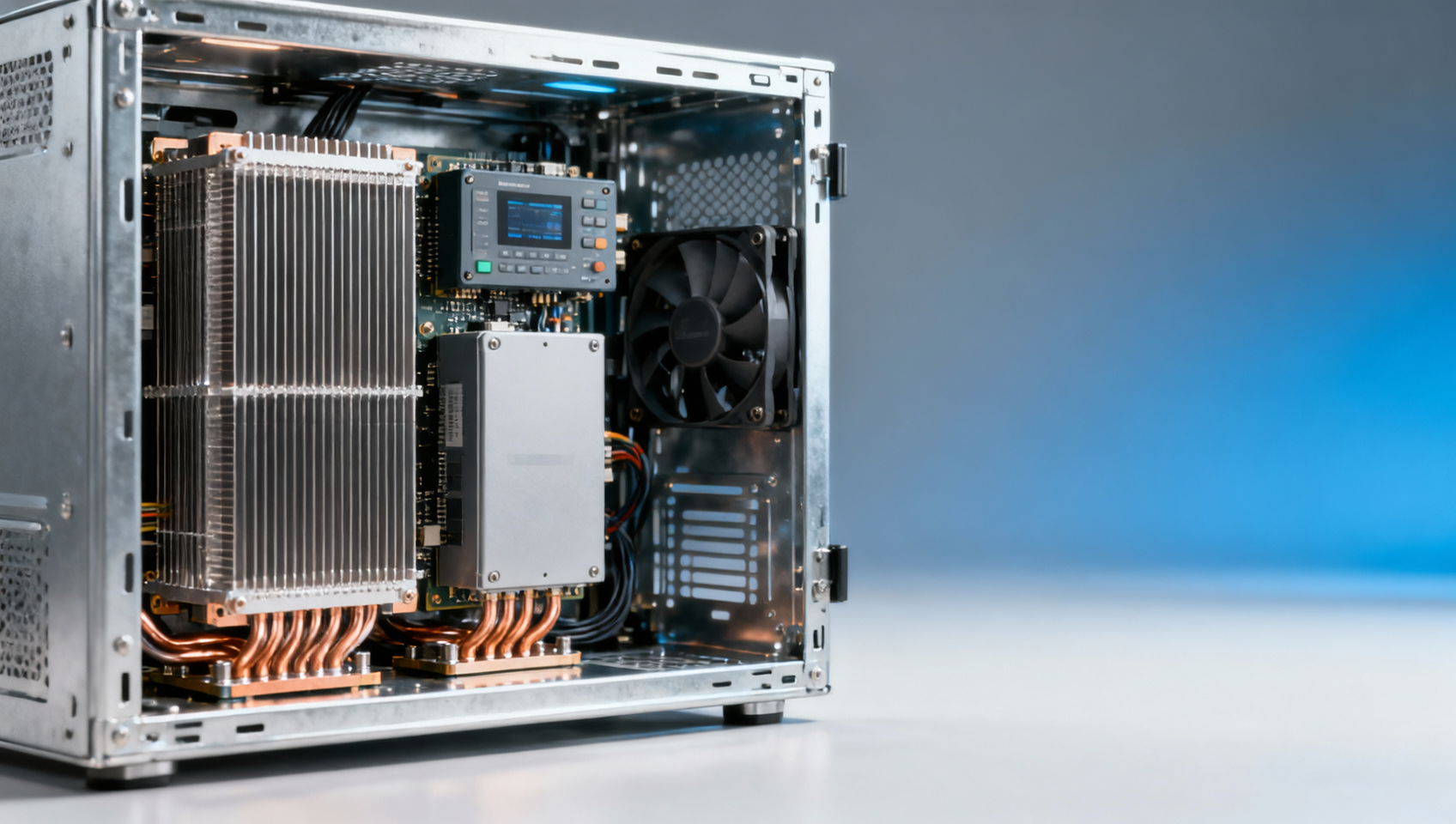
Thermal behavior is another critical factor. Aluminum conducts heat more effectively than steel, which is why it is widely used in electronics housings that double as heat spreaders or interface with custom heatsinks. In fanless or low-noise designs, this property can help maintain internal component temperatures within design windows such as 40°C–70°C, depending on power density and ambient conditions.
Steel can still be the right choice in thermally managed systems if airflow, fans, or dedicated heat exchangers are already part of the enclosure architecture. In those cases, the enclosure body does not need to serve as a major thermal pathway. Instead, rigidity, shielding, and cabinet durability may take priority, especially in industrial automation cells or electrical distribution systems.
Application-based comparison
The following comparison helps match enclosure material to common industrial and commercial use cases.
The best material fit usually emerges when environmental exposure, thermal load, and mechanical stress are reviewed together. This reduces the risk of overengineering with aluminum or underprotecting with steel.
Common mistakes in technical evaluation
- Choosing based only on raw material price without evaluating finish, freight, and service life.
- Ignoring heat dissipation requirements in compact electronics with power-dense assemblies.
- Specifying steel for corrosive environments without defining coating thickness, edge protection, or inspection criteria.
- Using aluminum in high-impact areas without adjusting wall thickness, ribbing, or bracket design.
How to choose the right enclosure material for your project
A reliable material decision should follow a structured review process. This is especially important in cross-functional B2B environments where engineering, sourcing, quality, operations, and finance all influence approval. A 5-step selection workflow can reduce redesign risk and shorten supplier alignment during RFQ and prototype stages.
Start with the use case. Define whether the enclosure is stationary or portable, indoors or outdoors, sealed or ventilated, and whether it contributes to heat dissipation. Then evaluate mechanical load, including expected impact, vibration, mounting orientation, and service access frequency. If the door or panel is opened dozens of times per month, hinge strength and panel stiffness may matter more than lightweight design.
Next, review compliance and finish needs. Some applications require cleanable surfaces, conductive continuity, or a specific visual quality level for end-user equipment. Others prioritize IP54, IP65, or similar ingress targets, where gasket compression, panel flatness, and weld quality become more important than base material alone. Material selection should support these assembly outcomes rather than conflict with them.
Finally, compare prototype and production economics. For low-volume projects under 50 units, machinability and design flexibility may justify aluminum. For repeat industrial volumes above 200 units, steel sheet metal fabrication may provide stronger cost control if thermal demands remain modest. Supplier capability should also be reviewed early, since not every vendor offers equal competence in both welded steel and precision aluminum fabrication.
5-step evaluation checklist
- Define the operating environment: indoor, outdoor, humid, chemical, medical-cleaning, or dusty industrial.
- Map the thermal profile: low heat, moderate heat, or passive cooling dependent.
- Set structural expectations: panel thickness, impact risk, mounting load, and vibration level.
- Estimate total cost: fabrication, finishing, packaging, freight, and maintenance intervals.
- Validate supplier process fit: welding, bending, CNC machining, sealing, inspection, and finishing control.
What quality and safety teams should verify
Quality managers and safety stakeholders should not approve a material choice without checking tolerances, finish durability, grounding needs, and edge treatment. Typical checkpoints include hole alignment, panel flatness, coating adhesion, sharp-edge removal, gasket fit, and fastener torque consistency. In practical sourcing, 6 inspection points are often enough to catch most enclosure-related quality failures before shipment.
Procurement, delivery, and supplier communication best practices
Even the right material can underperform if the RFQ package is incomplete. Buyers should provide drawings, target quantities, environmental notes, finish requirements, and assembly expectations at the start. If the supplier has to guess whether the enclosure needs EMC continuity, outdoor durability, or cosmetic grade surfaces, quote accuracy and manufacturability both suffer.
A strong RFQ should include at least 7 elements: 2D or 3D drawings, material preference, thickness range, finish specification, tolerance priorities, annual volume estimate, and packaging expectations. For projects involving medical device manufacturing or smart electronics, teams should also clarify cleaning agents, operator touchpoints, and visible surface standards. These details directly influence whether steel or aluminum is the better fit.
Delivery planning also differs by material and process. Welded steel cabinets may require more finishing and packaging protection, while aluminum housings may need scratch control and surface appearance inspection. Prototype projects often benefit from a first-article review within 5–10 working days after fabrication starts, followed by a controlled update cycle before mass production approval.
For distributors, agents, and enterprise buyers managing multiple end customers, a dual-material sourcing strategy can be practical. Standard indoor industrial boxes can remain steel-based for price competitiveness, while portable, outdoor, or thermally functional models can be offered in aluminum. This helps balance margin, technical fit, and lead time across a wider account base.
Supplier comparison criteria
Before awarding production, decision-makers can compare suppliers using the following matrix.
This type of supplier review helps commercial teams avoid low-visibility risk. A slightly higher quote may be justified if it reduces rework, improves finish consistency, or shortens the approval cycle by 1–2 weeks.
FAQ for buyers and engineering teams
Is aluminum always better for electronics because it dissipates heat?
Not always. Aluminum is stronger for passive thermal management, but if the enclosure uses forced-air cooling or isolated thermal modules, steel may still be the better value. The thermal requirement should be quantified first, especially when internal heat load exceeds a modest range such as 20 W–80 W in compact housings.
When is steel the safer commercial choice?
Steel is often the safer choice for large indoor cabinets, structurally demanding enclosures, and cost-sensitive batch production. It is especially practical when the equipment is fixed in place, corrosion exposure is controlled, and the enclosure itself does not need to function as a heat spreader.
What should teams ask before approving a final enclosure material?
Ask about environment, heat, mechanical load, finish, quantity, and inspection. If at least these 6 items are documented before RFQ closure, teams usually make faster and more defensible decisions. That is especially important when several stakeholders, from operators to finance approvers, must sign off.
Steel and aluminum each have a clear place in electronic enclosure fabrication. Steel generally offers better structural economy and robustness for large, fixed, and impact-prone enclosures. Aluminum brings major advantages in weight reduction, corrosion resistance, and heat dissipation, making it highly effective for portable equipment, outdoor use, and thermally sensitive electronics.
For buyers, engineers, and project leaders, the best decision comes from aligning material choice with operating conditions, production method, lifecycle cost, and supplier capability. If you are evaluating enclosure options for industrial equipment, medical devices, smart electronics, or custom heatsink-related assemblies, now is the right time to review the trade-offs in detail.
To explore fit-for-purpose enclosure solutions, discuss your specifications with TradeNexus Pro and get a more informed sourcing strategy, technical comparison, or custom project guidance. Contact us to get a tailored recommendation, compare supplier options, or learn more solutions for your next enclosure program.
Get weekly intelligence in your inbox.
No noise. No sponsored content. Pure intelligence.
 Apr 17, 2026Temperature data loggers drift unpredictably inside lithium-ion battery storage enclosuresTemperature data loggers drift unpredictably inside lithium-ion battery storage enclosures
 Apr 17, 2026Are solar microinverters really worth the extra cost?Are solar microinverters really worth the extra cost?
 Apr 17, 2026Bifacial solar panels: How much more energy can they generate?Bifacial solar panels: How much more energy can they generate?
 Apr 17, 2026Gear manufacturing: How to optimize production for high precision?Gear manufacturing: How to optimize production for high precision?
 Apr 17, 2026Why power transmission components fail earlier than expectedWhy power transmission components fail earlier than expected
 Apr 17, 2026Linear motion systems: belt drive or ball screw for speed?Linear motion systems: belt drive or ball screw for speed?
 Apr 17, 2026Industrial bearing suppliers: what signals reliable quality?Industrial bearing suppliers: what signals reliable quality?
 Apr 17, 2026When pneumatic valves wholesale gets expensive laterWhen pneumatic valves wholesale gets expensive later
 Apr 17, 2026Hydraulic cylinder fabrication mistakes that cause oil leaksHydraulic cylinder fabrication mistakes that cause oil leaks
 Apr 17, 2026Heavy equipment manufacturing delays often start hereHeavy equipment manufacturing delays often start here
 Apr 17, 2026Custom heatsinks: when a larger size solves nothingCustom heatsinks: when a larger size solves nothing
 Apr 17, 2026Electronic enclosure fabrication: steel or aluminum?Electronic enclosure fabrication: steel or aluminum?
 Apr 17, 2026Automotive parts machining tolerances that drive up scrapAutomotive parts machining tolerances that drive up scrap
 Apr 17, 2026Medical device manufacturing changes under tighter traceabilityMedical device manufacturing changes under tighter traceability
 Apr 17, 2026How to Choose Solid State Batteries in 2026How to Choose Solid State Batteries in 2026
 Apr 17, 2026Are Solid State Batteries Worth the Cost Yet?Are Solid State Batteries Worth the Cost Yet?
 Apr 17, 2026Commercial Energy Storage Sizing: What Matters Most?Commercial Energy Storage Sizing: What Matters Most?
 Apr 17, 2026Commercial Energy Storage ROI: How to Assess ItCommercial Energy Storage ROI: How to Assess It
 Apr 17, 2026Off Grid Solar Systems: What to Avoid FirstOff Grid Solar Systems: What to Avoid First
 Apr 17, 2026Who Should Use Off Grid Solar Systems?Who Should Use Off Grid Solar Systems?
 Apr 17, 2026Solar Microinverters vs String Inverters: Which Fits?Solar Microinverters vs String Inverters: Which Fits?
 Apr 17, 2026When Do Solar Microinverters Make More Sense?When Do Solar Microinverters Make More Sense?
 Apr 17, 2026How digital freight matching for international shipping cuts transit time by up to 22% in 2026How digital freight matching for international shipping cuts transit time by up to 22% in 2026
 Apr 17, 2026Why port automation tech for smart logistics reduces container handling errors by 37% at Tier-1 terminalsWhy port automation tech for smart logistics reduces container handling errors by 37% at Tier-1 terminals
 Apr 17, 2026What yard management systems for port operations actually deliver in real-world deploymentsWhat yard management systems for port operations actually deliver in real-world deployments
 Apr 17, 2026Can digital customs clearance for sea freight reduce D/O processing from 48 hours to under 90 minutesCan digital customs clearance for sea freight reduce D/O processing from 48 hours to under 90 minutes
 Apr 17, 2026How returnable transport packaging for automotive parts lowers TCO by 18–25% over 3 yearsHow returnable transport packaging for automotive parts lowers TCO by 18–25% over 3 years