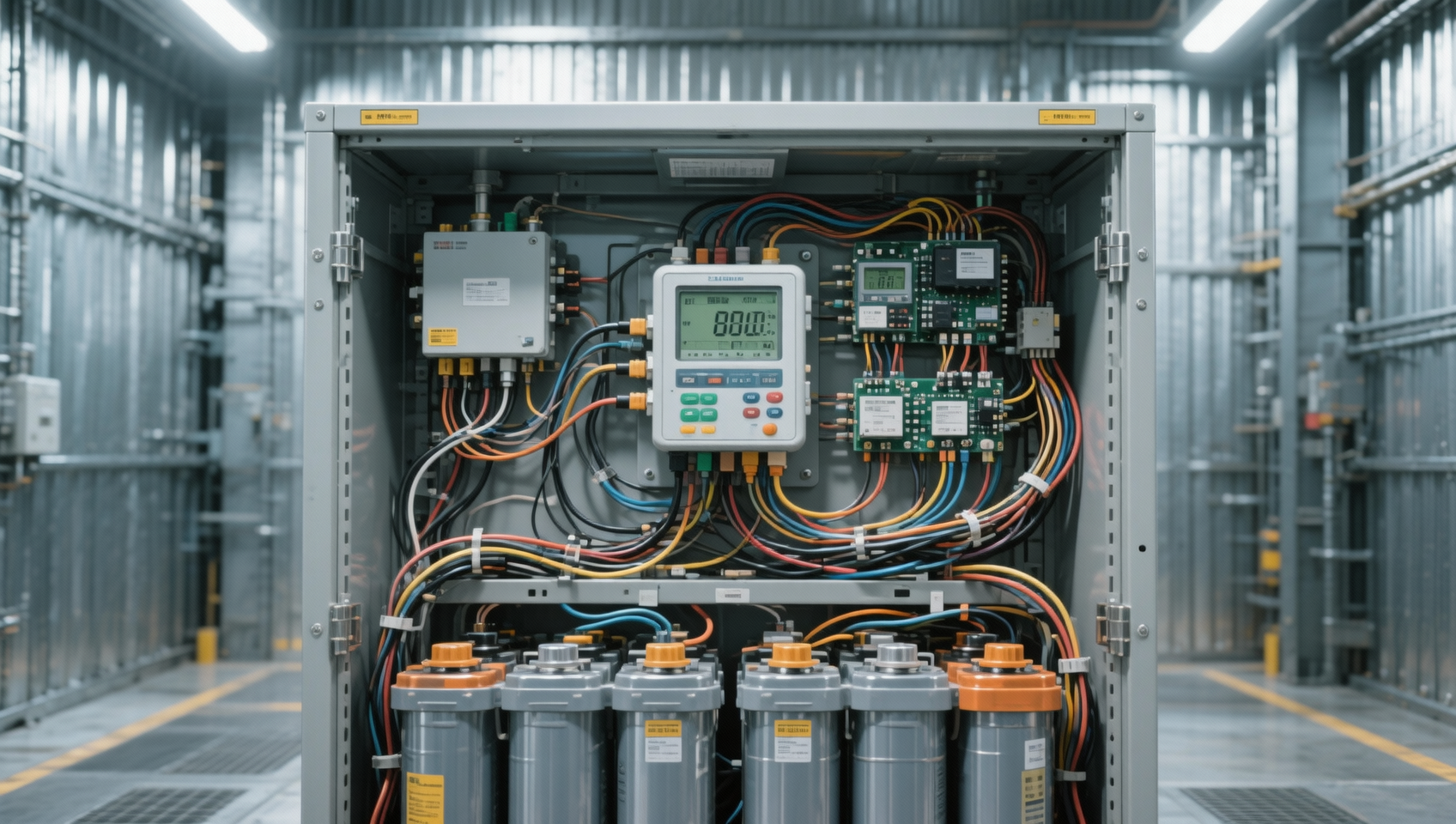
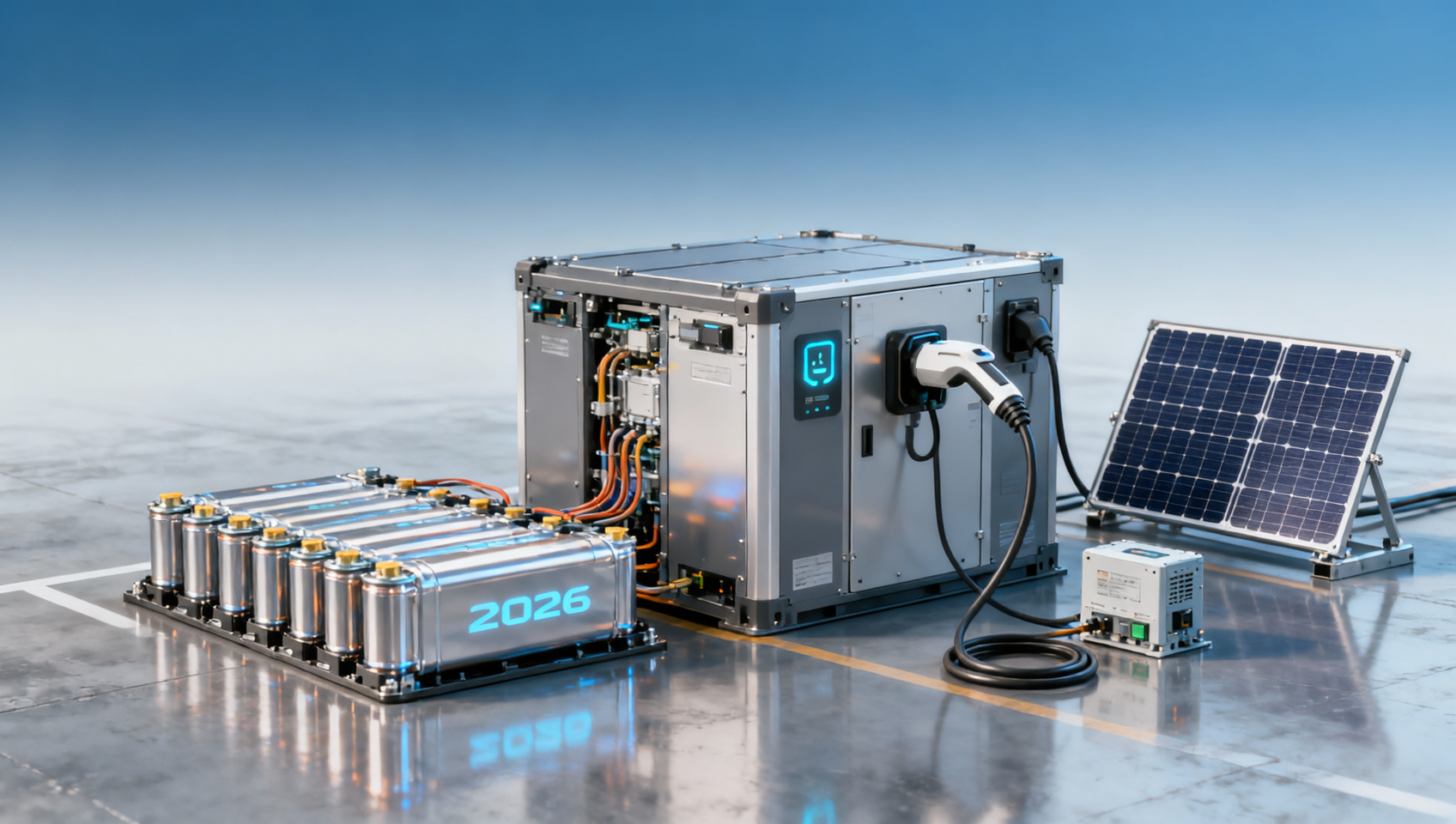
Are Solid State Batteries Worth the Cost Yet?
Solid state batteries promise higher energy density, faster charging, and better safety, but are they worth the premium for today’s buyers? For teams comparing next-generation power options across commercial energy storage, off grid solar systems, and smart electronics, the answer depends on performance, supply chain maturity, and total lifecycle cost.
For operators, technical evaluators, procurement leaders, finance approvers, and project managers, the decision is no longer about hype alone. It is about whether solid state batteries can deliver measurable value in a specific deployment window, typically 12–60 months, while meeting safety, sourcing, and return-on-investment targets.
In B2B settings, battery selection affects more than device runtime. It influences charging infrastructure, transport risk, warranty exposure, thermal management design, maintenance intervals, and the resilience of a multi-region supply chain. That is why the right question is not simply “Are solid state batteries better?” but “Are they worth the cost yet for this use case, at this scale, and under current market conditions?”
What Solid State Batteries Actually Change

A solid state battery replaces the liquid electrolyte used in conventional lithium-ion cells with a solid electrolyte. In practical terms, this can improve thermal stability, reduce leakage risk, and open the door to higher energy density. For B2B buyers, the headline advantages usually center on three metrics: watt-hours per kilogram, charging speed, and safety under stress.
In many development roadmaps, solid state battery targets fall in the range of 350–500 Wh/kg, compared with roughly 180–300 Wh/kg for many mainstream lithium-ion packs currently used in commercial devices and mobility systems. The exact number depends on chemistry, cell format, packaging efficiency, and whether the product is still at prototype, pilot, or low-volume production stage.
Charging performance is another reason companies are paying attention. Under optimized conditions, some solid state battery designs aim for 15–30 minute fast-charge windows to reach 80% capacity. However, engineering teams should separate lab potential from field-ready performance. Real-world charging speed still depends on current limits, thermal control, charger compatibility, and cycle-life tradeoffs.
Why the technology matters across sectors
In smart electronics, higher energy density can reduce product size or extend runtime without increasing pack weight. In green energy and off grid solar systems, a safer chemistry may lower enclosure complexity or reduce certain thermal management burdens. In advanced manufacturing and healthcare technology, lower fire risk can matter as much as capacity, especially where uptime and controlled operating environments are critical.
The table below outlines the most relevant technical differences buyers typically evaluate during early screening and pilot qualification.
The key takeaway is that a solid state battery can offer meaningful performance upside, but the value is highly application-specific. Teams should treat current offerings as a spectrum rather than a single mature category. Some products are close to commercial readiness, while others remain expensive demonstrations with narrow operating windows.
Where the Cost Premium Is Justified Today
A solid state battery is not automatically worth the premium in every project. Today, the economics are strongest where one or more of the following matter: space constraints, strict safety requirements, premium product positioning, or difficult service access. If a battery failure event can trigger downtime costs, recall exposure, or high field-service expenses, the business case becomes easier to support.
For example, in compact smart electronics, even a 15%–25% gain in usable energy density can justify a higher cell cost if it enables thinner industrial design, lighter products, or longer runtime per charge. In medical or industrial equipment, better stability and lower thermal incident risk may reduce enclosure redesign, insurance concerns, and validation complexity over a 3–7 year product lifecycle.
Use cases with the strongest near-term fit
- High-value portable electronics where battery size and weight directly affect product competitiveness.
- Specialized healthcare technology requiring strong safety performance and controlled charging behavior.
- Premium industrial systems where maintenance access is limited and replacement costs are high.
- Selective off grid solar systems where cycle performance, safety, and footprint matter more than lowest upfront cost.
By contrast, large-scale commercial energy storage projects often remain highly cost-sensitive. In those deployments, a solid state battery may still struggle to compete against established lithium iron phosphate or other mature chemistries unless the project owner assigns a significant premium to safety, footprint reduction, or future differentiation.
A practical decision lens for finance and procurement
Many approval teams make the mistake of comparing only purchase price per kilowatt-hour. A better model uses four layers: upfront cost, integration cost, operating risk, and replacement timing. If a solid state battery lowers cooling requirements, cuts service calls by even 1–2 visits per year, or extends replacement intervals from 4 years to 6 years, total lifecycle cost may improve despite a higher unit price.
That said, buyers should require scenario-based costing, not generic claims. A 20% higher battery cost may be acceptable in a high-margin device category, but not in a distributor-driven market where pricing pressure is intense and payback must stay under 24 months.
The Real Constraints: Supply Chain, Yield, and Qualification Risk
The biggest obstacle is not scientific promise but industrial maturity. A solid state battery may look compelling on a specification sheet, yet still present serious sourcing and qualification challenges. Buyers need to evaluate whether the supplier can support stable output volumes, acceptable defect rates, and clear test documentation over at least 2–4 production quarters.
Manufacturing yield remains a major issue in emerging cell platforms. Small deviations in material uniformity, interface quality, or moisture handling can affect cycle life and performance consistency. For quality managers and safety teams, this means incoming inspection, traceability, and accelerated life testing should be stricter than for a fully mature battery family.
What buyers should verify before approving a pilot
Before committing to scale, technical and sourcing teams should ask for a structured qualification package. At a minimum, this should include cycle-life ranges under defined conditions, temperature windows, storage guidance, transport handling notes, failure mode data, and expected lead times by volume bracket.
The table below provides a practical checklist for supplier review and internal risk scoring.
This checklist matters because the cost debate is inseparable from sourcing risk. If a solid state battery saves space but creates a single-source dependency with 20-week lead times, the premium may become difficult to justify for distributors, OEMs, and project teams working on fixed delivery milestones.
Common qualification mistakes
- Using laboratory cycle-life claims without matching the actual charge-discharge profile of the target product.
- Approving a supplier before verifying thermal behavior across the full operating range, such as 0°C to 45°C or wider.
- Ignoring tooling, firmware, and battery management system adjustments that can add 8%–15% to project cost.
How to Evaluate Total Lifecycle Cost Instead of Sticker Price
For enterprise buyers, the right metric is not cost per cell but cost per delivered function over time. That includes runtime, charging behavior, expected service life, thermal management needs, transportation constraints, replacement planning, and warranty exposure. In many procurement reviews, a solid state battery appears too expensive only because several downstream cost drivers are not modeled.
Start with a 5-step lifecycle framework: define the duty cycle, estimate energy throughput, model service and replacement events, quantify integration changes, and compare residual operational risk. This process usually gives decision-makers a much clearer answer than a simple spreadsheet comparing initial quotes from two cell suppliers.
A working TCO model for battery selection
- Upfront battery and pack cost: unit price, pack assembly, battery management, and validation testing.
- Integration cost: enclosure changes, thermal controls, charger compatibility, software calibration, and safety review.
- Operating cost: charging efficiency, maintenance checks, spare inventory, and service labor.
- Risk cost: thermal incidents, field returns, delayed launches, and supply chain disruption.
- End-of-life cost: replacement timing, recycling pathway, and logistics handling.
The comparison table below helps cross-functional teams align engineering, finance, and procurement priorities before moving from pilot to rollout.
In most current markets, the premium is justified only when at least two of the lifecycle benefits are strong and measurable. If your deployment cannot convert higher energy density or better safety into either revenue gain, lower operating cost, or reduced risk, then waiting 12–24 months may be the better commercial choice.
Best-Fit Sectors, Procurement Advice, and Near-Term Outlook
The near-term outlook for solid state batteries is promising but uneven. Over the next 2–5 years, adoption is likely to progress first in premium and specialized segments rather than in every cost-sensitive volume market. Buyers in advanced manufacturing, smart electronics, healthcare technology, and selected green energy applications should expect gradual commercialization, not an instant chemistry replacement cycle.
Who should consider buying now
If your product roadmap depends on compact form factor, improved safety, or fast charging as a differentiator, it is reasonable to begin pilot sourcing now. A 3-phase process works best: phase 1 for lab validation over 4–8 weeks, phase 2 for field testing over 8–16 weeks, and phase 3 for limited commercial rollout with controlled volumes and documented quality gates.
Distributors and channel partners should be especially cautious about support readiness. If customers expect immediate replacement stock, wide temperature tolerance, and stable delivery schedules, mature lithium-ion options may still be easier to support. A solid state battery should enter channel sales only when warranty terms, transport procedures, and technical documentation are clear enough for downstream teams to manage confidently.
FAQ: the questions buyers ask most often
How should technical teams compare solid state batteries with current lithium-ion packs?
Use the same load profile, the same charging conditions, and the same temperature window. Compare at least 6 metrics: energy density, charge time to 80%, cycle retention, thermal behavior, integration changes, and lead time. Do not accept unmatched test conditions.
Are solid state batteries suitable for commercial energy storage today?
In selected projects, yes, but broad cost competitiveness is still limited. For many installations above several hundred kilowatt-hours, mature chemistries remain easier to source and finance. Solid state battery adoption makes more sense where safety, footprint, or premium performance carries strategic value.
What procurement terms matter most right now?
Focus on minimum order quantity, lead time, engineering support, test data transparency, change-control notice period, and warranty coverage. For emerging battery platforms, a change-control window of at least 90 days can reduce qualification disruption.
When is it smarter to wait?
Wait if your buying criteria are dominated by lowest upfront price, commodity-scale sourcing, or immediate second-source availability. In those cases, the premium is often not justified yet, and market conditions may improve meaningfully within the next 12–24 months.
For most B2B buyers, the answer is nuanced: solid state batteries are worth the cost now only in applications where higher energy density, stronger safety performance, or lower lifecycle risk clearly offsets the premium and supply chain complexity. They are not yet the default choice for every project, but they are already a serious strategic option in high-value, performance-driven segments.
If your team is evaluating next-generation battery sourcing across smart electronics, energy systems, or industrial platforms, a structured comparison can prevent costly missteps. TradeNexus Pro helps decision-makers assess supplier readiness, technical tradeoffs, and commercial fit with deeper market intelligence. Contact us to discuss your sourcing priorities, request a tailored evaluation framework, or explore more battery and energy storage solutions.
Get weekly intelligence in your inbox.
No noise. No sponsored content. Pure intelligence.
 Apr 17, 2026Temperature data loggers drift unpredictably inside lithium-ion battery storage enclosuresTemperature data loggers drift unpredictably inside lithium-ion battery storage enclosures
 Apr 17, 2026Are solar microinverters really worth the extra cost?Are solar microinverters really worth the extra cost?
 Apr 17, 2026Bifacial solar panels: How much more energy can they generate?Bifacial solar panels: How much more energy can they generate?
 Apr 17, 2026Gear manufacturing: How to optimize production for high precision?Gear manufacturing: How to optimize production for high precision?
 Apr 17, 2026Why power transmission components fail earlier than expectedWhy power transmission components fail earlier than expected
 Apr 17, 2026Linear motion systems: belt drive or ball screw for speed?Linear motion systems: belt drive or ball screw for speed?
 Apr 17, 2026Industrial bearing suppliers: what signals reliable quality?Industrial bearing suppliers: what signals reliable quality?
 Apr 17, 2026When pneumatic valves wholesale gets expensive laterWhen pneumatic valves wholesale gets expensive later
 Apr 17, 2026Hydraulic cylinder fabrication mistakes that cause oil leaksHydraulic cylinder fabrication mistakes that cause oil leaks
 Apr 17, 2026Heavy equipment manufacturing delays often start hereHeavy equipment manufacturing delays often start here
 Apr 17, 2026Custom heatsinks: when a larger size solves nothingCustom heatsinks: when a larger size solves nothing
 Apr 17, 2026Electronic enclosure fabrication: steel or aluminum?Electronic enclosure fabrication: steel or aluminum?
 Apr 17, 2026Automotive parts machining tolerances that drive up scrapAutomotive parts machining tolerances that drive up scrap
 Apr 17, 2026Medical device manufacturing changes under tighter traceabilityMedical device manufacturing changes under tighter traceability
 Apr 17, 2026How to Choose Solid State Batteries in 2026How to Choose Solid State Batteries in 2026
 Apr 17, 2026Are Solid State Batteries Worth the Cost Yet?Are Solid State Batteries Worth the Cost Yet?
 Apr 17, 2026Commercial Energy Storage Sizing: What Matters Most?Commercial Energy Storage Sizing: What Matters Most?
 Apr 17, 2026Commercial Energy Storage ROI: How to Assess ItCommercial Energy Storage ROI: How to Assess It
 Apr 17, 2026Off Grid Solar Systems: What to Avoid FirstOff Grid Solar Systems: What to Avoid First
 Apr 17, 2026Who Should Use Off Grid Solar Systems?Who Should Use Off Grid Solar Systems?
 Apr 17, 2026Solar Microinverters vs String Inverters: Which Fits?Solar Microinverters vs String Inverters: Which Fits?
 Apr 17, 2026When Do Solar Microinverters Make More Sense?When Do Solar Microinverters Make More Sense?
 Apr 17, 2026How digital freight matching for international shipping cuts transit time by up to 22% in 2026How digital freight matching for international shipping cuts transit time by up to 22% in 2026
 Apr 17, 2026Why port automation tech for smart logistics reduces container handling errors by 37% at Tier-1 terminalsWhy port automation tech for smart logistics reduces container handling errors by 37% at Tier-1 terminals
 Apr 17, 2026What yard management systems for port operations actually deliver in real-world deploymentsWhat yard management systems for port operations actually deliver in real-world deployments
 Apr 17, 2026Can digital customs clearance for sea freight reduce D/O processing from 48 hours to under 90 minutesCan digital customs clearance for sea freight reduce D/O processing from 48 hours to under 90 minutes
 Apr 17, 2026How returnable transport packaging for automotive parts lowers TCO by 18–25% over 3 yearsHow returnable transport packaging for automotive parts lowers TCO by 18–25% over 3 years