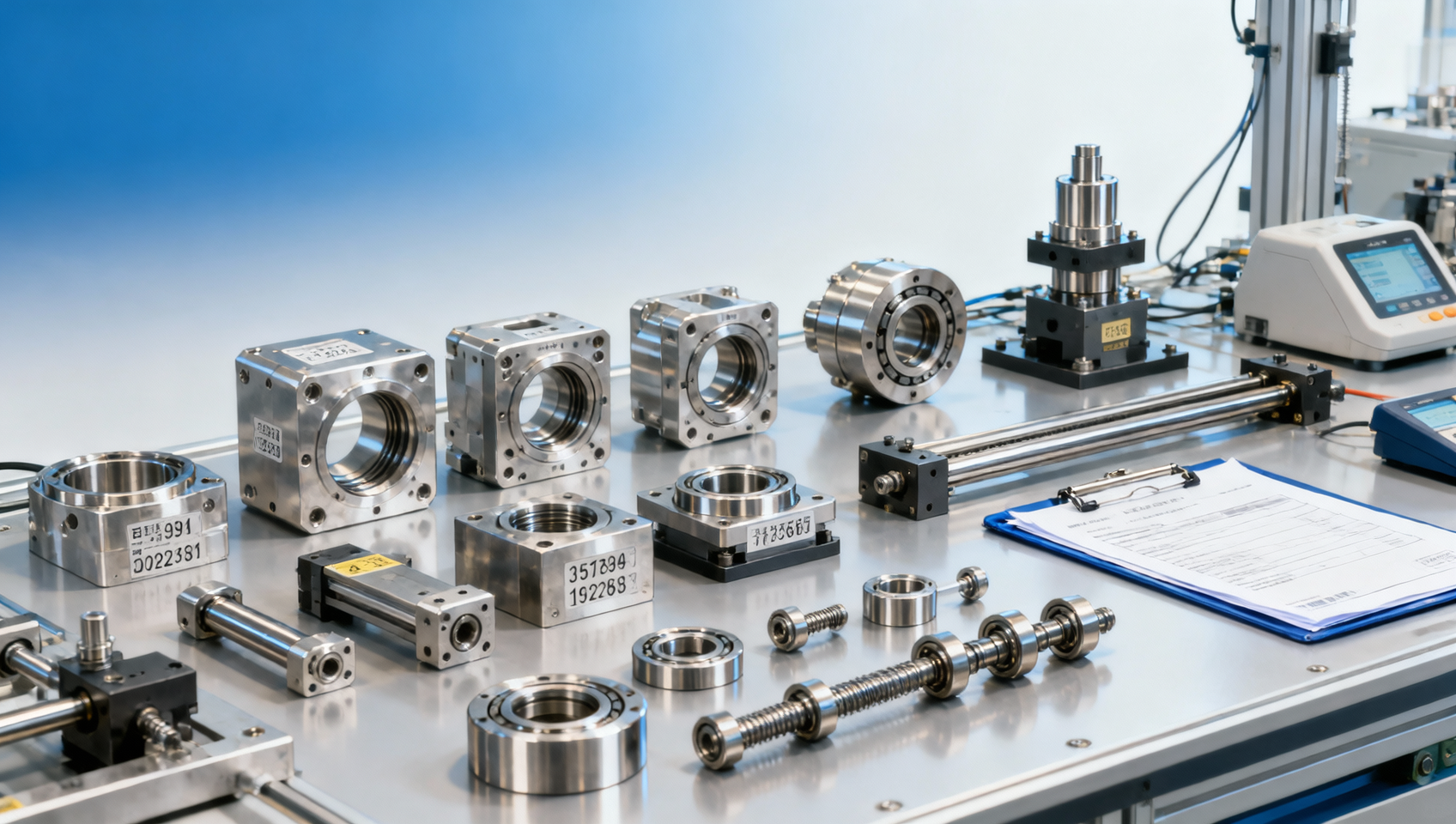
Automotive parts machining tolerances that drive up scrap
In automotive parts machining, small tolerance decisions can trigger major scrap, rework, and delivery risk across heavy equipment manufacturing and related supply chains. For buyers, engineers, and quality teams evaluating power transmission components, linear motion systems, and industrial bearing suppliers, understanding where machining tolerances fail is essential to controlling cost, ensuring fit, and improving production reliability.
Across shafts, housings, bearing seats, gear blanks, valve bodies, and precision brackets, tolerance strategy affects more than dimensional acceptance. It also influences cycle time, tool wear, heat distortion, assembly yield, inspection burden, and warranty exposure. A drawing that appears conservative can still create scrap if its critical-to-function dimensions are poorly prioritized or mismatched with the selected machining process.
For B2B sourcing teams, the problem is rarely just “tight tolerance equals high cost.” The deeper issue is where tolerance is placed, how it stacks across mating parts, and whether the supplier’s capability, gauging method, and process control can repeat the requirement over 500, 5,000, or 50,000 pieces. This article explains the tolerance conditions that most often drive scrap in automotive parts machining and what procurement, engineering, and quality leaders should verify before production release.
Where automotive machining tolerances create scrap first
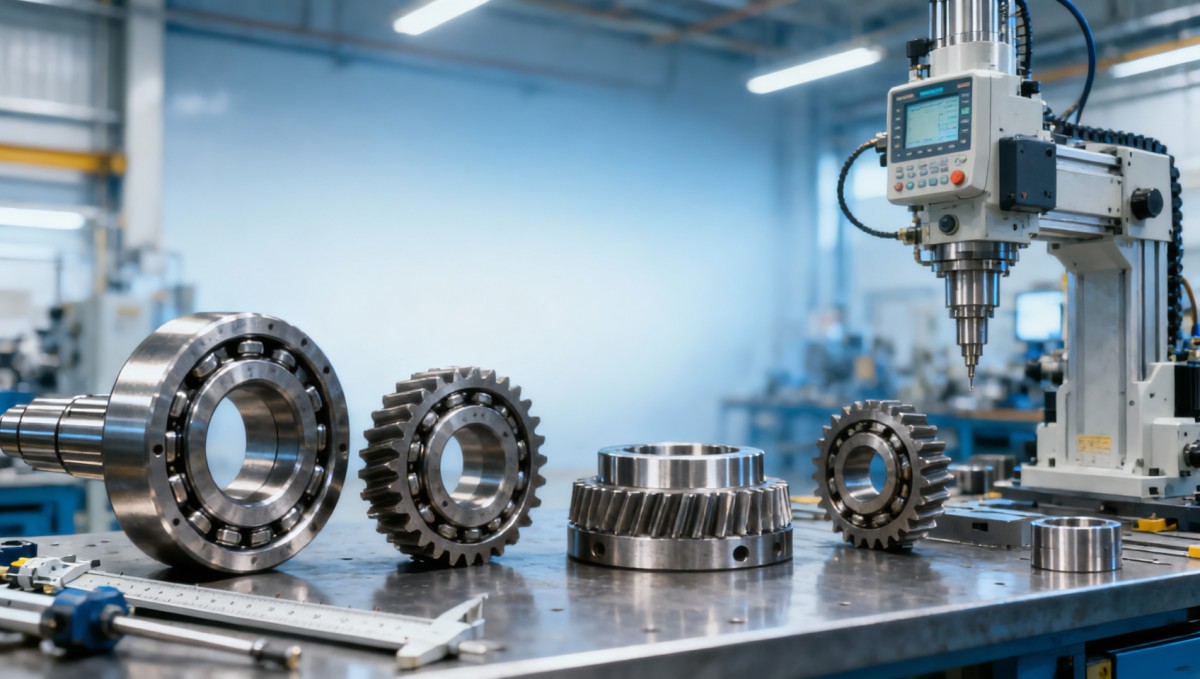
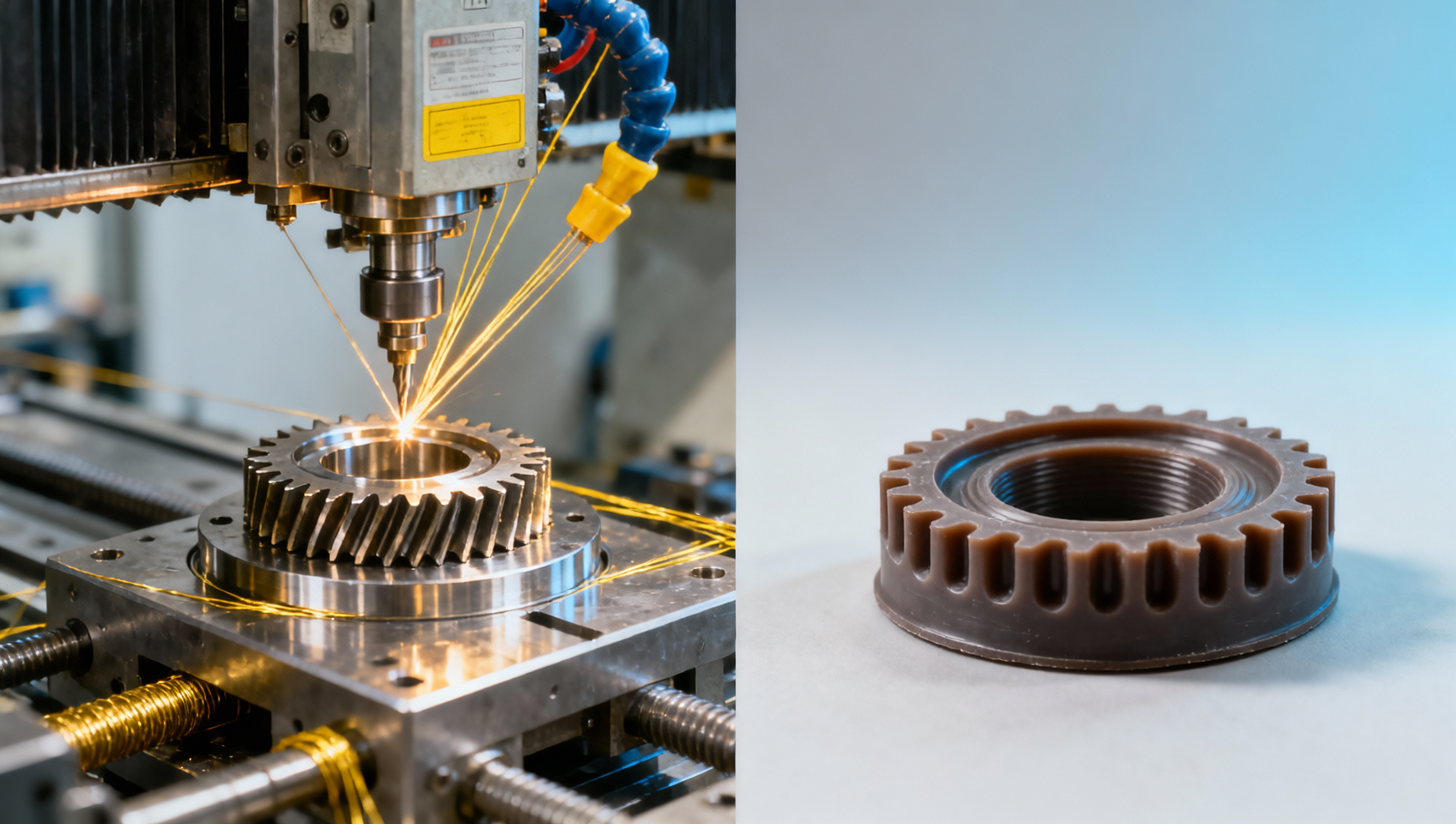
Scrap usually starts at the interface between design intent and shop-floor reality. In automotive parts machining, the highest-risk dimensions are often bores, bearing journals, spline features, sealing faces, and true position requirements on multi-operation parts. When these features are assigned tighter limits than function requires, process capability can fall below an acceptable threshold, especially in mixed-material programs using cast iron, forged steel, and aluminum.
A common failure point is the overuse of bilateral tolerances such as ±0.01 mm on non-critical dimensions. That level may be achievable in grinding or finish boring, but it can be unstable in standard CNC turning after thermal growth, tool edge wear, and clamping distortion. If the production process naturally varies by 0.015 mm to 0.025 mm, every batch requires either sorting or rework, both of which increase unit cost.
Another scrap trigger appears in stacked tolerances across assemblies. A shaft, bearing, housing bore, and retaining feature may each pass inspection independently, yet the final fit can still fail because the combined variation exceeds preload or clearance targets. In drivetrain and motion-control components, even a 0.02 mm mismatch in cumulative fit can lead to noise, heat, premature wear, or rejected assembly.
Flatness, perpendicularity, and concentricity also generate hidden losses. These geometric controls often require slower setups, more probing, and additional inspection fixtures. If the drawing calls for 0.01 mm runout on a feature produced in 3 setups, the process may be fundamentally misaligned with the requirement. Scrap is then not a quality accident but a predictable output of poor manufacturability planning.
Typical high-risk tolerance zones
- Bearing seat diameters with interference-fit windows below 0.015 mm or above 0.040 mm, depending on material and duty cycle.
- Hydraulic sealing surfaces requiring Ra 0.4–0.8 µm while also controlling flatness below 0.02 mm.
- Long shafts over 300 mm where straightness, roundness, and journal position interact during heat treatment and finish grinding.
- Multi-hole patterns with true position below 0.05 mm on cast or forged parts that shift after rough machining.
The practical lesson for sourcing and technical review teams is clear: scrap tends to rise fastest when tolerance limits are disconnected from actual function, process sequence, and inspection method. Before approving a supplier, teams should ask not only whether a requirement is possible, but whether it is repeatable over 3 shifts, 2 tool changes, and normal production temperatures.
The tolerance mistakes that most often raise scrap and rework
Several recurring specification errors account for a disproportionate share of scrap in machined automotive parts. The first is assigning precision to every dimension instead of isolating critical-to-quality features. When a drawing contains 20 dimensions at ±0.02 mm but only 4 of them affect fit, sealing, or rotational accuracy, the supplier spends unnecessary machine time controlling dimensions that add no value to end performance.
The second error is ignoring the impact of raw material variation. Castings can shift due to wall thickness inconsistency, and forgings may move after stress relief or roughing. If the process window is only 0.03 mm but the incoming blank location varies by 0.5 mm to 1.5 mm, operators are forced into offset correction, uneven stock removal, and unstable finishing conditions. That creates a direct path to oversize, undersize, chatter, and scrap.
The third mistake is mixing surface finish, hardness condition, and tolerance without defining machining sequence. A bore tolerance of H7 may be easy before heat treatment and difficult after distortion. Likewise, a hardened shaft at 58–62 HRC may require grinding rather than turning to hold roundness below 0.005 mm. If the drawing does not support sequence planning, the supplier absorbs risk and the buyer eventually absorbs delay or nonconformance.
A fourth problem is relying on inspection after machining instead of designing quality into the process. Final inspection can identify bad parts, but it does not prevent them. Programs with high scrap rates often lack in-process checks at the 1st piece, mid-batch, and tool-life change points. In medium-volume runs of 1,000 to 3,000 units, a missed tool drift can create 50 to 200 nonconforming pieces before containment begins.
Common tolerance errors and their production effect
The table below maps common specification mistakes to the scrap mechanisms they create in automotive and heavy-equipment component machining.
The pattern is consistent: scrap is rarely caused by one bad operator or one bad machine. It is usually embedded in drawing logic, raw material variation, sequence planning, or control method. Teams that identify these four areas early often reduce first-run defects faster than those focused only on incoming inspection.
How engineers and buyers can reduce these errors early
- Separate critical, major, and minor characteristics before RFQ release.
- Confirm the intended process route: turning, milling, honing, grinding, broaching, or a hybrid sequence.
- Review tolerance stack-up at assembly level, not only at part level.
- Align drawing datums with actual workholding and inspection datums.
These four steps are simple, but they often determine whether a project launches with a scrap rate below 2% or struggles in the 5%–12% range during early production.
How to evaluate supplier capability against machining tolerance risk
Supplier selection should go beyond equipment lists and sample photos. A supplier may own 5-axis machining centers, cylindrical grinders, and CMM systems, yet still struggle with tolerance repeatability if the process discipline is weak. Buyers assessing automotive component sources should verify machine capability, thermal control, fixture strategy, operator training, inspection frequency, and corrective action speed.
For critical parts such as transmission shafts, bearing housings, or linear motion guides, process capability should be discussed in measurable terms. A target Cp or Cpk threshold is often more useful than a general statement of “can hold tight tolerance.” For stable serial production, many teams expect Cpk 1.33 or above on key dimensions, while launch-phase parts may temporarily operate nearer 1.00 until tooling and offsets are optimized.
Inspection method also matters. Bore gauges, air gauges, CMM reports, profilometers, and roundness testers each serve a different purpose. If a supplier measures a 0.01 mm form requirement using a method with poor repeatability or inconsistent fixturing, the inspection result may look compliant while the assembly still fails. Measurement system capability should therefore be reviewed alongside machine capability.
Lead time risk is another hidden tolerance risk. When a supplier is forced into overloaded schedules, preventive tool changes and intermediate checks are often reduced. A nominal 3-week machining lead time can become unstable if the shop is running at 90%+ capacity and still accepting tight-turn orders. Under those conditions, scrap and missed shipments usually rise together.
Supplier qualification checklist for tolerance-sensitive parts
Use the following comparison framework when qualifying machining partners for automotive and industrial motion-control components.
This framework helps technical evaluators and procurement managers compare suppliers on repeatability, not just quote price. In many categories, a supplier with a 6% higher piece price but better process control delivers lower total cost once scrap, premium freight, and line disruption are included.
Questions worth asking during RFQ or audit
- Which 3 to 5 dimensions are considered process-critical, and how often are they checked?
- What is the expected tool life before bore size or runout begins to drift?
- Can the supplier share a sample control plan or capability summary for similar parts?
- How are raw castings or forgings screened before machining begins?
Answers to these questions usually reveal whether the supplier manages tolerance risk proactively or reacts only after scrap has already occurred.
Practical tolerance planning for lower scrap, better fit, and faster approvals
The most effective way to reduce scrap is not simply loosening all dimensions. It is designing a tolerance scheme that reflects function, process capability, and assembly needs. In automotive parts machining, that means identifying features linked to fit, load path, sealing, rotational stability, and noise behavior, then protecting those dimensions while relaxing non-functional ones where appropriate.
A good planning model begins with 3 layers: function-critical features, process-critical features, and reference-only features. Function-critical dimensions may include bearing fits, gear center distance, or sealing land flatness. Process-critical dimensions may support datum transfer or fixture repeatability. Reference-only dimensions should not consume high-value finishing time if they do not affect downstream performance.
Cross-functional review is essential. Engineering, quality, sourcing, and production should assess tolerance choices before release rather than after scrap appears. Even a 60-minute print review can prevent weeks of adjustment later. Teams should confirm machining sequence, stock allowance, heat-treatment movement, expected gauge method, and assembly stack-up in the same meeting.
For organizations managing international suppliers, digital collaboration matters as much as technical knowledge. RFQ packages should include clear revision control, key characteristic lists, surface finish callouts, sample inspection expectations, and escalation paths. This reduces the probability of interpretation gaps when parts move across regions, time zones, and production systems.
Recommended implementation flow
- Classify all dimensions into critical, major, and standard tolerance groups.
- Validate the process route and likely capability for each critical feature.
- Run assembly stack-up analysis on mating components before PO release.
- Define in-process inspection checkpoints at first article, mid-run, and post-tool-change stages.
- Review scrap, rework, and drift data after the first 2 to 4 production lots.
FAQ for buyers, engineers, and quality teams
How tight is too tight for a machined automotive part?
It depends on function and process. A tolerance of ±0.01 mm may be normal for a ground journal but excessive for a milled mounting face that only affects bracket positioning. The right standard is not the smallest number, but the narrowest range that still protects fit, durability, and assembly performance.
Why do parts pass inspection but still fail in assembly?
This usually happens because of tolerance stack-up, datum mismatch, or form error not captured by a simple size check. A bore diameter may be in tolerance, for example, but roundness, position, or perpendicularity may still cause poor fit. Assembly-level validation is necessary for high-risk interfaces.
What should financial approvers look for in a machining quote?
They should look beyond piece price and review expected scrap assumptions, inspection content, tooling refresh frequency, and lead-time stability. A lower quote may hide higher total cost if the supplier lacks control over critical tolerances and requires frequent rework or expedited shipments.
How long does tolerance stabilization usually take after launch?
For many machined automotive components, a stable process can emerge within the first 2 to 4 lots if the print, fixtures, and gauges are aligned. If distortion, stock variation, or tool-life drift are unresolved, stabilization can take 6 to 8 weeks or longer and may require drawing adjustment or process redesign.
Automotive parts machining tolerances drive up scrap when they are disconnected from function, process capability, and assembly reality. The biggest risks come from unnecessary tightness, poor datum strategy, unmanaged stack-up, and weak in-process control. For sourcing leaders, engineers, and quality managers, the best results come from evaluating tolerance decisions before production starts and selecting suppliers that can demonstrate repeatable control rather than one-time sample success.
TradeNexus Pro supports global decision-makers with deeper industry analysis, supplier evaluation insight, and practical frameworks for advanced manufacturing sourcing. If your team is reviewing tolerance-sensitive automotive or industrial components, now is the right time to compare process risk, supplier capability, and total cost before scrap reaches the line. Contact us to discuss your sourcing priorities, request a tailored evaluation framework, or explore more manufacturing intelligence solutions.
Get weekly intelligence in your inbox.
No noise. No sponsored content. Pure intelligence.
 Apr 17, 2026Temperature data loggers drift unpredictably inside lithium-ion battery storage enclosuresTemperature data loggers drift unpredictably inside lithium-ion battery storage enclosures
 Apr 17, 2026Are solar microinverters really worth the extra cost?Are solar microinverters really worth the extra cost?
 Apr 17, 2026Bifacial solar panels: How much more energy can they generate?Bifacial solar panels: How much more energy can they generate?
 Apr 17, 2026Gear manufacturing: How to optimize production for high precision?Gear manufacturing: How to optimize production for high precision?
 Apr 17, 2026Why power transmission components fail earlier than expectedWhy power transmission components fail earlier than expected
 Apr 17, 2026Linear motion systems: belt drive or ball screw for speed?Linear motion systems: belt drive or ball screw for speed?
 Apr 17, 2026Industrial bearing suppliers: what signals reliable quality?Industrial bearing suppliers: what signals reliable quality?
 Apr 17, 2026When pneumatic valves wholesale gets expensive laterWhen pneumatic valves wholesale gets expensive later
 Apr 17, 2026Hydraulic cylinder fabrication mistakes that cause oil leaksHydraulic cylinder fabrication mistakes that cause oil leaks
 Apr 17, 2026Heavy equipment manufacturing delays often start hereHeavy equipment manufacturing delays often start here
 Apr 17, 2026Custom heatsinks: when a larger size solves nothingCustom heatsinks: when a larger size solves nothing
 Apr 17, 2026Electronic enclosure fabrication: steel or aluminum?Electronic enclosure fabrication: steel or aluminum?
 Apr 17, 2026Automotive parts machining tolerances that drive up scrapAutomotive parts machining tolerances that drive up scrap
 Apr 17, 2026Medical device manufacturing changes under tighter traceabilityMedical device manufacturing changes under tighter traceability
 Apr 17, 2026How to Choose Solid State Batteries in 2026How to Choose Solid State Batteries in 2026
 Apr 17, 2026Are Solid State Batteries Worth the Cost Yet?Are Solid State Batteries Worth the Cost Yet?
 Apr 17, 2026Commercial Energy Storage Sizing: What Matters Most?Commercial Energy Storage Sizing: What Matters Most?
 Apr 17, 2026Commercial Energy Storage ROI: How to Assess ItCommercial Energy Storage ROI: How to Assess It
 Apr 17, 2026Off Grid Solar Systems: What to Avoid FirstOff Grid Solar Systems: What to Avoid First
 Apr 17, 2026Who Should Use Off Grid Solar Systems?Who Should Use Off Grid Solar Systems?
 Apr 17, 2026Solar Microinverters vs String Inverters: Which Fits?Solar Microinverters vs String Inverters: Which Fits?
 Apr 17, 2026When Do Solar Microinverters Make More Sense?When Do Solar Microinverters Make More Sense?
 Apr 17, 2026How digital freight matching for international shipping cuts transit time by up to 22% in 2026How digital freight matching for international shipping cuts transit time by up to 22% in 2026
 Apr 17, 2026Why port automation tech for smart logistics reduces container handling errors by 37% at Tier-1 terminalsWhy port automation tech for smart logistics reduces container handling errors by 37% at Tier-1 terminals
 Apr 17, 2026What yard management systems for port operations actually deliver in real-world deploymentsWhat yard management systems for port operations actually deliver in real-world deployments
 Apr 17, 2026Can digital customs clearance for sea freight reduce D/O processing from 48 hours to under 90 minutesCan digital customs clearance for sea freight reduce D/O processing from 48 hours to under 90 minutes
 Apr 17, 2026How returnable transport packaging for automotive parts lowers TCO by 18–25% over 3 yearsHow returnable transport packaging for automotive parts lowers TCO by 18–25% over 3 years