Linear motion systems: belt drive or ball screw for speed?
When selecting linear motion systems for high-speed automation, the choice between belt drive and ball screw affects accuracy, maintenance, and total cost. For buyers in heavy equipment manufacturing, automotive parts machining, medical device manufacturing, and related power transmission components sourcing, understanding these trade-offs is essential. This article outlines where each solution performs best and what technical and commercial factors matter most.
For technical evaluators, the decision usually starts with speed, acceleration, repeatability, and stroke length. For procurement teams and financial approvers, the bigger questions involve lifecycle cost, spare parts planning, installation complexity, and expected uptime over 3 to 5 years. In practice, a fast axis that creates frequent maintenance stops can become more expensive than a slower but more stable system.
In B2B manufacturing environments, the belt drive versus ball screw debate is rarely theoretical. It influences machine architecture, line throughput, safety planning, and service strategy. Whether the application involves pick-and-place modules, gantry systems, packaging lines, vision inspection, dispensing, or precision assembly, the right linear motion system must match both process demands and commercial targets.
How belt drive and ball screw systems differ in real operating conditions
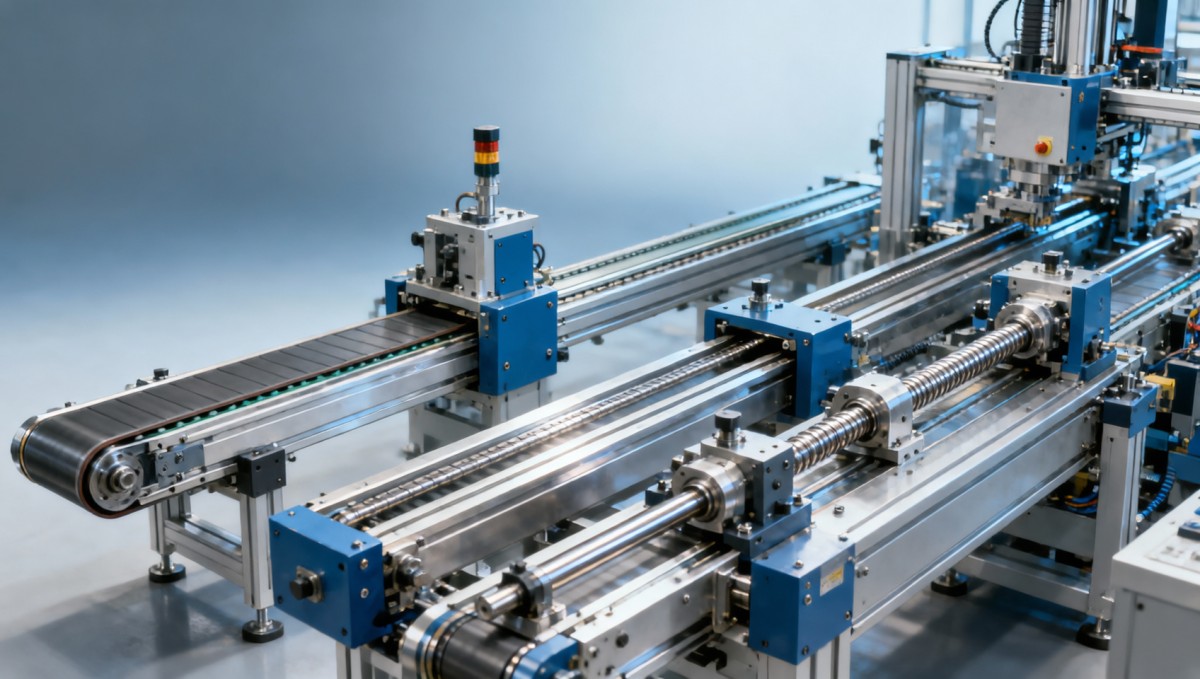
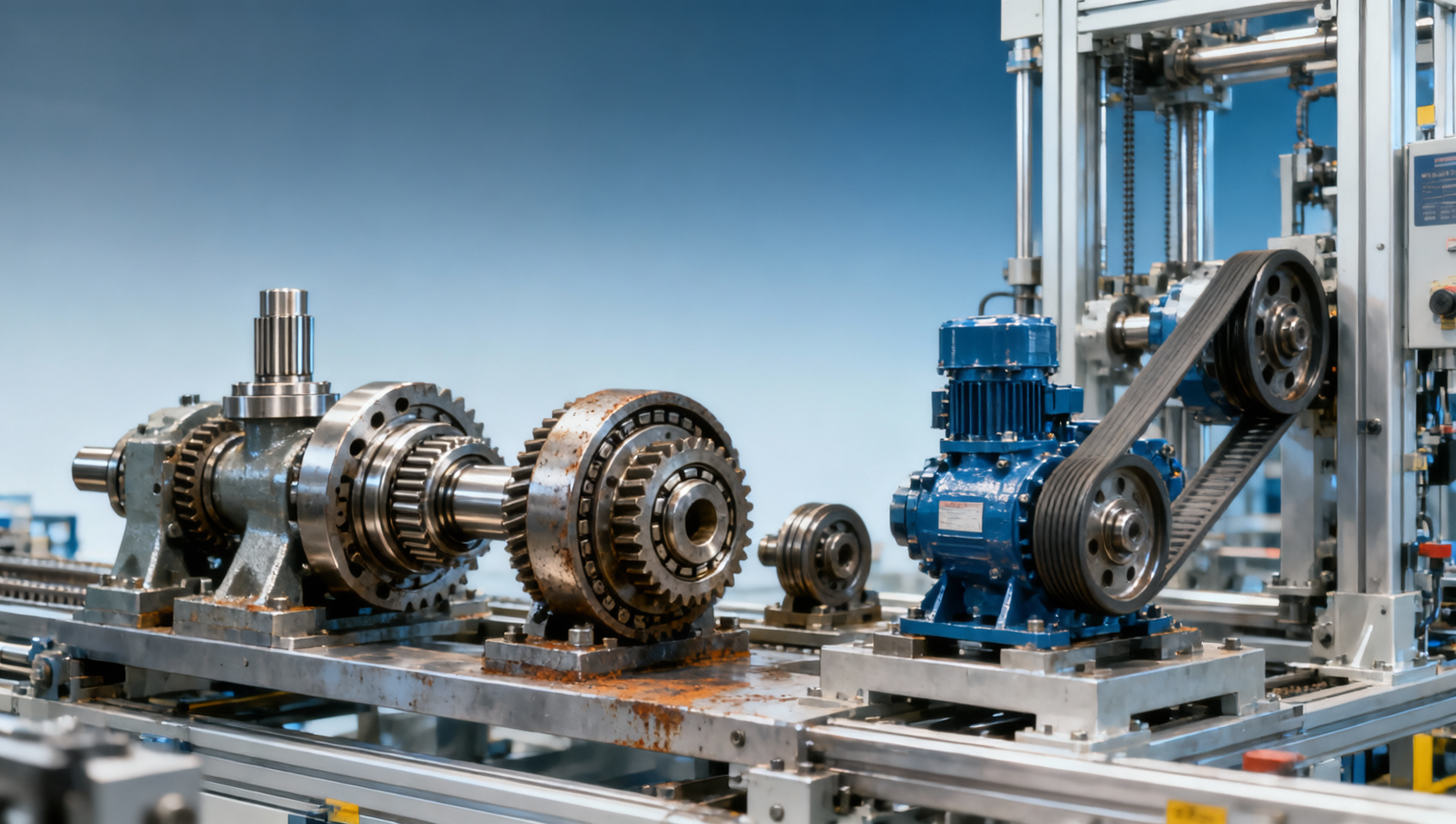
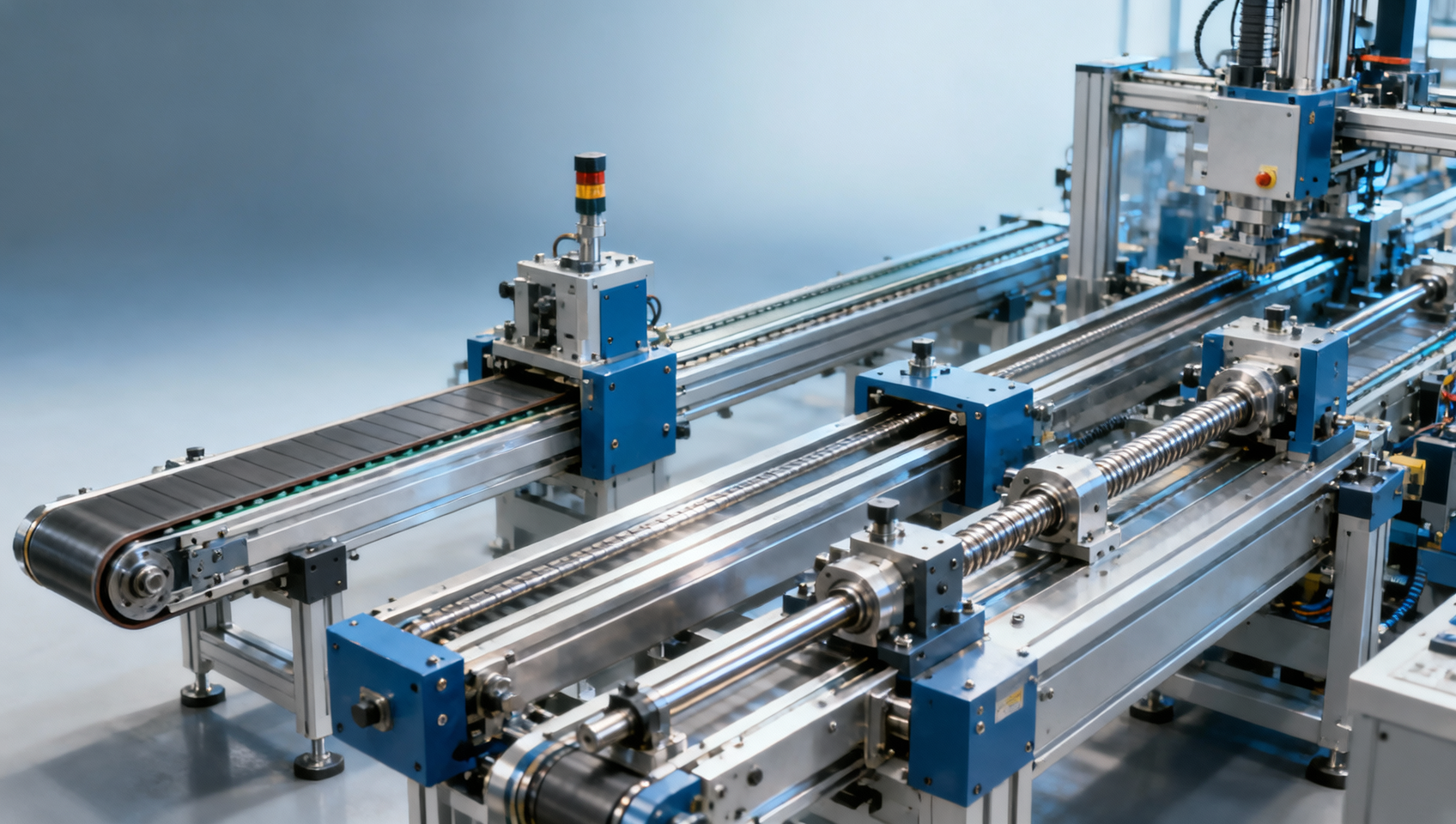
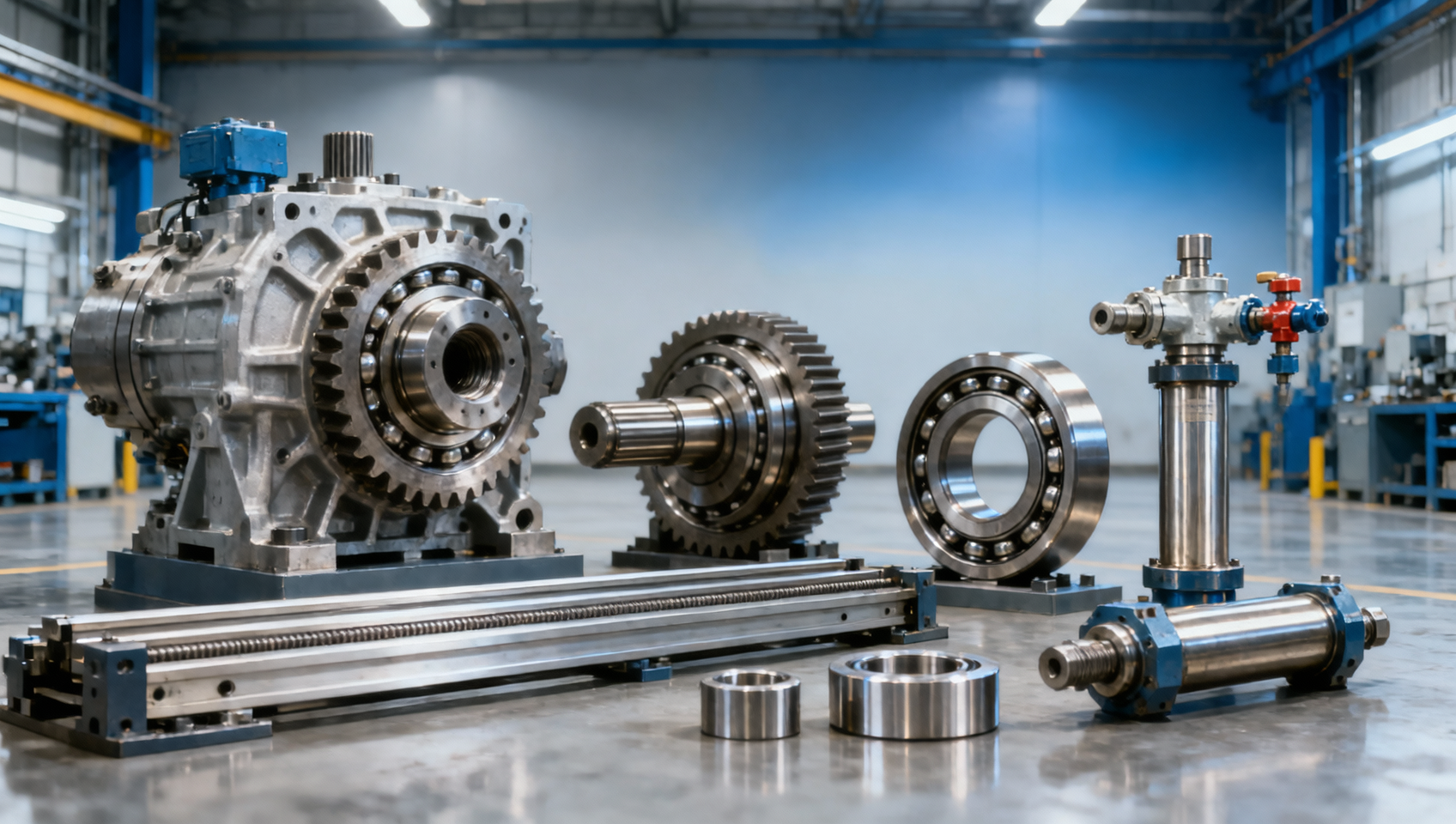
A belt drive linear motion system uses a reinforced belt, pulleys, and guide structure to move a carriage over longer distances at relatively high speed. A ball screw system converts rotary motion into linear travel through a precision screw shaft and recirculating ball nut. Both are proven technologies, but they serve different operating windows.
In many factory settings, belt drives are favored when travel length exceeds 1,500 mm and when target speed reaches 2 to 5 m/s. Ball screws are often selected when repeatability needs tighten into the ±0.01 mm to ±0.05 mm range, especially in assembly, metering, machining support, or medical device handling where positional control matters more than maximum linear speed.
The phrase “for speed” can be misleading if it focuses only on top speed. Real productivity depends on acceleration, settling time, payload stability, and control behavior. A belt drive may achieve higher travel speed over a 2 m stroke, but a ball screw may complete a short 150 mm indexing motion faster if the system requires tight stop accuracy and minimal overshoot.
Environmental conditions also shape the decision. Belt systems generally tolerate dust and long horizontal travel more easily, while ball screws can be more sensitive to contamination, lubrication condition, and critical speed limits. In clean, controlled production cells, ball screw performance is strong. In broader industrial automation, the belt drive often offers more flexibility.
Core performance comparison at a glance
The table below summarizes typical selection ranges used by machine builders, sourcing teams, and engineering project managers during early-stage concept evaluation. Values vary by frame size, guide design, motor selection, and mounting orientation, but these ranges provide a practical starting point.
The practical takeaway is clear: if your process priority is long travel and high throughput, a belt drive usually leads. If your process priority is tighter positioning and process consistency at moderate speed, a ball screw usually justifies the added mechanical precision.
Common selection mistake
A frequent error in capital equipment sourcing is comparing only motor power or only linear speed. The better approach is to evaluate five linked variables together: stroke length, payload, cycle rate, repeatability target, and maintenance interval. Missing even one of these can lead to underperforming machine modules and avoidable retrofit cost within 6 to 12 months.
When belt drive is the better choice for speed-focused automation
Belt drive systems are often the first choice in applications where line speed, long travel, and multi-axis coordination matter more than ultra-fine positioning. This includes pallet transfer, packaging automation, material handling gantries, carton loading, battery module transport, and vision-assisted pick-and-place cells. In these environments, reducing travel time over 1 to 3 m can bring more value than chasing very tight micron-level accuracy.
From an engineering standpoint, belt drives support high acceleration while keeping moving mass manageable. They are also easier to scale into wider machine envelopes, especially in dual-axis or gantry layouts. For system integrators serving advanced manufacturing or smart electronics plants, that flexibility can shorten machine design cycles by 2 to 4 weeks.
From a commercial standpoint, belt-driven axes can reduce initial cost on long-stroke machines. The screw length, support arrangement, and rotation limits that make long ball screw systems more complex do not apply in the same way to belts. This makes belt drive especially attractive in competitive equipment tenders where throughput per square meter is a major purchasing criterion.
However, speed does not mean “fit for all.” Belt elasticity, thermal effects, shock loading, and carriage dynamics can affect positional stability. For applications with repeated short-stop accuracy requirements, such as medical dispensing or precision laser alignment, these limits should be examined carefully before final approval.
Typical scenarios where belt drive adds value
- Long-travel transport axes above 1,500 mm, where cycle time savings accumulate across 20,000 to 80,000 daily movements.
- Packaging and end-of-line automation, where speeds of 2–4 m/s are more critical than sub-0.02 mm positioning.
- Large-format gantries in battery, solar, or panel handling lines, where machine footprint and axis span are major design constraints.
- General industrial transfer systems exposed to dust or variable ambient conditions, where simpler service access improves uptime.
Commercial benefits and practical watchpoints
Procurement teams often favor belt drive when evaluating total installed cost, not just component price. Installation is typically straightforward, spare parts are easier to stock, and service tasks such as tension checking can often be completed during planned maintenance windows. In many facilities, this translates into shorter intervention times, often under 1 to 2 hours for routine inspection.
The watchpoint is wear predictability. Belt systems need periodic review of belt tension, pulley condition, and alignment. If the machine handles abrasive dust, hot chips, or frequent shock reversals, inspection intervals may need to be tightened from every 6 months to every 8 to 12 weeks depending on duty cycle. That service discipline should be built into the procurement plan, not treated as an afterthought.
When ball screw wins despite lower maximum speed
Ball screw systems remain the preferred choice when precision, stiffness, and repeatable thrust are more important than long-stroke speed. In automotive parts machining support, medical device assembly, dosing systems, test equipment, and fine adjustment stations, the ability to hold position accurately under load often determines final product quality.
A ball screw transmits force with high mechanical efficiency and low backlash when properly configured. That gives it strong performance in vertical axes, pressing operations, and controlled feed movements. In many applications, speeds above 1 m/s are unnecessary because the dominant requirement is stable positioning over thousands of repeated cycles with minimal variation.
For quality managers and project leads, the benefit is process control. If an assembly station requires repeatability of ±0.02 mm, or if a machining-related positioning stage must minimize axial compliance, a ball screw usually provides a safer technical margin. The added precision can reduce downstream rejects, rework, and calibration drift across production batches.
The trade-off lies in stroke and rotational limits. As screw length increases, the risk of critical speed, whip, and vibration rises. That is why ball screw systems are more commonly used on shorter to medium strokes, often below 1,500 mm unless the design includes special support arrangements. Overextending the screw architecture for the wrong application usually increases cost without improving throughput.
Application-oriented comparison for buyers
The next table helps sourcing teams connect operating priorities with the more suitable linear motion option. It is especially useful for RFQ preparation, internal equipment reviews, and cross-functional discussions between engineering, operations, and finance.
This comparison shows why “faster” is not always the same as “more productive.” In many precision stations, a ball screw’s better settling behavior and force control outweigh its lower maximum travel speed. That difference matters when product quality, traceability, or calibration stability carries direct commercial risk.
Key risk if underspecified
If a ball screw is selected without checking duty cycle, lubrication schedule, or contamination control, wear can increase quickly and positioning quality can drift. For plants running 2 or 3 shifts, maintenance planning should include lubrication frequency, seal condition review, and replacement timing based on actual cycle counts rather than only calendar months.
A practical selection framework for engineering, procurement, and finance teams
A reliable selection process should align technical performance with business outcomes. In cross-functional buying decisions, engineering often prioritizes motion quality, operations focus on uptime, and finance reviews capital and maintenance cost. The best choice emerges when all three perspectives are evaluated together through a structured scoring process instead of isolated component comparison.
For most B2B projects, five decision categories are enough to reach a sound shortlist: speed and stroke, positioning requirement, environmental exposure, service model, and lifecycle economics. A team that scores each category from 1 to 5 can usually narrow the choice within one review cycle and avoid repeated redesign discussions later.
Lifecycle economics deserve particular attention. A belt drive may have lower acquisition cost on long axes, but if the application demands frequent recalibration or higher belt replacement frequency, the savings can narrow. A ball screw may cost more upfront, yet reduce scrap or improve process stability enough to pay back in 12 to 24 months. The answer depends on process value, not only hardware price.
Distributors and machine builders should also check supplier support depth. Availability of guides, belts, nuts, screw assemblies, couplings, and replacement seals can influence actual operating cost more than headline component pricing. Lead times of 7 to 15 days for consumables may be acceptable, while 6 to 10 weeks for critical replacement parts can disrupt production planning.
Five-step selection checklist
- Define stroke length, payload, target speed, and daily cycle count with realistic operating values rather than design assumptions.
- Set the required repeatability and allowable settling time based on process output, such as assembly tolerance, inspection precision, or transfer window.
- Review environmental conditions including dust, coolant mist, washdown exposure, and temperature variation, especially if shifts run 16 to 24 hours per day.
- Estimate maintenance workload over at least 3 years, including lubrication tasks, belt or screw wear checks, spare inventory, and technician access time.
- Compare total cost of ownership, not just purchase cost, using downtime risk, reject cost, and replacement lead time as decision inputs.
Procurement questions that reduce project risk
Before issuing a purchase order, ask suppliers for speed versus payload curves, repeatability range, recommended lubrication intervals, maximum unsupported stroke guidance, and spare parts availability. Also request installation tolerances and alignment requirements. These details often reveal whether an attractive quote will remain practical after commissioning.
For enterprise buyers using a vendor approval process, it is useful to separate mandatory criteria from preferred criteria. Mandatory items may include safety compatibility, service support response within 24 to 48 hours, and documented maintenance guidance. Preferred items may include local stock, modular mounting options, or compatible motor interfaces.
Maintenance, lifecycle cost, and implementation considerations
Once the linear motion system is installed, operational discipline determines whether the expected performance is achieved. Maintenance should be tailored to duty cycle, orientation, contamination level, and stop-start frequency. In high-speed automation, neglecting small issues such as belt tension drift or lubrication interval slippage can cause vibration, noise, position variation, and premature component wear.
Belt drive systems typically need periodic checks for belt wear, tension stability, pulley condition, and axis alignment. Ball screw systems require closer attention to lubrication quality, screw cleanliness, preload condition, and axial play. For 2-shift plants, routine inspection every 8 to 12 weeks is common; for lighter duty machines, every 4 to 6 months may be sufficient if the environment is controlled.
Implementation planning should also account for commissioning and training. Operators and maintenance staff need clear service instructions, acceptable wear thresholds, and escalation rules. A technically strong axis can still underperform if the plant team lacks guidance on lubrication volume, allowable noise change, or alignment verification after machine relocation.
For project managers, the best deployment model combines specification review, pre-install inspection, commissioning validation, and a 90-day performance check. That four-stage approach helps catch mounting errors early and supports more accurate budgeting for future spare demand across multi-line facilities.
Typical maintenance and cost planning considerations
The following table gives a practical planning reference for operations teams, service coordinators, and buyers preparing maintenance budgets or framework agreements.
The most important conclusion is that lifecycle performance depends less on the label “belt” or “ball screw” and more on correct application matching and maintenance execution. A well-chosen system with clear service discipline often outperforms a theoretically superior system used outside its ideal range.
Frequently asked questions
Which is faster: belt drive or ball screw?
In most long-stroke applications, belt drive is faster, often reaching 2–5 m/s versus about 0.3–1.5 m/s for many ball screw systems. But for short, precise indexing moves, ball screw performance may produce better net cycle time because stop accuracy and settling can be more stable.
Which option is better for precision manufacturing?
Ball screw is usually better when repeatability targets tighten below ±0.05 mm or when thrust stiffness matters. This is common in medical device assembly, metering, inspection positioning, and machining support modules where process repeatability affects final quality.
How should buyers compare total cost?
Compare at least four items: initial hardware cost, maintenance hours per year, spare part lead time, and production loss risk during downtime. A lower-priced axis is not automatically the lower-cost option if it causes more service stops or higher reject rates over a 3-year operating window.
What information should be included in an RFQ?
An RFQ should specify stroke, payload, speed, acceleration, mounting orientation, ambient condition, repeatability target, duty cycle, and preferred maintenance interval. Without these details, supplier quotations may look comparable but deliver very different real-world performance.
For high-speed automation, belt drive is usually the better choice when long travel, rapid transfer, and scalable machine layout are the priority. Ball screw is usually the stronger option when precision, stiffness, and controlled force matter more than maximum speed. The right decision comes from matching motion technology to process value, environmental conditions, and service capacity.
For manufacturers, sourcing teams, distributors, and project leaders evaluating linear motion systems across advanced manufacturing, healthcare technology, smart electronics, and related industrial automation fields, a structured comparison can prevent expensive redesigns and improve long-term uptime. To explore solution-fit, supplier evaluation criteria, or application-specific trade-offs, contact TradeNexus Pro to get tailored guidance, compare sourcing options, and learn more about practical motion system strategies for your next project.
Get weekly intelligence in your inbox.
No noise. No sponsored content. Pure intelligence.
 Apr 17, 2026Temperature data loggers drift unpredictably inside lithium-ion battery storage enclosuresTemperature data loggers drift unpredictably inside lithium-ion battery storage enclosures
 Apr 17, 2026Are solar microinverters really worth the extra cost?Are solar microinverters really worth the extra cost?
 Apr 17, 2026Bifacial solar panels: How much more energy can they generate?Bifacial solar panels: How much more energy can they generate?
 Apr 17, 2026Gear manufacturing: How to optimize production for high precision?Gear manufacturing: How to optimize production for high precision?
 Apr 17, 2026Why power transmission components fail earlier than expectedWhy power transmission components fail earlier than expected
 Apr 17, 2026Linear motion systems: belt drive or ball screw for speed?Linear motion systems: belt drive or ball screw for speed?
 Apr 17, 2026Industrial bearing suppliers: what signals reliable quality?Industrial bearing suppliers: what signals reliable quality?
 Apr 17, 2026When pneumatic valves wholesale gets expensive laterWhen pneumatic valves wholesale gets expensive later
 Apr 17, 2026Hydraulic cylinder fabrication mistakes that cause oil leaksHydraulic cylinder fabrication mistakes that cause oil leaks
 Apr 17, 2026Heavy equipment manufacturing delays often start hereHeavy equipment manufacturing delays often start here
 Apr 17, 2026Custom heatsinks: when a larger size solves nothingCustom heatsinks: when a larger size solves nothing
 Apr 17, 2026Electronic enclosure fabrication: steel or aluminum?Electronic enclosure fabrication: steel or aluminum?
 Apr 17, 2026Automotive parts machining tolerances that drive up scrapAutomotive parts machining tolerances that drive up scrap
 Apr 17, 2026Medical device manufacturing changes under tighter traceabilityMedical device manufacturing changes under tighter traceability
 Apr 17, 2026How to Choose Solid State Batteries in 2026How to Choose Solid State Batteries in 2026
 Apr 17, 2026Are Solid State Batteries Worth the Cost Yet?Are Solid State Batteries Worth the Cost Yet?
 Apr 17, 2026Commercial Energy Storage Sizing: What Matters Most?Commercial Energy Storage Sizing: What Matters Most?
 Apr 17, 2026Commercial Energy Storage ROI: How to Assess ItCommercial Energy Storage ROI: How to Assess It
 Apr 17, 2026Off Grid Solar Systems: What to Avoid FirstOff Grid Solar Systems: What to Avoid First
 Apr 17, 2026Who Should Use Off Grid Solar Systems?Who Should Use Off Grid Solar Systems?
 Apr 17, 2026Solar Microinverters vs String Inverters: Which Fits?Solar Microinverters vs String Inverters: Which Fits?
 Apr 17, 2026When Do Solar Microinverters Make More Sense?When Do Solar Microinverters Make More Sense?
 Apr 17, 2026How digital freight matching for international shipping cuts transit time by up to 22% in 2026How digital freight matching for international shipping cuts transit time by up to 22% in 2026
 Apr 17, 2026Why port automation tech for smart logistics reduces container handling errors by 37% at Tier-1 terminalsWhy port automation tech for smart logistics reduces container handling errors by 37% at Tier-1 terminals
 Apr 17, 2026What yard management systems for port operations actually deliver in real-world deploymentsWhat yard management systems for port operations actually deliver in real-world deployments
 Apr 17, 2026Can digital customs clearance for sea freight reduce D/O processing from 48 hours to under 90 minutesCan digital customs clearance for sea freight reduce D/O processing from 48 hours to under 90 minutes
 Apr 17, 2026How returnable transport packaging for automotive parts lowers TCO by 18–25% over 3 yearsHow returnable transport packaging for automotive parts lowers TCO by 18–25% over 3 years