Commercial Energy Storage Sizing: What Matters Most?
Choosing the right commercial energy storage size is not just a technical calculation—it directly affects project ROI, system safety, and long-term reliability. From off grid solar systems and solar microinverters to emerging solid state batteries, every component changes the sizing logic. For buyers, engineers, and decision-makers, understanding what matters most helps reduce risk, control costs, and build a more resilient energy strategy.
In commercial settings, storage sizing is rarely a one-variable exercise. A warehouse with a 300 kW daytime peak, a healthcare facility needing 2 hours of backup autonomy, and a manufacturing site managing demand charges all require different battery capacities, inverter ratings, and operational strategies. Oversizing increases capital cost and can delay payback by 2–4 years, while undersizing may leave critical loads exposed or limit revenue from peak shaving.
For technical evaluators, project managers, safety teams, and financial approvers, the core question is not simply “How many kilowatt-hours do we need?” It is “What system size supports the actual load profile, duty cycle, expansion plan, and compliance requirements of this site?” The answer depends on application, battery chemistry, dispatch logic, and installation constraints.
Start with the Load Profile, Not the Battery Catalog
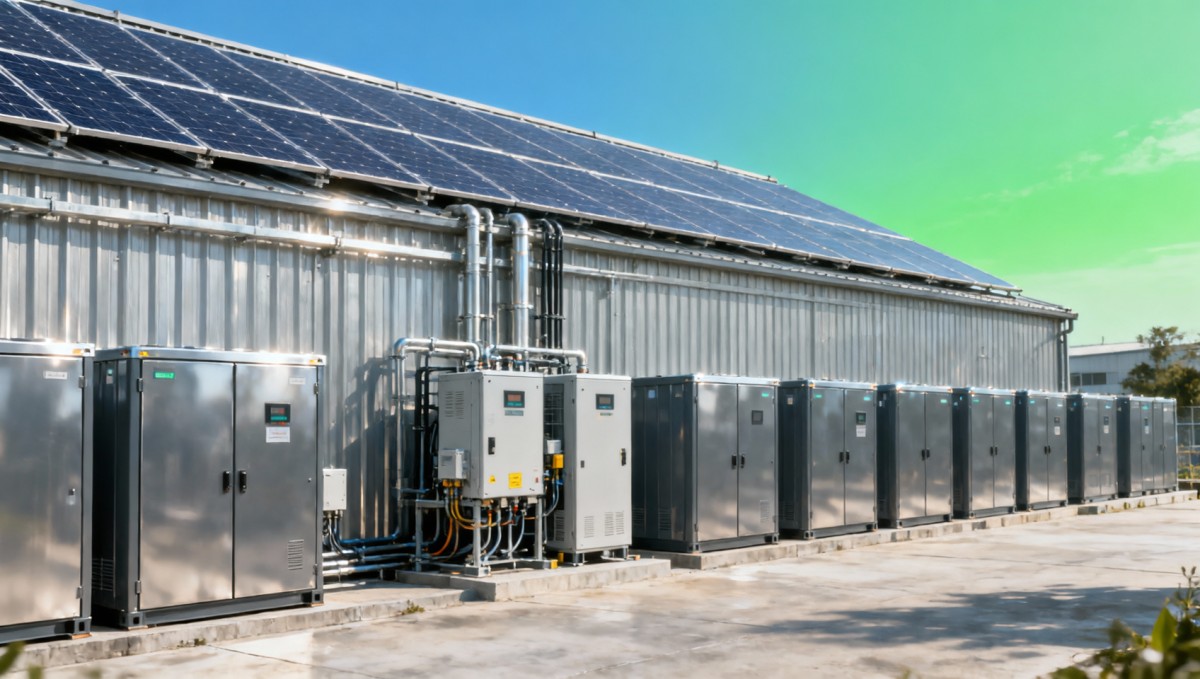
The most reliable commercial energy storage sizing process begins with site data. A 15-minute interval load profile over at least 30–90 days gives a much better sizing basis than monthly utility bills alone. Demand spikes, night loads, weekend patterns, and seasonal fluctuations all affect whether a site needs 100 kWh, 500 kWh, or several MWh.
In many projects, decision-makers focus on energy consumption in kWh but overlook power demand in kW. That mistake can distort system design. A site may consume 1,200 kWh per day yet still need a 250 kW discharge capability to cover short-duration peaks. In other cases, the load is steady and a lower power-to-energy ratio such as 0.5C may be sufficient.
Commercial energy storage sizing should also separate critical loads from flexible loads. If only refrigeration, server racks, security systems, and selected process lines must remain online during outages, the required storage capacity may be 30%–60% lower than sizing for the full facility. This distinction can materially reduce capex without compromising resilience.
Off grid solar systems require an even stricter approach. Because there is no grid fallback, the battery must cover daily energy use, low-solar periods, inverter losses, and a reserve margin. Many designers use 10%–20% extra capacity as an operational buffer, but the exact reserve should reflect local irradiance variability and the acceptable risk of curtailment or downtime.
Key data inputs before any sizing decision
- Peak demand in kW and how long peaks last, such as 15 minutes, 1 hour, or 3 hours.
- Average daily consumption in kWh, split by weekday, weekend, and seasonal changes.
- Critical load percentage, often between 20% and 70% of total site load.
- Expected outage duration, for example 30 minutes for ride-through or 4 hours for backup.
- Planned growth in load over the next 12–36 months.
The table below shows how application goals change the sizing logic. This is often the fastest way for procurement and engineering teams to align on whether the project is driven by savings, reliability, or renewable integration.
The key takeaway is straightforward: commercial energy storage sizing starts with how the site consumes and values electricity. Once the use case is clear, battery capacity, inverter size, and control strategy become much easier to define with confidence.
Battery Chemistry, Depth of Discharge, and System Efficiency Matter More Than Nameplate Capacity
A 500 kWh battery is not always 500 kWh of usable energy. Usable capacity depends on depth of discharge, round-trip efficiency, operating temperature, and aging allowance. For many lithium iron phosphate systems, an 80%–90% usable depth of discharge is common. If the round-trip efficiency is 88%–94%, the real deliverable energy over a duty cycle will be lower than the headline number suggests.
This becomes critical in commercial energy storage sizing because financial models often assume ideal performance. If a project requires 400 kWh of reliable usable energy, specifying a 400 kWh nameplate system may be inadequate. After accounting for reserve margin and conversion losses, the installed capacity may need to be closer to 470–550 kWh, depending on the architecture.
Chemistry selection also affects footprint, thermal management, safety protocols, and lifecycle cost. Lithium iron phosphate remains a common choice in commercial projects because of its stability and cycle life, often reaching 4,000–8,000 cycles under suitable operating conditions. Emerging solid state batteries are attracting attention for energy density and safety potential, but commercial adoption still depends on availability, pricing, and field-proven performance.
When solar microinverters or DC-coupled PV systems are involved, energy conversion paths must be mapped carefully. Every conversion stage adds losses, and those losses can accumulate across the year. A difference of 3%–5% in system efficiency can materially change annual savings and the effective storage duration available to the user.
What procurement and engineering teams should verify
- Usable energy at beginning of life and expected usable energy after 5–10 years.
- Cycle life under the intended operating window, not only under laboratory conditions.
- Operating temperature range and whether HVAC or enclosure conditioning is required.
- Fire detection, suppression interface, and local code compliance requirements.
- Warranty triggers, especially throughput limits and capacity retention terms.
The following table compares practical sizing implications across common storage technology paths. It is not a ranking table, but a procurement aid for aligning technical performance with business priorities.
For quality and safety managers, the main message is that nameplate figures should never be accepted in isolation. Commercial energy storage sizing becomes more accurate when usable energy, degradation, and efficiency are modeled together from the beginning.
Sizing for Economics: Demand Charges, Tariffs, and Payback Windows
Technical fit alone does not justify a storage project. In commercial environments, system size should be tied directly to the tariff structure and the economic mechanism that creates value. If the main target is demand charge reduction, the battery should be sized around recurring peak intervals, not around total daily consumption. In many markets, shaving just 50–150 kW from monthly peaks can materially improve project economics.
For time-of-use arbitrage, duration matters more than short burst power. A site that buys power during a 4-hour evening peak may need a storage duration of 2–4 hours to capture the relevant spread. If the tariff difference is small, oversizing the battery can erode returns. If the tariff spread is large and repeatable, a slightly larger system may shorten payback.
Financial approvers should also examine cycle frequency. A battery designed for one cycle per day may perform very differently from one dispatched 2–3 times daily. Higher cycling can increase savings but also accelerates throughput accumulation. This is why commercial energy storage sizing should connect dispatch strategy with warranty conditions and maintenance assumptions, not just with the purchase price.
Another frequently overlooked factor is future load expansion. If a facility expects a 20% production increase within 18 months, a system sized tightly for current demand may become undersized before the investment is fully amortized. Modular storage blocks often help here, allowing staged expansion rather than forcing a full oversize from day one.
A practical financial review checklist
- Map the top 10–20 peak intervals each month and estimate how many kW need to be shaved.
- Review tariff windows and identify whether value is created over 1 hour, 2 hours, or 4 hours.
- Model at least 3 cases: conservative, expected, and high-utilization dispatch.
- Include battery degradation and inverter losses in the savings model.
- Compare fixed-size deployment versus modular expansion over 12–24 months.
The businesses that gain the most are usually those that match storage size to a clearly monetized problem. A system designed to do everything at once can be technically impressive but financially inefficient. A system designed around one or two measurable value streams is often easier to approve and manage.
Site Constraints, Safety Rules, and Integration Risks Can Change the “Right” Size
Even when the energy model looks solid, real-world installation constraints can alter system sizing. Available floor area, outdoor pad space, ventilation pathways, fire separation distances, and transformer capacity all influence what can actually be deployed. A theoretically optimal 1 MWh design may need to be split into smaller cabinets or reconfigured due to site access and code requirements.
Safety teams should evaluate thermal management, emergency isolation, and maintenance access from the earliest project phase. In high-occupancy commercial buildings, battery placement often triggers stricter requirements than in utility or remote industrial sites. Projects may also require coordination with local electrical inspectors, fire authorities, and facility insurers, adding 2–8 weeks to the approval cycle if not planned early.
Integration with existing solar assets matters as well. Off grid solar systems, hybrid inverters, generator sets, and solar microinverters each impose different control and synchronization requirements. If the storage system must support black start, generator coordination, or seamless transfer for critical loads, the inverter and control layer may become the real bottleneck rather than the battery cabinets themselves.
Project leaders should also consider maintenance logistics. A dense battery configuration may look efficient on paper, but if service clearance is inadequate or replacement access is difficult, downtime and labor cost can rise over the system life. In commercial energy storage sizing, maintainability is part of the design equation, not a post-installation issue.
Common implementation risks
Electrical mismatch
If the inverter rating, switchgear capacity, and transformer headroom are not aligned, the project may need redesign after procurement. This can affect both timeline and total installed cost.
Insufficient safety clearance
Battery rooms and outdoor enclosures need proper access, ventilation, and emergency response planning. Compressing layout too aggressively to maximize capacity can create approval and service issues.
Control strategy gaps
Without a clear EMS logic, a well-sized battery may still underperform. Charge windows, reserve settings, generator interaction, and solar curtailment rules should be defined before commissioning.
The right size, therefore, is not only the size that meets the load model. It is the size that can be installed safely, integrated cleanly, and operated predictably under actual site conditions.
A Practical Sizing Framework for Buyers, Engineers, and Decision-Makers
For most commercial projects, the best approach is a staged evaluation process. This keeps technical teams, finance stakeholders, and operational users aligned. It also reduces the risk of approving a storage size that looks acceptable in a proposal but does not perform under live site conditions.
Step one is to define the primary objective in measurable terms: reduce peak demand by 100 kW, maintain critical loads for 3 hours, or absorb 70% of excess midday solar. Step two is to verify site data and constraints, including interval load profiles, one-line diagrams, and available installation space. Step three is to compare at least 2–3 system architectures using usable capacity rather than nameplate capacity alone.
Step four should be a scenario model. Run a base case, a conservative case with reduced usable capacity, and a growth case with 10%–20% higher future load. Step five is operational review: who will monitor alarms, how often will performance be reviewed, and what reserve level must remain available for safety-critical events? These questions directly influence final commercial energy storage sizing.
For distributors, agents, and solution partners, this framework is also a sales quality tool. It helps filter projects that are technically viable, financially defensible, and operationally supportable. That improves close rates while reducing post-sale redesign and warranty disputes.
Recommended evaluation sequence
This framework highlights a central point: the best system size is the result of cross-functional review. Operations teams define continuity needs, engineers validate technical fit, safety personnel assess risk, and finance evaluates whether the return profile matches investment criteria.
FAQ
How much reserve margin should a commercial battery system include?
A common planning range is 10%–20%, especially where outage support or solar variability is important. The exact figure depends on whether the site can tolerate partial load shedding and how predictable the charging source is.
Is a larger battery always better for ROI?
No. If the extra capacity is rarely dispatched, it increases capital cost without creating proportional savings. In many demand-charge projects, the highest-value portion of the battery is the first 1–2 hours of useful discharge.
When should solid state batteries be considered?
They may be worth evaluating for future-focused projects where energy density, safety roadmap, or strategic differentiation matters. Buyers should still verify commercial maturity, serviceability, and supply availability before making them the base case.
What is the minimum data set needed before requesting a formal proposal?
At minimum, provide 30–90 days of interval load data, desired application target, site electrical diagram, installation constraints, and any backup duration requirement. Without these inputs, proposals tend to be generic and less reliable.
Commercial energy storage sizing is most successful when it balances four dimensions at once: actual load behavior, usable battery performance, economic value streams, and site-specific safety constraints. Whether the project supports off grid solar systems, solar microinverters, backup resilience, or tariff optimization, the right size is the one that performs reliably under real operating conditions and remains defensible to engineering, finance, and compliance teams.
TradeNexus Pro helps B2B buyers and decision-makers evaluate technologies, compare solution paths, and reduce uncertainty in complex sourcing and deployment decisions across the green energy value chain. If you are assessing a commercial storage project, planning a procurement strategy, or comparing integration options, contact us to get tailored insights, explore solution-fit criteria, and learn more about practical pathways to a bankable energy storage deployment.
Get weekly intelligence in your inbox.
No noise. No sponsored content. Pure intelligence.
 Apr 17, 2026Temperature data loggers drift unpredictably inside lithium-ion battery storage enclosuresTemperature data loggers drift unpredictably inside lithium-ion battery storage enclosures
 Apr 17, 2026Are solar microinverters really worth the extra cost?Are solar microinverters really worth the extra cost?
 Apr 17, 2026Bifacial solar panels: How much more energy can they generate?Bifacial solar panels: How much more energy can they generate?
 Apr 17, 2026Gear manufacturing: How to optimize production for high precision?Gear manufacturing: How to optimize production for high precision?
 Apr 17, 2026Why power transmission components fail earlier than expectedWhy power transmission components fail earlier than expected
 Apr 17, 2026Linear motion systems: belt drive or ball screw for speed?Linear motion systems: belt drive or ball screw for speed?
 Apr 17, 2026Industrial bearing suppliers: what signals reliable quality?Industrial bearing suppliers: what signals reliable quality?
 Apr 17, 2026When pneumatic valves wholesale gets expensive laterWhen pneumatic valves wholesale gets expensive later
 Apr 17, 2026Hydraulic cylinder fabrication mistakes that cause oil leaksHydraulic cylinder fabrication mistakes that cause oil leaks
 Apr 17, 2026Heavy equipment manufacturing delays often start hereHeavy equipment manufacturing delays often start here
 Apr 17, 2026Custom heatsinks: when a larger size solves nothingCustom heatsinks: when a larger size solves nothing
 Apr 17, 2026Electronic enclosure fabrication: steel or aluminum?Electronic enclosure fabrication: steel or aluminum?
 Apr 17, 2026Automotive parts machining tolerances that drive up scrapAutomotive parts machining tolerances that drive up scrap
 Apr 17, 2026Medical device manufacturing changes under tighter traceabilityMedical device manufacturing changes under tighter traceability
 Apr 17, 2026How to Choose Solid State Batteries in 2026How to Choose Solid State Batteries in 2026
 Apr 17, 2026Are Solid State Batteries Worth the Cost Yet?Are Solid State Batteries Worth the Cost Yet?
 Apr 17, 2026Commercial Energy Storage Sizing: What Matters Most?Commercial Energy Storage Sizing: What Matters Most?
 Apr 17, 2026Commercial Energy Storage ROI: How to Assess ItCommercial Energy Storage ROI: How to Assess It
 Apr 17, 2026Off Grid Solar Systems: What to Avoid FirstOff Grid Solar Systems: What to Avoid First
 Apr 17, 2026Who Should Use Off Grid Solar Systems?Who Should Use Off Grid Solar Systems?
 Apr 17, 2026Solar Microinverters vs String Inverters: Which Fits?Solar Microinverters vs String Inverters: Which Fits?
 Apr 17, 2026When Do Solar Microinverters Make More Sense?When Do Solar Microinverters Make More Sense?
 Apr 17, 2026How digital freight matching for international shipping cuts transit time by up to 22% in 2026How digital freight matching for international shipping cuts transit time by up to 22% in 2026
 Apr 17, 2026Why port automation tech for smart logistics reduces container handling errors by 37% at Tier-1 terminalsWhy port automation tech for smart logistics reduces container handling errors by 37% at Tier-1 terminals
 Apr 17, 2026What yard management systems for port operations actually deliver in real-world deploymentsWhat yard management systems for port operations actually deliver in real-world deployments
 Apr 17, 2026Can digital customs clearance for sea freight reduce D/O processing from 48 hours to under 90 minutesCan digital customs clearance for sea freight reduce D/O processing from 48 hours to under 90 minutes
 Apr 17, 2026How returnable transport packaging for automotive parts lowers TCO by 18–25% over 3 yearsHow returnable transport packaging for automotive parts lowers TCO by 18–25% over 3 years