Heavy equipment manufacturing delays often start here
Heavy equipment manufacturing delays often begin long before assembly—inside overlooked sourcing gaps for power transmission components, linear motion systems, industrial bearing suppliers, pneumatic valves wholesale, and hydraulic cylinder fabrication. For teams evaluating custom heatsinks, electronic enclosure fabrication, automotive parts machining, and medical device manufacturing capabilities, understanding these upstream risks is essential to protecting timelines, quality, and procurement decisions.
In complex B2B manufacturing programs, a late gearbox, an unverified bearing batch, or a hydraulic cylinder that fails dimensional review can push an entire production line off schedule. For procurement leaders, technical evaluators, project managers, quality teams, and financial approvers, the real issue is rarely a single part. The issue is a weak upstream decision framework that allows supply uncertainty, specification drift, and vendor mismatch to enter the project too early.
This is especially relevant across advanced manufacturing, smart electronics, healthcare technology, and supply chain-driven industrial operations, where one missed component can affect lead times by 2–8 weeks and raise total project costs through expediting, rework, or secondary sourcing. The earlier these risks are mapped, the easier it becomes to protect quality, delivery, and commercial outcomes.
Where Heavy Equipment Delays Really Begin
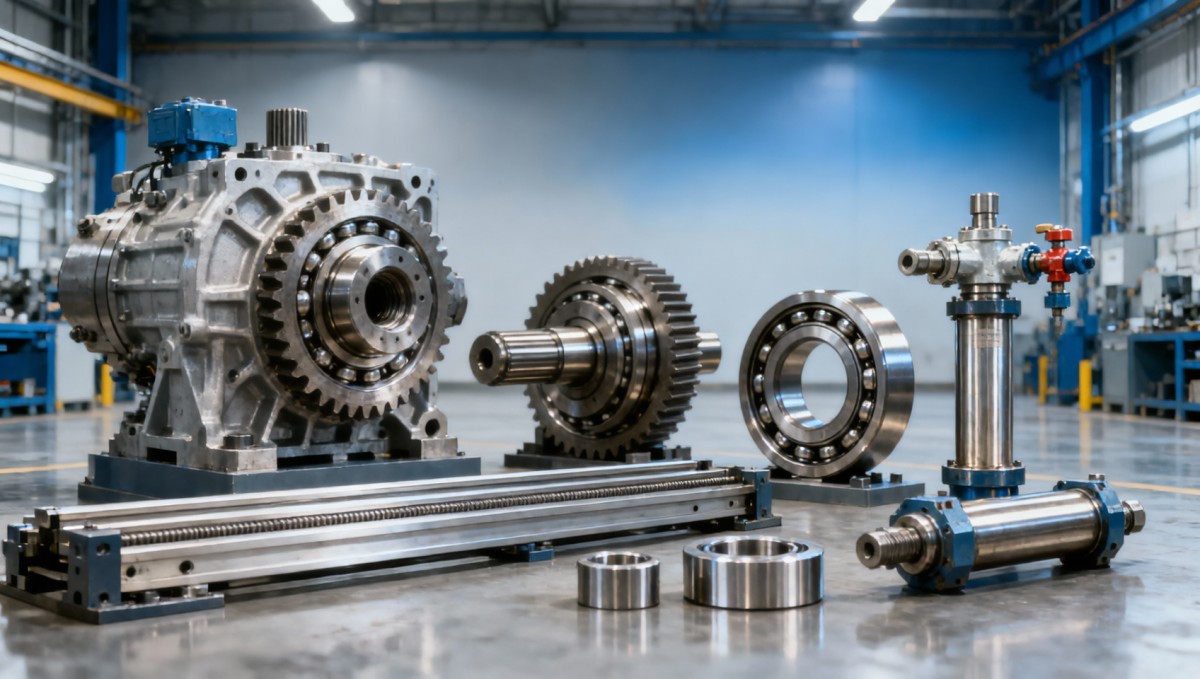
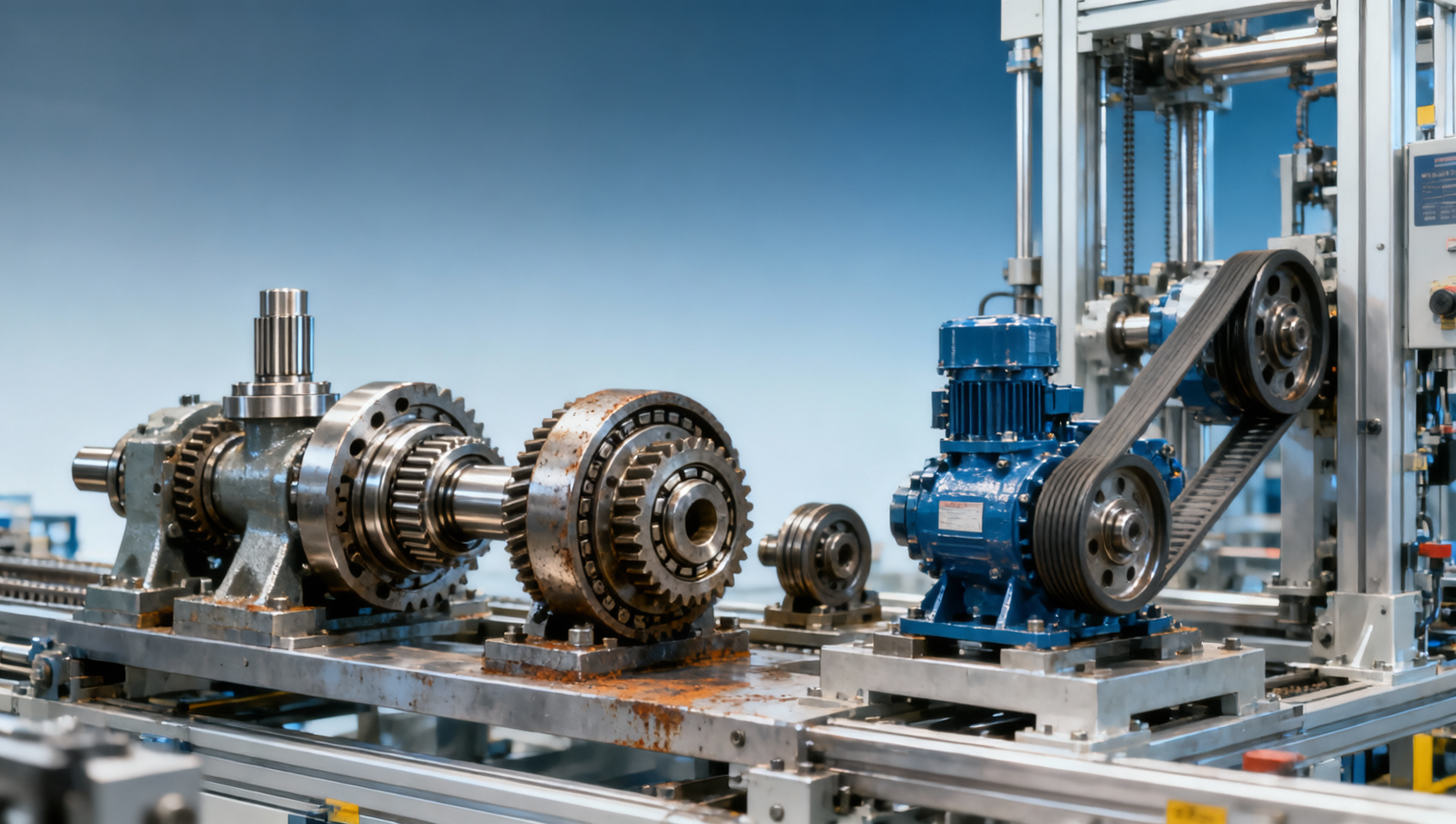
Many organizations assume manufacturing delays start on the shop floor, but in practice they often start during component qualification, supplier onboarding, or engineering clarification. A power transmission assembly may look simple on a bill of materials, yet if coupling tolerances, shaft alignment limits, or lubrication requirements are not fully defined, sourcing can stall for 7–21 days before a purchase order is even released.
The same pattern appears with linear motion systems, industrial bearings, pneumatic valves, and hydraulic cylinder fabrication. These categories carry hidden technical dependencies. Stroke length, pressure range, seal material, contamination resistance, load rating, and mounting geometry all affect interchangeability. A component that is “available” in theory may still be unusable in a real application if it falls outside a ±0.1 mm tolerance band or a 160–250 bar working pressure requirement.
For project owners and engineering managers, the earliest warning signs usually include repeated requests for drawing revisions, inconsistent material certificates, vague lead-time commitments, or suppliers unable to explain inspection methods. When those signals are ignored, downstream teams face schedule compression, higher non-conformance risk, and reduced negotiating leverage.
In cross-sector projects, the challenge grows further. A supplier suitable for automotive parts machining may not be ready for medical device manufacturing expectations, where traceability, cleanliness, and process discipline are often much stricter. Likewise, a vendor capable of basic enclosure fabrication may not support thermal requirements tied to custom heatsinks or electronics integration.
Early-stage sourcing failures that trigger later delays
- Incomplete technical data at RFQ stage, including missing tolerances, finish requirements, or pressure ratings.
- Supplier selection based on price only, without checking process capability, tooling readiness, or inspection resources.
- Overreliance on single-source vendors for high-risk components with 4–12 week replenishment cycles.
- Commercial approvals released before first-article expectations and acceptance criteria are aligned.
The table below outlines where these upstream failures typically occur and how they translate into measurable project impact for industrial buyers and decision-makers.
The key takeaway is simple: if sourcing discipline is weak in the first 10% of the project timeline, the final 90% becomes harder to control. Teams that treat upstream component evaluation as a strategic function rather than an administrative step usually protect both delivery reliability and margin more effectively.
High-Risk Components That Deserve Closer Qualification
Not all sourced items carry the same delay risk. Standard fasteners can often be replaced quickly, but motion, pressure, thermal, and machined components create much deeper exposure. In heavy equipment and adjacent industrial systems, these parts influence machine uptime, safety, load stability, and regulatory acceptability. That makes supplier qualification more important than simple availability.
Power transmission components such as gearboxes, couplings, sprockets, and drive shafts require close review of torque range, alignment tolerance, duty cycle, and lubrication expectations. A supplier that can produce a nominally correct part but cannot validate fatigue resistance or concentricity may introduce hidden failure modes. Typical review points include torque bands such as 50–500 Nm, shaft tolerance class, heat treatment consistency, and lead time for replacement parts.
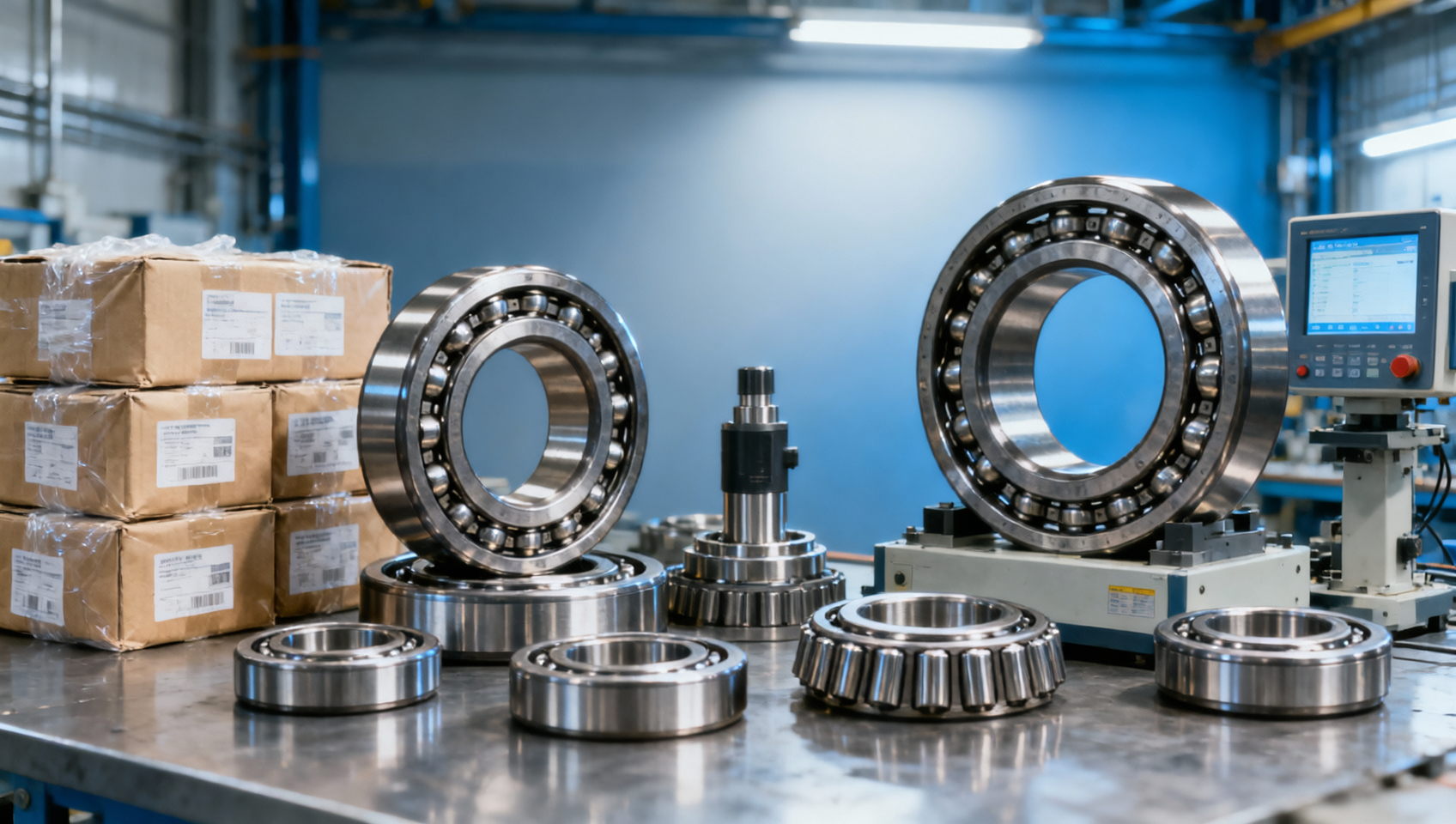
Linear motion systems and industrial bearings also deserve strict scrutiny. Rail straightness, preload grade, dynamic load rating, sealing type, and contamination protection determine whether performance is stable in dust, vibration, or washdown conditions. Even a small mismatch in bearing internal clearance or rail mounting flatness can reduce service life significantly, especially when cycle counts exceed 1 million movements.
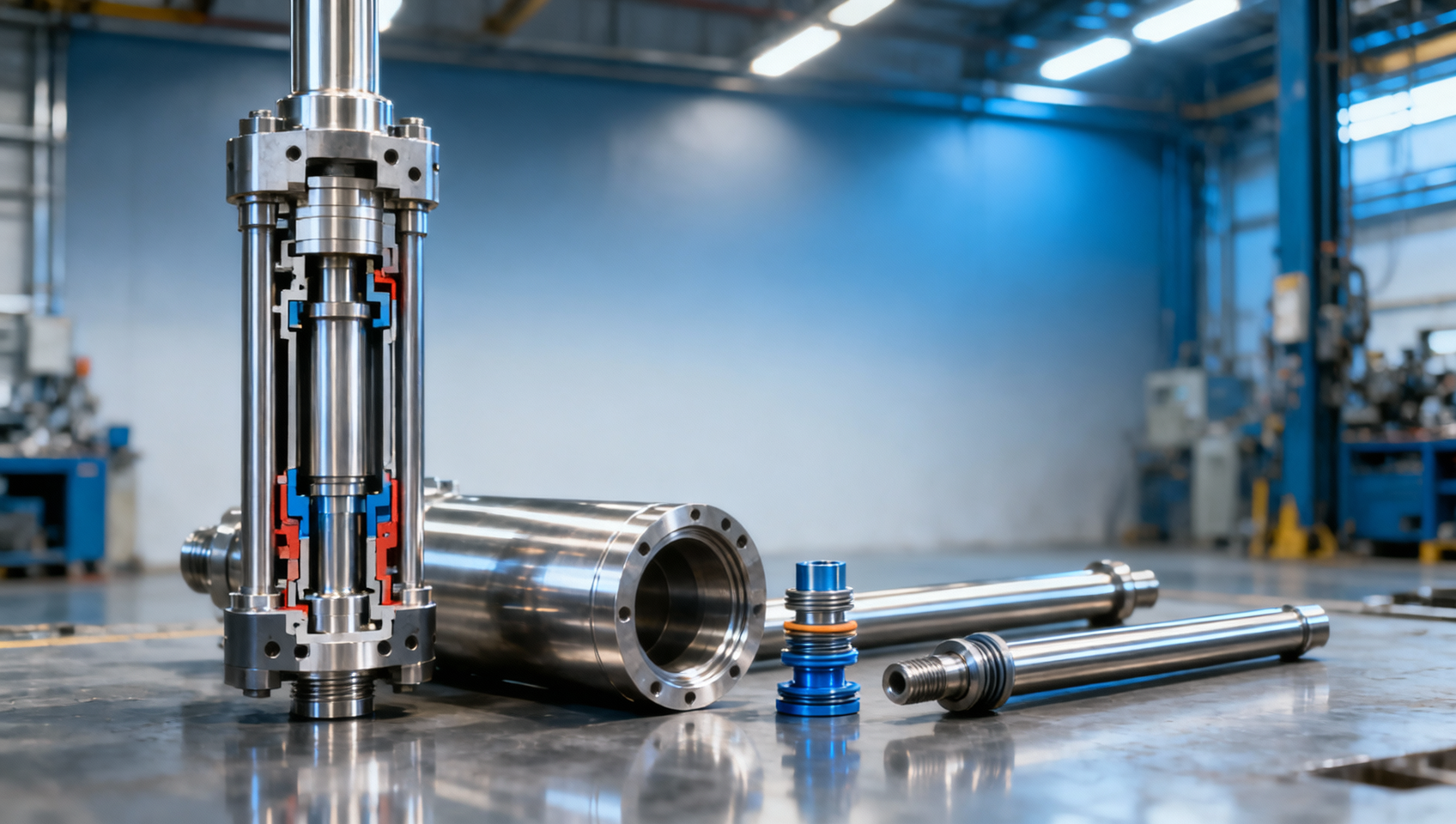
Pneumatic valves wholesale and hydraulic cylinder fabrication introduce another layer of complexity. Buyers must verify pressure range, response time, seal chemistry, rod coating, weld quality, and dimensional repeatability. For hydraulic cylinders, bore size, stroke length, operating pressure, and mounting type should be confirmed before approval. In many industrial applications, delivery can move from 2 weeks to 6 weeks if one custom mounting interface is added late.
Component categories and what to validate first
The comparison below helps technical buyers, operators, and quality managers focus on the checks that matter most before committing to a supplier or approving a release schedule.
A practical qualification rule is to rank components by replacement difficulty, not by unit price. A low-cost bearing with an 8-week lead time may be more dangerous than a higher-cost machined item with local alternatives. That perspective helps commercial teams and finance approvers align risk with purchasing strategy.
A four-point qualification lens
- Check whether the supplier can repeatedly hold the required tolerance and material standard.
- Confirm lead-time realism for both prototype and volume stages, such as 10–15 days versus 4–6 weeks.
- Verify inspection and traceability practices, especially for regulated or safety-sensitive applications.
- Assess fallback options if engineering changes occur after pilot validation.
Why Cross-Industry Manufacturing Complexity Raises Delay Exposure
Heavy equipment programs increasingly overlap with adjacent sectors such as smart electronics, healthcare technology, and advanced enclosure design. That means buyers are no longer evaluating one simple fabrication capability. They are comparing suppliers that may handle automotive parts machining, custom heatsinks, electronic enclosure fabrication, and medical device manufacturing under very different quality expectations.
The risk appears when teams treat these capabilities as interchangeable. For example, a machine shop that performs well on automotive brackets may still struggle with burr control, cleaning validation, or surface consistency required for healthcare-related assemblies. In electronics-focused projects, enclosure tolerances and thermal management often need better coordination than general fabrication vendors can provide. A 1–2 mm design oversight around airflow or mounting features can compromise downstream performance.
Cross-functional teams should therefore evaluate suppliers on process fit, not just category fit. This means asking whether the vendor can support prototype iterations, low-volume pilot runs, and scaled production without changing process discipline. A supplier may quote aggressively for 100 units but lack the quality system or production scheduling depth to support 1,000 units over a 3-month window.
For distributors, agents, and project owners, this distinction matters commercially. Delays triggered by cross-industry mismatch often create secondary costs that are not visible in the original quotation: engineering overtime, qualification repeats, on-site installation disruption, and customer confidence loss. Those hidden costs can easily exceed a 5% to 12% initial savings on piece price.
Common mismatch patterns in mixed manufacturing environments
- Thermal components sourced without confirming real heat-load conditions, airflow limits, or interface flatness.
- Electronic enclosure fabrication approved without checking ingress protection, EMI needs, or final assembly stack-up.
- Automotive-style machining assumptions carried into more tightly controlled healthcare or sensor applications.
- Prototype approval granted before packaging, transport protection, and incoming inspection criteria are defined.
Three questions decision-makers should ask
First, does the supplier understand the end-use environment well enough to challenge incomplete specifications? Second, can the supplier provide documentation suited to the project’s risk level, such as dimensional reports, leak tests, or material traceability? Third, is there enough production flexibility to absorb revision cycles without resetting the entire delivery schedule?
When the answer to any of these questions is unclear, the project should not move directly to full commercial release. A gated qualification path with sample approval, process review, and staged volume release usually lowers risk more effectively than speeding up the first order.
A Practical Procurement Framework for Reducing Delay Risk
A stronger procurement framework does not need to be bureaucratic. It needs to be structured. The most effective B2B teams separate sourcing decisions into technical fit, supply resilience, quality readiness, and commercial control. This 4-part approach makes it easier to evaluate both established suppliers and new vendors entering strategic programs.
Technical fit starts with drawings, specifications, and application context. Buyers should define mandatory parameters such as load range, temperature band, sealing requirement, voltage or pressure level, and dimensional tolerance before RFQ release. If more than 15% of the technical fields are left open to interpretation, quote comparability becomes weak and supplier responses become misleading.
Supply resilience then looks at lead times, sub-tier dependencies, MOQ, and recovery options. A supplier offering a 12-day prototype lead time but relying on a single imported sealing component may still be high risk in volume production. Quality readiness should cover inspection equipment, first-article routines, process control, and response time for non-conformance. Commercial control includes payment terms, price validity window, tooling ownership clarity, and change-order procedures.
For finance teams and business evaluators, this framework improves approval quality because it connects budget decisions to operational risk. Instead of comparing quotes on unit price alone, it allows a more realistic total-cost view that includes delay exposure, requalification effort, and inventory planning.
Recommended evaluation matrix before supplier award
The matrix below can be adapted for heavy equipment components, custom fabrication, or mixed-industry sourcing programs. It helps align engineering, procurement, quality, and management teams around consistent award criteria.
Using a matrix like this does more than reduce confusion. It helps teams identify when a supplier is strong in one area but weak in another. That distinction is important because many delay-prone suppliers are not incapable; they are simply mismatched to the project’s tolerance, documentation, or scheduling needs.
A five-step implementation flow
- Define critical-to-function parameters and non-negotiable acceptance criteria.
- Issue RFQ with drawings, usage conditions, annual volume, and approval timeline.
- Run technical-commercial review with procurement, engineering, and quality together.
- Approve sample or pilot batch before committing to full production quantities.
- Monitor first 30–90 days of delivery performance before expanding spend allocation.
FAQ and Action Priorities for Buyers, Engineers, and Decision-Makers
Teams involved in procurement and project execution often ask the same operational questions when delay risk becomes visible. Addressing them early can reduce confusion across technical review, budget approval, and supplier management.
How long should qualification take for critical industrial components?
For standard catalog items, qualification may take 3–7 business days if technical documentation is complete. For custom hydraulic cylinders, machined automotive parts, or enclosure assemblies, 2–4 weeks is more realistic when samples, drawings, and inspection criteria must be reviewed. Rushing below that range often shifts risk into production instead of removing it.
What should quality and safety teams focus on first?
They should prioritize traceability, dimensional conformity, material verification, and functional testing. For pressure or motion-related parts, leak testing, load validation, and wear-related checks are usually essential. For electronics and healthcare-adjacent assemblies, cleanliness, fit consistency, and thermal performance may be equally important.
How can finance approvers evaluate sourcing risk without reviewing every technical detail?
A useful shortcut is to request four commercial-risk indicators: committed lead-time range, MOQ, percentage of custom content, and expected cost of requalification if the first source fails. If a part has more than 50% custom content and a replenishment cycle beyond 4 weeks, the approval should include contingency planning.
When is dual sourcing worth the effort?
Dual sourcing is most valuable when the component is difficult to replace, affects safety or uptime, or has a long sub-tier material chain. It may not be necessary for every item, but for bearings, cylinders, motion systems, and thermal assemblies with project-critical roles, a qualified backup source can reduce schedule vulnerability significantly.
Heavy equipment manufacturing delays rarely appear without warning. They usually emerge from early sourcing blind spots, incomplete qualification logic, or poor alignment between engineering, procurement, quality, and finance. Organizations that evaluate upstream components more rigorously can protect lead times, reduce rework, and make supplier decisions with greater confidence across advanced manufacturing and adjacent industrial sectors.
For teams using TradeNexus Pro to assess suppliers, benchmark capabilities, and navigate complex B2B sourcing environments, the priority is clear: identify risk before it reaches production. If you are reviewing power transmission components, linear motion systems, industrial bearing suppliers, pneumatic valves wholesale, hydraulic cylinder fabrication, or cross-industry custom manufacturing capabilities, now is the time to get a more structured evaluation model in place.
Contact us to explore tailored sourcing intelligence, compare qualified manufacturing pathways, and get a more reliable plan for your next industrial program.
Get weekly intelligence in your inbox.
No noise. No sponsored content. Pure intelligence.
 Apr 17, 2026Temperature data loggers drift unpredictably inside lithium-ion battery storage enclosuresTemperature data loggers drift unpredictably inside lithium-ion battery storage enclosures
 Apr 17, 2026Are solar microinverters really worth the extra cost?Are solar microinverters really worth the extra cost?
 Apr 17, 2026Bifacial solar panels: How much more energy can they generate?Bifacial solar panels: How much more energy can they generate?
 Apr 17, 2026Gear manufacturing: How to optimize production for high precision?Gear manufacturing: How to optimize production for high precision?
 Apr 17, 2026Why power transmission components fail earlier than expectedWhy power transmission components fail earlier than expected
 Apr 17, 2026Linear motion systems: belt drive or ball screw for speed?Linear motion systems: belt drive or ball screw for speed?
 Apr 17, 2026Industrial bearing suppliers: what signals reliable quality?Industrial bearing suppliers: what signals reliable quality?
 Apr 17, 2026When pneumatic valves wholesale gets expensive laterWhen pneumatic valves wholesale gets expensive later
 Apr 17, 2026Hydraulic cylinder fabrication mistakes that cause oil leaksHydraulic cylinder fabrication mistakes that cause oil leaks
 Apr 17, 2026Heavy equipment manufacturing delays often start hereHeavy equipment manufacturing delays often start here
 Apr 17, 2026Custom heatsinks: when a larger size solves nothingCustom heatsinks: when a larger size solves nothing
 Apr 17, 2026Electronic enclosure fabrication: steel or aluminum?Electronic enclosure fabrication: steel or aluminum?
 Apr 17, 2026Automotive parts machining tolerances that drive up scrapAutomotive parts machining tolerances that drive up scrap
 Apr 17, 2026Medical device manufacturing changes under tighter traceabilityMedical device manufacturing changes under tighter traceability
 Apr 17, 2026How to Choose Solid State Batteries in 2026How to Choose Solid State Batteries in 2026
 Apr 17, 2026Are Solid State Batteries Worth the Cost Yet?Are Solid State Batteries Worth the Cost Yet?
 Apr 17, 2026Commercial Energy Storage Sizing: What Matters Most?Commercial Energy Storage Sizing: What Matters Most?
 Apr 17, 2026Commercial Energy Storage ROI: How to Assess ItCommercial Energy Storage ROI: How to Assess It
 Apr 17, 2026Off Grid Solar Systems: What to Avoid FirstOff Grid Solar Systems: What to Avoid First
 Apr 17, 2026Who Should Use Off Grid Solar Systems?Who Should Use Off Grid Solar Systems?
 Apr 17, 2026Solar Microinverters vs String Inverters: Which Fits?Solar Microinverters vs String Inverters: Which Fits?
 Apr 17, 2026When Do Solar Microinverters Make More Sense?When Do Solar Microinverters Make More Sense?
 Apr 17, 2026How digital freight matching for international shipping cuts transit time by up to 22% in 2026How digital freight matching for international shipping cuts transit time by up to 22% in 2026
 Apr 17, 2026Why port automation tech for smart logistics reduces container handling errors by 37% at Tier-1 terminalsWhy port automation tech for smart logistics reduces container handling errors by 37% at Tier-1 terminals
 Apr 17, 2026What yard management systems for port operations actually deliver in real-world deploymentsWhat yard management systems for port operations actually deliver in real-world deployments
 Apr 17, 2026Can digital customs clearance for sea freight reduce D/O processing from 48 hours to under 90 minutesCan digital customs clearance for sea freight reduce D/O processing from 48 hours to under 90 minutes
 Apr 17, 2026How returnable transport packaging for automotive parts lowers TCO by 18–25% over 3 yearsHow returnable transport packaging for automotive parts lowers TCO by 18–25% over 3 years