Why power transmission components fail earlier than expected
Unexpected early failure in power transmission components rarely comes down to a single defect. From linear motion systems and industrial bearing suppliers to pneumatic valves wholesale and hydraulic cylinder fabrication, performance depends on material choice, load conditions, lubrication, alignment, and quality control. For teams in heavy equipment manufacturing, automotive parts machining, medical device manufacturing, custom heatsinks, and electronic enclosure fabrication, understanding these failure triggers is essential to reducing downtime, risk, and total lifecycle cost.
In B2B operations, premature component failure is not only a maintenance issue. It affects production scheduling, warranty exposure, procurement planning, safety compliance, and capital allocation. A bearing that lasts 6 months instead of 24, or a coupling that fails after repeated shock loads, can interrupt an entire assembly line and trigger hidden costs across multiple departments.
For procurement directors, technical evaluators, plant engineers, and quality teams, the real question is not simply why a component failed, but why it failed earlier than expected under actual service conditions. That distinction matters because nameplate ratings, catalog assumptions, and real-world duty cycles often diverge. The sections below examine the failure drivers, warning signs, selection criteria, and control measures that help organizations reduce avoidable losses.
The Real Causes Behind Early Failure
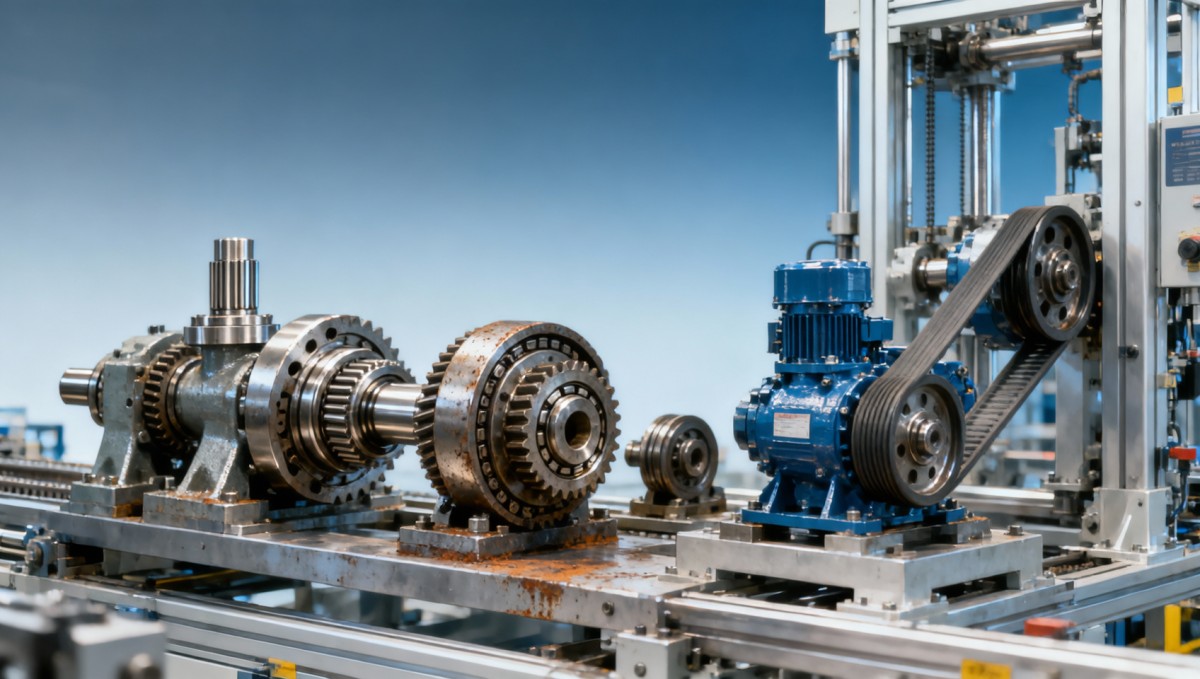
Power transmission components fail early when several moderate risks combine into one severe operating condition. In most industrial settings, the root cause is cumulative rather than isolated. A shaft may be slightly misaligned by 0.2–0.5 mm, lubrication intervals may extend from 500 hours to 900 hours, and shock loads may exceed design assumptions by 15%–25%. Each issue alone may seem manageable, but together they shorten service life dramatically.
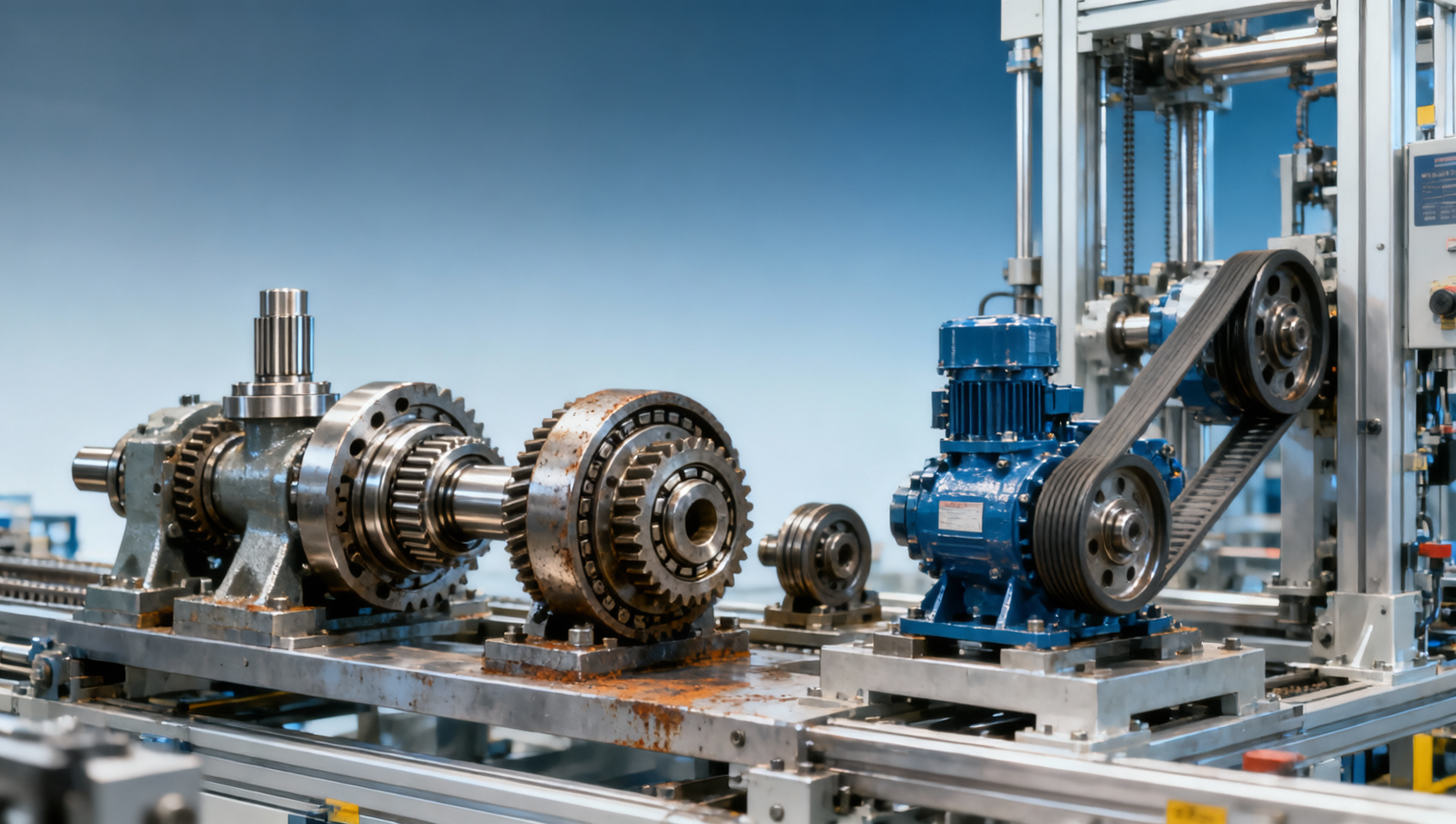
The most common failure mechanisms include fatigue, wear, overheating, contamination, corrosion, and installation damage. Bearings often fail from lubrication starvation or particle ingress. Belts and chains degrade under improper tension. Gearboxes suffer from poor oil condition, thermal stress, or unbalanced loads. Couplings crack when torsional vibration and misalignment are ignored during setup.
In sectors such as advanced manufacturing and smart electronics production, the tolerance stack is especially important. A precision linear motion assembly in medical device manufacturing may operate within micrometer-level expectations, while a hydraulic cylinder in heavy equipment may face repeated side loading. The failure mode changes by application, but the pattern remains the same: actual operating conditions exceed the assumptions used during selection, installation, or maintenance.
Another overlooked factor is procurement substitution. When teams replace a specified alloy, seal material, or surface finish with an apparently equivalent option, early failure risk rises. Two parts may share dimensions but differ in hardness, corrosion resistance, temperature tolerance, or fatigue limit. In high-cycle systems, that difference can mean 3 times lower service life.
Why rated life and field life often differ
Catalog ratings usually assume stable lubrication, controlled contamination, correct installation, and predictable load distribution. Field conditions rarely remain that stable for 12–36 months. Dust, washdown exposure, thermal cycling, operator variability, and emergency stops all create duty conditions that are more severe than the original calculation model.
Typical mismatch areas
- Static load data used for parts that actually experience repeated shock loading 20–50 times per shift.
- Ambient temperature assumptions of 25°C applied to systems operating at 45°C–60°C near motors, ovens, or enclosed cabinets.
- Lubricants selected for clean indoor use but deployed in humid, dusty, or washdown environments.
- Nominal speed ratings applied without accounting for acceleration, deceleration, and start-stop cycles.
Failure Patterns by Component Type and Operating Condition
Not all power transmission components fail in the same way, and diagnosing them correctly helps avoid repeated replacement of the wrong part. Bearings usually show pitting, smearing, cage damage, or overheating. Belts reveal glazing, edge wear, cracking, or tooth shear. Chains stretch gradually, while gears show micropitting, scuffing, and tooth root fatigue. Pneumatic and hydraulic transmission elements often fail through seal degradation, pressure instability, or contamination-driven wear.
Operating condition matters as much as component type. High-speed, low-load systems face different risks than low-speed, high-torque drives. In custom heatsinks and electronic enclosure fabrication, compact machine layouts may trap heat and accelerate grease breakdown. In automotive parts machining, repetitive torque variation can amplify shaft fatigue and coupling wear. In healthcare technology manufacturing, low particle tolerance raises the cost of minor seal or bearing failure because contamination control is critical.
A practical failure review should link symptom, likely cause, and corrective action. Replacing a failed part without documenting operating temperature, lubrication state, mounting method, and alignment data often leads to the same failure within 3–9 months. Strong quality systems therefore track both failure evidence and installation context.
Common failure signatures and what they usually indicate
The table below helps procurement, maintenance, and quality teams distinguish between visible symptoms and the more probable technical cause. It is especially useful when comparing supplier recommendations or validating warranty claims.
The key takeaway is that visible damage rarely tells the whole story on its own. A cracked coupling element might appear to be a material defect, yet the underlying issue may be repeated transient torque that was never measured. Likewise, bearing overheating may originate from over-greasing as often as under-greasing. Accurate diagnosis requires condition context, not only part inspection.
Conditions that accelerate wear fastest
- Contamination levels high enough to introduce particles above 10–50 microns into contact surfaces.
- Load reversals and emergency stops that create short-duration torque spikes exceeding nominal load by 1.5–2.5 times.
- Temperature rise of more than 15°C above the lubricant’s stable operating window.
- Mounting errors that create soft foot, shaft runout, or coupling offset during commissioning.
Selection and Procurement Mistakes That Shorten Service Life
Many early failures begin at the selection stage, long before equipment is installed. Procurement teams often work under pressure to reduce lead times, standardize SKUs, or lower unit cost by 5%–12%. Those goals are understandable, but a cheaper component can become the most expensive option if it increases maintenance calls, rejects, or unplanned downtime. In capital-intensive production, one failed drive element can affect labor utilization, delivery performance, and customer service levels.
A common mistake is selecting only by nominal dimensions or torque rating. Good sourcing decisions also evaluate duty cycle, overload profile, environmental exposure, seal design, material compatibility, and replacement intervals. A supplier that can document inspection methods, traceability, and process consistency often reduces lifecycle risk more effectively than one offering the lowest initial quote.
For distributors and project managers, cross-industry applications create added complexity. A component acceptable in general factory automation may not be suitable for washdown food-adjacent environments, clean assembly areas, or corrosive process lines. A structured procurement checklist prevents technical mismatches that do not appear in a simple price comparison.
A practical evaluation matrix for B2B buyers
The following comparison framework is useful when technical evaluators, purchasing managers, finance approvers, and quality personnel need a shared basis for decision-making. It combines cost, risk, and operating fit instead of relying on unit price alone.
This matrix shows why procurement and engineering should align early. A supplier with stronger process control, even at a 6% higher purchase price, may lower annual failure events enough to produce a better cost profile over one fiscal year. For finance approvers, the relevant measure is usually total cost of ownership, not invoice price.
Questions buyers should ask before approval
- What is the actual duty cycle in operating hours per day and peak load versus nominal load?
- Which failure mode has historically occurred first: wear, fatigue, contamination, seal leakage, or thermal damage?
- Can the supplier provide inspection consistency and dimensional tolerance control for repeat orders?
- Does the part match the real environment, including humidity, debris, chemical exposure, and temperature?
Installation, Lubrication, and Maintenance Control
Even a well-selected component can fail early if installation quality is inconsistent. Improper mounting force, contaminated assembly surfaces, incorrect torque on fasteners, and unchecked shaft alignment are among the fastest ways to shorten life. In many factories, commissioning schedules are compressed, and teams skip verification steps that add 20–40 minutes but prevent months of avoidable wear.
Lubrication remains one of the most underestimated factors. Too little lubricant causes film breakdown; too much can create heat, churning, and seal stress. Grease type also matters. A product suitable for moderate speed may not hold performance under high-speed operation or elevated ambient temperature. When relubrication intervals drift from the intended 300–500 hours to irregular manual servicing, failure patterns become difficult to predict.
Condition monitoring can reduce uncertainty significantly. Vibration trending, temperature checks, oil analysis, and routine visual inspection allow teams to intervene before catastrophic failure. This does not require a complex digital program in every facility. Even a basic inspection cycle every 2–4 weeks, supported by a standard checklist, can improve fault detection and help quality managers identify recurring installation errors.
For project leaders and safety managers, maintenance discipline should be treated as a process design issue rather than an afterthought. If a component is hard to access, poorly labeled, or inconsistently documented, maintenance quality will decline. Design for serviceability is therefore part of failure prevention.
Core maintenance controls that deliver measurable value
- Use alignment verification during installation and after the first 50–100 operating hours on critical rotating assemblies.
- Set lubrication intervals by operating speed, load, and temperature, not by calendar dates alone.
- Track vibration and surface temperature trends; a repeat rise of 10%–20% often indicates a developing issue.
- Record failure mode, lot information, and maintenance action to support supplier review and root-cause analysis.
A simple control workflow for multi-role teams
Organizations that reduce early failure most effectively usually apply a repeatable 5-step workflow. First, define real operating duty, including peak events. Second, verify component fit and material suitability. Third, control installation with documented checks. Fourth, run periodic condition monitoring. Fifth, review failure evidence jointly across engineering, procurement, and quality. That cross-functional loop is especially valuable for large exporters and multi-site manufacturers seeking stable performance across different production environments.
How to Reduce Lifecycle Cost and Build a Better Decision Framework
Reducing early failure is not only about preventing breakdowns. It is about improving lifecycle economics. When a component lasts its intended service interval, organizations gain more predictable maintenance planning, fewer urgent purchases, better spare inventory control, and more stable production output. For enterprise decision-makers, the value appears across operations, finance, quality, and customer delivery.
A strong decision framework begins with application segmentation. Critical systems should not be sourced by the same logic as low-risk consumable assemblies. If failure could stop a line, affect product quality, or create safety exposure, the approval process should include technical review, supplier capability screening, and maintenance input. That may add 1–2 approval steps, but it often prevents repeat replacement cycles over the next 12 months.
For distributors, agents, and channel partners, this creates a commercial opportunity as well. Buyers increasingly prefer suppliers who can explain fit-for-purpose selection, not just availability. Technical guidance, documented inspection practice, and realistic service recommendations build trust more effectively than generic claims about durability.
Lifecycle-oriented actions that outperform price-only sourcing
The table below summarizes how different control actions influence reliability, cost predictability, and procurement quality. It can be used in internal approval discussions or supplier qualification reviews.
The pattern is clear: organizations that combine specification discipline, controlled installation, and supplier review generally experience lower failure volatility than those relying on reactive replacement. This approach is especially relevant in sectors where uptime, compliance, and delivery reliability carry high commercial value.
FAQ for technical and commercial teams
How can buyers tell whether a failure is caused by poor quality or poor application fit?
Start with three checks: failure mode, operating context, and batch consistency. If one lot repeatedly fails across similar applications, supplier quality variation may be involved. If failures occur only in high-load or high-temperature positions, application mismatch is more likely. A review of alignment, load peaks, lubrication state, and installation records usually narrows the cause quickly.
What service life margin should be considered during selection?
There is no universal percentage, but critical industrial systems often benefit from a realistic design margin that accounts for shock load, environmental variation, and maintenance uncertainty. If the duty profile includes frequent starts, contamination, or thermal cycling, selection should not rely only on nominal catalog conditions.
How often should condition checks be performed?
For critical assets, a 2–4 week inspection interval is common, while lower-risk equipment may be reviewed monthly or quarterly. The right frequency depends on duty severity, replacement cost, and operational consequences of failure. Trending matters more than isolated readings, so use the same checkpoints and recording method each time.
Early failure in power transmission components is usually the result of combined stresses across design, sourcing, installation, and maintenance. Companies that evaluate real duty cycles, verify supplier consistency, control alignment and lubrication, and monitor condition over time are better positioned to reduce downtime and protect lifecycle value.
For organizations navigating sourcing risk across advanced manufacturing, green energy, smart electronics, healthcare technology, and supply chain-intensive operations, informed decision-making matters as much as component quality itself. To explore tailored procurement intelligence, technical evaluation support, or sector-specific supplier insight, connect with TradeNexus Pro and get a more reliable path to performance. Contact us today to discuss your application, compare sourcing options, or request a customized solution.
Get weekly intelligence in your inbox.
No noise. No sponsored content. Pure intelligence.
 Apr 17, 2026Temperature data loggers drift unpredictably inside lithium-ion battery storage enclosuresTemperature data loggers drift unpredictably inside lithium-ion battery storage enclosures
 Apr 17, 2026Are solar microinverters really worth the extra cost?Are solar microinverters really worth the extra cost?
 Apr 17, 2026Bifacial solar panels: How much more energy can they generate?Bifacial solar panels: How much more energy can they generate?
 Apr 17, 2026Gear manufacturing: How to optimize production for high precision?Gear manufacturing: How to optimize production for high precision?
 Apr 17, 2026Why power transmission components fail earlier than expectedWhy power transmission components fail earlier than expected
 Apr 17, 2026Linear motion systems: belt drive or ball screw for speed?Linear motion systems: belt drive or ball screw for speed?
 Apr 17, 2026Industrial bearing suppliers: what signals reliable quality?Industrial bearing suppliers: what signals reliable quality?
 Apr 17, 2026When pneumatic valves wholesale gets expensive laterWhen pneumatic valves wholesale gets expensive later
 Apr 17, 2026Hydraulic cylinder fabrication mistakes that cause oil leaksHydraulic cylinder fabrication mistakes that cause oil leaks
 Apr 17, 2026Heavy equipment manufacturing delays often start hereHeavy equipment manufacturing delays often start here
 Apr 17, 2026Custom heatsinks: when a larger size solves nothingCustom heatsinks: when a larger size solves nothing
 Apr 17, 2026Electronic enclosure fabrication: steel or aluminum?Electronic enclosure fabrication: steel or aluminum?
 Apr 17, 2026Automotive parts machining tolerances that drive up scrapAutomotive parts machining tolerances that drive up scrap
 Apr 17, 2026Medical device manufacturing changes under tighter traceabilityMedical device manufacturing changes under tighter traceability
 Apr 17, 2026How to Choose Solid State Batteries in 2026How to Choose Solid State Batteries in 2026
 Apr 17, 2026Are Solid State Batteries Worth the Cost Yet?Are Solid State Batteries Worth the Cost Yet?
 Apr 17, 2026Commercial Energy Storage Sizing: What Matters Most?Commercial Energy Storage Sizing: What Matters Most?
 Apr 17, 2026Commercial Energy Storage ROI: How to Assess ItCommercial Energy Storage ROI: How to Assess It
 Apr 17, 2026Off Grid Solar Systems: What to Avoid FirstOff Grid Solar Systems: What to Avoid First
 Apr 17, 2026Who Should Use Off Grid Solar Systems?Who Should Use Off Grid Solar Systems?
 Apr 17, 2026Solar Microinverters vs String Inverters: Which Fits?Solar Microinverters vs String Inverters: Which Fits?
 Apr 17, 2026When Do Solar Microinverters Make More Sense?When Do Solar Microinverters Make More Sense?
 Apr 17, 2026How digital freight matching for international shipping cuts transit time by up to 22% in 2026How digital freight matching for international shipping cuts transit time by up to 22% in 2026
 Apr 17, 2026Why port automation tech for smart logistics reduces container handling errors by 37% at Tier-1 terminalsWhy port automation tech for smart logistics reduces container handling errors by 37% at Tier-1 terminals
 Apr 17, 2026What yard management systems for port operations actually deliver in real-world deploymentsWhat yard management systems for port operations actually deliver in real-world deployments
 Apr 17, 2026Can digital customs clearance for sea freight reduce D/O processing from 48 hours to under 90 minutesCan digital customs clearance for sea freight reduce D/O processing from 48 hours to under 90 minutes
 Apr 17, 2026How returnable transport packaging for automotive parts lowers TCO by 18–25% over 3 yearsHow returnable transport packaging for automotive parts lowers TCO by 18–25% over 3 years