India BIS Approves 3 Chinese IoT Labs for IS 16444:2026 Certification
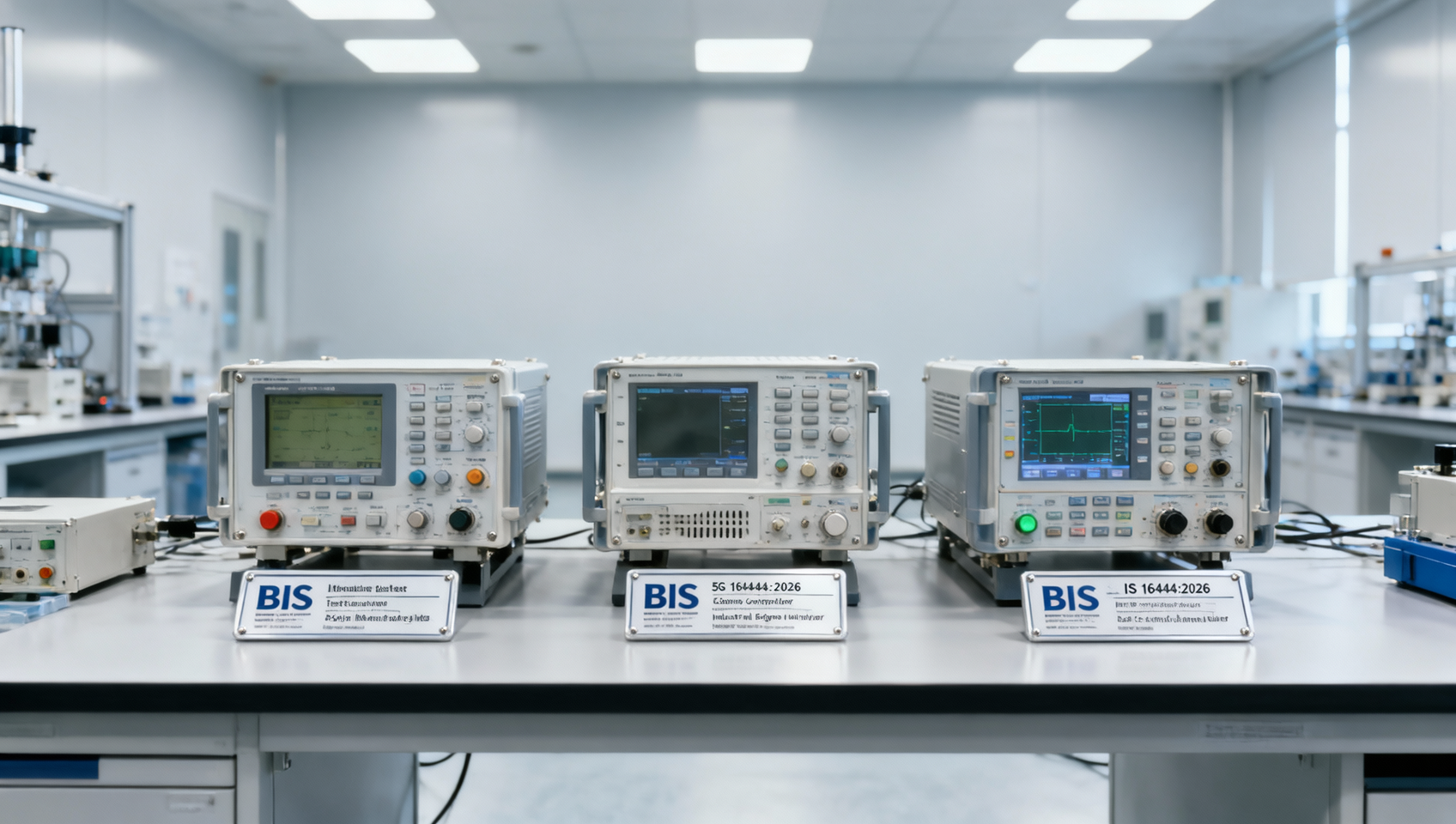
On April 16, 2026, the Bureau of Indian Standards (BIS) officially granted IS 16444:2026 certification authority to three Chinese laboratories — CESI (China Electric Power Research Institute), GDIQ (Guangdong Provincial Academy of Quality Supervision and Inspection), and HTL (Huawei Terminal Laboratory) — for IoT devices including smart meters, gateways, and edge controllers. This development directly impacts manufacturers exporting IoT hardware to India, shortening average certification timelines from 14 weeks to 5 weeks and eliminating mandatory sample shipment to Indian labs.
Event Overview
On April 16, 2026, the Bureau of Indian Standards (BIS) published an official notice confirming that CESI, GDIQ, and Huawei Terminal Laboratory (HTL) have been formally authorized to conduct conformity assessment and issue test reports under IS 16444:2026 for specified IoT devices. The scope explicitly covers smart meters, communication gateways, and edge controllers intended for the Indian market. No further conditions or phased rollout were indicated in the public announcement.
Industries Affected by This Development
Direct Exporters of IoT Hardware to India
These companies supply smart meters, residential/commercial gateways, or industrial edge controllers to Indian utilities, telecom operators, or system integrators. They are affected because the new authorization removes a major logistical bottleneck: physical sample dispatch to India is no longer required. Impact includes reduced lead time, lower shipping and customs handling costs, and greater control over test scheduling and documentation turnaround.
Contract Manufacturers & ODMs Serving Indian-Bound Brands
Manufacturers producing under private labels or OEM/ODM arrangements for brands targeting India must now align their quality assurance workflows with the newly authorized labs. Impact centers on internal test planning — product validation cycles must be synchronized with CESI, GDIQ, or HTL capacity and reporting formats, rather than relying solely on pre-certified modules or legacy third-party data.
Supply Chain Service Providers (Certification Consultants, Logistics Firms)
Firms offering end-to-end BIS certification support — especially those previously managing sample logistics, local representative coordination, or lab liaison services — face revised service scopes. Impact includes diminished demand for India-based sample handling and local agent engagement, while increasing demand for technical coordination with the three newly authorized Chinese labs, including report review, non-conformance resolution, and audit readiness support.
What Relevant Enterprises or Practitioners Should Monitor and Do Now
Track official BIS updates on scope expansion or implementation clarifications
The current authorization applies only to IS 16444:2026 and only for the listed device categories. From industry perspective, it remains unclear whether BIS will extend this model to other standards (e.g., IS 13252 for IT equipment) or add more Chinese labs. Stakeholders should monitor BIS’s official notifications and gazette entries for any amendments or supplementary guidance issued after April 16, 2026.
Confirm lab acceptance status for specific product variants and firmware versions
Authorization does not automatically cover all configurations. Analysis来看, each lab may apply internal criteria for firmware versioning, hardware revision thresholds, or interoperability test coverage. Exporters should request written confirmation from CESI, GDIQ, or HTL regarding whether their exact product SKUs — including software build numbers and variant markings — fall within the accepted scope before initiating formal testing.
Distinguish between certification eligibility and market access compliance
IS 16444:2026 certification remains mandatory for covered IoT devices sold in India, but it is only one component of full market access. Observation shows that BIS registration, label compliance (including bilingual marking), and post-certification surveillance remain unchanged. Companies must continue fulfilling all other regulatory requirements — this authorization streamlines only the test report generation step, not the entire BIS licensing process.
Prepare internal alignment across R&D, QA, and export teams
Current more suitable understanding is that cross-departmental coordination is now essential: firmware release schedules must accommodate lab test windows; QA documentation must match the format expected by CESI/GDIQ/HTL; and export operations must update SOPs to reflect revised sample submission protocols. Proactive alignment avoids delays once certification workflows shift to Chinese labs.
Editorial Perspective / Industry Observation
This authorization is best understood as an operational enabler — not a policy shift. From industry angle, it reflects BIS’s incremental move toward recognizing qualified foreign infrastructure where domestic capacity constraints exist, rather than signaling broader regulatory liberalization. It is neither a precedent for automatic reciprocity nor an indication of upcoming harmonization with IEC or ISO frameworks. Rather, it represents a targeted efficiency measure for a high-volume, standards-driven segment: utility-grade IoT hardware. Continued observation is warranted for whether similar authorizations follow for adjacent standards or additional labs — but as of April 16, 2026, this remains a scoped, standalone update.
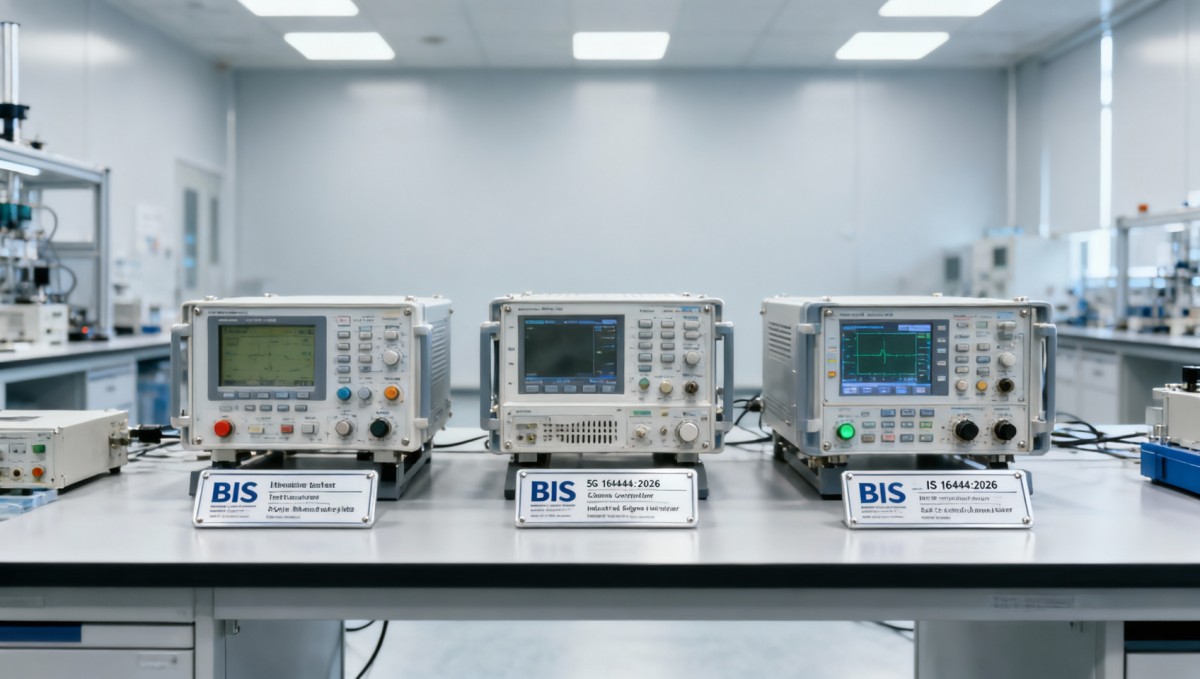
In summary, the BIS authorization marks a concrete improvement in certification efficiency for a defined set of IoT products entering India — but it does not alter the underlying regulatory obligation, scope definitions, or enforcement mechanisms. For stakeholders, the most rational interpretation is pragmatic: treat it as a validated pathway to accelerate one critical step in an otherwise unchanged compliance journey.
Source: Official notification issued by the Bureau of Indian Standards (BIS), dated April 16, 2026. Scope and lab names confirmed per publicly available BIS gazette entry. No additional implementation details or transitional provisions were included in the initial announcement. Ongoing monitoring of BIS official channels is recommended for future updates.
Get weekly intelligence in your inbox.
No noise. No sponsored content. Pure intelligence.
 Apr 18, 2026TradeNexus Pro Launches Global Compliance RadarTradeNexus Pro Launches Global Compliance Radar
 Apr 18, 2026JIS T 2304:2026 Takes Effect June 1, 2026 for IVD SoftwareJIS T 2304:2026 Takes Effect June 1, 2026 for IVD Software
 Pathway for Rehab Devices with AI Modules") Apr 18, 2026FDA Updates 510(k) Pathway for Rehab Devices with AI ModulesFDA Updates 510(k) Pathway for Rehab Devices with AI Modules
Apr 18, 2026FDA Updates 510(k) Pathway for Rehab Devices with AI ModulesFDA Updates 510(k) Pathway for Rehab Devices with AI Modules Apr 18, 2026India BIS Approves 3 Chinese IoT Labs for IS 16444:2026 CertificationIndia BIS Approves 3 Chinese IoT Labs for IS 16444:2026 Certification
 Apr 18, 2026THE Alliance Launches Green Slot Priority for China PortsTHE Alliance Launches Green Slot Priority for China Ports
 Apr 18, 2026TÜV Rheinland Releases Dual-Standard ESS Certification Guide for ChinaTÜV Rheinland Releases Dual-Standard ESS Certification Guide for China
 Apr 18, 2026Vietnam Imposes AD Duties on Chinese Electronic ComponentsVietnam Imposes AD Duties on Chinese Electronic Components
 Apr 18, 2026SASO Launches PV Carbon Footprint Labeling from July 2026SASO Launches PV Carbon Footprint Labeling from July 2026
 Apr 18, 2026U.S. Adds 17 Smart Warehouse Robot Components to Export Control ListU.S. Adds 17 Smart Warehouse Robot Components to Export Control List
 Apr 18, 2026EU Enforces EN IEC 62443-4-2:2026 for Industrial Control Devices from 18 Apr 2026EU Enforces EN IEC 62443-4-2:2026 for Industrial Control Devices from 18 Apr 2026
 Apr 17, 2026Temperature data loggers drift unpredictably inside lithium-ion battery storage enclosuresTemperature data loggers drift unpredictably inside lithium-ion battery storage enclosures
 Apr 17, 2026Are solar microinverters really worth the extra cost?Are solar microinverters really worth the extra cost?
 Apr 17, 2026Bifacial solar panels: How much more energy can they generate?Bifacial solar panels: How much more energy can they generate?
 Apr 17, 2026Gear manufacturing: How to optimize production for high precision?Gear manufacturing: How to optimize production for high precision?
 Apr 17, 2026Why power transmission components fail earlier than expectedWhy power transmission components fail earlier than expected
 Apr 17, 2026Linear motion systems: belt drive or ball screw for speed?Linear motion systems: belt drive or ball screw for speed?
 Apr 17, 2026Industrial bearing suppliers: what signals reliable quality?Industrial bearing suppliers: what signals reliable quality?
 Apr 17, 2026When pneumatic valves wholesale gets expensive laterWhen pneumatic valves wholesale gets expensive later
 Apr 17, 2026Hydraulic cylinder fabrication mistakes that cause oil leaksHydraulic cylinder fabrication mistakes that cause oil leaks
 Apr 17, 2026Heavy equipment manufacturing delays often start hereHeavy equipment manufacturing delays often start here
 Apr 17, 2026Custom heatsinks: when a larger size solves nothingCustom heatsinks: when a larger size solves nothing
 Apr 17, 2026Electronic enclosure fabrication: steel or aluminum?Electronic enclosure fabrication: steel or aluminum?
 Apr 17, 2026Automotive parts machining tolerances that drive up scrapAutomotive parts machining tolerances that drive up scrap
 Apr 17, 2026Medical device manufacturing changes under tighter traceabilityMedical device manufacturing changes under tighter traceability
 Apr 17, 2026How to Choose Solid State Batteries in 2026How to Choose Solid State Batteries in 2026
 Apr 17, 2026Are Solid State Batteries Worth the Cost Yet?Are Solid State Batteries Worth the Cost Yet?
 Apr 17, 2026Commercial Energy Storage Sizing: What Matters Most?Commercial Energy Storage Sizing: What Matters Most?