U.S. Adds 17 Smart Warehouse Robot Components to Export Control List
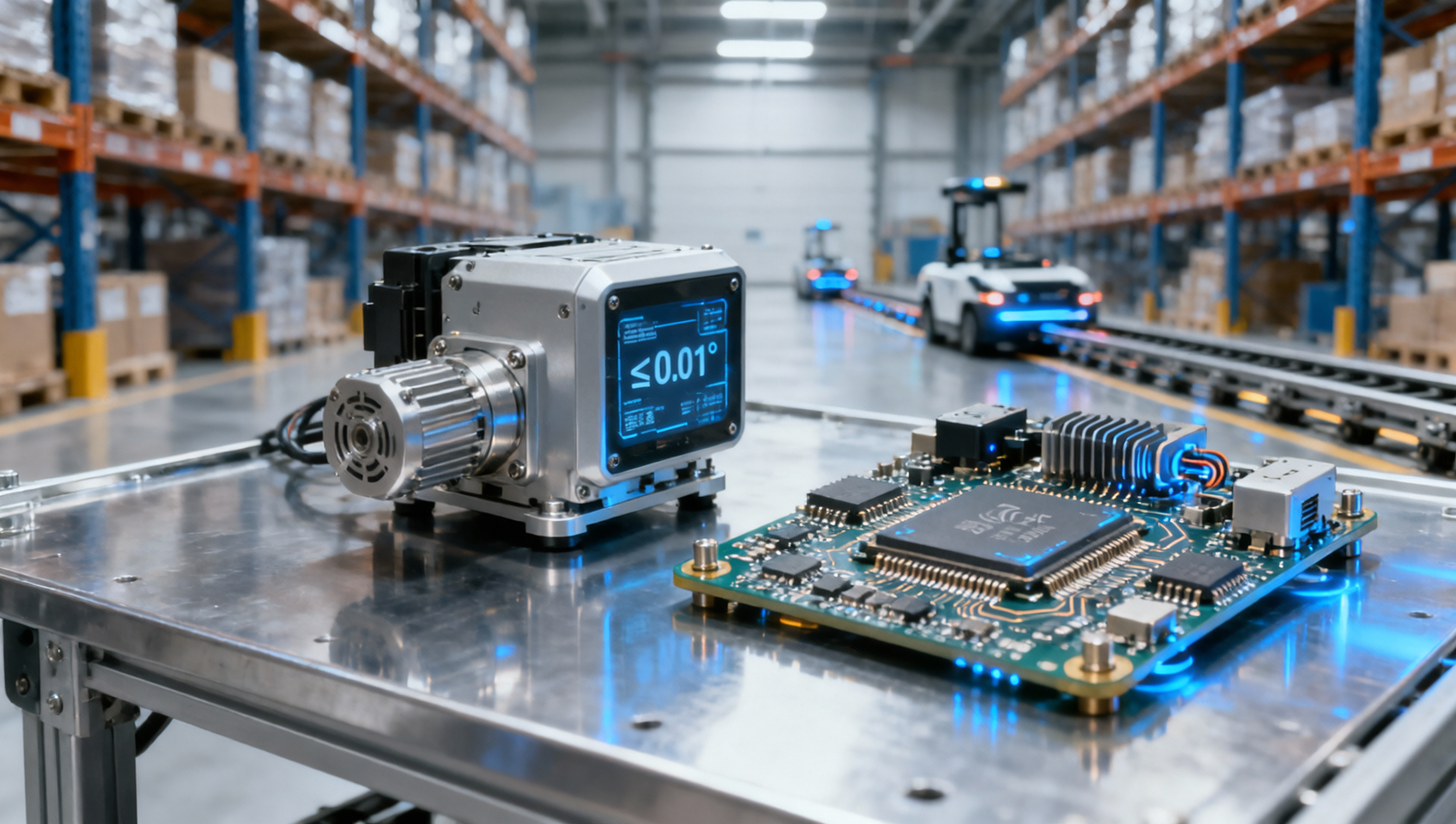
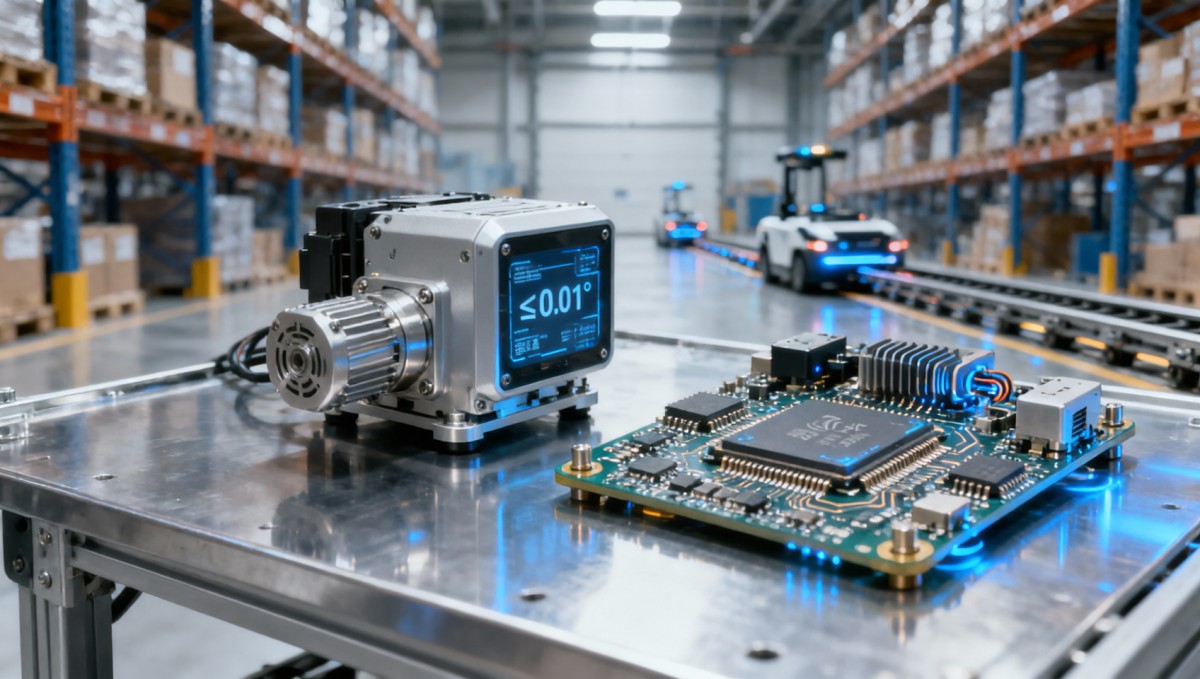
On April 17, 2026, the U.S. Department of Commerce’s Bureau of Industry and Security (BIS) updated the Export Administration Regulations (EAR) by issuing Supplement No. 4, adding 17 critical components for intelligent warehouse robotics—including laser SLAM navigation modules, high-precision servo drivers (positioning accuracy ≤0.01°), and multimodal fusion perception chips (integrating ToF + millimeter-wave radar)—to the Emerging Technologies Export Control List. This change directly affects U.S. export licensing requirements for shipments to China and carries material implications for logistics automation, industrial robotics, and cross-border supply chain operations.
Event Overview
On April 17, 2026, the U.S. Bureau of Industry and Security (BIS) published EAR Supplement No. 4, formally amending the Export Administration Regulations to include 17 specific components essential to smart warehouse robotics under license-required controls for destinations including China. The listed items are explicitly identified in the supplement as: laser SLAM navigation modules; high-precision servo drivers with positioning accuracy of ≤0.01°; and multimodal fusion perception chips combining time-of-flight (ToF) and millimeter-wave radar technologies—among 14 other enumerated components. No further implementation details, grace periods, or exceptions were announced in the initial notice.
Impact on Specific Industry Segments
Direct Exporters and Trading Firms
Companies engaged in the U.S.-to-China export of warehouse robotics hardware or subsystems must now obtain BIS licenses for any transaction involving the 17 newly controlled components. This introduces mandatory pre-shipment review, extended lead times, and heightened compliance documentation burdens—particularly for firms without dedicated export control officers or established license application workflows.
Chinese System Integrators and OEMs
Domestic warehouse robot manufacturers relying on U.S.-sourced core components face immediate pressure on delivery timelines and cost structures. As these parts are foundational to navigation, motion control, and environmental perception, substitution is not trivial. Delays may cascade into project deployments, especially for customers operating under strict go-live schedules (e.g., e-commerce fulfillment centers, third-party logistics providers).
Global Component Distributors and Logistics Service Providers
Distributors handling dual-use robotics components—including those managing inventory across multiple jurisdictions—must reassess classification, recordkeeping, and shipment routing protocols. Even non-U.S.-origin goods incorporating controlled U.S.-designed components may trigger EAR jurisdiction under the de minimis rule or foreign-produced direct product rule, depending on design origin and manufacturing location.
Supply Chain and Procurement Teams
Procurement departments sourcing from U.S. suppliers—or from non-U.S. vendors using U.S.-origin technology—must now verify EAR99 vs. controlled status for each component SKU. Inventory planning, vendor qualification, and bill-of-materials (BOM) audits require updated screening procedures to avoid inadvertent violations during order placement or customs clearance.
What Relevant Enterprises or Practitioners Should Monitor and Do Now
Track official guidance and potential carve-outs
Current language in Supplement No. 4 does not specify whether certain end-users, end-uses (e.g., civilian logistics vs. industrial automation), or license exceptions (such as License Exception STA or RPL) may apply. Stakeholders should monitor BIS FAQs, Federal Register notices, and public comments for clarifications expected in Q2–Q3 2026.
Map exposure across BOMs and identify priority components
Manufacturers should conduct a rapid component-level review of existing warehouse robot designs—focusing first on laser SLAM modules, sub-0.01° servo drivers, and ToF+mmWave chips—to quantify dependency levels and flag high-exposure SKUs. Prioritization enables faster evaluation of alternative sourcing or redesign pathways.
Distinguish regulatory signal from operational impact
This revision reflects an expansion of emerging technology controls—not an outright embargo. Enforcement scope, license approval rates, and processing timelines remain unconfirmed. Companies should avoid overreacting operationally (e.g., halting all U.S. orders) before assessing actual license feasibility and historical BIS approval patterns for similar robotics-related applications.
Initiate internal compliance readiness and supplier communication
Firms should update internal export control checklists, train procurement and engineering teams on EAR classification fundamentals, and proactively engage U.S. suppliers to confirm part-specific ECCNs and licensing obligations. Early dialogue helps clarify responsibilities in contracts and avoids post-order compliance surprises.
Editorial Perspective / Industry Observation
From an industry perspective, this update is better understood as a targeted calibration of U.S. export policy toward automation-enabling technologies—not a broad-based restriction on industrial robotics. Analysis来看, the selection of components aligns closely with capabilities central to autonomous navigation, precision motion, and robust environment sensing: functions increasingly vital to next-generation logistics infrastructure. Observation来看, the timing coincides with accelerated domestic investment in smart warehousing across Asia and Europe, suggesting BIS is acting preemptively to manage technology diffusion pathways. Current更值得关注的是 how strictly licensing decisions will be applied in practice—and whether parallel controls emerge in allied jurisdictions (e.g., Netherlands, Japan) in coming months. It is more accurately interpreted as a signal of tightening oversight on dual-use AI-adjacent hardware than an immediate operational blockade.
In summary, the April 17, 2026 EAR update marks a formal escalation in U.S. controls over foundational technologies for intelligent warehouse systems. Its primary significance lies not in immediate disruption, but in signaling a structural shift: key robotics subsystems are now treated as strategic enablers warranting deliberate export governance. For stakeholders, the most constructive stance is neither alarm nor dismissal—but disciplined, component-level assessment coupled with proactive compliance alignment.
Source: U.S. Department of Commerce, Bureau of Industry and Security (BIS), Export Administration Regulations (EAR), Supplement No. 4 to Part 774, published April 17, 2026.
Note: Implementation timelines, license approval criteria, and applicability of exceptions remain subject to ongoing BIS guidance and are under active observation.
Get weekly intelligence in your inbox.
No noise. No sponsored content. Pure intelligence.
 Apr 18, 2026TradeNexus Pro Launches Global Compliance RadarTradeNexus Pro Launches Global Compliance Radar
 Apr 18, 2026JIS T 2304:2026 Takes Effect June 1, 2026 for IVD SoftwareJIS T 2304:2026 Takes Effect June 1, 2026 for IVD Software
 Pathway for Rehab Devices with AI Modules") Apr 18, 2026FDA Updates 510(k) Pathway for Rehab Devices with AI ModulesFDA Updates 510(k) Pathway for Rehab Devices with AI Modules
Apr 18, 2026FDA Updates 510(k) Pathway for Rehab Devices with AI ModulesFDA Updates 510(k) Pathway for Rehab Devices with AI Modules Apr 18, 2026India BIS Approves 3 Chinese IoT Labs for IS 16444:2026 CertificationIndia BIS Approves 3 Chinese IoT Labs for IS 16444:2026 Certification
 Apr 18, 2026THE Alliance Launches Green Slot Priority for China PortsTHE Alliance Launches Green Slot Priority for China Ports
 Apr 18, 2026TÜV Rheinland Releases Dual-Standard ESS Certification Guide for ChinaTÜV Rheinland Releases Dual-Standard ESS Certification Guide for China
 Apr 18, 2026Vietnam Imposes AD Duties on Chinese Electronic ComponentsVietnam Imposes AD Duties on Chinese Electronic Components
 Apr 18, 2026SASO Launches PV Carbon Footprint Labeling from July 2026SASO Launches PV Carbon Footprint Labeling from July 2026
 Apr 18, 2026U.S. Adds 17 Smart Warehouse Robot Components to Export Control ListU.S. Adds 17 Smart Warehouse Robot Components to Export Control List
 Apr 18, 2026EU Enforces EN IEC 62443-4-2:2026 for Industrial Control Devices from 18 Apr 2026EU Enforces EN IEC 62443-4-2:2026 for Industrial Control Devices from 18 Apr 2026
 Apr 17, 2026Temperature data loggers drift unpredictably inside lithium-ion battery storage enclosuresTemperature data loggers drift unpredictably inside lithium-ion battery storage enclosures
 Apr 17, 2026Are solar microinverters really worth the extra cost?Are solar microinverters really worth the extra cost?
 Apr 17, 2026Bifacial solar panels: How much more energy can they generate?Bifacial solar panels: How much more energy can they generate?
 Apr 17, 2026Gear manufacturing: How to optimize production for high precision?Gear manufacturing: How to optimize production for high precision?
 Apr 17, 2026Why power transmission components fail earlier than expectedWhy power transmission components fail earlier than expected
 Apr 17, 2026Linear motion systems: belt drive or ball screw for speed?Linear motion systems: belt drive or ball screw for speed?
 Apr 17, 2026Industrial bearing suppliers: what signals reliable quality?Industrial bearing suppliers: what signals reliable quality?
 Apr 17, 2026When pneumatic valves wholesale gets expensive laterWhen pneumatic valves wholesale gets expensive later
 Apr 17, 2026Hydraulic cylinder fabrication mistakes that cause oil leaksHydraulic cylinder fabrication mistakes that cause oil leaks
 Apr 17, 2026Heavy equipment manufacturing delays often start hereHeavy equipment manufacturing delays often start here
 Apr 17, 2026Custom heatsinks: when a larger size solves nothingCustom heatsinks: when a larger size solves nothing
 Apr 17, 2026Electronic enclosure fabrication: steel or aluminum?Electronic enclosure fabrication: steel or aluminum?
 Apr 17, 2026Automotive parts machining tolerances that drive up scrapAutomotive parts machining tolerances that drive up scrap
 Apr 17, 2026Medical device manufacturing changes under tighter traceabilityMedical device manufacturing changes under tighter traceability
 Apr 17, 2026How to Choose Solid State Batteries in 2026How to Choose Solid State Batteries in 2026
 Apr 17, 2026Are Solid State Batteries Worth the Cost Yet?Are Solid State Batteries Worth the Cost Yet?
 Apr 17, 2026Commercial Energy Storage Sizing: What Matters Most?Commercial Energy Storage Sizing: What Matters Most?