TÜV Rheinland Releases Dual-Standard ESS Certification Guide for China
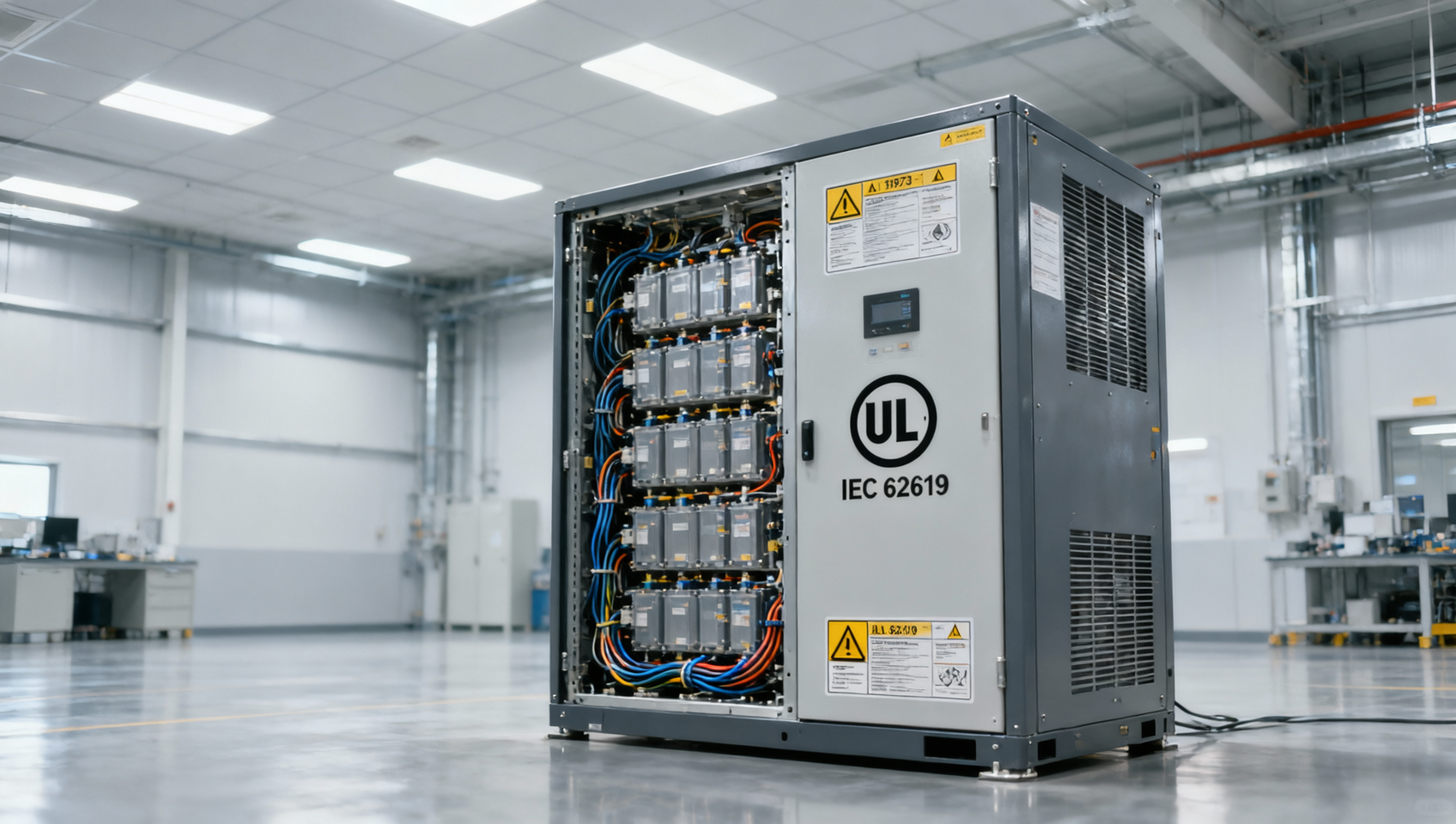
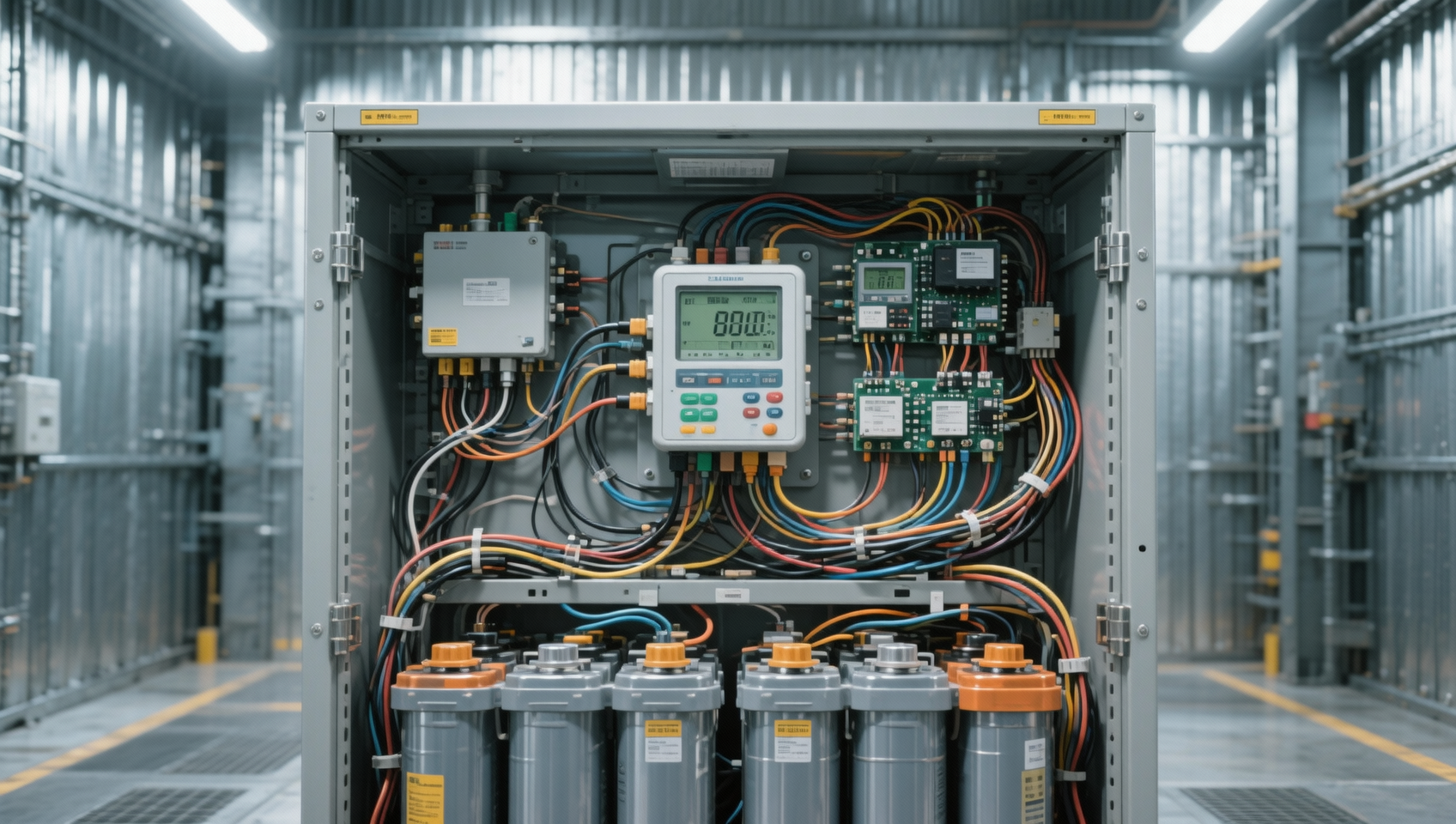
On April 16, 2026, TÜV Rheinland published the Battery Storage Certification Guidance V3.2, integrating UL 1973 (North America) and IEC 62619 (global) test requirements into a single certification pathway — with immediate applicability for Chinese battery storage enterprises. This update directly impacts manufacturers, testing service providers, and exporters targeting North American, European, and Australian markets.
Event Overview
TÜV Rheinland released the Battery Storage Certification Guidance V3.2 on April 16, 2026. The document establishes a unified certification path covering both UL 1973 and IEC 62619 standards. It explicitly permits pre-testing reports from selected Chinese laboratories — including CATL Testing Center and BYD Cell Lab — to be accepted as part of the formal certification process. According to the guidance, average certification cycle time for battery energy storage systems (BESS) from Chinese enterprises entering North America, Europe, and Australia is reduced to 68 days.
Industries Affected by This Update
Cell and BESS manufacturers (OEMs/ODMs): These companies face revised technical documentation and test report submission requirements. Acceptance of pre-test data from domestic labs lowers dependency on overseas testing facilities but introduces new expectations for lab accreditation scope and traceability of test conditions.
Third-party testing and certification service providers: Domestic labs authorized under this guidance must align internal procedures with dual-standard reporting formats. Non-authorized labs may see reduced demand for UL 1973–specific validation unless they pursue recognition under the updated framework.
Export-oriented system integrators and project developers: Shorter certification timelines improve predictability for cross-border tender submissions and grid interconnection applications in target markets. However, integrators remain responsible for full-system compliance — meaning cell-level certification under V3.2 does not automatically validate full BESS assemblies.
Supply chain logistics and compliance coordinators: Faster certification cycles increase pressure on concurrent documentation preparation (e.g., bilingual safety manuals, labeling files per regional regulations). Delays in supporting documentation now pose a higher risk of timeline slippage than test execution itself.
Key Points for Enterprises and Practitioners to Monitor and Act On
Confirm lab authorization status before initiating pre-testing
Only laboratories explicitly named in the guidance — such as CATL Testing Center and BYD Cell Lab — are currently authorized to issue accepted pre-test reports. Enterprises should verify current eligibility before commissioning test work, as TÜV Rheinland has not published an open application process for additional labs.
Align internal test planning with dual-standard clause mapping
The guidance does not eliminate divergent requirements between UL 1973 and IEC 62619 (e.g., thermal runaway propagation testing thresholds, charge/discharge cycling profiles). Manufacturers must map test plans to overlapping clauses first, then identify and schedule remaining standalone tests — rather than assuming full harmonization.
Prepare for increased scrutiny on test report traceability
Pre-test reports from Chinese labs will be reviewed for equipment calibration records, environmental chamber logs, and operator qualifications. Enterprises should retain raw data archives for at least 5 years and ensure digital signatures meet ISO/IEC 17025 documentation integrity requirements.
Review existing certification contracts for scope adjustments
Enterprises holding active UL 1973 or IEC 62619 certifications under earlier versions should assess whether their current certificates remain valid for new market entries. The V3.2 guidance applies only to new applications filed on or after April 16, 2026 — it does not trigger automatic re-evaluation of legacy certifications.
Editorial Observation / Industry Perspective
From an industry perspective, this guidance is better understood as a procedural optimization than a regulatory shift: no new safety requirements are introduced, and no standards are superseded. Analysis来看, its primary function is to reduce administrative friction — not technical risk — in multi-market certification workflows. Observation来看, TÜV Rheinland’s decision to recognize specific Chinese labs reflects growing confidence in domestic testing maturity, yet remains narrowly scoped rather than indicative of broader mutual recognition agreements. Current more appropriate interpretation is that this is a targeted efficiency measure, not a signal of imminent global standard convergence.
Conclusion
This update streamlines certification logistics for Chinese battery storage enterprises targeting regulated markets — but does not lower technical compliance thresholds. Its significance lies in operational predictability, not regulatory leniency. It is more appropriately understood as a refinement of existing conformity assessment practice, rather than a foundational change in market access rules.
Information Source
Main source: TÜV Rheinland official publication — Battery Storage Certification Guidance V3.2, issued April 16, 2026. Note: List of authorized Chinese laboratories is confirmed only for CATL Testing Center and BYD Cell Lab as stated in the document; expansion to other labs remains unannounced and requires ongoing monitoring.
Get weekly intelligence in your inbox.
No noise. No sponsored content. Pure intelligence.
 Apr 18, 2026TradeNexus Pro Launches Global Compliance RadarTradeNexus Pro Launches Global Compliance Radar
 Apr 18, 2026JIS T 2304:2026 Takes Effect June 1, 2026 for IVD SoftwareJIS T 2304:2026 Takes Effect June 1, 2026 for IVD Software
 Pathway for Rehab Devices with AI Modules") Apr 18, 2026FDA Updates 510(k) Pathway for Rehab Devices with AI ModulesFDA Updates 510(k) Pathway for Rehab Devices with AI Modules
Apr 18, 2026FDA Updates 510(k) Pathway for Rehab Devices with AI ModulesFDA Updates 510(k) Pathway for Rehab Devices with AI Modules Apr 18, 2026India BIS Approves 3 Chinese IoT Labs for IS 16444:2026 CertificationIndia BIS Approves 3 Chinese IoT Labs for IS 16444:2026 Certification
 Apr 18, 2026THE Alliance Launches Green Slot Priority for China PortsTHE Alliance Launches Green Slot Priority for China Ports
 Apr 18, 2026TÜV Rheinland Releases Dual-Standard ESS Certification Guide for ChinaTÜV Rheinland Releases Dual-Standard ESS Certification Guide for China
 Apr 18, 2026Vietnam Imposes AD Duties on Chinese Electronic ComponentsVietnam Imposes AD Duties on Chinese Electronic Components
 Apr 18, 2026SASO Launches PV Carbon Footprint Labeling from July 2026SASO Launches PV Carbon Footprint Labeling from July 2026
 Apr 18, 2026U.S. Adds 17 Smart Warehouse Robot Components to Export Control ListU.S. Adds 17 Smart Warehouse Robot Components to Export Control List
 Apr 18, 2026EU Enforces EN IEC 62443-4-2:2026 for Industrial Control Devices from 18 Apr 2026EU Enforces EN IEC 62443-4-2:2026 for Industrial Control Devices from 18 Apr 2026
 Apr 17, 2026Temperature data loggers drift unpredictably inside lithium-ion battery storage enclosuresTemperature data loggers drift unpredictably inside lithium-ion battery storage enclosures
 Apr 17, 2026Are solar microinverters really worth the extra cost?Are solar microinverters really worth the extra cost?
 Apr 17, 2026Bifacial solar panels: How much more energy can they generate?Bifacial solar panels: How much more energy can they generate?
 Apr 17, 2026Gear manufacturing: How to optimize production for high precision?Gear manufacturing: How to optimize production for high precision?
 Apr 17, 2026Why power transmission components fail earlier than expectedWhy power transmission components fail earlier than expected
 Apr 17, 2026Linear motion systems: belt drive or ball screw for speed?Linear motion systems: belt drive or ball screw for speed?
 Apr 17, 2026Industrial bearing suppliers: what signals reliable quality?Industrial bearing suppliers: what signals reliable quality?
 Apr 17, 2026When pneumatic valves wholesale gets expensive laterWhen pneumatic valves wholesale gets expensive later
 Apr 17, 2026Hydraulic cylinder fabrication mistakes that cause oil leaksHydraulic cylinder fabrication mistakes that cause oil leaks
 Apr 17, 2026Heavy equipment manufacturing delays often start hereHeavy equipment manufacturing delays often start here
 Apr 17, 2026Custom heatsinks: when a larger size solves nothingCustom heatsinks: when a larger size solves nothing
 Apr 17, 2026Electronic enclosure fabrication: steel or aluminum?Electronic enclosure fabrication: steel or aluminum?
 Apr 17, 2026Automotive parts machining tolerances that drive up scrapAutomotive parts machining tolerances that drive up scrap
 Apr 17, 2026Medical device manufacturing changes under tighter traceabilityMedical device manufacturing changes under tighter traceability
 Apr 17, 2026How to Choose Solid State Batteries in 2026How to Choose Solid State Batteries in 2026
 Apr 17, 2026Are Solid State Batteries Worth the Cost Yet?Are Solid State Batteries Worth the Cost Yet?
 Apr 17, 2026Commercial Energy Storage Sizing: What Matters Most?Commercial Energy Storage Sizing: What Matters Most?