Vietnam Imposes AD Duties on Chinese Electronic Components
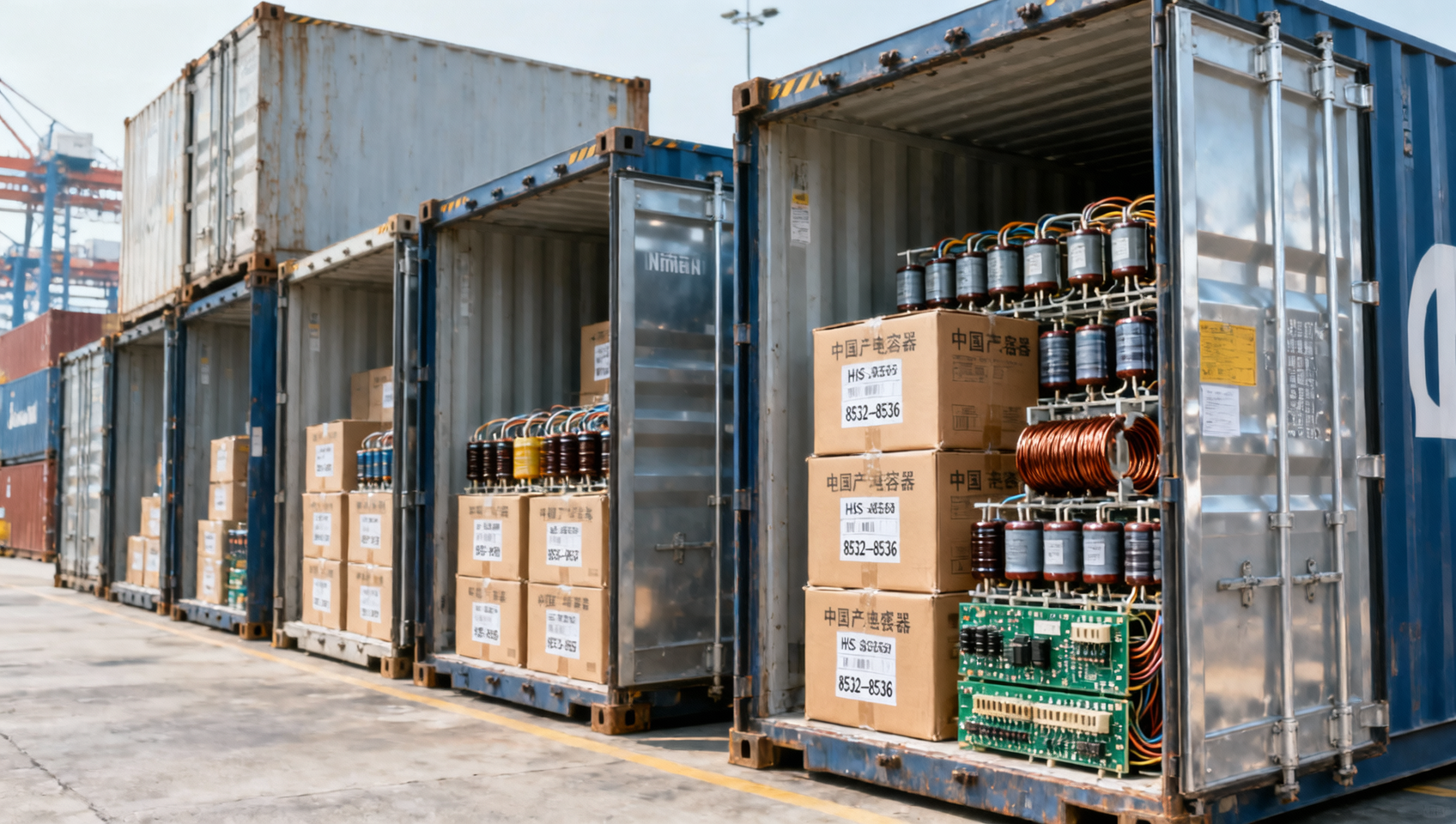
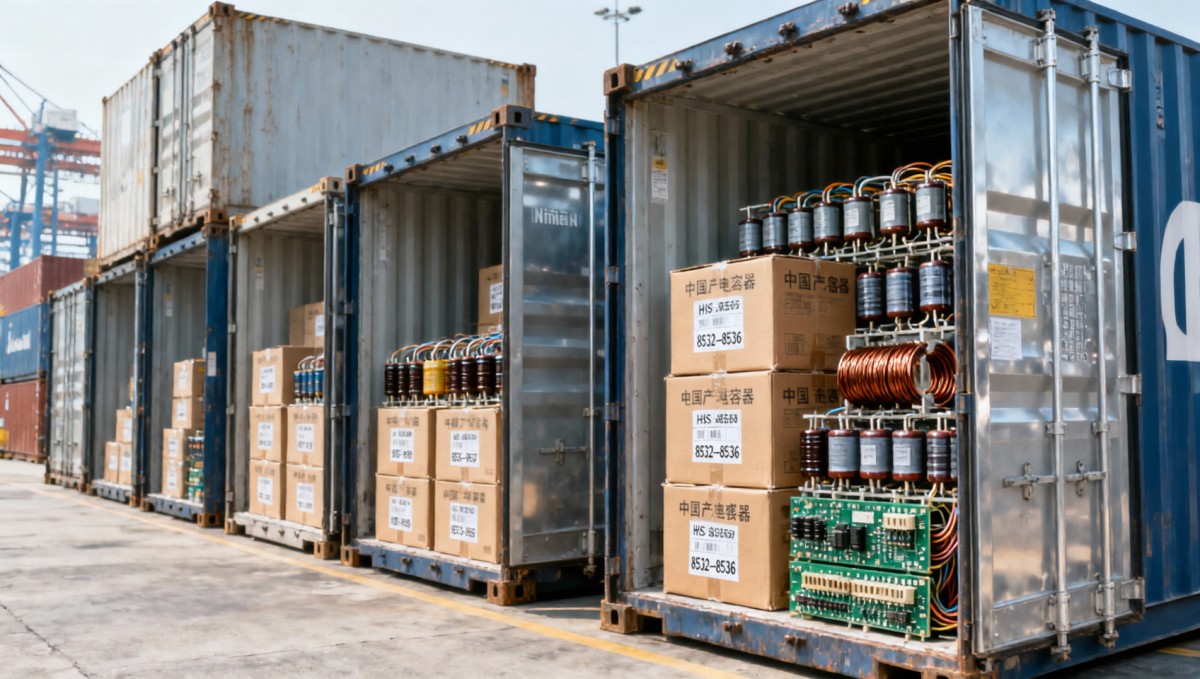
Vietnam’s Ministry of Industry and Trade (MOIT) has imposed definitive anti-dumping duties ranging from 18.7% to 32.4% on certain electronic components originating from China, effective April 18, 2026. The ruling directly affects exporters and downstream assemblers in the electronics supply chain—particularly those engaged in capacitor, inductor, and PCB connector trade with Vietnam—and signals a material shift in cost structure and competitive positioning for affected product categories under HS codes 8532–8536.
Event Overview
On April 17, 2026, Vietnam’s Ministry of Industry and Trade announced the final determination of its anti-dumping investigation into electronic components imported from China. The decision establishes differentiated anti-dumping duties of 18.7%–32.4%, applicable to products classified under HS codes 8532–8536—including capacitors, inductors, and PCB connectors. The measures entered into force on April 18, 2026.
Industries Affected by Product Category and Supply Chain Role
Direct Exporters of Electronic Components (HS 8532–8536)
These enterprises face immediate tariff liability on shipments to Vietnam. The duty is applied at the customs clearance stage, increasing landed costs and compressing export margins. For firms without preferential trade arrangements or local production presence, price competitiveness in the Vietnamese market will be materially reduced.
Local Assembly and Contract Manufacturing Firms in Vietnam
Many Vietnamese electronics assemblers source key passive and interconnect components from China. With the new duties, their input costs rise—potentially affecting delivery timelines, quotation validity, and bid competitiveness in OEM/ODM tenders. Cost pass-through mechanisms may trigger renegotiation of supply agreements or require revised bill-of-materials planning.
Regional Procurement and Logistics Service Providers
Third-party procurement agents, customs brokers, and logistics coordinators supporting China–Vietnam component flows must update duty classification guidance, revise landed-cost calculators, and verify HS code alignment for each shipment. Misclassification risks now carry higher financial exposure due to the differential rate structure.
What Enterprises and Practitioners Should Monitor and Do Now
Verify HS Code Alignment and Duty Rate Assignment
Confirm precise HS subheading classification for each exported item against MOIT’s published list. Rates vary within the 8532–8536 range; misclassification could lead to overpayment or post-clearance audits. Cross-check with Vietnam’s General Department of Vietnam Customs for official tariff line notes.
Assess Impact on Existing Contracts and Quotations
Review active supply agreements, especially those with fixed-price terms or long lead times. Identify clauses covering tariff adjustments or force majeure triggers. Proactively engage Vietnamese buyers to clarify responsibility for newly levied duties—especially where Incoterms place customs formalities and tariff liability with the seller.
Prepare Documentation for Potential Review or Appeal Procedures
While the final determination is effective, MOIT allows for administrative review requests within specified timeframes. Exporters assigned higher rates should collect contemporaneous evidence—including domestic sales records, cost of production data, and export pricing history—to support future reconsideration if warranted.
Map Alternative Sourcing or Localization Options
For high-duty items, evaluate feasibility of regional alternatives (e.g., ASEAN-sourced components) or incremental local assembly steps in Vietnam that may qualify for origin-based duty exemptions. Note: such shifts require advance validation of Vietnam’s Rules of Origin criteria under relevant trade frameworks.
Editorial Perspective / Industry Observation
From an industry perspective, this ruling is best understood not as an isolated trade action—but as a structural recalibration of Vietnam’s import policy toward mid-tier electronic components. Analysis来看, the use of differentiated rates suggests MOIT’s intent to target specific producers rather than impose blanket restrictions, implying continued openness to compliant exporters. Observation来看, the timing—just ahead of broader ASEAN electronics supply chain consolidation—highlights growing sensitivity to upstream dependency on China-sourced passives and interconnects. Current更值得关注的是 how Vietnamese customs authorities implement rate assignment at the port level, and whether parallel investigations emerge for related components (e.g., resistors, ferrites) under adjacent HS headings.
It is important to recognize that this measure is now in effect—not pending or proposed. However, its full operational impact will unfold over the next 3–6 months as importers adjust documentation, pricing, and sourcing behavior. It functions both as a concrete cost imposition and as a signal of heightened scrutiny for electronics imports entering Vietnam from China.
Concluding this development: the MOIT’s final anti-dumping duty reflects a formalized trade barrier with immediate commercial consequences—not a warning or consultation phase. It is more accurately interpreted as an implemented policy outcome than a preliminary signal. For stakeholders, the priority is operational adaptation—not strategic speculation.
Source: Ministry of Industry and Trade of Vietnam (MOIT), Official Gazette Notice No. [unspecified], dated April 17, 2026.
Note: Implementation details—including exact product scope per company, review application deadlines, and potential exemptions—are subject to further MOIT guidance and require ongoing monitoring.
Get weekly intelligence in your inbox.
No noise. No sponsored content. Pure intelligence.
 Apr 18, 2026TradeNexus Pro Launches Global Compliance RadarTradeNexus Pro Launches Global Compliance Radar
 Apr 18, 2026JIS T 2304:2026 Takes Effect June 1, 2026 for IVD SoftwareJIS T 2304:2026 Takes Effect June 1, 2026 for IVD Software
 Pathway for Rehab Devices with AI Modules") Apr 18, 2026FDA Updates 510(k) Pathway for Rehab Devices with AI ModulesFDA Updates 510(k) Pathway for Rehab Devices with AI Modules
Apr 18, 2026FDA Updates 510(k) Pathway for Rehab Devices with AI ModulesFDA Updates 510(k) Pathway for Rehab Devices with AI Modules Apr 18, 2026India BIS Approves 3 Chinese IoT Labs for IS 16444:2026 CertificationIndia BIS Approves 3 Chinese IoT Labs for IS 16444:2026 Certification
 Apr 18, 2026THE Alliance Launches Green Slot Priority for China PortsTHE Alliance Launches Green Slot Priority for China Ports
 Apr 18, 2026TÜV Rheinland Releases Dual-Standard ESS Certification Guide for ChinaTÜV Rheinland Releases Dual-Standard ESS Certification Guide for China
 Apr 18, 2026Vietnam Imposes AD Duties on Chinese Electronic ComponentsVietnam Imposes AD Duties on Chinese Electronic Components
 Apr 18, 2026SASO Launches PV Carbon Footprint Labeling from July 2026SASO Launches PV Carbon Footprint Labeling from July 2026
 Apr 18, 2026U.S. Adds 17 Smart Warehouse Robot Components to Export Control ListU.S. Adds 17 Smart Warehouse Robot Components to Export Control List
 Apr 18, 2026EU Enforces EN IEC 62443-4-2:2026 for Industrial Control Devices from 18 Apr 2026EU Enforces EN IEC 62443-4-2:2026 for Industrial Control Devices from 18 Apr 2026
 Apr 17, 2026Temperature data loggers drift unpredictably inside lithium-ion battery storage enclosuresTemperature data loggers drift unpredictably inside lithium-ion battery storage enclosures
 Apr 17, 2026Are solar microinverters really worth the extra cost?Are solar microinverters really worth the extra cost?
 Apr 17, 2026Bifacial solar panels: How much more energy can they generate?Bifacial solar panels: How much more energy can they generate?
 Apr 17, 2026Gear manufacturing: How to optimize production for high precision?Gear manufacturing: How to optimize production for high precision?
 Apr 17, 2026Why power transmission components fail earlier than expectedWhy power transmission components fail earlier than expected
 Apr 17, 2026Linear motion systems: belt drive or ball screw for speed?Linear motion systems: belt drive or ball screw for speed?
 Apr 17, 2026Industrial bearing suppliers: what signals reliable quality?Industrial bearing suppliers: what signals reliable quality?
 Apr 17, 2026When pneumatic valves wholesale gets expensive laterWhen pneumatic valves wholesale gets expensive later
 Apr 17, 2026Hydraulic cylinder fabrication mistakes that cause oil leaksHydraulic cylinder fabrication mistakes that cause oil leaks
 Apr 17, 2026Heavy equipment manufacturing delays often start hereHeavy equipment manufacturing delays often start here
 Apr 17, 2026Custom heatsinks: when a larger size solves nothingCustom heatsinks: when a larger size solves nothing
 Apr 17, 2026Electronic enclosure fabrication: steel or aluminum?Electronic enclosure fabrication: steel or aluminum?
 Apr 17, 2026Automotive parts machining tolerances that drive up scrapAutomotive parts machining tolerances that drive up scrap
 Apr 17, 2026Medical device manufacturing changes under tighter traceabilityMedical device manufacturing changes under tighter traceability
 Apr 17, 2026How to Choose Solid State Batteries in 2026How to Choose Solid State Batteries in 2026
 Apr 17, 2026Are Solid State Batteries Worth the Cost Yet?Are Solid State Batteries Worth the Cost Yet?
 Apr 17, 2026Commercial Energy Storage Sizing: What Matters Most?Commercial Energy Storage Sizing: What Matters Most?