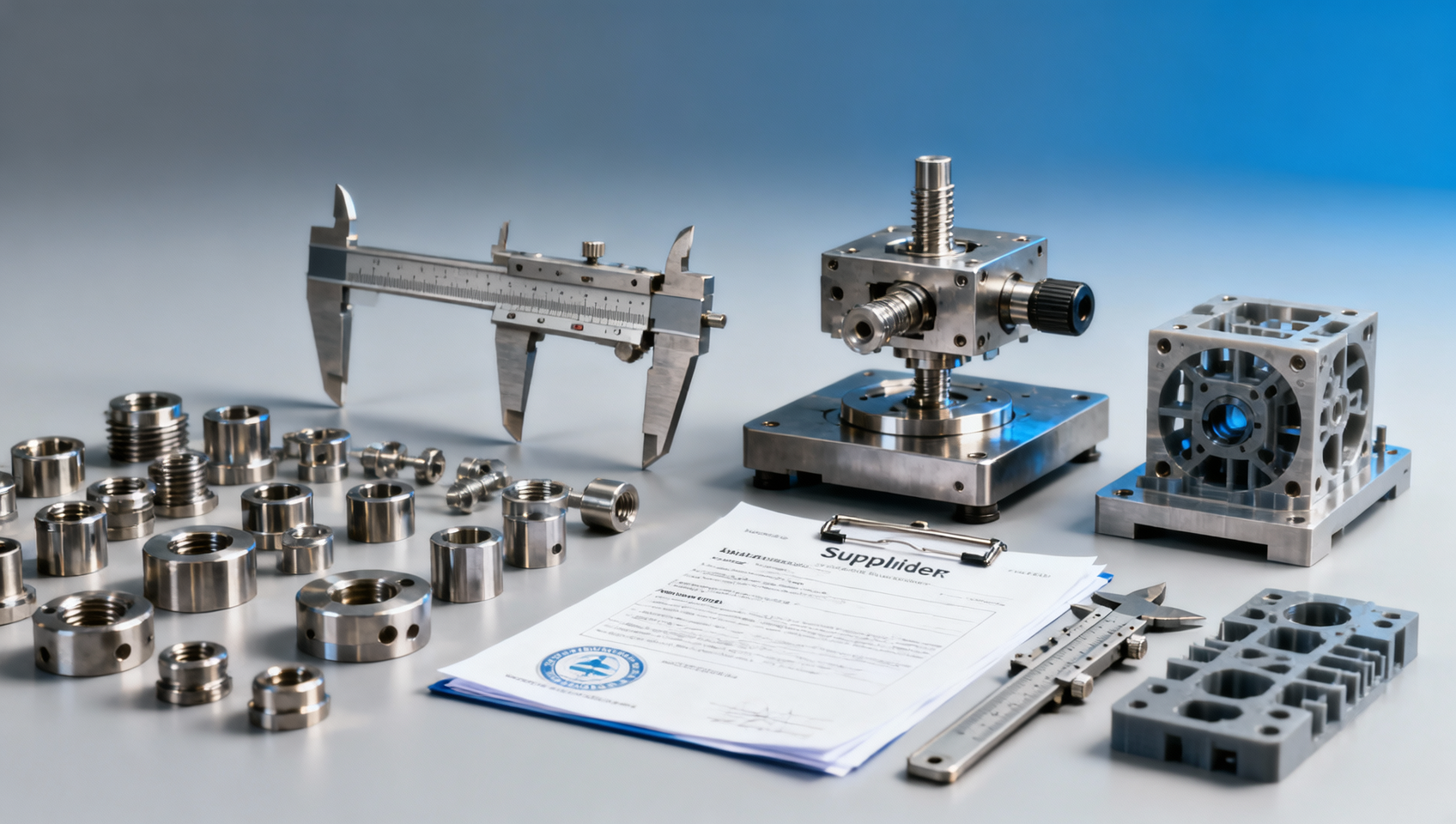
What Industry Veterans notice first in weak supplier content
Industry veterans do not need long to judge whether supplier content is credible. In most cases, they make an initial assessment within seconds by looking for specificity, proof, technical relevance, and editorial discipline. If a supplier relies on generic claims, avoids measurable details, or presents polished marketing without operational substance, experienced buyers immediately see higher sourcing risk.
That matters across complex sectors such as laser cutting services, custom sheet metal fabrication, micro machining, CNC turning centers, additive manufacturing services, industrial 3D printing, and energy analytics. In these fields, weak content is not just a branding problem. It can signal weak process control, poor documentation habits, limited engineering maturity, or an inability to support serious procurement conversations.
For procurement leaders, technical evaluators, project managers, quality teams, and financial approvers, the real question is not whether supplier content “looks professional.” The real question is whether the content helps reduce uncertainty. Strong supplier content makes capability, quality, compliance, delivery readiness, and business fit easier to verify. Weak supplier content does the opposite.
This article explains what industry veterans notice first in weak supplier content, why those signals matter during supplier evaluation, and how buyers can use content quality as an early indicator of supplier credibility.
What experienced evaluators notice first: weak supplier content creates doubt before the first call
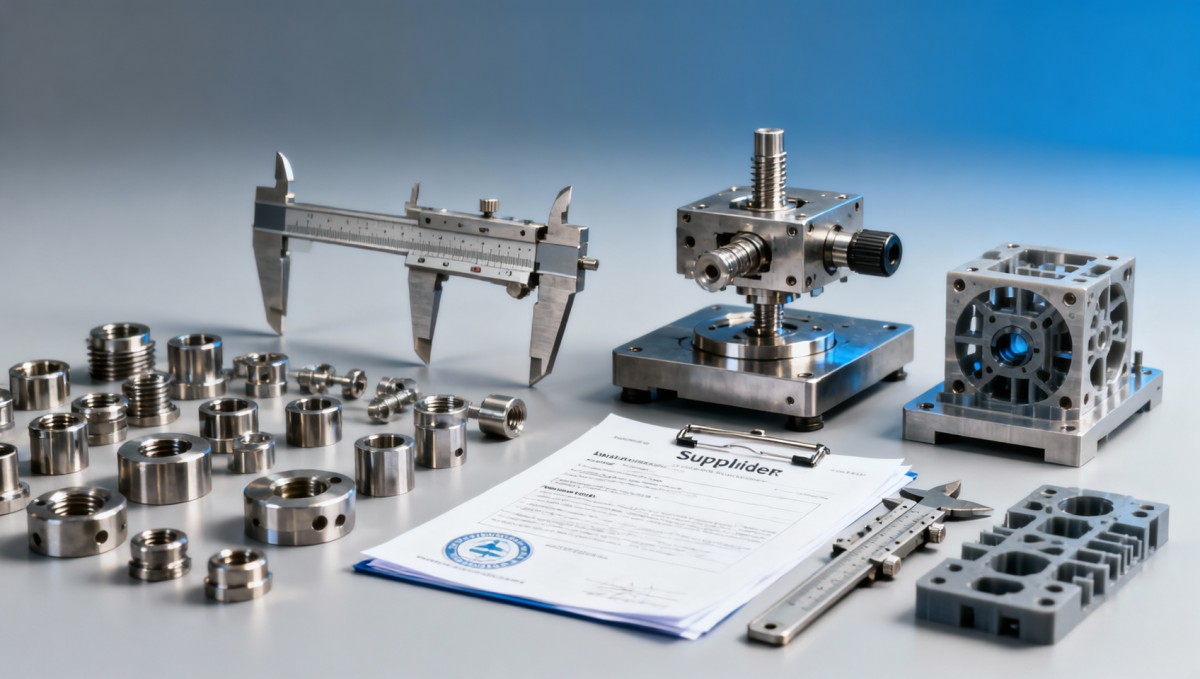
The first thing veterans notice is usually not design quality. It is the absence of usable substance. A supplier may have a modern website, polished visuals, and confident language, but experienced reviewers look past presentation and ask a simpler question: “Can this company prove what it says?”
When the answer is unclear, concern rises quickly. Weak supplier content often shows up in a few familiar ways:
- Broad claims such as “high quality,” “advanced technology,” or “customer-focused service” with no supporting evidence
- No case studies showing project complexity, process challenges, or measurable outcomes
- Thin technical pages that mention services but do not explain tolerances, materials, standards, production range, or application scenarios
- No visible editorial framework, author accountability, or source transparency
- Copy that appears interchangeable across industries, suggesting low domain depth
- No proof of compliance, quality systems, testing protocols, or inspection capabilities
- Missing operational signals such as lead times, prototyping workflow, design support, or post-sales coordination
To an inexperienced buyer, these gaps may seem like normal marketing limitations. To an industry veteran, they are signals. They suggest the supplier may lack process maturity, internal alignment, or the ability to communicate with serious enterprise buyers.
Why vague messaging damages supplier credibility so quickly
In B2B procurement, vague content creates friction because it pushes basic validation work back onto the buyer. Instead of helping a procurement director, engineering reviewer, or quality manager assess fit, poor content forces them to schedule calls just to gather foundational information.
This is a problem for several reasons.
First, enterprise buying teams are cross-functional. Technical teams want to understand process capability. Quality teams want traceability and standards. Finance teams want lower risk and predictable delivery. Project leaders want realistic execution confidence. If the supplier’s content cannot answer baseline questions for these groups, the supplier appears unprepared for complex purchasing cycles.
Second, vague messaging weakens trust. For example, if a company promoting custom sheet metal fabrication never discusses material grades, dimensional consistency, finish options, secondary operations, or inspection methods, experienced readers assume one of two things: either the supplier does not have strong control over the process, or it does not understand what serious buyers need to know.
Third, generic content often signals low differentiation. In crowded categories like additive manufacturing services or industrial 3D printing, buyers need to know where a supplier is genuinely strong. Is the strength in low-volume prototyping, lightweight geometries, tooling reduction, thermal performance, surface finish, post-processing, or regulated applications? If the content never clarifies this, the supplier becomes difficult to shortlist.
Case studies are often the fastest proof of real capability
One of the first things experienced evaluators search for is a credible case study. Not because case studies are fashionable, but because they reveal whether a supplier can connect capabilities to outcomes.
A useful case study typically answers questions like these:
- What was the customer challenge?
- What technical or operational constraints existed?
- What process, equipment, or engineering method was used?
- What quality requirements had to be met?
- What measurable result was delivered?
Without these elements, claims stay theoretical. With them, buyers can begin comparing supplier fit against actual needs.
For example, in micro machining, a strong case study may describe how a supplier achieved precision on miniature components while controlling burr formation, maintaining repeatability, and meeting documentation requirements. In CNC turning centers, it may show how cycle time was reduced without compromising tolerance stability. In energy analytics, it may explain how data modeling improved load forecasting accuracy, asset visibility, or cost control.
Veterans know that case studies do not need to disclose confidential customer details to be useful. Even anonymized project examples can demonstrate problem-solving ability, process discipline, and sector understanding. Their absence, especially on suppliers targeting enterprise buyers, is often noticed immediately.
Technical depth matters more than promotional language
Experienced readers are rarely persuaded by adjectives. They look for operating reality.
If a supplier offers laser cutting services, weak content might only mention speed, quality, and customization. Strong content, by contrast, would explain material handling range, sheet thickness capacity, cut edge quality considerations, nesting efficiency, tolerance expectations, and how the process fits downstream fabrication workflows.
The same applies across other sectors:
- Custom sheet metal fabrication: Buyers want to see forming capability, welding standards, finish control, assembly options, prototyping support, and production scalability.
- Micro machining: They look for dimensional precision, tool wear control, material behavior, inspection methods, and application suitability.
- CNC turning centers: They expect clarity on part complexity, repeatability, machine range, material capability, throughput, and tolerance management.
- Additive manufacturing services: They want process selection logic, material properties, build size, post-processing, and use-case limitations.
- Industrial 3D printing: They need to understand when it replaces conventional production, when it complements it, and what the economics and quality tradeoffs look like.
- Energy analytics: Decision-makers expect insight into data sources, modeling assumptions, decision impact, integration complexity, and measurable business outcomes.
This kind of detail does two things. It demonstrates competence, and it helps buyers self-qualify. A supplier that publishes technical depth reduces wasted conversations and attracts better-fit leads.
Missing trust signals usually point to higher sourcing risk
Industry veterans are trained by experience to notice what is not present. Missing trust signals can be as revealing as visible claims.
The most important trust signals often include:
- Quality certifications or quality management references
- Inspection and test capability details
- Regulatory or sector-specific compliance awareness
- Named expertise, editorial review, or technical authorship
- Version freshness and content maintenance discipline
- Real production imagery, process documentation, or facility evidence
- Customer segments served and application-specific experience
For quality managers and safety reviewers, missing documentation signals potential downstream issues. For procurement teams, it raises vendor onboarding risk. For financial approvers, it suggests a higher probability of delays, quality escapes, change-order disputes, or supplier underperformance.
This is especially true when suppliers claim to serve regulated, safety-sensitive, or high-precision industries but provide no evidence of the systems needed to support that work.
Weak content often reveals weak alignment between sales, engineering, and operations
Another thing veterans notice is whether the supplier’s content reflects real coordination across internal teams. Strong supplier content usually shows that marketing, engineering, quality, and commercial teams understand the same value proposition. Weak content often suggests those functions are disconnected.
Common warning signs include:
- Service pages that promise flexibility but provide no operational boundaries
- Engineering claims that are not supported by quality or production details
- Broad industry coverage with no sector-specific examples
- Inconsistent terminology that creates confusion for technical buyers
- Sales-oriented messaging that ignores implementation realities
Why does this matter? Because supplier content is often an early preview of how the company will behave during qualification and execution. If the website is vague, fragmented, and inconsistent, buyers may reasonably expect the same pattern during quoting, technical clarification, and project delivery.
For project managers and sourcing teams, this is not a minor concern. Misalignment during pre-sales often becomes delay, rework, or escalation after purchase.
How buyers can use supplier content as an early screening tool
For busy B2B teams, supplier content can serve as an efficient first-pass filter. It should not replace due diligence, but it can help identify which suppliers deserve deeper evaluation.
A practical screening approach includes the following questions:
- Is the content specific?
Look for measurable details, defined capabilities, and clear operational scope. - Is there proof?
Prioritize suppliers that publish case studies, application examples, process data, or quality references. - Is the content relevant to your use case?
A supplier may be credible in general but still not be a good fit for your technical or commercial requirements. - Does the content reduce uncertainty?
If you still cannot understand process fit, risk profile, or differentiation after reading, the content is not doing its job. - Is there evidence of editorial discipline?
Well-structured, updated, technically reviewed content usually reflects stronger organizational maturity.
This approach is useful for procurement researchers, engineers, distributors, and enterprise decision-makers alike. It saves time, improves shortlist quality, and helps teams identify which suppliers are likely to be more transparent and execution-ready.
What strong supplier content looks like in practice
Strong supplier content does not need to be overly long or overly promotional. It needs to be useful. In practice, that usually means combining commercial clarity with technical substance and trust-building evidence.
The best supplier content often includes:
- Clear explanations of core services and where they fit best
- Industry-specific use cases instead of generic market claims
- Case studies with measurable results
- Technical parameters that help buyers assess suitability
- Quality, compliance, inspection, and process-control visibility
- Honest communication about limitations, lead times, and ideal applications
- Editorial consistency that supports E-E-A-T principles
This is why high-authority B2B platforms such as TradeNexus Pro matter in modern supplier visibility. In complex markets, credible editorial environments help buyers separate superficial claims from actual industry competence. For exporters and B2B enterprises, being featured in a rigorous, expert-reviewed ecosystem can strengthen digital trust far more effectively than isolated self-promotional content.
Conclusion: supplier content is often the first risk signal buyers receive
What industry veterans notice first in weak supplier content is simple: uncertainty. They see vague claims, missing case studies, thin technical detail, and absent trust signals, and they interpret those gaps as possible indicators of commercial, operational, or quality risk.
For suppliers, this means content quality is not just a marketing concern. It is part of credibility infrastructure. For buyers, it means content review can be a practical early-stage tool for judging fit, maturity, and sourcing risk.
In sectors shaped by precision manufacturing, advanced production methods, and data-driven decision-making, experienced evaluators expect proof, precision, and context. Suppliers that provide those elements earn attention. Suppliers that do not are often filtered out before the first serious conversation begins.
Get weekly intelligence in your inbox.
No noise. No sponsored content. Pure intelligence.
 Apr 19, 20262026 Dongguan Whole-House Customization List Released2026 Dongguan Whole-House Customization List Released
 Apr 19, 2026Global Shipping Alliances Launch Green Slot Priority for Asia-Europe RoutesGlobal Shipping Alliances Launch Green Slot Priority for Asia-Europe Routes
 Apr 19, 2026Vietnam Imposes AD Duties on Chinese Electronic ComponentsVietnam Imposes AD Duties on Chinese Electronic Components
 Apr 19, 2026Dongguan Victor Tops Local Full-Home Customization ListDongguan Victor Tops Local Full-Home Customization List
 Apr 19, 2026Guosheng Zhike Launches High-Precision Mold Machine Project in TaizhouGuosheng Zhike Launches High-Precision Mold Machine Project in Taizhou
 Apr 19, 2026CRRC Changchun Wins Jiaxing Urban Rail EMU ProjectCRRC Changchun Wins Jiaxing Urban Rail EMU Project
 Apr 19, 2026China Releases Green Design Guidelines 2026 for Industrial ProductsChina Releases Green Design Guidelines 2026 for Industrial Products
 Apr 19, 2026CATL Establishes $3B Era Resources Group for Global Mineral ControlCATL Establishes $3B Era Resources Group for Global Mineral Control
 Apr 19, 2026Shanghai Electric Gas Turbine Backlog Extends to 2028Shanghai Electric Gas Turbine Backlog Extends to 2028
 Apr 19, 2026Hormuz Strait Reopens, China Fertilizer Export Quota Easing ExpectedHormuz Strait Reopens, China Fertilizer Export Quota Easing Expected
 Apr 18, 2026TradeNexus Pro Launches Global Compliance RadarTradeNexus Pro Launches Global Compliance Radar
 Apr 18, 2026JIS T 2304:2026 Takes Effect June 1, 2026 for IVD SoftwareJIS T 2304:2026 Takes Effect June 1, 2026 for IVD Software
 Pathway for Rehab Devices with AI Modules") Apr 18, 2026FDA Updates 510(k) Pathway for Rehab Devices with AI ModulesFDA Updates 510(k) Pathway for Rehab Devices with AI Modules
Apr 18, 2026FDA Updates 510(k) Pathway for Rehab Devices with AI ModulesFDA Updates 510(k) Pathway for Rehab Devices with AI Modules Apr 18, 2026India BIS Approves 3 Chinese IoT Labs for IS 16444:2026 CertificationIndia BIS Approves 3 Chinese IoT Labs for IS 16444:2026 Certification
 Apr 18, 2026THE Alliance Launches Green Slot Priority for China PortsTHE Alliance Launches Green Slot Priority for China Ports
 Apr 18, 2026TÜV Rheinland Releases Dual-Standard ESS Certification Guide for ChinaTÜV Rheinland Releases Dual-Standard ESS Certification Guide for China
 Apr 18, 2026Vietnam Imposes AD Duties on Chinese Electronic ComponentsVietnam Imposes AD Duties on Chinese Electronic Components
 Apr 18, 2026SASO Launches PV Carbon Footprint Labeling from July 2026SASO Launches PV Carbon Footprint Labeling from July 2026
 Apr 18, 2026U.S. Adds 17 Smart Warehouse Robot Components to Export Control ListU.S. Adds 17 Smart Warehouse Robot Components to Export Control List
 Apr 18, 2026EU Enforces EN IEC 62443-4-2:2026 for Industrial Control Devices from 18 Apr 2026EU Enforces EN IEC 62443-4-2:2026 for Industrial Control Devices from 18 Apr 2026
 Apr 17, 2026Why Industry Veterans question impressive but vague specsWhy Industry Veterans question impressive but vague specs
 Apr 17, 2026What Industry Veterans notice first in weak supplier contentWhat Industry Veterans notice first in weak supplier content
 Apr 17, 2026A practical Editorial Framework for multi-topic industry sitesA practical Editorial Framework for multi-topic industry sites
 Apr 17, 2026Editorial Framework choices that weaken technical content SEOEditorial Framework choices that weaken technical content SEO
 Apr 17, 2026Temperature data loggers drift unpredictably inside lithium-ion battery storage enclosuresTemperature data loggers drift unpredictably inside lithium-ion battery storage enclosures
 Apr 17, 2026Are solar microinverters really worth the extra cost?Are solar microinverters really worth the extra cost?
 Apr 17, 2026Bifacial solar panels: How much more energy can they generate?Bifacial solar panels: How much more energy can they generate?